
Honda HRX217 Lawn Mower Review
The Honda HRX217 is the benchmark residential walk-behind gas mower in the self-propelled category. It has held that position for over a decade through consistent build quality, reliable starting, and a dual-blade cutting system that produces a finer mulch than any single-blade competitor at the same price range. For buyers willing to pay the premium over mid-range options, the HRX217 justifies the price in long-term durability and consistent performance. For buyers comparing it to battery alternatives, the case depends heavily on lot size and tolerance for ongoing gas and maintenance costs.
Product Update: Honda HRX217 Has Been Replaced
Honda has discontinued the HRX217 gas model and replaced it with the HRX-BV, a battery-powered version of the same mower. The HRX-BV carries over the core features that defined the HRX line, including the MicroCut twin-blade system, the NeXite composite deck, and the rear-wheel Select Drive system, and adds a brushless motor platform, a 4-in-1 VersaMow grass management system, and a 5-year residential warranty. Buyers who came to this page looking for the current Honda HRX mower will find a full review of the updated model in the Honda HRX-BV review, which covers all specifications, the battery and run time considerations, and how the new model compares with the gas version it replaces.
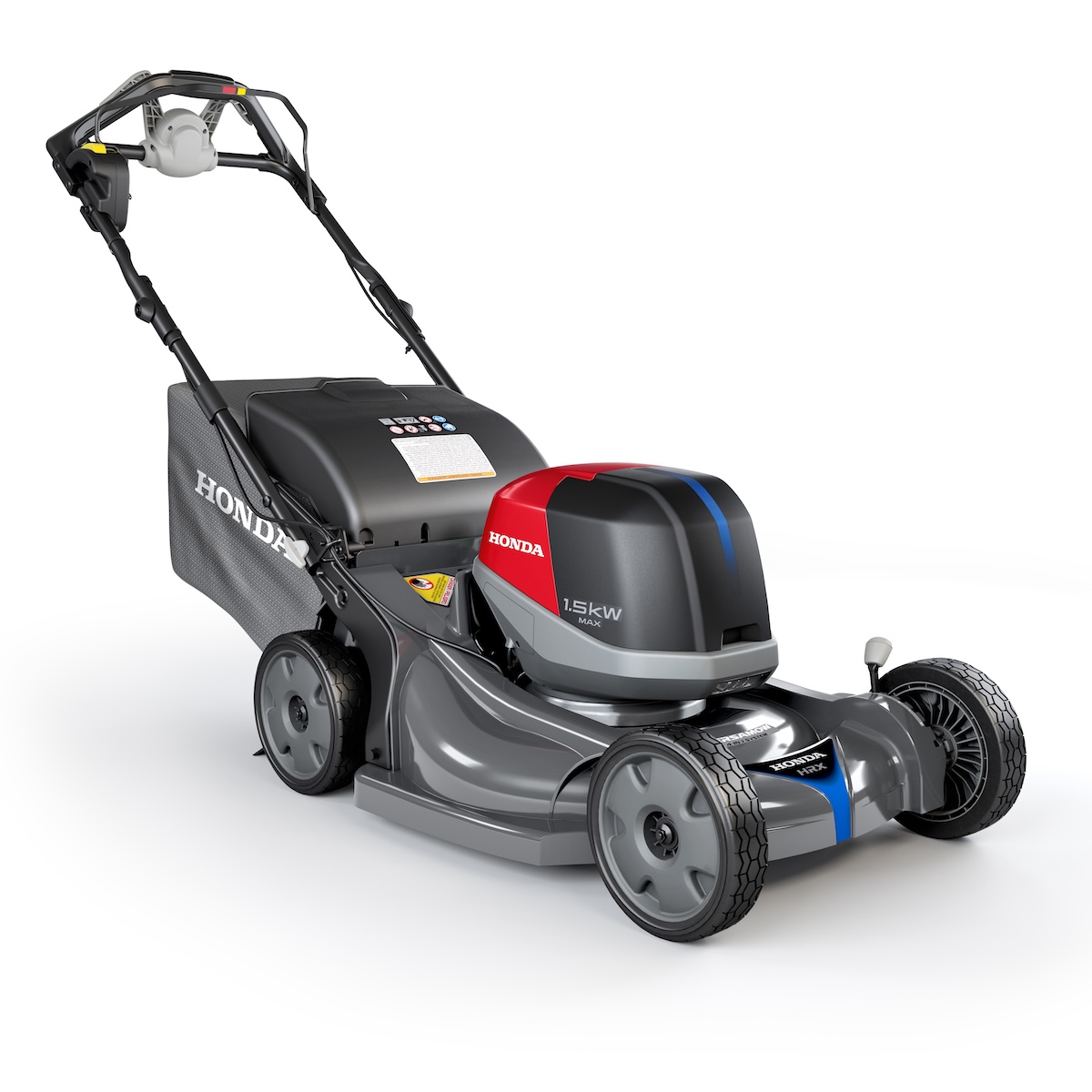
4-in-1 Versamow without attachments
Honda HRX-BV self-propelled electric mower with variable speed and 4-in-1 mowing for crisp cuts in tough grass.
As an affiliate, we earn on qualifying purchases.
This review of the HRX217 remains available as a reference for owners of the gas model and for buyers sourcing it through used or remaining retail stock.
The Honda HRX-BV battery powered lawn mower delivers high torque performance for clean cutting in thick and tall grass. It features 4-in-1 Versamow with Clip Director for...
Quick Reference
| Spec | Detail |
|---|---|
| Engine | Honda GCV200, 196cc OHC |
| Deck | 21 inches, NeXite composite |
| Drive | Rear-wheel, variable speed |
| Blade system | MicroCut dual blade |
| Grass management | Mulch, bag, side discharge |
| Cutting heights | 1 to 4 inches, 7 positions |
| Weight | 90 pounds |
| Fuel type | Regular unleaded, 4-stroke |
Engine and Starting
The GCV200 is a 196cc overhead cam engine that Honda has built in residential mower configurations for many years. Overhead cam designs run more smoothly and at cooler temperatures than older side-valve designs, and the GCV200’s reputation for reliable pull-cord starting across a wide temperature range is well established. In typical use, a cold start with the choke engaged requires one to three pulls. A warm restart after a brief pause during a session typically starts on the first pull without engaging the choke. The engine uses an automatic choke system on the HRX217, which removes the manual choke step and simplifies the start sequence for users who find choke management unintuitive.
Fuel type is regular 87 octane unleaded. Honda recommends fuel with no more than 10% ethanol (E10). The gas type guide for lawn mowers covers the ethanol content consideration for small engines in more detail.
MicroCut Dual-Blade System
The most distinctive feature of the HRX217 is its MicroCut dual-blade cutting system, which uses two overlapping blades that rotate at offset positions within the deck. The first blade cuts the grass at full cutting width; the second blade immediately re-cuts the clippings before they exit the deck. The result is a mulch particle that is significantly finer than single-blade output, which decomposes more quickly on the lawn surface and is less visible after a mulching pass. In practice, the dual blade produces a notably cleaner appearance after a mulching pass compared to single-blade mowers, particularly noticeable when the grass is slightly long or wet.
The dual-blade system adds weight and requires that both blades are balanced and in good condition for the mower to run smoothly. A damaged or unbalanced blade causes vibration that is detectable through the handle. Both blades should be inspected and sharpened at the start of each season. The best lawn mower lifts guide covers the stable elevated platform needed for safe blade access on a mower this heavy.
NeXite Deck
The HRX217 uses a NeXite composite polymer deck rather than the pressed or fabricated steel decks used on most competing mowers. The NeXite deck does not rust, does not dent from rock or debris impacts, and does not accumulate grass and debris on the interior surface the way steel decks do after seasons of use. In practical terms, it means the underside of the deck stays cleaner, requires less scraping maintenance, and will not develop the rust-through failures that eventually limit steel deck lifespan. Honda warrants the NeXite deck against rust and corrosion for the life of the mower.
The trade-off is that composite decks flex slightly under heavy impact in a way that fabricated steel decks do not, and some users working on lots with frequent large rocks or debris report concern about this. In normal residential use on maintained turf, the flexibility is not a practical issue.
Self-Propelled Drive System
The HRX217 uses rear-wheel drive with Honda’s Select Drive variable-speed system. Speed is controlled by two separate levers: the main blade-engagement bail engages the drive and blade together, and the speed selection is set independently on a control at the top of the handle bar with detents at low, medium, and high. This is a different design from the continuous-variable bail-squeeze systems used by Toro Personal Pace and some EGO models, and some users prefer the detented speed selection because it does not require maintaining consistent hand pressure throughout the mowing session.
Rear-wheel drive provides strong traction on slopes and when the collection bag is full and weight is biased to the rear. On flat lots, it performs identically to front-wheel drive. On slopes of more than 15 degrees, rear-wheel drive is the preferred configuration.
Grass Collection and Discharge
The HRX217 handles all three grass management functions: mulching, bagging through a rear collection bag, and side discharge. Switching between mulch and bag modes requires inserting or removing the mulch plug at the rear of the deck, which takes approximately 30 seconds. The collection bag is a rear-mount fabric bag with a rigid plastic frame that holds its shape when full and is easy to remove and empty. The bag capacity is 1.9 bushels, which suits one pass around a quarter-acre lot before the first emptying on a standard-height grass cut.
What the HRX217 Does Well
Starting reliability across seasons and temperatures is the single most consistent positive in long-term user experience with this mower. Users who have owned the HRX217 for five or more years consistently report that it starts easily and requires little unplanned maintenance. The MicroCut mulch quality is noticeably superior to single-blade alternatives. The NeXite deck lifespan outlasts steel decks in most real-world comparisons.
What to Consider
The HRX217 is heavy at 90 pounds, which is noticeable when lifting it for blade access or storage on a raised shelf. The purchase price is approximately $800 to $950 depending on retailer and variant, which is significantly more than mid-range gas competitors and comparable to the EGO 56V battery self-propelled mowers that now compete for the same buyer. Buyers weighing the Honda HRX217 against battery alternatives will find the full cost and maintenance comparison in the gas vs electric lawn mower guide.
Verdict
The Honda HRX217 earns its reputation as the residential gas walk-behind benchmark through reliable performance over a long ownership period. It is the right choice for buyers who value proven gas engine reliability, the specific mulch quality of the MicroCut system, and long-term durability from the NeXite deck, and who are comfortable with the fuel and maintenance requirements of a gas four-stroke engine. Buyers whose lots and use patterns suit a battery mower should evaluate both before committing, since the battery alternatives at the $500 to $600 level now deliver performance within reach of the Honda for most residential grass conditions.