
What Type of Gas Does a Lawn Mower Take?
Most residential walk-behind and riding lawn mowers use four-stroke engines that run on regular 87 octane unleaded gasoline. That is the starting answer. The more important variable is the ethanol content of that gasoline, which varies by blend at the pump and has a direct effect on fuel system component durability in small engines. Understanding both octane rating and ethanol content prevents the most common fueling mistakes that lead to carburetor damage and fuel system degradation in lawn mowers and other outdoor power tools.
Octane Rating
Octane rating measures gasoline’s resistance to premature detonation (knock) in the engine. Most four-stroke small engines used in residential lawn mowers are low-compression designs that run correctly on 87 octane regular unleaded. Using premium 91 or 93 octane gasoline in a mower that specifies regular provides no benefit and is simply higher cost without any performance or longevity advantage. The engine’s compression ratio determines what octane it requires, and residential mower engines are designed for regular grade.
The only residential mower scenario where premium fuel may be specified is in some higher-performance commercial-grade four-stroke engines with higher compression ratios. The owner’s manual lists the minimum octane requirement. If the manual specifies 87, use 87.
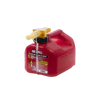
The NO-SPILL 2-1/2 gal Gas Can makes fueling cleaner and more controlled with a thumb button that starts and stops flow instantly. A 7/8-inch funnel spout with an attached dust cover helps fill small equipment while keeping the spout clean. The integrated 20 mesh stainless steel screen and auto-stop feature cut off fuel before overflow to reduce mess and accidental spills.
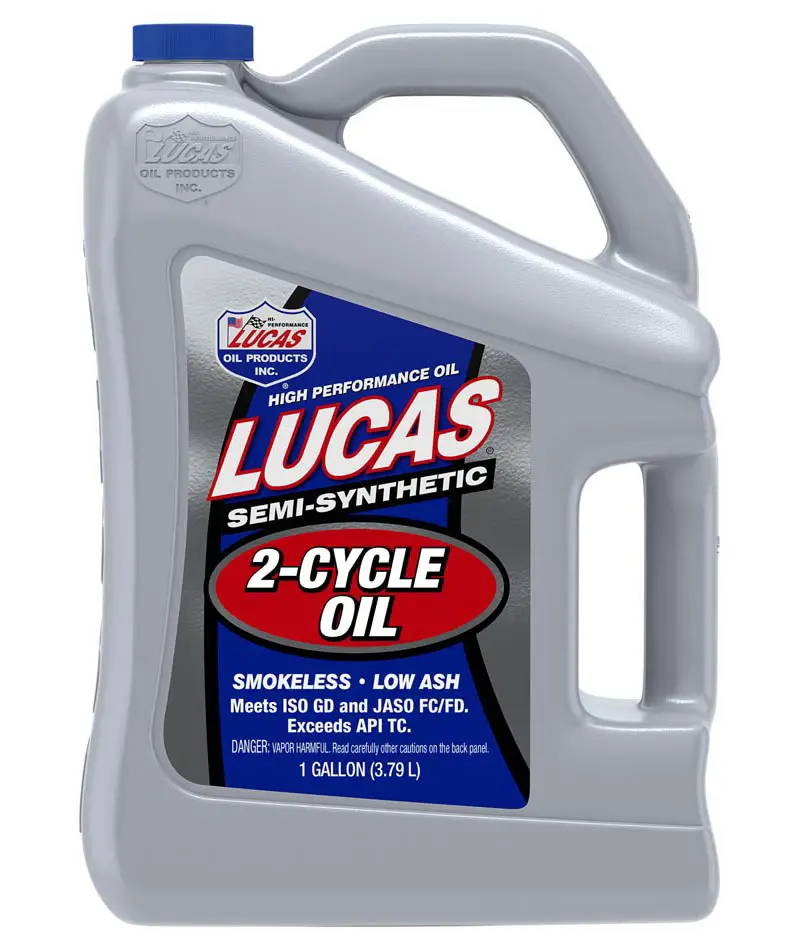
Lucas Oil High Performance semi-synthetic 2-cycle motor oil is specially formulated for oil injection systems or premix ratios up to 50:1. Its advanced smokeless formula with low-ash additives helps deliver cleaner burning, reducing emissions and improving power. An ashless detergent inhibitor package helps minimize spark plug fouling and combustion deposits for cleaner exhaust ports and long trouble-free engine life.
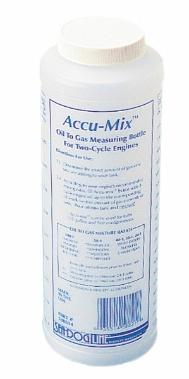
Sea Dog Accu-Mix helps you accurately measure the correct oil-to-gas mixture for 2-cycle engines. The see-through bottle shows multiple mix ratios, including 24:1, 33:1, 40:1, 50:1, and 100:1, so you can measure in both liters and gallons. This reduces guesswork and helps ensure your crew mixes fuel correctly every time.
Ethanol Content: The More Important Variable
Ethanol is an alcohol blended into most pump gasoline in the United States as an oxygenate additive. The most common blend at standard fuel pumps is E10 (10% ethanol, 90% gasoline). Some pumps now offer E15 (15% ethanol). Flex-fuel pumps offer E85 (85% ethanol).
Most small engine manufacturers, including Briggs and Stratton, Honda, Kawasaki, and Kohler, specify in their owner’s manuals that fuel with no more than 10% ethanol (E10) is acceptable in their engines. E15 and E85 are not recommended for small engines because the higher ethanol concentration degrades rubber fuel lines, plastic carburetor components, and gaskets faster than E10 does. It also accelerates fuel degradation during storage more rapidly than E10.
The practical guidance is to use E10 or lower-ethanol fuel whenever possible. At a standard gas station pump, the ethanol content is posted on the pump face. The lowest-ethanol option available is the correct choice.
Ethanol-Free Fuel
Ethanol-free gasoline (also labeled “recreation fuel,” “marine fuel,” or “non-ethanol” at some stations) contains no ethanol and is the best choice for any small engine that will sit unused for a month or more between uses. Ethanol absorbs water from the air during storage, which causes phase separation in the fuel tank: the ethanol and water separate from the gasoline and sink to the bottom of the tank, where they can be drawn into the carburetor and cause running problems. Ethanol-free fuel eliminates this degradation mechanism and stays usable longer without a stabilizer additive.
Pre-mixed ethanol-free fuel in cans, such as TruFuel or Husqvarna XP, is available at hardware stores in both straight gasoline (for four-stroke engines) and pre-mixed two-stroke formulations. These canned fuels are significantly more expensive per ounce than pump gasoline but are the most reliable option for equipment that sits unused for long periods between uses, such as a generator, snowblower, or seasonal tool.
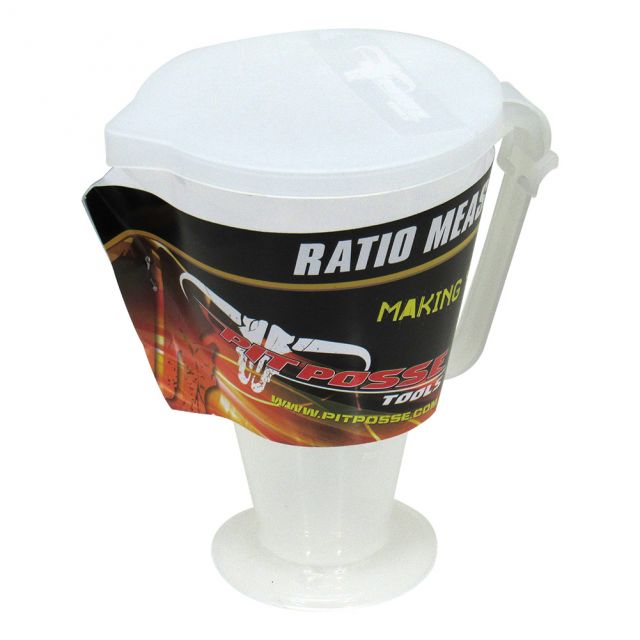
Pit Posse PP3318 is a racing utility measuring cup designed to mix 2-stroke oil and other engine fluids to accurate ratios. It features readable CC and ounce marks plus a...
Two-Stroke Engines
String trimmers, handheld blowers, and some small tillers use two-stroke engines that require a pre-mixed fuel where two-stroke oil is measured and combined with gasoline before fueling. The correct fuel for the gasoline component of a two-stroke mix is the same as for four-stroke engines: 87 octane, E10 or lower ethanol content. The pre-mix process and the correct oil-to-fuel ratio are covered in the 40:1 vs 50:1 fuel mix guide.
Storage and Degradation
Gasoline begins to degrade within 30 days under typical storage conditions. Ethanol-blended fuel degrades faster than ethanol-free fuel. For mowers that will sit unused for more than 30 days, adding a fuel stabilizer to the tank and running the engine briefly to distribute treated fuel through the carburetor significantly extends the useful life of the fuel. The STA-BIL vs Sea Foam guide covers the most widely used stabilizer options and the correct dosage for each.