
Pest Control Methods: A Homeowner’s Guide to Every Treatment Option
Pest control is not a single action but a spectrum of interventions, and understanding where each method sits on that spectrum determines whether your treatment is effective, economical, and proportionate to the problem. This hub is the methodological reference for every species-specific guide in the Bovees pest control silo. It covers the full range of available tools, from cultural practices and mechanical traps at one end to systemic synthetic insecticides at the other, and it explains how to choose between them based on the pest, the environment, and the acceptable level of risk to beneficial insects and non-target species.
The Four Pillars of Pest Control
Every recognized pest management framework, including the integrated pest management system used by universities, extension services, and professional pest control operators, organizes treatment options into four broad categories. Understanding these categories before selecting a product or method is the foundational step that separates effective pest control from expensive, often counterproductive guesswork.
Cultural control includes every practice that modifies the environment to make it less favorable for pest establishment: irrigation timing, mowing height, plant spacing, compost application, crop rotation, and sanitation. Cultural controls are preventive rather than curative, which means they are most valuable as a first line of defense rather than as a response to an active infestation.
Mechanical control covers physical exclusion, trapping, and removal: caulking entry points, installing door sweeps, hand-picking pests from plants, using sticky traps and pheromone traps, and applying row covers to protect crops from foliar pests. Mechanical controls are targeted and carry no risk to beneficial insects or non-target species.
Biological control uses living organisms to suppress pest populations: predatory insects such as ladybugs and lacewings, parasitic wasps, beneficial nematodes in the soil, and microbial insecticides such as Bacillus thuringiensis, commonly sold as Bt. Biological controls are highly selective but typically slower-acting than chemical treatments.
Chemical control includes both organic and synthetic pesticides, from contact killers that break down within hours to systemic and residual treatments that remain active for weeks. Chemical control delivers the fastest knockdown of an active infestation but carries the most significant potential for harm to beneficial insects, soil biology, and water quality if applied incorrectly.
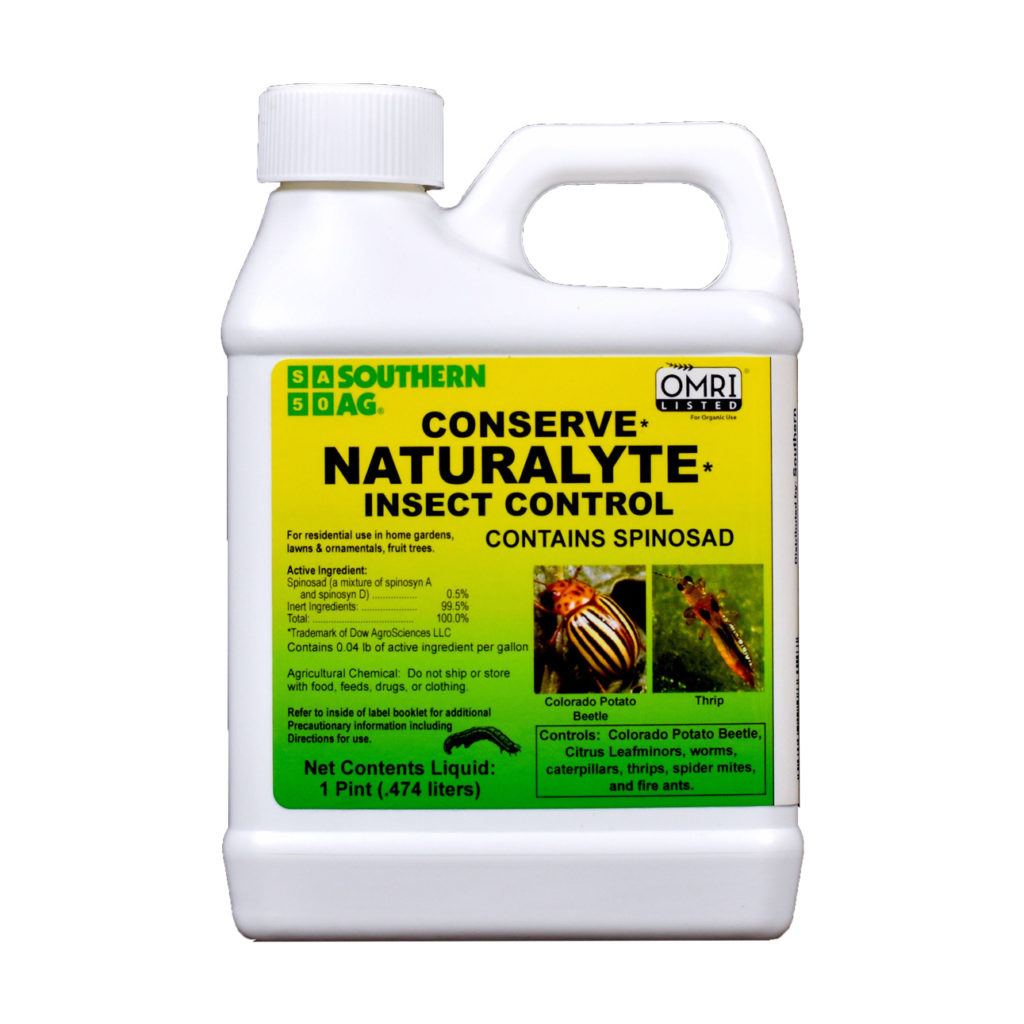
Conserve Naturalyte Insect Control is an OMRI-listed spinosad insect control for use on vegetables, ornamentals, and fruit trees. It helps control a wide range of pests including caterpillars, thrips, leaf miners, beetles, flies, fire ants, and fruit flies. Apply as a thorough cover spray and follow label directions for either spray or drench treatments.
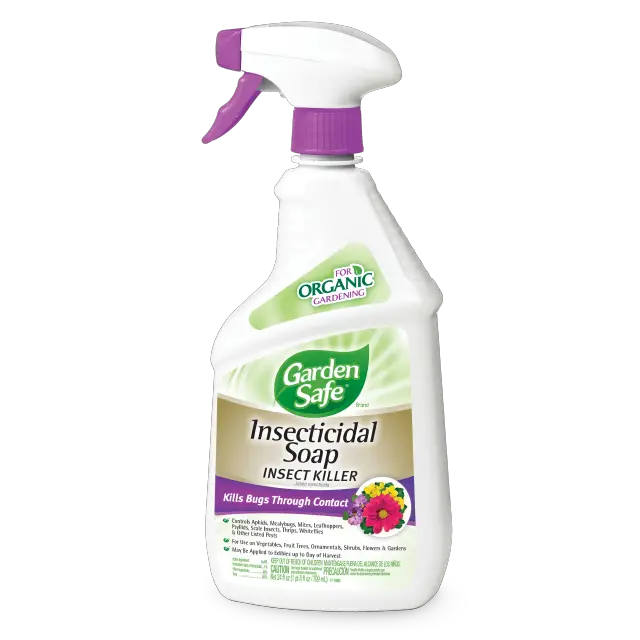
Garden Safe insecticidal soap is a ready-to-use contact spray that kills listed garden pests when sprayed directly on them. It’s formulated for organic gardening and can be used on vegetables, fruit trees, ornamentals, shrubs, flowers, and in indoor, outdoor, and greenhouse applications. For convenience, it may be applied to edibles up to and including the day of harvest.
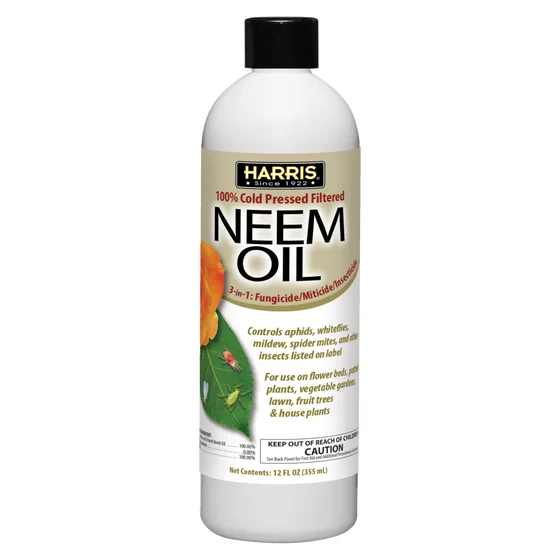
HARRIS Neem Oil Cold Pressed Water Soluble Concentrate is a 3-in-1 insecticide, fungicide, and miticide made from 100% cold pressed neem oil. It is EPA registered to help control aphids, whiteflies, mildew, spider mites, and other label-listed pests and diseases. Safe for indoor and outdoor use, it can be applied to a wide range of flowering and potted plants, vegetable gardens, lawns, ornamentals, fruit trees, and container gardening with foliar or soil treatments.
Integrated Pest Management: The Decision Framework
Integrated pest management, or IPM, is the system for deciding when and whether to treat, and which method to use. Rather than scheduling routine pesticide applications, IPM calls for monitoring pest populations against an established action threshold: the population level at which the expected damage exceeds the cost of treatment. Below the threshold, no treatment is applied. At or above it, the least disruptive effective treatment is chosen first. The full framework for applying IPM to home gardens and lawns is explained in our integrated pest management guide, including how to set realistic thresholds for the most common homeowner pest scenarios.
Organic vs Synthetic: Choosing the Right Chemistry
The distinction between organic and synthetic pesticides is frequently misunderstood. Organic pesticides, including neem oil, pyrethrin, spinosad, and insecticidal soap, are derived from natural sources and are often OMRI listed for use in certified organic production, but they are still pesticides with active ingredients, modes of action, and label requirements. Some organic pesticides, such as pyrethrin, are highly toxic to beneficial insects and aquatic invertebrates. Synthetic pesticides, such as bifenthrin, permethrin, and carbaryl, are manufactured compounds that typically offer longer residual activity and broader label coverage, but they carry corresponding risks to pollinators and non-target species. The full comparison of organic and synthetic options, including signal words, re-entry intervals, and which situations call for which approach, is in our organic vs chemical pest control guide.
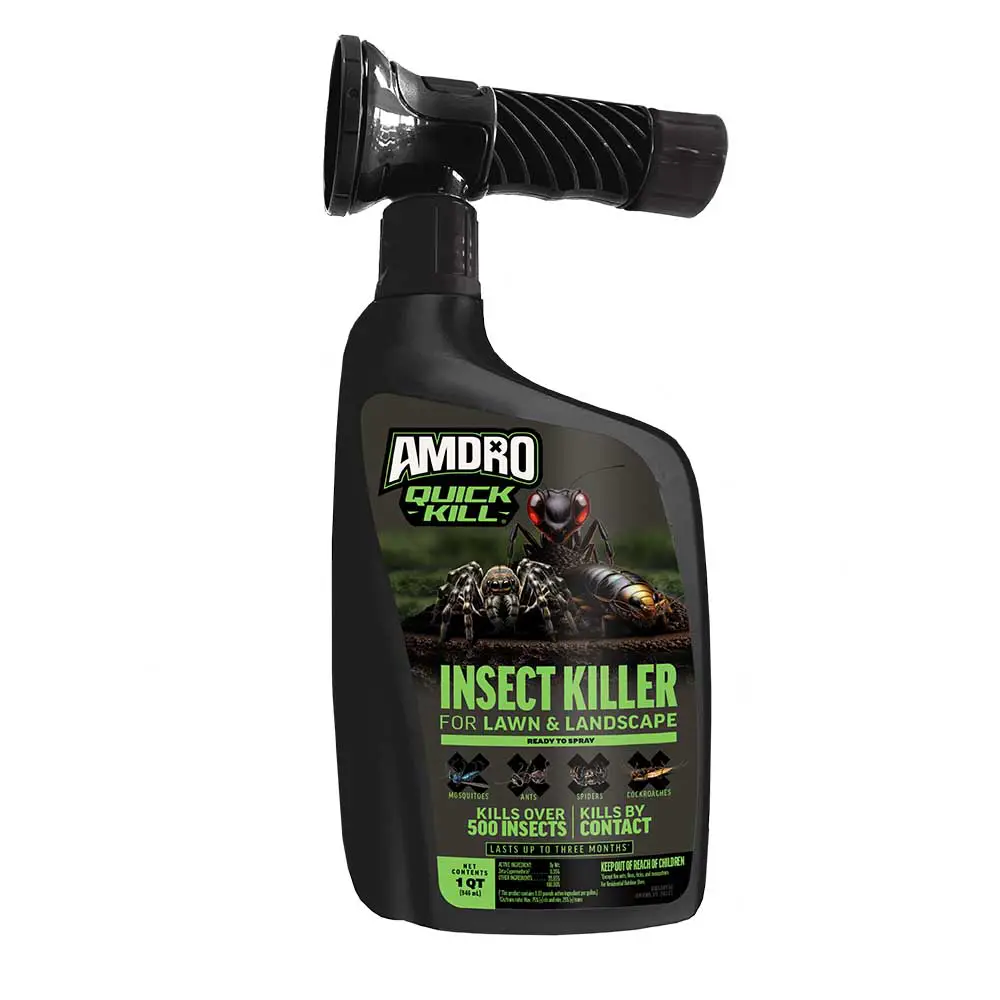
Amdro Quick Kill Insect Killer for Lawn & Landscape is a fast-acting ready-to-spray formula that starts working in minutes (except ticks) and kills over 500 insects. It kills by contact and is designed to be lawn-safe when used as directed, with control that keeps killing for up to 3 months (except fire ants, fleas, ticks and mosquitoes). Simply shake well, attach to the hose, and spray—no mixing or measuring required.
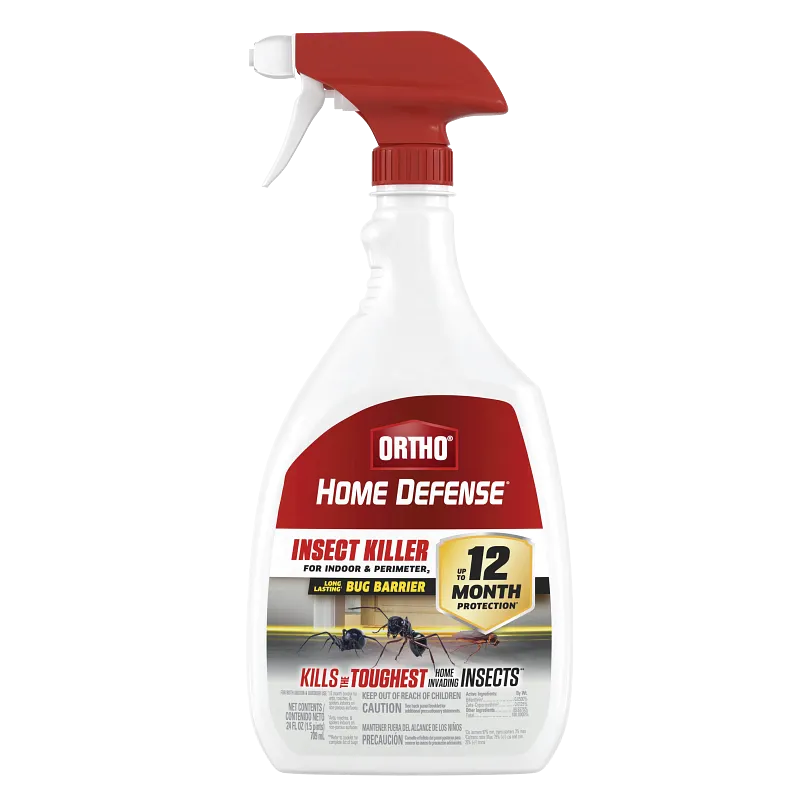
Ortho Home Defense Backyard Mosquito and Bug Killer Area Fogger helps control horse flies, deer flies, mosquitoes and other listed backyard pests. It provides up to 12-month protection indoors on non-porous surfaces and can be used to create a perimeter barrier outdoors. The ready-to-use trigger sprayer applies a clear, fast-drying, no-fumes formula for convenient spot or barrier treatment.
Key Products Covered in This Hub
Diatomaceous Earth
Diatomaceous earth is a mechanical insecticide: a fine powder made from fossilized algae that damages the exoskeleton of crawling insects and causes them to desiccate. It is effective against a wide range of soft-bodied insects and is non-toxic to mammals when food-grade formulations are used, but it is non-selective and will harm beneficial insects that crawl through treated areas. The question of whether diatomaceous earth kills beneficial insects, and how to use it in a way that minimizes that impact, is addressed in our diatomaceous earth and beneficial insects guide. Product recommendations are in our best diatomaceous earth guide.
Neem Oil
Neem oil is extracted from the seeds of the neem tree and works primarily through azadirachtin, a compound that disrupts insect hormone systems and interferes with feeding, molting, and reproduction. It is most effective against soft-bodied pests in their immature stages and requires thorough coverage of plant surfaces because it is a contact treatment with limited residual activity. Product recommendations are in our best neem oil guide.
Insecticidal Soap
Insecticidal soap is a contact treatment based on potassium fatty acid salts that disrupts the cell membrane of soft-bodied insects on contact. It has essentially no residual activity, which makes it safe to reapply frequently but requires direct contact with the pest at time of application. The comparison between insecticidal soap and neem oil, including which is more effective for specific pests and which is safer around beneficials, is covered in our insecticidal soap vs neem oil guide. Product recommendations are in our best insecticidal soap guide.
Sevin (Carbaryl)
Sevin dust and Sevin spray formulations contain carbaryl, a broad-spectrum synthetic insecticide in the carbamate class. Carbaryl kills a wide range of insects on contact and has moderate residual activity, but it is highly toxic to bees and beneficial insects and should not be applied to flowering plants or used when pollinators are foraging. The correct application rates, timing, and safety precautions for carbaryl-based products are covered in our how to use Sevin dust guide.
Fungus Gnat and Pot Worm Control
Fungus gnats and pot worms are distinct pest problems rooted in overwatered potting mix, and both require a combination of cultural correction and targeted treatment rather than a surface insecticide application. The control sequences for each are covered in our fungus gnats in houseplants guide and our pot worms guide.
When DIY Pest Control Reaches Its Limits
Some pest problems exceed what homeowner-grade products and methods can reliably resolve, and recognizing those situations before investing further in failed DIY attempts saves both time and money. Structural termite infestations, large carpenter ant colonies with satellite nests in wall voids, and rodent infestations that have established within the building envelope are the most common situations where professional intervention is warranted. The criteria for making that call are outlined in our when to call a pest control professional guide.
Soil Health as a Cultural Pest Prevention Tool
Building soil organic matter through regular compost applications reduces the compaction, poor drainage, and low microbial diversity that make lawns and garden beds vulnerable to root-feeding pests. The connection between soil organic matter and pest suppression is one of the most underutilized tools in the homeowner’s pest management toolkit, and the application rates and timing for compost for lawns as a cultural pest prevention strategy are covered in our composting guide.
Herbicide and Pesticide Safety in Mixed Programs
When pest control products and herbicides are applied to the same lawn or garden area in the same season, label restrictions and re-entry intervals for both product types become critical to manage simultaneously. The weed control application framework that governs timing and product selection on lawns, including how it interacts with insecticide applications, is covered in our lawn weed control guide.