
Best Neem Oil for Plants and Pest Control
Neem oil is pressed from the seeds of the neem tree (Azadirachta indica) and is one of the few organic pest control products that also functions as a fungicide, making it genuinely multi-purpose for garden use. The quality difference between neem oil products on the homeowner market is real: azadirachtin content varies significantly between cold-pressed concentrates and clarified hydrophobic extracts, and the labeling is not always transparent about what you are actually buying. This guide explains what separates an effective neem oil product from a diluted or processed one, and which products deliver the best results for homeowners.
Cold-Pressed Neem Oil vs Clarified Hydrophobic Extract: What the Labels Mean
Cold-pressed neem oil retains the full complement of naturally occurring compounds from the neem seed, including azadirachtin, the primary insect growth regulating compound, along with limonoids, fatty acids, and other biologically active compounds. Cold-pressed products are the most effective for pest control because they contain the highest concentration of azadirachtin and the full spectrum of synergistic compounds.
Clarified hydrophobic neem oil extract is neem oil that has been processed to remove most of the azadirachtin, leaving primarily the fatty acid fraction. Products based on clarified hydrophobic extract can carry an OMRI listing and be sold as neem oil, but they have little to no insect growth regulating activity. They function primarily as a suffocant and spray oil, similar to horticultural oil, with much weaker effects on pest reproduction and development. These are appropriate products for some applications, such as dormant oil treatments for scale on woody plants, but they are significantly less effective than cold-pressed neem oil for managing active foliar pest infestations.
When reading a neem oil label, look for the azadirachtin content listed as a percentage of the active ingredient. A quality cold-pressed neem oil concentrate typically contains azadirachtin at around 0.9% to 3% of the total product depending on the concentration level. A clarified hydrophobic extract will list azadirachtin at very low levels or not at all, and will emphasize the “hydrophobic extract of neem oil” designation.
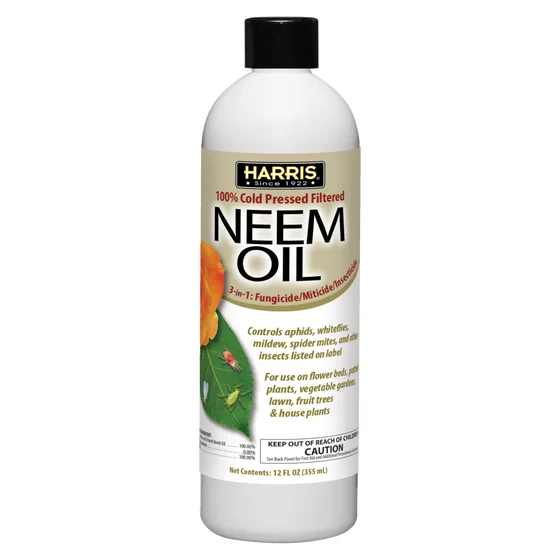
HARRIS Neem Oil Cold Pressed Water Soluble Concentrate is a 3-in-1 insecticide, fungicide, and miticide made from 100% cold pressed neem oil. It is EPA registered to help control aphids, whiteflies, mildew, spider mites, and other label-listed pests and diseases. Safe for indoor and outdoor use, it can be applied to a wide range of flowering and potted plants, vegetable gardens, lawns, ornamentals, fruit trees, and container gardening with foliar or soil treatments.
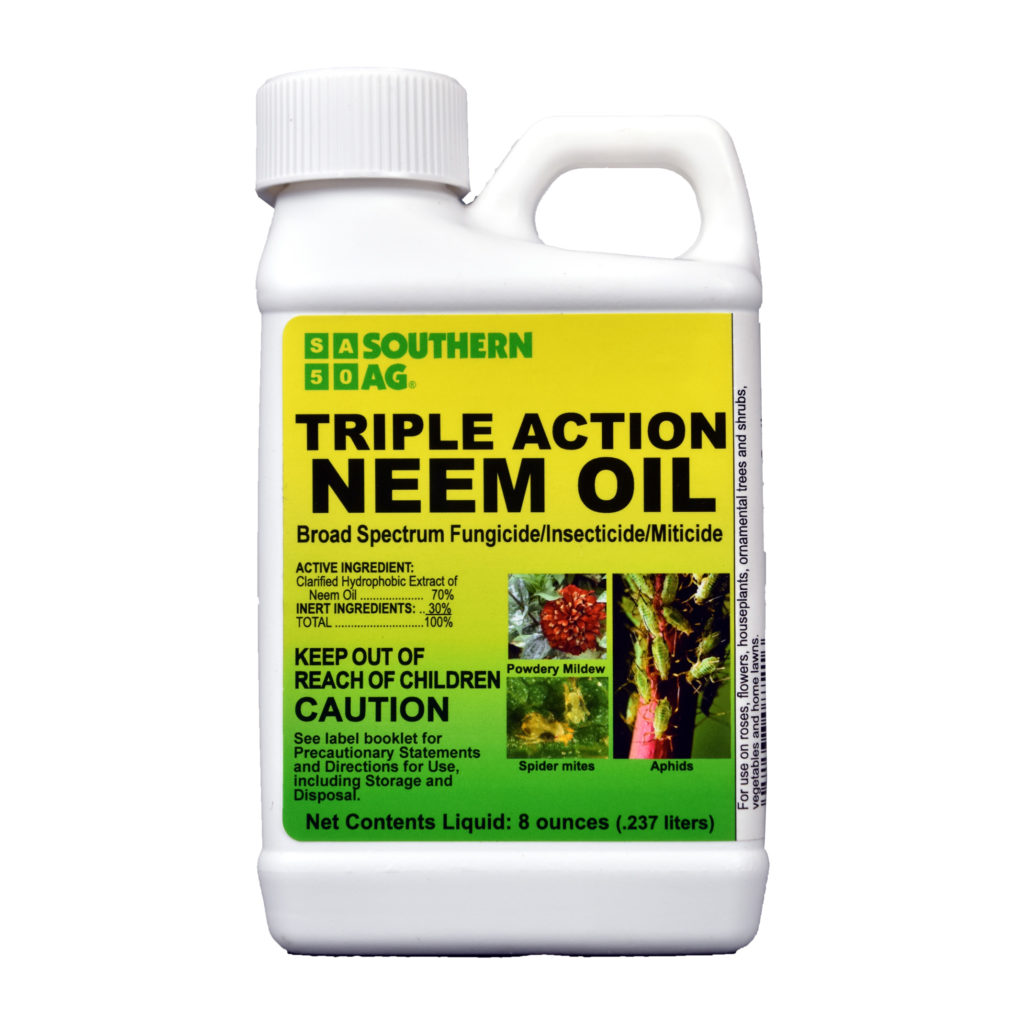
Southern Ag Triple Action Neem Oil Fungicide/Insecticide/Miticide delivers broad-spectrum control to help protect indoor and outdoor ornamental plants. Formulated with 70% clarified hydrophobic extract of neem oil, it targets common fungal diseases like powdery mildew and black spot as well as pests including aphids, spider mites, scale, and whiteflies. Thoroughly spray all plant surfaces for best results, mixing frequently during application.
What to Look for in a Neem Oil Product
Cold-pressed, unrefined oil for maximum azadirachtin content and biological activity.
OMRI listing confirms the product is approved for organic use, which is the clearest independent verification of ingredient sourcing.
Concentrate format for large gardens, ready-to-use for smaller applications. Concentrates are significantly more economical per application for anyone treating more than a few plants regularly. Ready-to-use products are convenient for small-scale spot treatments.
Emulsifier included or specified. Neem oil concentrate does not mix with water without an emulsifier because oil and water do not combine on their own. Some products include an emulsifier in the bottle; others require the user to add a small amount of liquid dish soap. Products that specify a mixing protocol (a few drops of liquid soap per quart of water) are giving you a correct and useful instruction.
Top Products for Homeowners
Bonide Neem Oil Concentrate
Bonide’s neem oil concentrate is one of the most widely available cold-pressed products in the US homeowner market and is registered as a fungicide, insecticide, and miticide on its label, covering the full range of neem oil’s practical applications. It mixes reliably with water and the included emulsifier base, and it is OMRI listed. The 16 oz and 32 oz concentrate sizes are economical for homeowners managing infestations across multiple plants or treating garden beds regularly through the season. It covers aphids, spider mites, whiteflies, scale crawlers, and powdery mildew.
Garden Safe Neem Oil Extract Concentrate
Garden Safe is another consistently available OMRI listed concentrate with cold-pressed neem oil as the active ingredient. It performs comparably to Bonide for most applications and is often the more accessible option in mass-market garden center channels. The ready-to-spray format is convenient for occasional use where mixing a concentrate is not practical.
Verdana USDA Certified Organic Cold-Pressed Neem Oil
For homeowners who want the highest azadirachtin concentration and the clearest sourcing documentation, Verdana’s USDA certified organic cold-pressed neem oil is a premium option. It is sold as a pure seed oil concentrate and requires the user to add their own emulsifier and mix with warm water before application. The cost per ounce is higher than Bonide or Garden Safe, but the azadirachtin content is among the highest available in the retail market and the sourcing is transparent.
Mixing Neem Oil Concentrate Correctly
Neem oil solidifies below about 65 degrees Fahrenheit and needs to be warmed to room temperature before mixing. Start with warm (not hot) water in your spray bottle or garden sprayer. Add a few drops of mild liquid soap, such as Dawn or Castile soap, per quart of water to act as an emulsifier. Add the neem oil concentrate at the label-specified rate and shake vigorously. The mixture will appear milky white when properly emulsified.
Use the mixture within a few hours: neem oil emulsions are unstable and will separate over time. Do not store mixed product and reshake hoping to reactivate it, as the biological activity degrades once the oil is exposed to water and light.
For a full explanation of how neem oil compares to insecticidal soap and when to use each, see our insecticidal soap vs neem oil guide.