
Insecticidal Soap vs Neem Oil: Which Should You Use?
Insecticidal soap and neem oil are two of the most widely recommended organic pest control products for home gardens, but they work very differently, are effective against different pest types and life stages, and have different application requirements and risk profiles. Using one where the other is more appropriate either wastes the treatment or delivers partial results that still leave a pest population recovering and reinfesting. This comparison covers the mechanisms, target pests, timing rules, and practical tradeoffs that determine which product belongs on your garden shelf.
How Insecticidal Soap Works
Insecticidal soap is formulated from potassium salts of fatty acids, which are the same compounds found in natural soap, purified and concentrated for pest control use. When the soap solution contacts a soft-bodied insect or mite, the fatty acid salts disrupt the phospholipid structure of the cell membrane, causing the cell to lose integrity and the pest to die rapidly. The action is immediate but requires direct physical contact: insecticidal soap kills pests it touches and has essentially no activity on pests it does not contact. Once the solution dries on the plant surface, it is no longer toxic to insects. There is no residual.
This zero-residual characteristic is the most important fact to understand about insecticidal soap. It is a contact-only treatment that you must apply directly to visible pest populations, and it will not protect the plant from new arrivals that colonize after the application has dried.
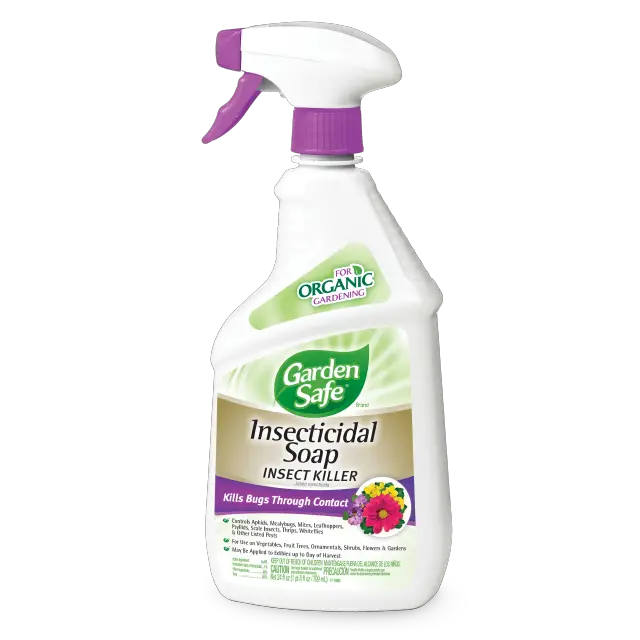
Garden Safe insecticidal soap is a ready-to-use contact spray that kills listed garden pests when sprayed directly on them. It’s formulated for organic gardening and can be used on vegetables, fruit trees, ornamentals, shrubs, flowers, and in indoor, outdoor, and greenhouse applications. For convenience, it may be applied to edibles up to and including the day of harvest.
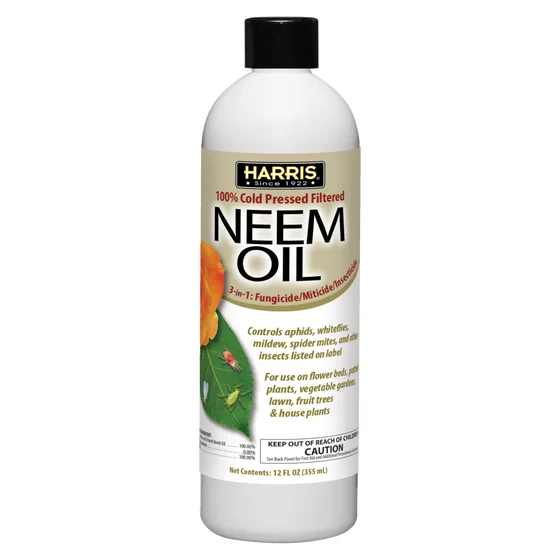
HARRIS Neem Oil Cold Pressed Water Soluble Concentrate is a 3-in-1 insecticide, fungicide, and miticide made from 100% cold pressed neem oil. It is EPA registered to help control aphids, whiteflies, mildew, spider mites, and other label-listed pests and diseases. Safe for indoor and outdoor use, it can be applied to a wide range of flowering and potted plants, vegetable gardens, lawns, ornamentals, fruit trees, and container gardening with foliar or soil treatments.
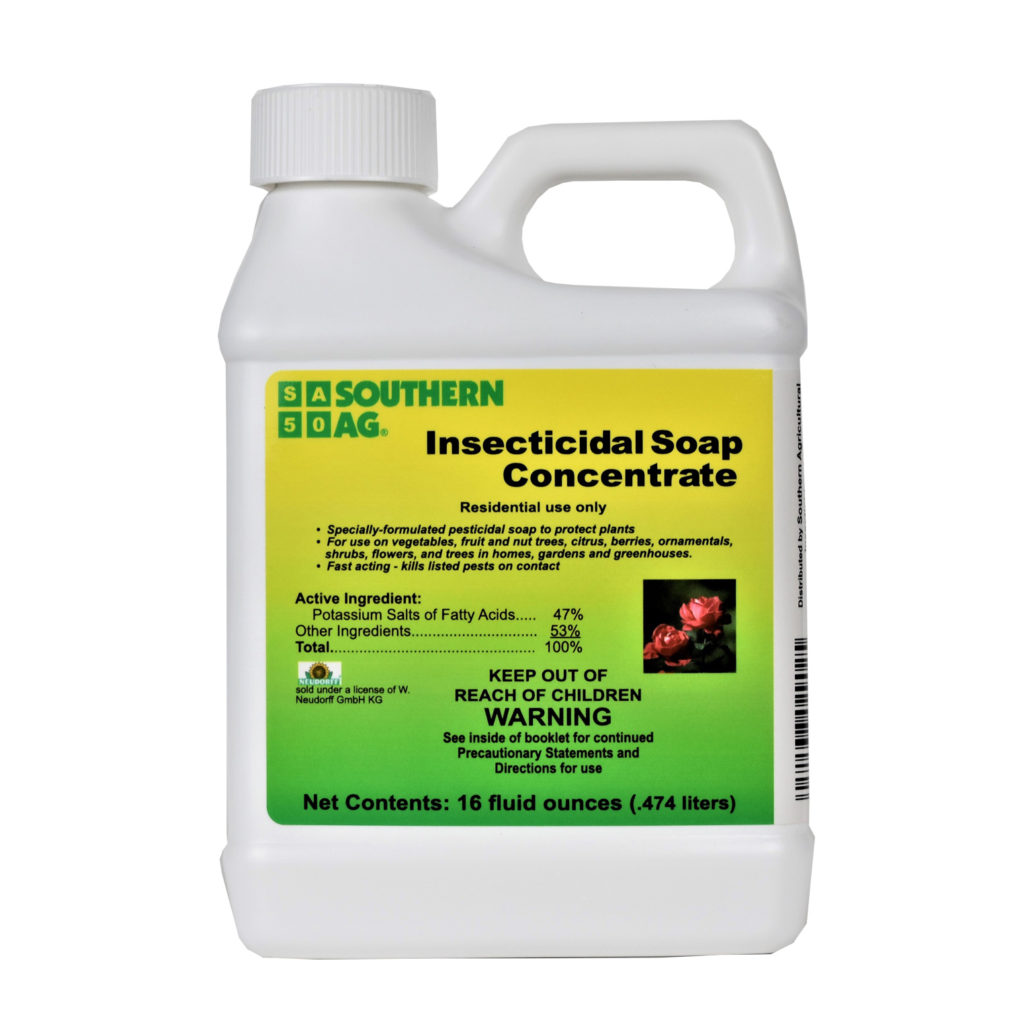
Southern Ag Insecticidal Soap Concentrate is a specially formulated pesticidal soap that delivers fast contact control of insect and mite pests. It’s suitable for use on vegetables, fruit and nut trees, citrus, berries, ornamentals, shrubs, flowers, and trees, including greenhouse and garden applications. Mix 4 teaspoons per quart of water and thoroughly spray all plant parts, including undersides of leaves.
How Neem Oil Works
Neem oil is pressed from the seeds of the neem tree (Azadirachta indica) and contains a complex mixture of compounds, of which azadirachtin is the most biologically active for insect control. Azadirachtin is an insect growth regulator analog that interferes with the juvenile hormone system, disrupting the ability of immature insects to molt and mature into reproductive adults. It also acts as a feeding deterrent and repellent for some pest species.
Unlike insecticidal soap, neem oil has multiple modes of action and some residual activity on plant surfaces, typically one to three days depending on sunlight, temperature, and rainfall. It is most effective against immature pest stages (eggs, larvae, and nymphs) and least effective against fully developed adults. This means neem oil works best as a population management tool applied before a pest outbreak reaches high density, rather than as a rescue treatment for a heavy, established infestation.
Target Pests Comparison
Both insecticidal soap and neem oil are effective against the same broad category of soft-bodied pest species, but with meaningful differences in which life stage they are most effective against.
Aphids: Both products are effective. Insecticidal soap kills adults and nymphs on contact. Neem oil targets nymphs most effectively and acts as a feeding deterrent that discourages new colonization. For a heavy aphid infestation with dense clusters, soap delivers faster visible knockdown. For ongoing prevention in a bed with a history of aphid pressure, neem oil is the better maintenance tool.
Spider mites: Insecticidal soap is the stronger choice for active spider mite infestations because it penetrates the webbing to contact mites directly and kills nymphs and adults quickly. Neem oil has moderate effectiveness against mite eggs and early nymphs but is less reliable against established populations with heavy webbing.
Whiteflies: Both products require thorough coverage of leaf undersides where whitefly nymphs and eggs are concentrated. Insecticidal soap is more effective at killing crawlers (the mobile first-instar nymph stage), while neem oil, with its IGR activity, is more effective at preventing eggs from hatching and disrupting the reproductive cycle of adults.
Scale insects: The most vulnerable stage for both products is the crawler stage, when newly hatched scale nymphs move across the plant surface before settling and developing their protective armor. Once scale has settled and developed a hard or waxy covering, neither soap nor neem oil can penetrate effectively. A dormant oil or horticultural oil application is more appropriate for settled scale.
Mealybugs: Insecticidal soap is effective on mealybugs because the fatty acids cut through the waxy body coating that protects them from many other treatments. Neem oil provides additional deterrent activity but is generally the secondary rather than primary treatment choice for mealybugs.
Fungus gnats: Neither insecticidal soap nor neem oil applied as a foliar spray addresses fungus gnats effectively because the pest is a soil-dweller in its larval stage. Neem oil applied as a soil drench around the root zone can suppress larvae by disrupting their development, and this is the one application where neem genuinely outperforms soap for this pest. The full fungus gnat treatment sequence is covered in our fungus gnats in houseplants guide.
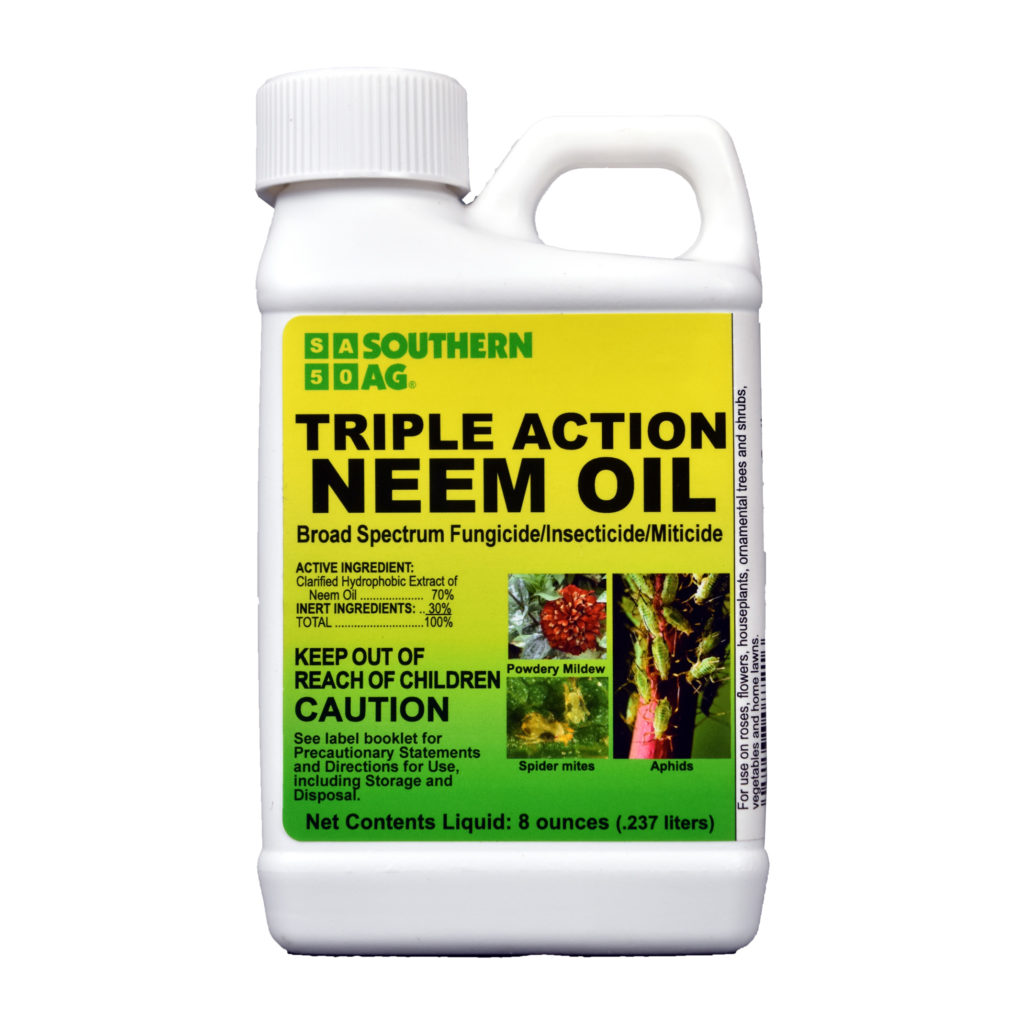
Southern Ag Triple Action Neem Oil Fungicide/Insecticide/Miticide delivers broad-spectrum control to help protect indoor and outdoor ornamental plants. Formulated with 70%...
Application Differences
Temperature sensitivity: Insecticidal soap causes phytotoxicity (leaf burn) when applied in temperatures above 90 degrees Fahrenheit or in direct hot sun. Neem oil also risks phytotoxicity in extreme heat and when plants are drought-stressed. Both should be applied in the early morning or evening, when temperatures are moderate and the plant surface has time to dry before midday heat.
Mixing: Commercial insecticidal soap products are pre-formulated and applied as directed on the label. Neem oil, particularly cold-pressed neem oil concentrate, needs to be emulsified with warm water and a small amount of mild liquid soap to stay in suspension, and the mixture should be used immediately after preparation as it separates within a few hours.
Coverage: Both products require thorough coverage of all plant surfaces, including leaf undersides, stem junctions, and any location where pests are concentrated. A light mist over the top of the plant does very little for either product.
Reapplication interval: Because both products have short residual activity, a treatment program for an active infestation typically requires reapplication every three to five days for two to three cycles to address newly hatched individuals from eggs that survived the initial application.
Which to Choose: A Practical Decision Guide
Choose insecticidal soap when you need fast, visible knockdown of an active, heavy infestation of soft-bodied pests; when the target pest is in the adult or large nymph stage where neem oil’s IGR activity is less effective; and when you are treating mealybugs specifically, where soap’s penetrating fatty acids outperform neem.
Choose neem oil when the pest population is in early stages and ongoing prevention is the goal; when egg suppression is as important as adult kill; when you are treating a bed with a history of recurring infestations and want a product that also acts as a deterrent; and when you want a single product that can function as both a fungicide (for powdery mildew) and an insecticide, since neem oil has antifungal properties that insecticidal soap does not.
For product recommendations in each category, see our best neem oil guide and best insecticidal soap guide.