
Organic vs Chemical Pest Control: Pros, Cons, and When to Use Each
The organic versus chemical debate in pest control generates more confusion than almost any other topic in home gardening, largely because the terms are used loosely and the products in each category are rarely explained accurately. Organic pest control does not mean harmless, and synthetic pest control does not mean reckless. Both categories contain compounds with active ingredients, modes of action, signal words, re-entry intervals, and the potential to harm non-target species if applied incorrectly. The practical question is not which philosophy is better but which specific product, at what application rate and timing, is the most effective and least disruptive choice for a defined pest problem in a defined environment.
What “Organic” Actually Means in Pest Control
An organic pesticide is one derived from natural sources, typically plant extracts, minerals, or microorganisms, and approved for use in certified organic production under the National Organic Program, or NOP, standards administered by the USDA. Products that meet this standard are often labeled OMRI listed, referring to the Organic Materials Review Institute, which evaluates products for compliance. OMRI listing is the most reliable signal that a product is genuinely approved for organic use.
The key point is that natural origin does not equal low toxicity. Pyrethrin, derived from chrysanthemum flowers, is highly toxic to bees, aquatic invertebrates, and beneficial insects. Copper sulfate, approved for organic use as a fungicide, is a potent soil accumulator that can reach phytotoxic levels with repeated application. Neem oil can burn foliage if applied to plants under water stress or in direct sun. Every organic product has a mode of action, a target pest spectrum, and conditions under which it can cause harm.
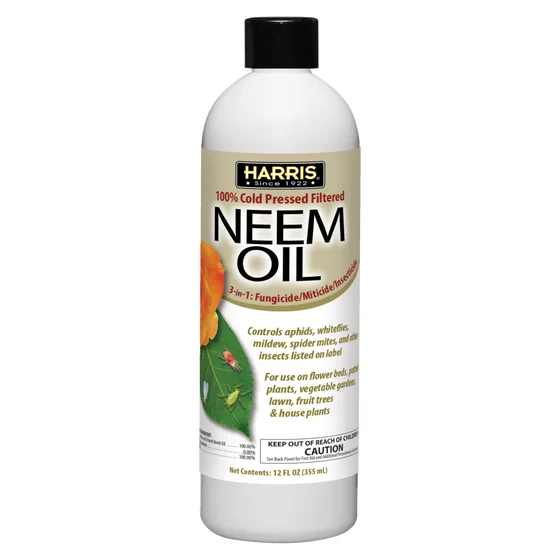
HARRIS Neem Oil Cold Pressed Water Soluble Concentrate is a 3-in-1 insecticide, fungicide, and miticide made from 100% cold pressed neem oil. It is EPA registered to help control aphids, whiteflies, mildew, spider mites, and other label-listed pests and diseases. Safe for indoor and outdoor use, it can be applied to a wide range of flowering and potted plants, vegetable gardens, lawns, ornamentals, fruit trees, and container gardening with foliar or soil treatments.
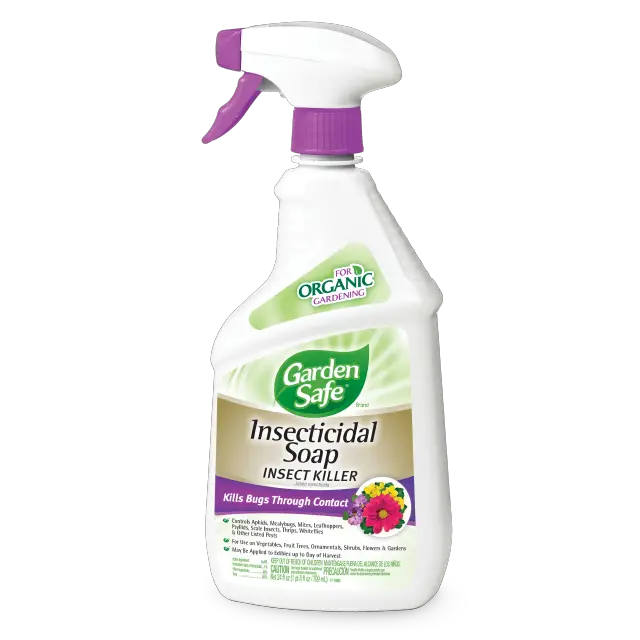
Garden Safe insecticidal soap is a ready-to-use contact spray that kills listed garden pests when sprayed directly on them. It’s formulated for organic gardening and can be used on vegetables, fruit trees, ornamentals, shrubs, flowers, and in indoor, outdoor, and greenhouse applications. For convenience, it may be applied to edibles up to and including the day of harvest.
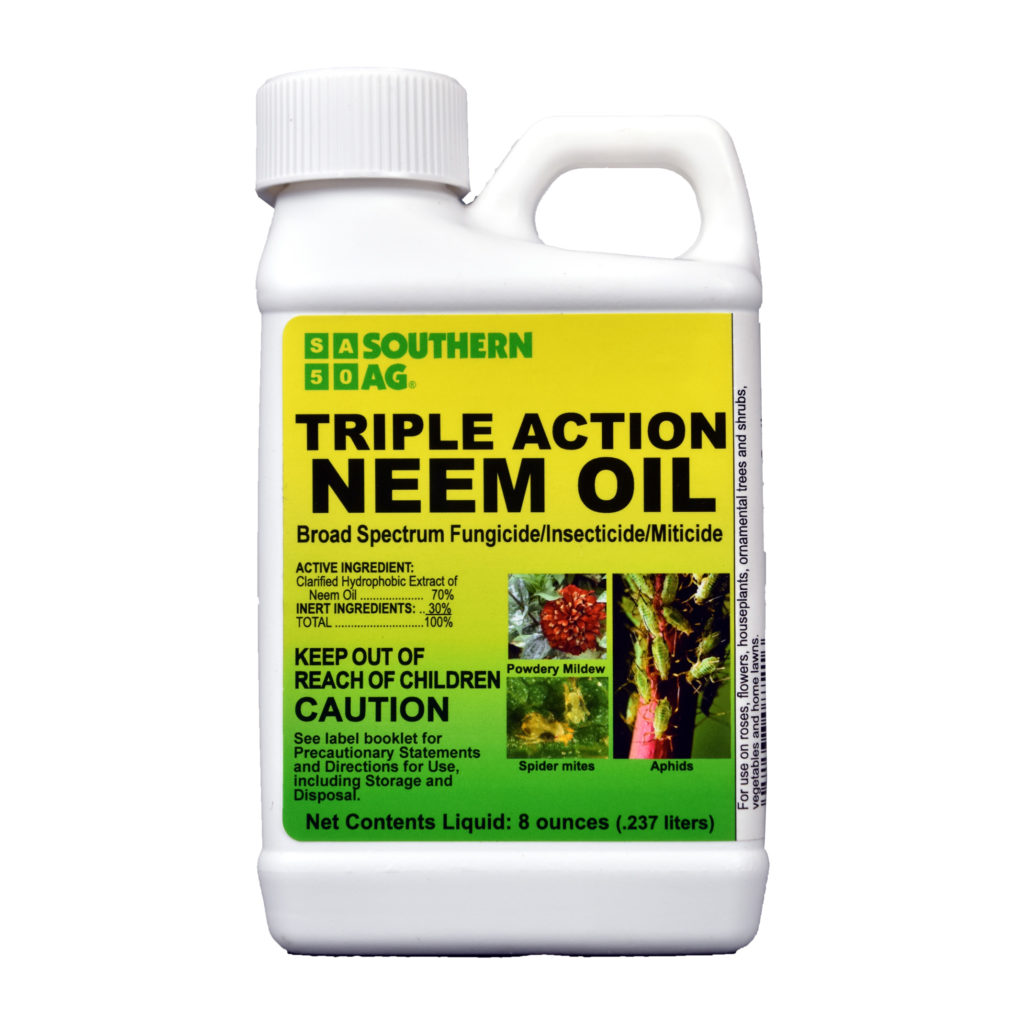
Southern Ag Triple Action Neem Oil Fungicide/Insecticide/Miticide delivers broad-spectrum control to help protect indoor and outdoor ornamental plants. Formulated with 70% clarified hydrophobic extract of neem oil, it targets common fungal diseases like powdery mildew and black spot as well as pests including aphids, spider mites, scale, and whiteflies. Thoroughly spray all plant surfaces for best results, mixing frequently during application.
What “Chemical” or “Synthetic” Means in Pest Control
Synthetic pesticides are manufactured compounds designed to kill or repel pest organisms. The major classes relevant to homeowners are pyrethroids (bifenthrin, permethrin, lambda-cyhalothrin), organophosphates (malathion, acephate), carbamates (carbaryl, marketed as Sevin), neonicotinoids (imidacloprid, clothianidin), and insect growth regulators (methoprene, pyriproxyfen). Each class has a distinct mode of action, a specific risk profile for non-target species, and a different residual activity period.
Synthetic pesticides generally offer longer residual activity than organic alternatives, which reduces the frequency of reapplication needed to maintain control. They also tend to be registered for a broader range of pest species on a single label, which makes them more versatile for homeowners managing multiple pest types. The tradeoff is a higher potential for harm to pollinators and beneficial insects if applied without attention to timing, temperature, and proximity to flowering plants.
Side-by-Side Comparison
| Factor | Organic | Synthetic |
|---|---|---|
| Residual activity | Low to moderate | Moderate to high |
| Beneficial insect impact | Variable (pyrethrin: high; soap: low) | Variable (pyrethroid: high; IGR: low) |
| Re-entry interval | Usually short | Varies by product |
| Application frequency | Higher (shorter residual) | Lower (longer residual) |
| OMRI listed | Yes (where applicable) | No |
| Signal word | CAUTION to WARNING common | CAUTION to DANGER depending on class |
| Resistance development | Lower risk | Higher risk |
| Cost per application | Moderate | Low to moderate |
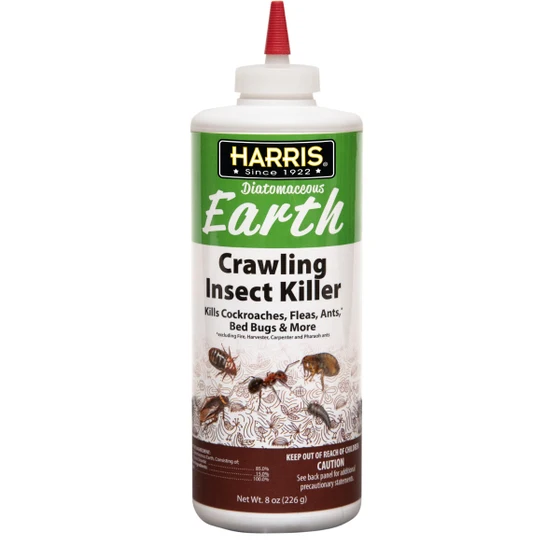
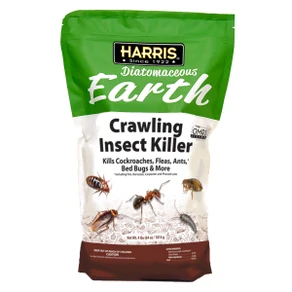
Harris Diatomaceous Earth Crawling Insect Killer is a ready-to-use 100% natural dust that targets crawling pests including ants, roaches, bed bugs, and fleas. Insects that contact or ingest the powder die within 48 hours when applied in cracks, crevices, and other hiding areas. Suitable for indoor and outdoor use with a powder duster included for easy application.
HARRIS Food Grade Diatomaceous Earth is made from 100% ground freshwater diatomaceous earth with no additives or fillers, making it suitable for food-grade use. It comes with a powder duster for easy, efficient application on animal feed. OMRI listed, and Harris supports the local Etowah Valley Humane Society with a portion of profits.
Organic Pest Control Options Explained
Neem oil contains azadirachtin as its primary active ingredient, which disrupts insect hormone systems and interferes with feeding and molting. It is most effective against soft-bodied pests in immature life stages, including aphids, whiteflies, spider mites, and scale crawlers. Neem oil requires thorough canopy coverage and loses efficacy quickly after application, with a residual period of approximately one to three days. It is relatively safe for bees when applied in the evening after foraging activity has stopped and has dried before morning activity resumes.
Insecticidal soap works by penetrating the cuticle of soft-bodied insects and disrupting cell membrane integrity on direct contact. It has no residual activity, which is both a limitation and an advantage: there is no lasting toxic load in the environment, but the pest must be wet with the solution at the time of application. Insecticidal soap is most effective against aphids, mites, mealybugs, and soft scale, and it requires multiple applications at three to five day intervals to address newly hatched generations.
Pyrethrin is extracted from chrysanthemum flowers and is a fast-acting broad-spectrum contact insecticide. It kills on contact and degrades rapidly in sunlight, typically within one to two days. The speed and short residual make it useful for quick knockdown situations, but its broad-spectrum activity means it is non-selective and will harm beneficial insects in the treatment area. Never apply pyrethrin to flowering plants when pollinators are active.
Spinosad is derived from a soil bacterium and is highly effective against caterpillars, thrips, and leafminers. It has a low mammalian toxicity, a moderate residual of approximately three to seven days, and is significantly less harmful to beneficial insects than pyrethrin, though it is moderately toxic to bees for the first few hours after application.
Diatomaceous earth functions mechanically rather than biochemically: the fine particles damage the exoskeleton of crawling insects and cause dehydration. It has no residual loss from biochemical degradation but loses effectiveness when wet and must be reapplied after rain. The impact of diatomaceous earth on beneficial insects is addressed in detail in our diatomaceous earth and beneficial insects guide.
Synthetic Pest Control Options Explained
Pyrethroids (bifenthrin, permethrin) are synthetic analogs of pyrethrin with significantly longer residual activity, typically two to four weeks on treated surfaces. They are highly effective for perimeter treatments, ant control, and broad-spectrum yard spraying. They are also highly toxic to bees, aquatic organisms, and beneficial insects, and should never be applied near water features, flowering plants, or compost areas with active beneficial insects.
Carbaryl (Sevin) is a carbamate insecticide with broad-spectrum contact activity and a moderate residual. It is registered for a very wide range of pests and is commonly used for Japanese beetle control, caterpillar control, and perimeter pest exclusion. It is toxic to bees and should not be applied to flowering plants. Correct application rates and safety precautions are covered in our how to use Sevin dust guide.
Neonicotinoids (imidacloprid) are systemic insecticides absorbed by plant tissue and translocated to all parts of the plant, including pollen and nectar. This systemic activity makes them highly effective for soil drench applications targeting root pests, including grubs, and for trunk injection against wood-boring beetles. However, systemic uptake into pollen and nectar is a documented pathway for harm to bees and other pollinators, and neonicotinoids should not be used as foliar sprays on flowering plants or applied to the soil around plants with open flowers.
Insect growth regulators (methoprene, pyriproxyfen) disrupt insect development by mimicking juvenile hormones, preventing larvae from maturing into reproductive adults. They are highly effective for flea control in carpets and lawns and are among the safest synthetic options for beneficial insects because their mode of action targets insect-specific hormonal pathways. IGRs are most often used in combination with an adulticide rather than as standalone treatments.
When Organic Is the Right Choice
Organic pest control is the appropriate first choice when the pest is a soft-bodied species susceptible to low-residual contact treatments, when the treatment environment includes flowering plants with active pollinator activity, when children and pets will be in the treated area within 24 hours, when the treatment area is adjacent to water or compost systems, and when the goal is to manage rather than eliminate a pest population while preserving its natural enemies.
Organic options are also the required choice for certified organic food production, and they are strongly preferred for any pest management in a compost pile, where preserving the beneficial microorganism populations that drive decomposition is essential. Managing pests in a compost pile requires organic-only methods, and the broader framework for choosing between organic and chemical pest control in a composting context is addressed in our organic vs chemical pest control integration with composting.
When Synthetic Is the Right Choice
Synthetic pest control is appropriate when an organic product cannot deliver sufficient residual activity to break the pest’s reproductive cycle, when the infestation is beyond the threshold manageable by contact treatments alone, when a systemic product is needed to protect root systems from soil-dwelling larvae, and when speed of knockdown matters more than residual ecological impact.
When pest control products and herbicides are applied to the same lawn area in the same season, understanding label restrictions and re-entry intervals for both product types becomes critical. The weed control application framework that governs timing and product selection on lawns, including how it interacts with insecticide applications, is covered in our lawn weed control guide.
Reading a Pesticide Label Correctly
Every pesticide label is a legal document, and the label’s instructions are federal law under the Federal Insecticide, Fungicide, and Rodenticide Act, FIFRA. The signal word indicates acute toxicity: CAUTION indicates low acute hazard, WARNING indicates moderate acute hazard, and DANGER indicates high acute hazard or corrosivity. The active ingredient listing identifies the compound responsible for pest control. The mode of action group number, often listed as a IRAC or FRAC code, is the key to resistance management and tells you which chemical class the product belongs to so you can rotate to a different class when retreating.
The application rate on the label is not a minimum: it is the rate at which the product was registered as effective and safe. Applying more does not improve efficacy and increases the risk of phytotoxicity, non-target harm, and legal liability. Applying less risks ineffective treatment and contributes to resistance development.