
Does Diatomaceous Earth Kill Beneficial Insects?
Diatomaceous earth does kill beneficial insects, and this fact is important to understand before applying it in any garden or lawn setting where natural pest predators are active. Diatomaceous earth is a mechanical insecticide: a powder made from the fossilized silica shells of microscopic algae called diatoms. When an insect crawls through it, the sharp microscopic particles pierce and abrade the waxy cuticle that protects the insect’s body, causing moisture loss and eventually death by dehydration. This mechanism is entirely non-selective: it damages the cuticle of any soft-bodied arthropod that makes contact with the powder, whether that arthropod is a garden pest or a beneficial predatory insect.
How Diatomaceous Earth Works
The dehydration mechanism that makes diatomaceous earth effective requires physical contact between the powder and the insect’s exoskeleton. Unlike chemical insecticides that work systemically or through vapor action, diatomaceous earth has no activity against insects that do not walk through the treated surface or are not directly dusted. This is relevant to beneficial insect risk: insects that forage above the treated surface, such as honeybees visiting flowers, face very little risk from a properly applied soil or ground-level application. Insects that move along the same surfaces where the powder is applied face the same exposure risk as the target pest.
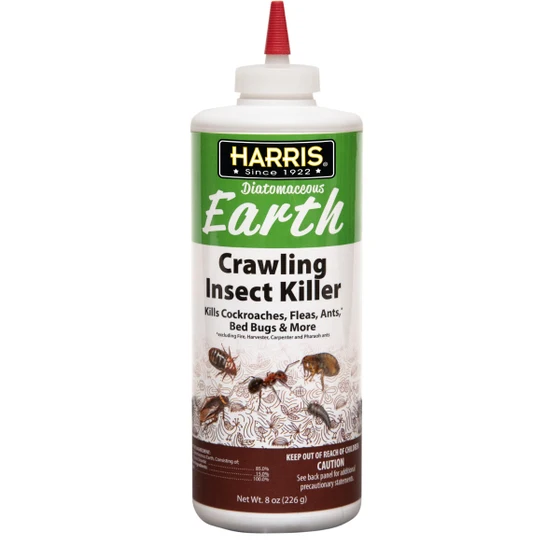
Harris Diatomaceous Earth Crawling Insect Killer is a ready-to-use 100% natural dust that targets crawling pests including ants, roaches, bed bugs, and fleas. Insects that contact or ingest the powder die within 48 hours when applied in cracks, crevices, and other hiding areas. Suitable for indoor and outdoor use with a powder duster included for easy application.
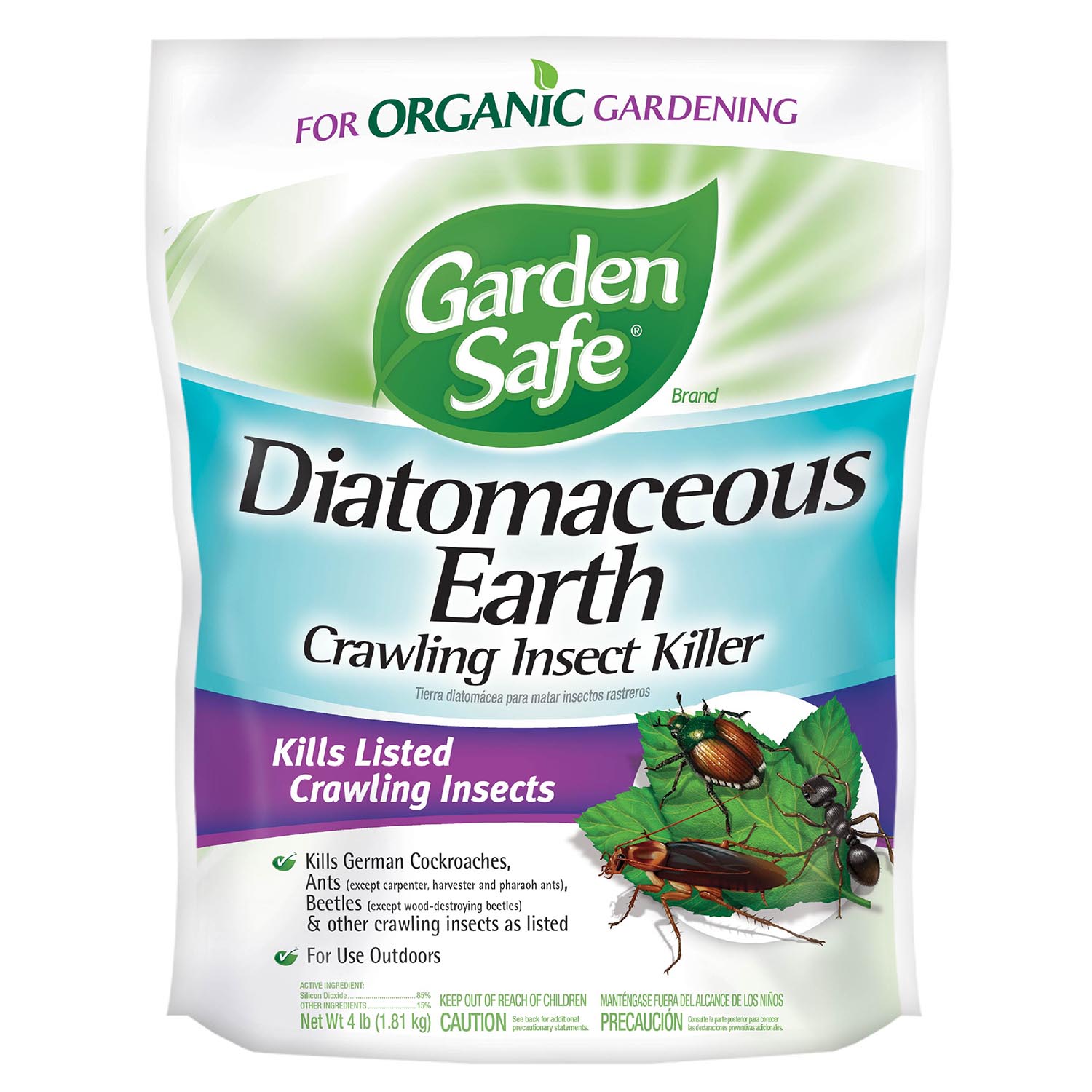
Garden Safe diatomaceous earth-based crawling insect killer provides organic, long-lasting control for listed pests. It kills German cockroaches, ants, beetles, fleas, mealybugs, and other crawling insects by contact by coating their exoskeletons and drying them out. Apply a thin powdery layer outdoors on plants and surrounding soil, and use indoors for crawling insect control as directed.
Harris Diatomaceous Earth powder provides thorough bed bug treatment, including hard-to-reach areas, with simple application using the included puffer tip. Bed bugs that contact the powder die within 48 hours, and the dry powder continues killing for weeks for extended residual protection. It is EPA registered for use in homes with people and pets and is also OMRI listed for organic mineral use.
Which Beneficial Insects Are Most at Risk
Ground-dwelling beneficial insects face the highest risk from diatomaceous earth applications, particularly when it is applied broadly to garden beds or lawn areas as a general deterrent. The most commonly affected beneficial groups are as follows.
Ground beetles (Carabidae) are among the most valuable pest predators in any garden. They are active nocturnal hunters that consume soil-dwelling pest larvae, including cutworms, root maggots, and small grubs. A broad diatomaceous earth application to the soil surface in a garden bed will kill ground beetles crossing the treated area.
Predatory mites such as Phytoseiulus persimilis and Neoseiulus californicus are used commercially and released by homeowners to control spider mite infestations. They are small enough that a light dusting can be lethal, and they are destroyed by the same surface applications intended to control their prey.
Parasitic wasps, many of which are extremely small, can be harmed by diatomaceous earth dusted onto plant foliage where they search for aphid or caterpillar hosts. The smaller the wasp, the greater the relative surface area exposed to the powder and the higher the risk.
Ladybugs (Coccinellidae) and lacewings are somewhat less vulnerable due to their larger size and harder wing covers, but they are still at risk if they walk through heavily dusted areas or if the powder contacts their soft abdominal undersides.
Honeybees and bumble bees are at lower risk from soil and ground-level applications but are at risk if diatomaceous earth is dusted directly onto flowering plants where they forage. Pollen covered in diatomaceous earth particles can contaminate the bee bread stored in the hive, and direct contact with dusted flowers damages the bee’s body in the same way it damages pest insects.
How to Apply Diatomaceous Earth With Minimal Impact on Beneficial Insects
Targeted application is the most effective strategy for preserving beneficial insects while still using diatomaceous earth against crawling pests. Rather than broadcasting DE across a whole garden bed, apply it as a barrier at specific pest entry points: around the base of individual plants being targeted by slugs, in a ring around susceptible seedlings, along the edges of raised beds, or directly into cracks and crevices where crawling indoor pests are known to travel.
Apply diatomaceous earth in dry conditions and replace it after rain, because wet DE is ineffective and a fresh dry application is more targeted than trying to reactivate a wet layer. Apply it in the evening when possible, after foraging bee activity has ended and before nocturnal beneficial insects such as ground beetles are most active. This timing does not eliminate the risk to nocturnal beneficials but reduces the peak exposure of daytime-foraging species.
Never dust diatomaceous earth directly onto flowering plants, onto compost materials, or onto soil areas where beneficial nematode applications have been made, as DE will dehydrate nematodes as effectively as it dehydrates pest insects.
Food-Grade vs Pool-Grade: Which to Use in the Garden
Food-grade diatomaceous earth is produced from freshwater diatom deposits and has not been chemically processed beyond drying and milling. It is the appropriate choice for garden and pest control applications and is non-toxic to mammals when used as directed. Pool-grade diatomaceous earth, also called filter-grade, has been heated to very high temperatures through a process called calcination, which converts the amorphous silica to crystalline silica. Crystalline silica is a respiratory hazard, and pool-grade DE should never be used in the garden or in any indoor pest control application. Always verify that the product label states food-grade or OMRI listed before purchasing diatomaceous earth for pest control.
When to Choose an Alternative to Diatomaceous Earth
Diatomaceous earth is most appropriate when the target pest is a crawling species in a location where beneficial insects are not highly active, when you want a residual physical barrier rather than a contact chemical treatment, and when the treatment area is accessible for reapplication after rain. It is a poor choice as a broad-spectrum garden treatment where predatory beetles, parasitic wasps, and other ground-level beneficials are present and actively suppressing pest populations.
For situations where preserving beneficial insects is the priority and the target pest is a soft-bodied foliar species, insecticidal soap or neem oil are more targeted alternatives. The comparison of those two options is covered in our insecticidal soap vs neem oil guide. For product recommendations, see our best diatomaceous earth guide.