
Best Diatomaceous Earth for Pest Control
Diatomaceous earth is one of the most versatile physical pest control tools available to homeowners, but the difference between a product that works and one that poses a respiratory hazard comes down to a single label distinction: food-grade versus filter-grade. This guide cuts through the noise, explains what separates a quality DE product from a poor one, and identifies the best options for crawling insect control in homes, gardens, and around structures.
What to Look for in a Diatomaceous Earth Product
Food-grade certification is the first and most important criterion. Food-grade diatomaceous earth is milled from freshwater diatom deposits and contains amorphous silica, which is non-toxic when inhaled in the quantities encountered during normal application. Filter-grade (pool-grade) DE has been calcined, or heat-treated, to convert amorphous silica to crystalline silica, which is a classified respiratory hazard. The label must state food-grade, OMRI listed, or EPA registered for pest control use. If the label only says “diatomaceous earth” without one of those designations, do not use it in a pest control or garden application.
Particle size and milling consistency affect both efficacy and dust behavior. Finely milled DE adheres better to surfaces and insect cuticles, improving contact kill rates. Products with inconsistent milling, including visible chunks or coarse fragments alongside fine powder, are less effective as barrier treatments.
Moisture content matters because DE loses its desiccating properties when wet. Fresh, dry product in a sealed container is more effective than product that has been stored in a damp environment. Look for products in resealable bags or containers with moisture barriers.
Application format should match your primary use case. A loose powder product in a bag is most economical for large-area outdoor applications. A powder duster or puffer bottle format is more precise for indoor crack-and-crevice applications and for applying around individual plants. Some products come pre-loaded in squeeze duster bottles, which are worth the small premium for indoor use where precision matters.
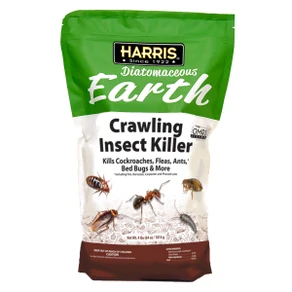
HARRIS Food Grade Diatomaceous Earth is made from 100% ground freshwater diatomaceous earth with no additives or fillers, making it suitable for food-grade use. It comes with a powder duster for easy, efficient application on animal feed. OMRI listed, and Harris supports the local Etowah Valley Humane Society with a portion of profits.
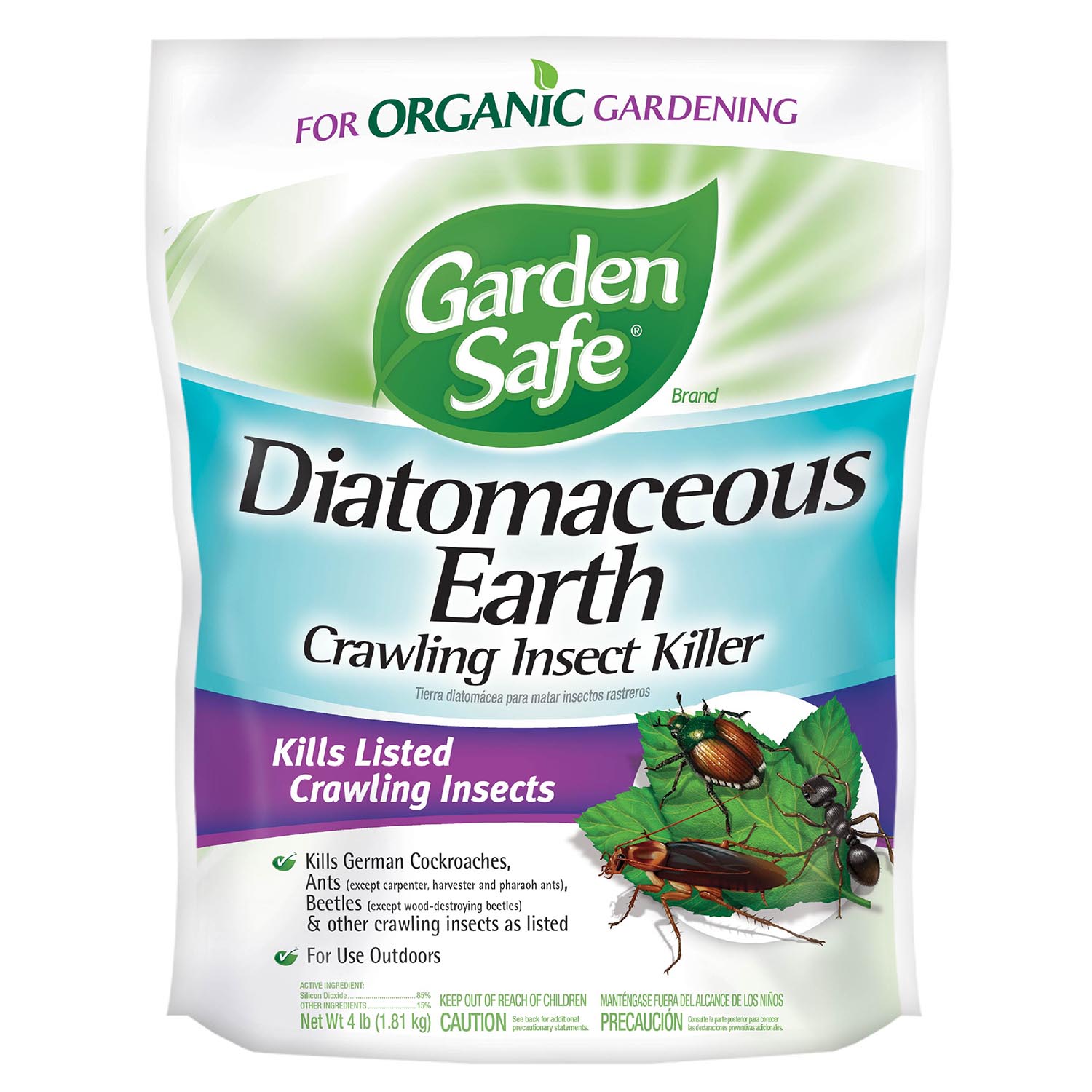
Garden Safe diatomaceous earth-based crawling insect killer provides organic, long-lasting control for listed pests. It kills German cockroaches, ants, beetles, fleas, mealybugs, and other crawling insects by contact by coating their exoskeletons and drying them out. Apply a thin powdery layer outdoors on plants and surrounding soil, and use indoors for crawling insect control as directed.
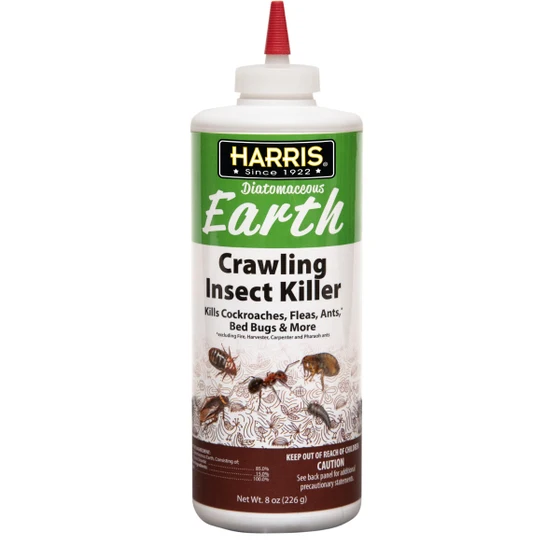
Harris Diatomaceous Earth Crawling Insect Killer is a ready-to-use 100% natural dust that targets crawling pests including ants, roaches, bed bugs, and fleas. Insects that contact or ingest the powder die within 48 hours when applied in cracks, crevices, and other hiding areas. Suitable for indoor and outdoor use with a powder duster included for easy application.
Top Products for Homeowners
Harris Diatomaceous Earth Food Grade
Harris is one of the most widely available and consistently reviewed food-grade DE products in the homeowner market. The 4 lb and 10 lb bags carry EPA registration and include a powder duster applicator, which makes them the best value format for homeowners who want a single product for both indoor crack-and-crevice applications and outdoor garden barrier use. The milling consistency is good, and the food-grade certification is clearly stated on the label. Suitable for crawling insect control including ants, cockroaches, silverfish, and slugs along garden bed edges.
Safer Brand Diatomaceous Earth Powder
Safer Brand is an established OMRI listed brand with a consistent product quality record across their organic pest control line. Their DE product is food-grade and registered for a broad range of crawling insects. It is available in smaller quantities than Harris, which makes it a practical option for homeowners with limited storage space or who need DE for a specific, contained application rather than large-area coverage.
Flex Products FLX10401 Pest Control Insect Killer
This product is specifically marketed for indoor applications and comes in a pre-charged puffer applicator for crack-and-crevice application. The food-grade formulation and applicator format make it well suited for treating baseboards, wall penetrations, under appliances, and other indoor pest harborage locations without creating excessive airborne dust. It is a good choice when precision indoor application is the primary need.
Application Equipment Worth Buying Separately
A dedicated powder duster is one of the most useful pest control equipment purchases a homeowner can make. A bellows-style hand duster with an extension tube allows controlled application in tight spaces, under appliances, and around foundation perimeters without getting product on your skin or creating unnecessary dust clouds. The extension tube is essential for applying DE into crawl space voids, under deck boards, and along foundation cracks where a direct application would be difficult. The Bellows Hand Duster by Dustin-Mizer and the JT Eaton Hi-Power Duster are both solid options at a practical price point for homeowners.
Harris Diatomaceous Earth powder provides thorough bed bug treatment, including hard-to-reach areas, with simple application using the included puffer tip. Bed bugs that...
How Much to Buy
For indoor crack-and-crevice applications in a typical house, a 2 to 4 lb bag provides enough material for a thorough treatment of baseboards, under appliances, and entry points. For outdoor garden barrier use around raised beds or along foundation perimeters, a 10 lb bag is more practical. DE is stable in dry storage for years if kept sealed, so buying a larger quantity when the price per pound is lower is a reasonable approach if you have dry storage available.
How to Apply for Best Results
Apply DE as a thin, barely visible layer rather than a thick pile. A heavy layer does not work better than a thin one, and thick applications are more likely to be avoided by insects walking around the treated area rather than through it. For barrier applications around garden beds or along foundations, apply in a continuous band about three to four inches wide. Reapply after rain, as wet DE is completely ineffective and must dry and be replaced to restore its barrier function.
For more detail on safe application practices and the impact of DE on beneficial insects, see our diatomaceous earth and beneficial insects guide.