
Integrated Pest Management for Home Gardens and Lawns
Integrated pest management, commonly abbreviated as IPM, is the decision-making framework that treats pest control as a structured process rather than an automatic response to any pest sighting. Developed initially for commercial agriculture and adapted extensively for residential use by university extension services across the United States, IPM operates on a core principle: a pest is only a problem when its population exceeds the threshold at which the expected damage outweighs the cost and disruption of treatment. Below that threshold, the pest and the damage it causes are tolerable, and applying a pesticide introduces more disruption than the pest itself would have caused.
For homeowners, IPM translates into a four-step process: identify the pest accurately, monitor its population and the damage it is causing, compare observed conditions against an established action threshold, and choose the least disruptive effective treatment when that threshold is reached.
Step 1: Accurate Pest Identification
Accurate identification is the non-negotiable first step in any IPM program, and skipping it is the most common reason homeowner pest control attempts fail. The treatment that is highly effective against aphids will do nothing for spider mites because mites are arachnids and require a different active ingredient class. An insecticide applied to a fungal disease problem eliminates nothing. A bait formulation placed for sugar ants will not attract carpenter ants because the two species have entirely different food preferences.
Key identification factors to establish: the pest’s body plan (six legs indicates an insect; eight legs indicates an arachnid), its feeding behavior (chewing versus piercing-sucking), the type of damage visible, whether the pest is targeting foliage, roots, wood, or stored products, and the time of year the pest is active. Most university cooperative extension services publish free identification resources organized by plant host and damage type, and these are the most reliable starting points.
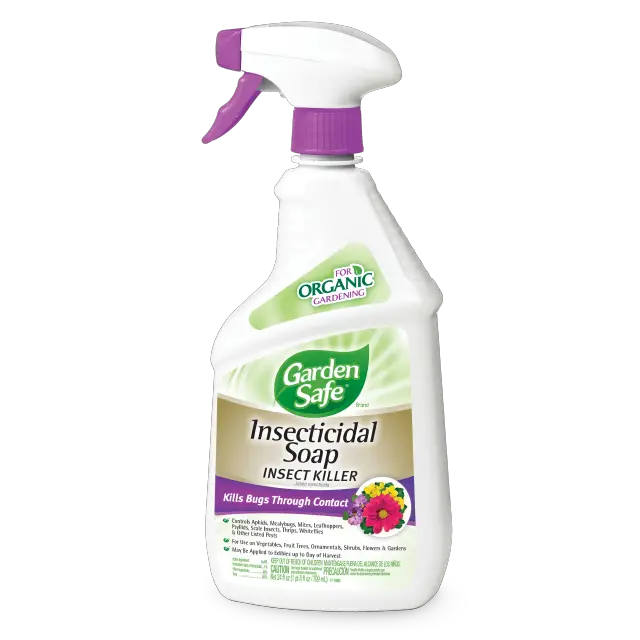
Garden Safe insecticidal soap is a ready-to-use contact spray that kills listed garden pests when sprayed directly on them. It’s formulated for organic gardening and can be used on vegetables, fruit trees, ornamentals, shrubs, flowers, and in indoor, outdoor, and greenhouse applications. For convenience, it may be applied to edibles up to and including the day of harvest.
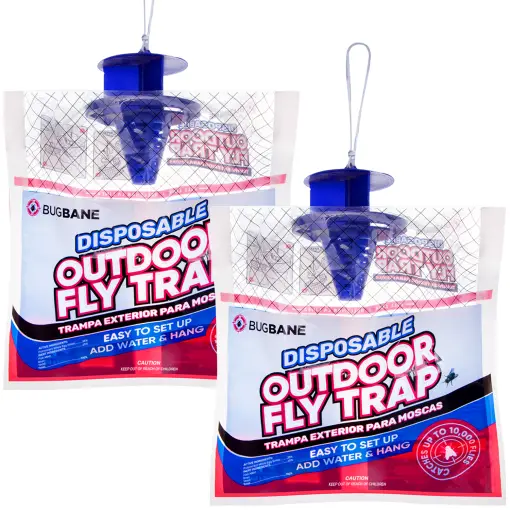
Discreetly draw flies away from your home with disposable outdoor hanging fly trap bags. The non-toxic bait is safe for kids and pets, activates with water, and attracts filth flies quickly using odor plus a visual lure. Hang the trap about 20 feet from your home, then dispose in outdoor trash for easy cleanup.
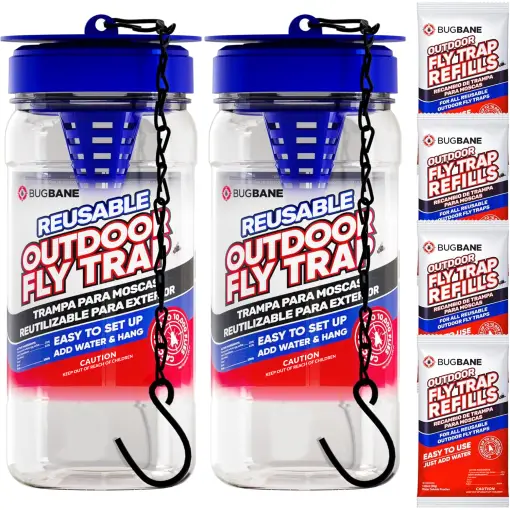
This 2-pack outdoor hanging fly trap helps discreetly draw flies away when placed about 20 feet from your home. The non-toxic, dissolvable bait releases an attractant odor and blue visual lure to quickly attract filth flies, including house and ranch flies. The reusable thick plastic trap is easy to set up with water fill and includes multiple bait refill packets for ongoing outdoor control.
Step 2: Monitoring and Scouting
Monitoring means observing pest populations systematically over time rather than treating at the first sign of a pest. The scouting process involves making regular inspections of plants, lawn areas, and structures, recording what you find, and tracking whether populations are increasing, stable, or declining. Sticky traps, pheromone traps, and yellow sticky cards are practical monitoring tools for flying insects and some crawling pests. For soil pests such as grubs, a turf sample method, cutting a square foot of sod and counting larvae, gives a direct population density estimate.
Monitoring also means watching for the presence and activity of beneficial insects in the same area. A garden with active populations of ladybugs, lacewings, parasitic wasps, and predatory beetles has a built-in biological control network that will regulate many soft-bodied pest populations without any intervention. Applying a broad-spectrum insecticide before that natural system has a chance to act destroys the very predators that would have resolved the problem for free.
Step 3: Establishing an Action Threshold
An action threshold is the pest population level or damage level at which the cost and disruption of treatment is justified by the expected reduction in damage. Thresholds are pest-specific and context-specific. A few aphids on a rose bush are not an action threshold event. A dense colony covering new growth tips and distorting leaves is. Three or four grubs per square foot of lawn are within a tolerable range for healthy, well-established turf. Ten or more grubs per square foot in a lawn already stressed by drought represents a threshold that warrants treatment.
Thresholds are also influenced by the setting. A home vegetable garden where you are growing food for your family has a lower damage tolerance than an ornamental bed. A lawn used daily by children and pets may have different priorities than a low-traffic utility lawn. Setting realistic, context-appropriate thresholds prevents both under-treatment, where damage accumulates beyond recovery, and over-treatment, where pesticides are applied to populations that would never have caused meaningful harm.
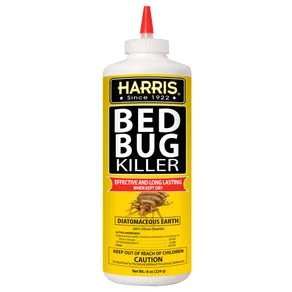
Harris Diatomaceous Earth powder provides thorough bed bug treatment, including hard-to-reach areas, with simple application using the included puffer tip. Bed bugs that contact the powder die within 48 hours, and the dry powder continues killing for weeks for extended residual protection. It is EPA registered for use in homes with people and pets and is also OMRI listed for organic mineral use.
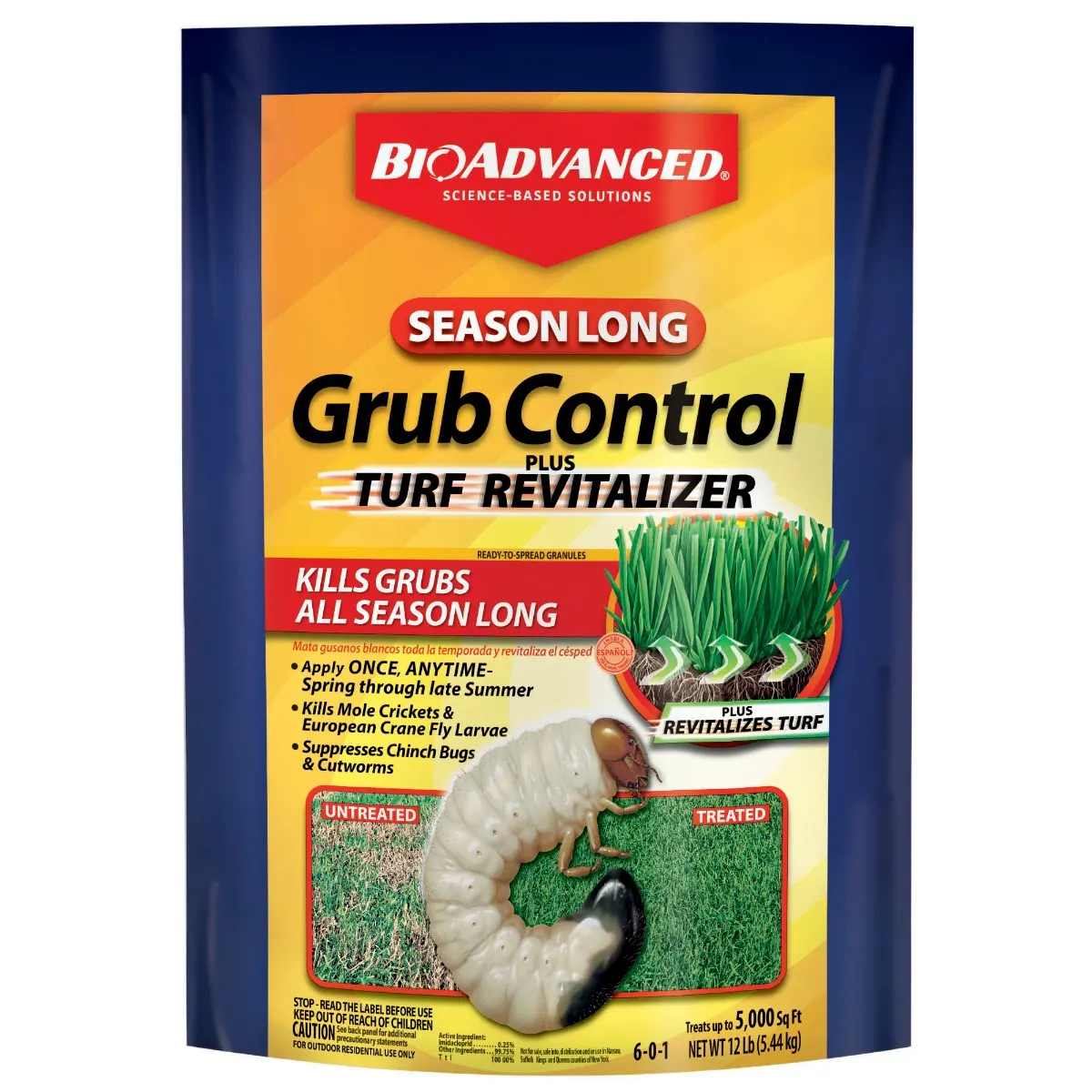
BioAdvanced Season-Long Grub Control Plus Turf Revitalizer is a 2-in-1 granule formula that kills lawn grubs while helping promote strong roots and thicker turf. Apply at the first sign of grubs for season-long protection and continued damage prevention. Coverage reaches up to 5,000 sq ft, and it also targets pests such as mole crickets, European crane fly larvae, and billbugs.
Step 4: Choosing the Least Disruptive Effective Treatment
The treatment hierarchy in IPM moves from least disruptive to most disruptive, and treatment selection always begins at the lowest level that can realistically achieve control given the pest species, the population level, and the treatment environment.
Cultural controls are modifications to growing conditions that reduce pest pressure: adjusting irrigation to avoid the overwatered soil conditions that favor fungus gnats, maintaining proper mowing height to support turf density that resists chinch bug establishment, or removing standing water that provides mosquito breeding habitat.
Mechanical controls include physical removal, exclusion, and trapping: hand-picking caterpillars from plants, applying copper tape barriers against slugs and snails, caulking entry points to exclude indoor pests, or using pheromone traps to monitor and reduce beetle populations.
Biological controls deploy living organisms against the pest: releasing or conserving predatory insects, applying beneficial nematodes to soil to target grubs and other soil larvae, or using Bacillus thuringiensis, known as Bt, as a selective microbial insecticide against caterpillar species. Bt is highly effective against lepidopteran larvae and essentially non-toxic to beneficial insects, birds, and mammals.
Chemical controls are used when the above options are insufficient to hold the pest below the action threshold. Within chemical control, the IPM hierarchy prefers the most selective effective product over the broadest-spectrum option: a targeted aphicide over a general-purpose contact killer, a systemic soil treatment that targets root pests over a foliar spray that would also affect above-ground beneficials.
The full comparison of organic and synthetic chemical control options, including their active ingredients, modes of action, and safety profiles, is covered in our organic vs chemical pest control guide.
Resistance Management
Resistance management is a component of IPM that most homeowners overlook. When the same active ingredient or mode of action is applied repeatedly against the same pest population, individuals that survive due to natural genetic variation pass their resistance traits to offspring. Over several generations, a formerly effective product loses efficacy against that specific population. Rotating active ingredient classes, combining chemical control with biological and cultural methods, and avoiding the routine calendar-based application of pesticides are the primary resistance management strategies available to homeowners.
IPM and Soil Health
Cultural pest prevention and soil health are directly connected. Building soil organic matter through regular compost applications reduces compaction and improves drainage, creating conditions that are less hospitable to root-feeding soil pests. The physical structure of healthy, biologically active soil also supports populations of predatory soil organisms, including ground beetles, rove beetles, and predatory mites, that regulate pest populations from within the soil profile. Building soil organic matter through regular compost applications reduces the conditions that favor root pests and turf-damaging grubs, and the application rates and timing for using compost as a soil health tool are covered in our compost for lawns guide.
IPM and Tree Health
The IPM framework that governs home garden and lawn pest decisions applies equally to tree health management, where the goal is monitoring for early symptoms, using targeted treatments, and preserving the beneficial insects and soil organisms that support tree vigor. The connection between IPM principles and tree disease management is addressed in our pruning and trees guide.
Common IPM Mistakes Homeowners Make
Treating without identifying the pest first is the most costly mistake, both in money spent on ineffective products and in damage to beneficial insect populations. Applying pesticides on a calendar schedule regardless of observed pest levels is the second most common error: routine applications are the opposite of IPM. Treating the whole garden when the problem is localized to one plant or bed wastes product and maximizes non-target impact. And using broad-spectrum contact insecticides as a first response rather than a last resort eliminates the natural enemies that would otherwise keep secondary pest populations in check.
IPM is not a softer or slower approach to pest control. When applied correctly, it is more effective than routine spraying because it targets the right pest at the right life stage with the right tool, rather than applying maximum-disruption chemistry to every pest sighting regardless of context.