
Engine Maintenance and Fuel for Outdoor Power Tools
Gas-powered outdoor tools require a small but consistent set of maintenance inputs to run reliably season after season. Fuel grade, oil type, two-stroke mix ratio, fuel stabilizer use, and annual end-of-season storage procedures are the variables that determine whether a mower, trimmer, or blower starts cleanly in spring and lasts through many years of use. This hub covers all of them with practical, equipment-specific guidance for homeowners managing a typical residential tool collection.
Two-Stroke vs Four-Stroke: The Fundamental Distinction
The most important engine maintenance decision is understanding which type of engine the tool runs, because two-stroke and four-stroke engines require completely different fueling approaches. Two-stroke engines power most string trimmers, handheld and backpack leaf blowers, and some small tillers. They have no separate oil reservoir: the engine lubrication comes from oil that is pre-mixed directly into the gasoline before fueling. Four-stroke engines power most walk-behind and riding lawn mowers and some larger tillers. They use straight gasoline in the fuel tank and have a separate oil sump that is checked and changed on its own service schedule.
Fueling a two-stroke engine with unmixed gasoline causes it to run without lubrication and leads to rapid cylinder and piston wear. Fueling a four-stroke engine with pre-mixed two-stroke fuel adds oil to the combustion chamber, produces heavy smoke, and fouls the spark plug. Getting this distinction right is the starting point for every other fuel and maintenance decision in this hub.
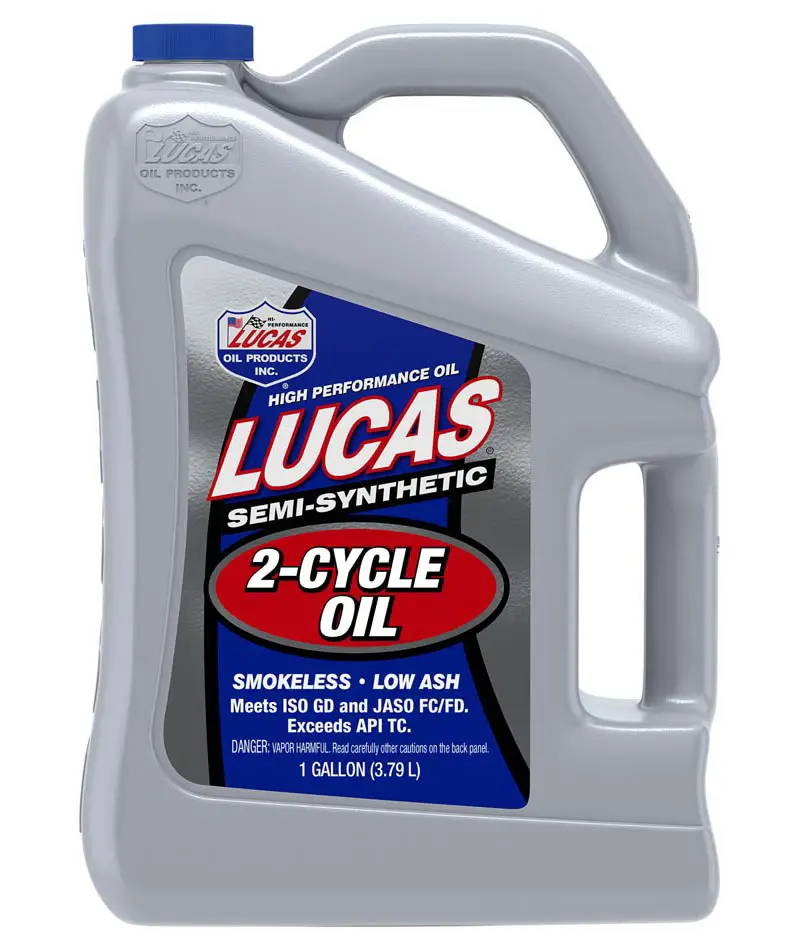
Lucas Oil High Performance semi-synthetic 2-cycle motor oil is specially formulated for oil injection systems or premix ratios up to 50:1. Its advanced smokeless formula with low-ash additives helps deliver cleaner burning, reducing emissions and improving power. An ashless detergent inhibitor package helps minimize spark plug fouling and combustion deposits for cleaner exhaust ports and long trouble-free engine life.

Husqvarna XP+ 2-stroke oil is engineered to maximize performance in all Husqvarna 2-stroke engines. It’s JASO-FD certified with a low-smoke, low operating temperature formulation to help maintain engine protection. The semi-synthetic blend includes fuel stabilizer for improved consistency during use and storage.
The NO-SPILL 2-1/2 gal Gas Can makes fueling cleaner and more controlled with a thumb button that starts and stops flow instantly. A 7/8-inch funnel spout with an attached dust cover helps fill small equipment while keeping the spout clean. The integrated 20 mesh stainless steel screen and auto-stop feature cut off fuel before overflow to reduce mess and accidental spills.
Gas Type for Four-Stroke Mower Engines
Most residential walk-behind and riding lawn mowers run four-stroke engines that accept regular 87 octane unleaded gasoline. Ethanol content is the more important variable: most small engine manufacturers recommend fuel with no more than 10% ethanol (E10) and advise against E15 or E85, which can degrade fuel system components including the carburetor, gaskets, and fuel lines faster than E10. The gas type guide for lawn mowers covers octane rating, ethanol blends, and the case for ethanol-free fuel for equipment that sits unused for long periods.
Oil Viscosity: SAE 30 vs 10W-30
Four-stroke mower engines typically specify either SAE 30 or 10W-30 engine oil depending on the operating temperature range the manufacturer expects. SAE 30 is a single-grade oil suited to warm weather use above 40 degrees Fahrenheit. 10W-30 is a multigrade oil that flows better at low temperatures and provides more reliable startup lubrication through a wider temperature range, making it the practical default for most homeowners who use their mower in variable spring and fall conditions. The SAE 30 vs 10W-30 comparison covers which to use for a given climate, engine type, and operating season.

Pit Posse PP3318 is a racing utility measuring cup designed to mix 2-stroke oil and other engine fluids to accurate ratios. It features readable CC and ounce marks plus a 16:1 to 70:1 premix scale to remove guesswork and help you add the right amount quickly. A durable polyurethane jug with a debris-preventing cap and spill-resistant lid helps keep mixtures clean and easier to stir or shake for an even blend.
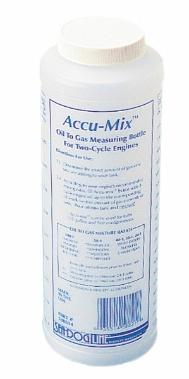
Sea Dog Accu-Mix helps you accurately measure the correct oil-to-gas mixture for 2-cycle engines. The see-through bottle shows multiple mix ratios, including 24:1, 33:1, 40:1, 50:1, and 100:1, so you can measure in both liters and gallons. This reduces guesswork and helps ensure your crew mixes fuel correctly every time.
Two-Stroke Fuel Mix Ratios
Two-stroke engines require oil to be measured and mixed into the gasoline at a specific ratio before the fuel goes into the tank. The two most common ratios for residential outdoor tools are 40:1 and 50:1. A 40:1 mix contains more oil per volume of gasoline than a 50:1 mix. Using the wrong ratio in either direction affects engine lubrication, exhaust output, and long-term engine wear. The 40:1 vs 50:1 fuel mix guide covers which ratio applies to which tools, how to measure the mix accurately for different container sizes, and what happens when the ratio is off. Readers with a chainsaw will find the same ratios apply: the correct ratio and how to measure it without guesswork are covered in the linked guide, and the chainsaw bar oil guide in the pruning and trees section addresses the separate bar and chain lubrication system.
Fuel Stabilizers
Gasoline degrades when it sits unused. The hydrocarbons in the fuel begin to oxidize and break down within 30 days under typical storage conditions, forming gum and varnish deposits that clog carburetor jets and fuel passages. Fuel stabilizer added to the tank before storage slows this process significantly. The two most widely used fuel stabilizers for outdoor power tools are STA-BIL and Sea Foam, which work by different mechanisms and suit different storage scenarios. The STA-BIL vs Sea Foam comparison covers how each product works, when to use each, and the correct dosage. The companion guide on whether you can use too much fuel stabilizer addresses the common overcautious approach of adding extra stabilizer, and whether over-dosing causes its own problems.
Winterizing Outdoor Power Tools
End-of-season storage preparation is the single maintenance step that most affects how reliably tools start the following spring. Winterization covers draining or stabilizing the fuel system, fogging the cylinder with storage oil, cleaning air filters, checking and replacing the spark plug, and storing the tool in a dry environment. The how to winterize outdoor power tools guide walks through the full procedure for gas mowers, string trimmers, and blowers with clear step-by-step instructions for each tool type.
Carburetor Cleaning
A carburetor that has been exposed to stale fuel develops deposits on the jets and needle that cause starting problems, rough idle, and poor throttle response. Carburetor cleaning restores normal fuel flow without replacing the unit in most cases. The how to clean a lawn mower carburetor guide covers the disassembly sequence, cleaning process using carburetor cleaner spray and a fine wire or needle, and reassembly, with notes on when the deposits are severe enough to warrant a full rebuild kit or replacement.
Spark Plug Replacement
Spark plugs wear gradually and should be inspected annually as part of the seasonal startup routine. A fouled, corroded, or worn plug causes hard starting, misfires, and rough running that is often mistaken for carburetor or fuel problems. Replacing a spark plug is a straightforward task that costs very little and resolves a wide range of starting and running complaints. The spark plug replacement guide covers the correct plug specification for common mower and trimmer engines, the gapping procedure, and the torque used when reinstalling.
Cross-Reference: Lawn Mower Maintenance
Winterization is one step within a broader annual maintenance routine for four-stroke mower engines. The full seasonal maintenance schedule, covering blade sharpening, belt inspection, air filter replacement, and oil change intervals, is covered in the lawn mower maintenance guide in the lawn care section. The engine maintenance hub and the mower maintenance guide work in sequence: fuel and storage preparation is covered here; mechanical inspection and service is covered there.