
STA-BIL vs Sea Foam Fuel Stabilizer: Which Is Better?
STA-BIL and Sea Foam are the two most widely used fuel stabilizer products for outdoor power tools. Both prevent fuel degradation during storage periods when the tool will not be used. They work through different mechanisms and are better suited to different scenarios. The correct choice depends on what the tool needs: pure fuel stabilization before storage, active cleaning of an existing deposit problem, or a treatment that addresses both.
How Gasoline Degrades
Untreated gasoline begins to oxidize and form peroxides within 30 days under typical storage conditions. These breakdown products react further to form gum and varnish, which are sticky, resinous deposits that settle in the carburetor bowl, clog the main jet and needle valve passages, and restrict fuel flow. The carburetor’s small passages are particularly vulnerable because the quantities of gum required to partially block a jet are tiny. A mower that was running perfectly in October can fail to start in April because the fuel that sat in the carburetor bowl all winter has left deposits that block the idle circuit.
Ethanol-blended fuel (E10) degrades faster than ethanol-free fuel because ethanol absorbs water from the air during storage, leading to phase separation where water and ethanol settle to the bottom of the tank, separate from the gasoline.
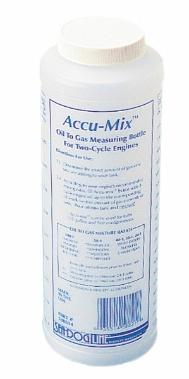
Sea Dog Accu-Mix helps you accurately measure the correct oil-to-gas mixture for 2-cycle engines. The see-through bottle shows multiple mix ratios, including 24:1, 33:1, 40:1, 50:1, and 100:1, so you can measure in both liters and gallons. This reduces guesswork and helps ensure your crew mixes fuel correctly every time.
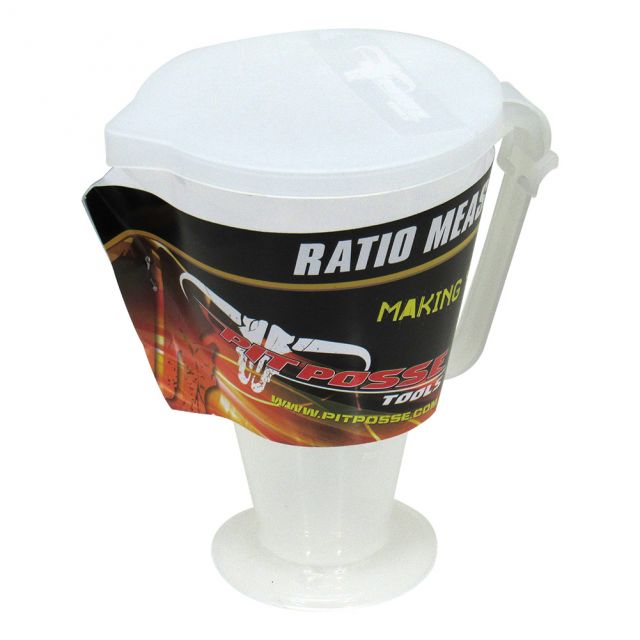
Pit Posse PP3318 is a racing utility measuring cup designed to mix 2-stroke oil and other engine fluids to accurate ratios. It features readable CC and ounce marks plus a 16:1 to 70:1 premix scale to remove guesswork and help you add the right amount quickly. A durable polyurethane jug with a debris-preventing cap and spill-resistant lid helps keep mixtures clean and easier to stir or shake for an even blend.
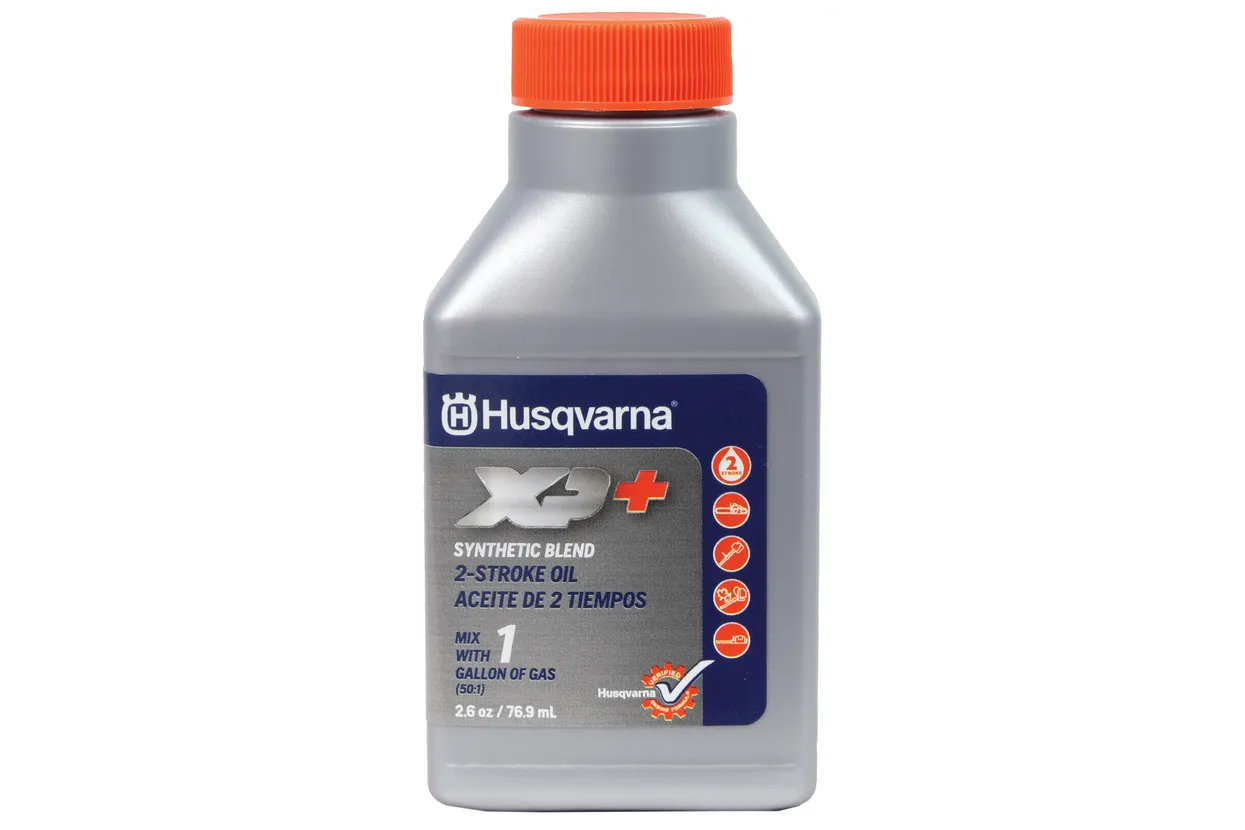
Husqvarna XP+ 2-stroke oil is engineered to maximize performance in all Husqvarna 2-stroke engines. It’s JASO-FD certified with a low-smoke, low operating temperature formulation to help maintain engine protection. The semi-synthetic blend includes fuel stabilizer for improved consistency during use and storage.
How STA-BIL Works
STA-BIL fuel stabilizer works primarily by preventing oxidation of the gasoline through an antioxidant additive package that slows the breakdown reaction. Added at the correct dose to fresh fuel, it keeps the fuel from forming gum and varnish for up to 24 months under ideal storage conditions (cool, dark environment with a sealed tank). STA-BIL is most effective when added to fresh fuel: it slows degradation from the point of addition but does not reverse degradation that has already occurred or dissolve existing gum deposits.
The standard dose for STA-BIL is 1 ounce per 2.5 gallons of fuel. A higher dose (double the standard rate) is recommended by the manufacturer for storage periods exceeding 12 months.
How Sea Foam Works
Sea Foam is a petroleum-based product that functions as both a fuel stabilizer and a cleaning agent. Its active ingredients include petroleum naphtha, isopropyl alcohol, and pale oil. The stabilizing effect preserves fuel against degradation similarly to STA-BIL. The cleaning effect dissolves existing gum, varnish, and carbon deposits in the carburetor and fuel system. Sea Foam can be added to the fuel tank or, in a heavier dose, poured directly into the carburetor bowl before running the engine briefly to clean the carburetor passages.
Sea Foam is the better choice when the tool has been sitting with old fuel and already has some deposit formation, or when an engine is running poorly due to carburetor deposits and the operator wants to attempt a cleaning treatment without disassembling the carburetor. For preventive storage stabilization on a clean, well-maintained engine, STA-BIL and Sea Foam are comparable in effectiveness.
The standard dose for Sea Foam in the fuel tank is 1 ounce per gallon for fuel stabilization and up to 2 ounces per gallon for active cleaning treatment. Higher doses for direct carburetor cleaning are covered in the Sea Foam product instructions.
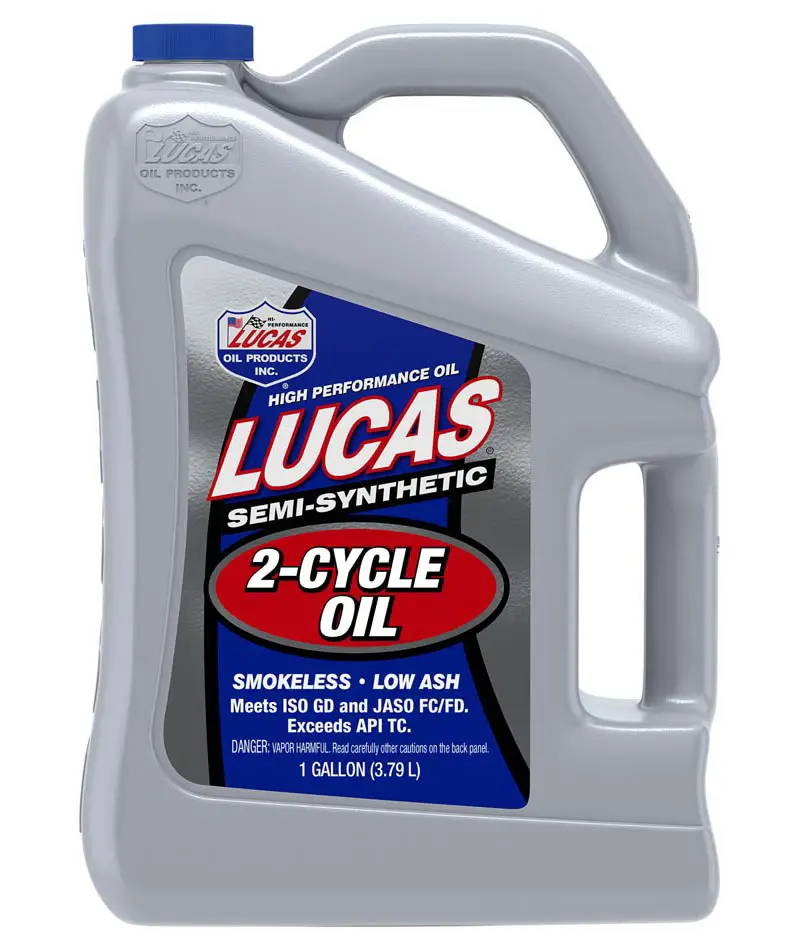
Lucas Oil High Performance semi-synthetic 2-cycle motor oil is specially formulated for oil injection systems or premix ratios up to 50:1. Its advanced smokeless formula with low-ash additives helps deliver cleaner burning, reducing emissions and improving power. An ashless detergent inhibitor package helps minimize spark plug fouling and combustion deposits for cleaner exhaust ports and long trouble-free engine life.
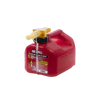
The NO-SPILL 2-1/2 gal Gas Can makes fueling cleaner and more controlled with a thumb button that starts and stops flow instantly. A 7/8-inch funnel spout with an attached dust cover helps fill small equipment while keeping the spout clean. The integrated 20 mesh stainless steel screen and auto-stop feature cut off fuel before overflow to reduce mess and accidental spills.
Which to Use
Use STA-BIL for straightforward preventive fuel stabilization before a planned storage period on an engine with no existing deposit problems. It is slightly less expensive than Sea Foam per ounce for the same stabilization volume and is purpose-built for the storage use case.
Use Sea Foam when the tool has been stored with old or untreated fuel and may have some carburetor deposit accumulation, when the engine is running rough and a fuel system cleaning treatment is the first step before disassembly, or when the buyer wants a single product that handles both storage stabilization and routine cleaning in one application.
The question of whether too much of either product causes problems is covered in the can you use too much fuel stabilizer guide. The full seasonal storage procedure for gas outdoor tools is in the how to winterize outdoor power tools guide.