
Gravel Grid: Types, Uses, and How to Choose the Right System
A gravel grid is a plastic cellular panel system installed beneath a gravel surface to contain the aggregate, prevent displacement, and maintain a stable, even finish over time. Understanding what gravel grids are, which product type suits your application, and how the installation process works will help you decide whether a grid system is worth the investment for your driveway, pathway, patio, or shed base.
What Is a Gravel Grid?
A gravel grid is a modular, interlocking panel made from polypropylene or HDPE plastic, formed into a honeycomb or cellular structure. When laid on a prepared sub-base and filled with gravel, the cells contain individual stones within defined compartments, preventing the lateral migration and surface scatter that causes untreated gravel surfaces to develop ruts, bare patches, and uneven edges over time.
Gravel grids do not change the material itself. The gravel you see and walk or drive on is the same aggregate you would use without a grid. What the grid provides is a structural containment layer beneath the surface that holds each stone roughly in place, distributes load across a wider area, and reduces the depth of aggregate needed to achieve a stable surface.
The term gravel grid covers several distinct product types that work differently and suit different applications. Standard plastic honeycomb grids, geocell systems, and flat geogrid mesh are all sold under the broader gravel grid description, and choosing between them matters significantly for heavy-duty versus light-duty use. The full comparison of product types is in our gravel grid types guide.
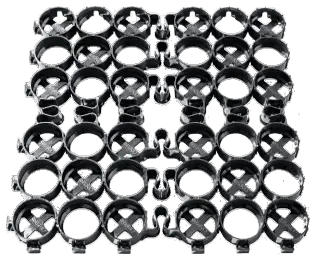
TRUEGRID PRO LITE permeable pavers are lightweight, DIY-friendly driveway and outdoor base pavers that install easily for a variety of projects. Made in the USA from 100%...
The Main Product Types
Standard Plastic Honeycomb Grids
Standard plastic gravel grids are the product most homeowners encounter when searching for driveway grid systems. They are flat panels, typically 20 to 50mm in cell depth, made from UV-stabilised polypropylene, and formed into a regular honeycomb or square cell pattern. Panels interlock along their edges and can be cut to shape with a handsaw or utility knife. Cells are open at the top and bottom, allowing gravel to seat within each cell while the grid structure holds the stone from spreading sideways.
These grids handle the load distribution demands of residential driveways carrying standard passenger vehicles when installed over a properly prepared sub-base. For most homeowners, this is the correct product. They are widely available, competitively priced, and straightforward to install without specialist equipment.
Geocell Systems
Geocell systems use deeper, three-dimensional HDPE honeycomb panels with cell depths of 75mm to 200mm or more. The additional depth creates a far more substantial containment and load distribution structure, capable of handling heavier vehicles and more demanding applications including commercial driveways, parking areas, and slope stabilisation. Geocell systems are also used as grass-fill grids where cells are filled with topsoil and seeded rather than gravel. They cost more than standard plastic grids and are heavier to handle, but they outperform standard grids significantly in high-load or engineered applications.
Geogrid (Flat Mesh)
Geogrid is a flat, open-mesh panel used beneath aggregate layers rather than filled with aggregate. It is a structural reinforcement product rather than a containment product. Installed between the subgrade and the sub-base, geogrid improves the load-bearing capacity of weak or soft ground by spreading load laterally through the tensile strength of the mesh. Geogrid does not prevent gravel scatter on the surface; it improves the structural performance of the base beneath. For applications where the ground is too soft to provide adequate bearing capacity, geogrid in the base combined with a standard honeycomb grid at the surface addresses both the structural and containment problems.
Primary Applications
Gravel grids are used across several distinct residential applications, each with different load requirements, aesthetic priorities, and installation approaches.
Driveways are the highest-volume application. Vehicle loads demand a grid with adequate cell depth and load rating, a proper compacted sub-base underneath, and the right aggregate fill size. The performance case for gravel grids on driveways, including where they deliver genuine value and where they do not, is covered in full in our gravel grid for driveways guide.
Pathways and walkways require only a light-duty grid because pedestrian loads are low. A shallower cell depth is adequate, and the priority shifts from load distribution to edge containment and aggregate stability underfoot. Our gravel grid for paths and walkways guide covers the specification and installation differences from driveway applications.
Patios benefit from gravel grids primarily because contained gravel is more stable under garden furniture and less likely to scatter onto lawn or planting areas. Our gravel grid for patios guide covers installation on both new and existing gravel patio surfaces.
Shed bases use gravel grids differently from driveways, because the load is static rather than moving and drainage is the primary performance requirement rather than rut resistance. Our gravel grid for a shed base guide covers the specific preparation and specification for garden buildings.
Grass-fill systems are a distinct category where geocell panels are filled with soil and seeded to create a permeable, load-bearing grass surface for driveways and parking areas. Our grass driveway grid guide covers both gravel-fill and grass-fill options in geocell systems.
What Gravel Grids Do and Do Not Do
Gravel grids meaningfully reduce surface displacement and rut formation on driveways and pathways. They extend the interval between top-up and regrading operations, reduce the volume of gravel that migrates to the edges or onto adjacent surfaces, and help a gravel surface maintain its level and appearance longer than ungridded gravel under the same traffic conditions.
Gravel grids do not replace the need for a properly prepared sub-base. A grid installed over soft, uncompacted, or poorly draining ground will perform poorly regardless of its quality because the sub-base movement undermines the surface layer. They do not structurally upgrade an inadequate base. Readers planning a new driveway installation will find the sub-base preparation requirements in our driveway gravel installation guide, which covers the base specification that gravel grid installation depends on.
For homeowners already managing an existing gravel driveway and looking to reduce ongoing maintenance, gravel grids are one of several strategies. The full context of gravel driveway maintenance, including regrading, topping up, and weed control, is in our how to maintain a gravel driveway guide.
Hub Contents
This hub covers gravel grid product types, aggregate selection, buying guides, all primary applications, and the full installation process. Use the links below to navigate directly to the topic you need.
Product types and materials
- Gravel Grid Types: Plastic, Geocell, and Geogrid Compared
- What Size Gravel to Use With a Gravel Grid
- Best Gravel Grids for Driveways, Paths, and Patios
Applications
- Gravel Grid for Driveways: Does It Work and Is It Worth It?
- Gravel Grid for Paths and Walkways
- Gravel Grid for Patios
- Gravel Grid for a Shed Base
- Grass Driveway Grid: Gravel or Grass Fill Options
Installation