
Best Gravel Grids for Driveways, Paths, and Patios
Choosing the best gravel grid for your project depends on matching the product’s cell depth, load rating, UV stabilisation quality, and interlocking system to your specific application. A grid that is adequate for a garden path will underperform on a vehicle driveway. A heavy-duty geocell specified for a commercial access road is unnecessary for a domestic path. This guide covers what to look for in each use case and where the main product families sit in the market.
What to Look for Before You Buy
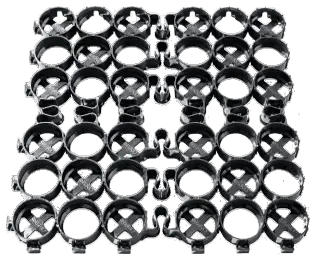
TRUEGRID PRO LITE permeable pavers are lightweight, DIY-friendly driveway and outdoor base pavers that install easily for a variety of projects. Made in the USA from 100%...
Cell Depth
Cell depth is the single most important specification for a gravel grid. It determines how securely the aggregate is contained, how the load is distributed, and how the surface feels under load.
For pedestrian paths and patios, 20mm to 30mm cell depth is sufficient. For residential driveways carrying passenger cars, 30mm to 40mm is the recommended minimum. For heavier vehicles or commercial applications, 50mm and above should be specified, moving into geocell territory for the most demanding loads.
Load Rating
Most reputable gravel grid manufacturers publish a load rating in tonnes per square metre, tested under static or dynamic loading. A standard domestic driveway grid should be rated for at least 400 tonnes per square metre under static load. Higher ratings indicate thicker cell walls and stronger polypropylene formulations.
Treat load rating claims with scepticism unless the figure comes with a published test standard. A stated load rating is only meaningful if it was determined under defined test conditions. Manufacturers who publish ISO or EN test references alongside their load figures are giving a more reliable specification than those who state a number with no test context.
UV Stabilisation
UV-stabilised polypropylene is essential for any outdoor installation. The product description should explicitly state that the panels are UV stabilised, ideally to a rated lifespan at outdoor temperatures. A product described simply as “polypropylene” without a UV stabilisation statement is a risk – untreated polypropylene becomes brittle and cracks in two to three years of sun exposure.
Interlocking System
The quality of the interlocking connection between panels determines how well the installed surface holds together under vehicle loads and thermal expansion and contraction cycles. Better products use positive-lock tabs that click firmly into adjacent panels and resist separation when the grid is loaded asymmetrically. Lower-quality products rely on friction or very shallow pin-and-socket connections that separate under the lateral forces of vehicle turning manoeuvres.
Test the interlock by clicking two panels together and trying to pull them apart by hand. A high-quality interlock requires deliberate disassembly. A poor interlock separates easily.
Recycled Content
Many gravel grid manufacturers now use recycled polypropylene or HDPE content in their panels. Recycled content products carry a lower embodied carbon footprint and often cost less than virgin polymer products. Provided the recycled content is properly UV stabilised and the finished panel meets the same load specifications, recycled content is not a quality compromise.
Best Gravel Grid for Driveways
For a residential driveway carrying standard passenger vehicles, the priority is a 30mm to 40mm cell depth grid with a positive interlock system, UV stabilisation rated to at least 15 years, and a static load rating of 400 tonnes per square metre or higher.
TrueGrid Pro is widely regarded as a leading product in the residential driveway category in the US market. Its cell depth and wall thickness are appropriate for vehicle loads, the interlocking system is robust, and the product is manufactured from UV-stabilised recycled polypropylene. TrueGrid is positioned toward the premium end of the domestic market, with pricing reflecting that.
NidaGravel is a well-established European product with a strong track record in domestic driveway installations. It is available in the US market and offers good cell depth and UV stabilisation at a competitive price. The panel size makes it manageable for DIY installation.
Core Gravel Grid is a UK-produced product with clear cell depth and load rating specifications, suitable for residential driveways and available through online retail channels.
For the heaviest residential loads, BaseCore Geocell moves beyond standard plastic grids into the geocell category, providing deeper confinement and higher load capacity for driveways carrying SUVs, pickup trucks, light trailers, and delivery vehicles.
Best Gravel Grid for Pathways
For pedestrian-only pathways and garden paths, a lighter-duty product in the 20mm to 30mm cell depth range is adequate and more economical than a full driveway specification grid.
EcoDeck and EasyPave are both well-suited to pathway applications, with shallower cell depths appropriate for pedestrian loads and panel dimensions that make installation straightforward over typical path widths. Both are available in recycled polypropylene.
Vevor gravel grid panels are available at a lower price point through online retail channels including Amazon. They are appropriate for low-traffic pathways and patios where loads are light. Quality control on import products varies, so check that the specific product listed states a cell depth, load rating, and UV stabilisation standard before purchasing.
Best Gravel Grid for Patios
For patio applications, aesthetics and edge containment matter more than maximum load capacity. A 20mm to 30mm cell depth grid filled with 10mm to 14mm clean stone or pea gravel provides a stable patio surface that resists furniture displacement and contains the aggregate within defined edges.
Ibran grid panels are well-suited to patio installations and are available in configurations that suit the smaller, irregular areas typical of garden patios. The ACO Threshold range also includes products suited to patio and terrace gravel containment.
For readers planning a pea gravel patio specifically, the broader guidance on pea gravel as a patio surface material, including edging options and maintenance, is in our pea gravel patio guide.
Best Budget Gravel Grid
For homeowners managing costs on a path or small patio project, standard-depth panels from Vevor or similar retail-channel products provide adequate performance for light pedestrian use at lower cost. The key is to verify that the product specifies UV stabilisation, even at a budget price point, because a cheap grid that degrades in two years is not a saving.
Best Heavy-Duty Gravel Grid
For heavy loads, steep slopes, or commercial-adjacent applications, geocell products outperform standard plastic panels decisively. BaseCore Geocell is the most accessible geocell product in the US residential market. For engineered applications with defined loading requirements, geocell products from PRS Geo-Technologies and Presto Geosystems provide a wider range of cell depths with published engineering specifications.
Where to Buy Gravel Grids
Home Depot stocks a limited range of gravel grid products, typically from one or two suppliers. Availability varies by store and region. Purchasing in store means you can check the panel quality before buying but limits you to whatever the local store carries.
Lowe’s similarly carries a limited range, and as with Home Depot, in-store availability is inconsistent. Online ordering through Lowe’s.com provides access to a wider product range with delivery.
Amazon is the most practical channel for accessing the full range of gravel grid products, including TrueGrid, BaseCore, Vevor, NidaGravel, and others. Product specifications are visible before purchase, and reviews provide real-world performance data from other homeowners.
For large-area projects requiring bulk quantities, contacting a gravel grid distributor or the manufacturer directly often produces a better price than retail channels. TrueGrid, NidaGravel, and Core Gravel Grid all sell direct or through landscape supply distributors for larger orders.
For guidance on the different product types and how they compare structurally, see our gravel grid types guide.