
Grass Driveway Grid: Gravel or Grass Fill Options
A grass driveway grid is a geocell panel system where cells are filled with topsoil and seeded with grass rather than filled with gravel, creating a permeable, load-bearing grass surface that can support vehicle traffic without developing the bare, muddy patches that unprotected grass driveways produce under regular use. Understanding the difference between grass-fill and gravel-fill geocell systems, how each is installed, and what each delivers in practice will help you choose the right approach for your property.
What Is a Grass Driveway Grid?
A grass driveway grid – also called a geocell driveway, geo grid driveway, or grass cell system – is a deep geocell panel made from HDPE plastic, staked into position over a prepared sub-base, filled with a topsoil and grass seed mix, and maintained until the grass establishes within the cells and covers the visible cell tops.
The resulting surface looks like a grass lawn but performs like a reinforced load-bearing surface. The geocell walls prevent the soil within each cell from being displaced sideways under vehicle wheel loads, which is the mechanism that causes conventional grass to be destroyed by repeated vehicle traffic. Each grass plant grows within a protected cell, shielded from direct tyre compaction of the root zone by the surrounding HDPE walls, and the grass canopy recovers quickly after light trafficking because the root zone remains intact.
This is categorically different from standard gravel-fill honeycomb grids, where cells are filled with stone and the surface finish is gravel rather than vegetation. The product type and installation process differ, and so do the maintenance requirements. The comparison between product types is covered fully in our gravel grid types guide.
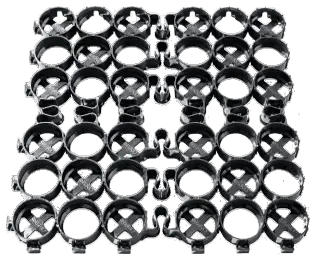
TRUEGRID PRO LITE permeable pavers are lightweight, DIY-friendly driveway and outdoor base pavers that install easily for a variety of projects. Made in the USA from 100%...
When a Grass Grid Is the Right Choice
A grass driveway grid suits applications where the aesthetic of a green, planted surface is strongly preferred over gravel or pavement, and where traffic volume is low to moderate – typically a secondary parking area, an occasional-use access drive, or an overflow parking area used on weekends or for events.
Grass cells are not suited to high-frequency daily vehicle use by heavy vehicles. Under daily car traffic, grass struggles to establish or maintain coverage because the recovery time between trafficking events is too short. Under heavy vehicle loads, the cell walls of many domestic grass grid products are not rated for the same loads as commercial geocell systems. For high-traffic driveways where a permeable surface is desired, gravel-fill is the more durable choice.
Grass grids are particularly effective as overflow parking areas for properties where additional parking is needed occasionally – for family gatherings, holiday visitors, or events – but the area sits as lawn for most of the year. The grid allows vehicle access without permanent surface damage while the area functions as lawn the rest of the time.
Gravel Fill vs Grass Fill: Key Differences
| Factor | Gravel Fill | Grass Fill |
|---|---|---|
| Aesthetic outcome | Gravel surface | Grass surface |
| Traffic tolerance | Daily vehicle use | Occasional or low-frequency use |
| Establishment time | Immediate after fill | 4-8 weeks for grass to establish |
| Ongoing maintenance | Low – occasional top-up | Regular mowing, irrigation in dry weather |
| Best application | Driveways, paths, patios | Overflow parking, secondary access |
| Cell depth typically needed | 30 – 50mm | 75 – 100mm+ |
Geocell Products for Grass Driveways
The cell depth needed for a grass-fill system is greater than for a gravel-fill system because the cells need to contain enough topsoil depth for grass root development. A minimum cell depth of 75mm is generally recommended for grass-fill applications, with 100mm providing better establishment in drier climates where deeper root systems are needed for drought resistance.
BaseCore Geocell is the most widely available product for residential grass driveway applications in the US market. Its HDPE construction provides good load capacity for passenger vehicles, and the recycled material content reduces cost relative to virgin HDPE alternatives. Cell depths in the 75mm to 100mm range are available.
EasyPave grids offer a grass-fill option suitable for light residential use and overflow parking applications at a competitive price. The lower cell depth of some EasyPave products limits their suitability for higher-load applications.
For genuinely demanding applications – commercial parking, access roads for delivery vehicles, or high-traffic grass surfaces – geocell products from specialist geosynthetics suppliers with published engineering load ratings are the appropriate specification.
Installation Process for a Grass Driveway Grid
Preparation
Prepare the area to a level subgrade, remove weeds and organic material, and lay a geotextile membrane over the prepared surface. The membrane is essential for preventing fines from migrating upward into the soil fill over time. Compact the subgrade before laying the membrane.
Staking the Geocell Panels
Geocell panels are supplied in a collapsed state and expanded to their working dimensions on site. Stake the panels into the ground using the anchor stakes provided – typically at the panel perimeter and at intervals specified by the manufacturer. Ensure the panels are fully expanded and staked flat before filling.
Filling with Topsoil
Fill the cells with a topsoil and grass seed mix, or fill with plain topsoil and seed separately after filling. Do not use compacted heavy clay soils – the fill needs to be free-draining enough for grass roots to penetrate and for water to drain through the cells. A sandy loam topsoil blended with a small amount of compost provides good establishment conditions. Fill to just below the cell top, leaving 5mm to 10mm for grass growth to the cell top level.
Seeding and Establishment
Select a grass seed variety suited to the traffic level and sun exposure of the installation. Hard-wearing, low-growing varieties with good drought tolerance are preferable for grass grid applications. Keep the seeded area moist during the establishment period of four to eight weeks. Avoid vehicle traffic until the grass has established fully and the roots have knitted together across the cell fill.
Ongoing Maintenance
Grass driveway grids require regular mowing at a slightly higher cut than a standard lawn to avoid cutting into the tops of the geocell walls. Irrigation during dry periods helps maintain coverage, and any bare patches should be overseeded promptly before weeds establish. Annual fertilisation with a low-nitrogen lawn feed promotes a dense, hard-wearing sward.