
Gravel Grid for a Shed Base
A gravel grid shed base is a practical, cost-effective alternative to a concrete or paving slab foundation for garden buildings such as sheds, summerhouses, log cabins, and workshops. The grid system provides a level, load-bearing surface for the shed floor bearers while allowing rainwater to drain freely through the base layer, which is the property that determines long-term timber floor health more than any other single factor.
Why Drainage Matters More Than Load Capacity for Shed Bases
A shed base carries a static load that is modest by construction standards – even a well-stocked garden shed places only a few hundred kilograms distributed across the full floor area. Structural load capacity is not the primary engineering challenge for a shed base.
The primary challenge is moisture. Shed timber floors in contact with poorly drained bases are exposed to persistent damp that causes rot, mould, and structural deterioration over years. A gravel grid base, installed over a well-prepared aggregate sub-base on a geotextile membrane, drains freely in all directions. Rainwater that blows or runs under the shed passes through the gravel layer and the membrane, away from the timber floor bearers. The floor remains dry and ventilated from below.
Concrete bases, by contrast, can trap moisture against the underside of shed floor bearers at the perimeter if drainage is not carefully managed. Paving slab bases have similar issues if the slabs settle unevenly and create low points where water pools. A gravel grid base does not develop these problems because there are no impermeable surfaces for water to accumulate on.
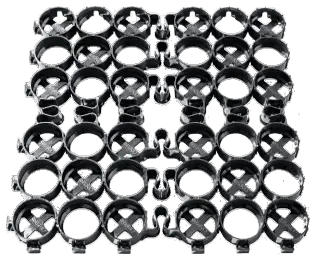
TRUEGRID PRO LITE permeable pavers are lightweight, DIY-friendly driveway and outdoor base pavers that install easily for a variety of projects. Made in the USA from 100%...
How a Gravel Grid Shed Base Compares to Alternatives
Gravel Grid vs Concrete
Concrete provides an excellent shed base when installed correctly – level, stable, and permanent. It is more labour-intensive to install than a gravel grid, requires more materials, and if it cracks or settles unevenly it is very difficult to correct without full removal. The drainage concern applies if the concrete sits flush with surrounding grade and rainwater is not directed away from the slab perimeter. For homeowners who want a permanent, low-effort base for a substantial garden building and do not mind the installation work, concrete is a good choice. For those who want a quicker, lower-cost installation with better drainage performance and the ability to relocate the shed in future, a gravel grid base is preferable.
Gravel Grid vs Paving Slabs
Paving slabs on a sand bed are a common shed base approach that works adequately for smaller, lighter sheds but can develop problems with uneven settlement over time as the sand base compresses differently under each slab. A gravel grid base on a well-compacted aggregate sub-base settles more uniformly because the base material is distributed evenly rather than confined beneath individual slabs. Gravel grids are also faster to install than a carefully levelled slab grid.
Gravel Grid vs Plain Crusher Run
A compacted crusher run base without a grid provides stable support and adequate drainage, but the surface gravel can still migrate over time as the shed is accessed, items are moved in and out, and seasonal ground movement affects the area. A grid on top of the crusher run base keeps the surface aggregate in place and makes the floor area around the shed more stable and easier to keep clean. For readers interested in crusher run as a standalone shed base material, our crusher run shed base guide covers that option in full.
Installation Process for a Gravel Grid Shed Base
Step 1: Mark Out and Excavate
Mark the shed base area 150mm to 200mm larger than the shed footprint on all sides. This overhang ensures the edge of the shed sits over a fully supported grid surface rather than at the very perimeter of the installation. Excavate to a depth of 100mm to 150mm below finished grade, or deeper if the topsoil layer is thick or soft.
Step 2: Prepare the Sub-Base
Compact the bottom of the excavation with a plate compactor or hand tamper. Lay a layer of 75mm to 100mm of compacted crushed stone, MOT Type 1, or clean angular gravel as the sub-base, compacting in 50mm layers. The sub-base must be level – use a long straightedge and spirit level to check across the full area in multiple directions. Any unevenness in the sub-base transfers directly to unevenness in the finished shed floor.
Step 3: Lay Geotextile Membrane
Lay a non-woven geotextile membrane over the compacted sub-base, extending it up the sides of the excavation and beyond the edges by 100mm on each side. The membrane prevents sub-base fines from migrating up into the grid fill layer over time while allowing water to drain freely downward.
Step 4: Install Edging
Install a rigid perimeter edging around the shed base area before placing the grid panels. Pressure-treated timber boards, concrete kerb sections, or plastic landscape edging all work. The edging must be secure and vertical, as it provides the restraint that prevents the outermost grid panels from spreading under the static load of the shed.
Step 5: Lay Grid Panels
Place grid panels within the edged area, interlocking panels along their edges. Cut the outermost panels to fit using a handsaw or jigsaw – most panel products cut cleanly across the cell pattern. Press each panel firmly down onto the membrane and check that the interlocks between panels are fully engaged.
Step 6: Fill with Aggregate
Fill the cells with 10mm to 20mm clean angular gravel, raking the aggregate level so that the fill reaches just above the cell tops. Do not overfill – the shed floor bearers rest on the top of the filled grid, and the level of the filled surface is the reference for the finished shed floor height.
Grid Specification for a Shed Base
A 30mm to 40mm cell depth grid is appropriate for shed base applications, providing adequate aggregate retention under the static load of a garden building. A geotextile membrane beneath the grid is essential for drainage and base separation. A 75mm to 100mm compacted crushed stone sub-base over native ground provides the structural support layer the grid needs.