
A shed base needs to do two things reliably: carry the weight of the structure evenly without settling at the corners, and stay firm and level over time regardless of wet weather and seasonal moisture change in the ground beneath it.
Crusher run handles both requirements well for most residential shed installations. It is cheaper than a poured concrete slab, faster to install, and easier to adjust or remove if the shed is relocated. This guide covers how to use it correctly for a shed base, including depth, membrane, edging, and how it compares to the main alternatives.
Why Crusher Run Works for a Shed Base
The same properties that make crusher run effective as a driveway base make it a practical shed foundation: the fines content compacts into a dense, stable layer that distributes load evenly and resists the gradual corner-sinking that affects shed bases built on inadequately prepared ground.
A pea gravel shed base is loose by nature and tends to shift and displace under the weight and occasional movement of a shed structure. Crusher run, once compacted, does not shift in the same way. It provides a considerably firmer platform that behaves more like a solid surface than a loose aggregate layer.
The drainage behavior of crusher run is also an advantage in the shed base context. While crusher run is not a free-draining material once compacted, it does not hold standing water on the surface the way concrete can around the perimeter. This reduces the risk of water pooling at the base of the shed walls, which is a common cause of timber rot at the bottom of shed frames.
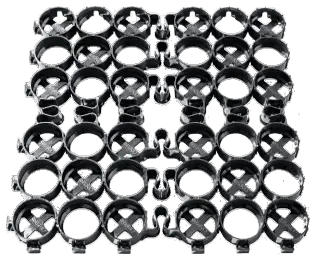
TRUEGRID PRO LITE permeable pavers are lightweight, DIY-friendly driveway and outdoor base pavers that install easily for a variety of projects. Made in the USA from 100%...
Preparation: Marking Out and Excavating
Mark the shed base area at least 6 inches larger than the shed footprint on each side. This overhang of crusher run beyond the shed walls provides a stable apron that prevents the base edge from crumbling away under foot traffic around the outside of the shed.
Excavate the marked area to a depth of 5 to 7.5 inches, depending on whether you are installing a 4-inch or 6-inch compacted base. Account for the loose-to-compacted ratio: a 4-inch compacted layer requires approximately 5 inches of loose material, and a 6-inch compacted layer requires approximately 7.5 inches.
Remove all topsoil, organic material, and plant roots from the excavated area. Organic material left beneath the base layer will decompose and cause uneven settlement over time, which is exactly the outcome a shed base is designed to prevent.
Membrane and Edging
Lay a geotextile membrane over the compacted sub-grade before placing any crusher run. Overlap seams by at least 12 inches and secure the fabric with landscape staples along the edges. Trim the membrane to fit within the edging border once it is installed.
The membrane prevents weed growth through the base, stops the crusher run fines from migrating into the native soil over time, and reduces the risk of the base softening in prolonged wet weather by keeping the sub-grade and the aggregate layer separated. For a shed base, it is a straightforward step that adds years to the life of the installation.
Install edging around the perimeter of the base before placing any crusher run. The edging needs to extend to the full depth of the crusher run layer to contain the material effectively. Suitable options for a shed base include pressure-treated timber boards, concrete edging blocks, or steel landscape edging. The edging also defines the perimeter of the base clearly, which helps when leveling the crusher run surface during installation.
Timber edging is the most commonly used option for shed bases because it is easy to cut to size, can be staked securely, and sits at or below the finished surface level without creating a trip hazard. For a review of edging materials and their relative durability, the best patio edging guide covers the options in detail.
Spreading and Compacting
Spread the crusher run evenly within the edged area to the required loose depth. Rake to a consistent level, checking with a spirit level across the full base area. Pay particular attention to the corners, which tend to be difficult to level accurately and are also where uneven settlement is most visible in the finished shed.
Compact the crusher run using a plate compactor, making overlapping passes in two perpendicular directions. For a shed base where access with a full-size plate compactor is easy, the standard residential compaction process applies. For very small bases or areas close to the edging, use a hand tamper to compact the material in the corners and along the edges where the plate compactor cannot reach effectively.
After compaction, check the surface with a spirit level in multiple directions. Add a small amount of crusher run to any low spots, rake level, and recompact before placing the shed. The finished surface should be level to within approximately half an inch across the full base area. Greater variation than this will require the shed to be shimmed during installation and will make the structure more prone to racking.
For the full compaction technique including moisture content checking and completion testing, the how to compact crusher run guide covers the process in detail.
Crusher Run vs Concrete for a Shed Base
Concrete is the most permanent shed base option and produces the flattest, most stable surface, but it has real disadvantages for many residential shed installations.
A concrete base cannot be adjusted once poured. If the shed is ever relocated, the slab remains. Concrete also requires forming, mixing or ordering ready-mix, and a longer curing period before the shed can be positioned. For a small residential shed, the cost and effort of a concrete slab is often disproportionate to the benefit.
Crusher run can be installed in a single afternoon, costs significantly less than a poured slab for an equivalent footprint, and can be broken up and removed if the shed is relocated. For residential sheds that may be moved, upgraded, or replaced within a decade or two, crusher run is the more practical and flexible choice.
The one application where concrete has a clear advantage over crusher run is for heavy workshop installations where precision leveling, anchoring of machinery, or oil-resistance of the floor surface are requirements. In those cases, a concrete slab is the appropriate choice.
Crusher Run vs Pea Gravel for a Shed Base
Pea gravel is sometimes suggested as a shed base material because it is easy to source and drains freely. In practice, it performs poorly under a shed structure for the same reason it performs poorly under furniture: it is a loose, rounded material that shifts under point loads and does not compact into a stable surface.
A shed placed on a pea gravel base will gradually sink at the corners as the weight of the structure forces the rounded pebbles aside. The shed floor will become uneven over time, doors will not hang correctly, and the structure will be susceptible to racking.
Crusher run produces a far more stable surface than pea gravel for this application. The compacted fines bind the surface together in a way that pea gravel simply cannot replicate. If drainage beneath the shed is a concern, the geotextile membrane beneath the crusher run layer handles sub-surface moisture without sacrificing the surface stability that pea gravel cannot provide.
For guidance on the full range of base material options for patios and outdoor structures, the best base material for a patio guide covers the comparative performance of crushed aggregate, gravel, and concrete in more detail.
Frequently Asked Questions
Is crusher run good for a shed base?
Yes. Crusher run is a practical and cost-effective shed base material. It compacts into a firm, stable surface that distributes the shed’s weight evenly and resists settling at the corners over time. It also drains better than concrete at the surface perimeter, reducing the risk of water pooling against the shed walls.
How thick should crusher run be for a shed base?
For a small to medium shed on firm, well-draining soil, 4 inches of compacted crusher run is adequate. For a larger shed, a shed on softer ground, or a shed that will carry significant weight such as a workshop with heavy equipment, use 6 inches of compacted crusher run.
Should I put a membrane under crusher run for a shed base?
Yes, in almost all cases. A geotextile membrane beneath the crusher run prevents weed growth through the base, stops the crusher run from mixing into the native soil over time, and reduces the risk of the base becoming unstable in wet conditions. It is a low-cost measure that significantly extends the life of the base.
Can I put a shed directly on crusher run?
Yes, provided the crusher run is properly compacted and the shed is supported on a frame with a floor, bearers, or skids that spread the load across the surface. Sheds with a solid floor frame can sit directly on a well-compacted crusher run base. Point-loaded foundations such as pier blocks require a firmer or more precisely leveled base.