
How to Get Rid of a Wasps Nest Safely
Wasp nest removal is one of those tasks where the difference between a safe outcome and an emergency room visit comes down almost entirely to timing and preparation rather than bravery or speed. The wasps defending a nest are not faster or more aggressive than the product you are applying: they are simply more numerous and better motivated. Giving yourself every situational advantage before you begin, choosing the right time of day and season, having the right product at the right distance, and knowing your planned exit route before you approach the nest, is what makes DIY nest removal manageable rather than hazardous.
Assessing the Nest Before Treatment
Before choosing a treatment approach, confirm three things about the nest: the species, the size, and the location.
Species determines the aggression level and the treatment approach. Paper wasps (Polistes species) build the open, umbrella-shaped nests under eaves, inside porch roof joists, and under deck rails. They are moderately defensive: they will sting when the nest is threatened directly but are less likely to pursue aggressors away from the nest area than yellow jackets or hornets. Yellow jacket aerial nests are enclosed in a papery gray covering and are significantly more aggressive. Bald-faced hornet nests are large, enclosed, and attached to tree branches or structural surfaces, and the colony is highly aggressive at considerable distances from the nest. For yellow jacket ground nests, see our yellow jacket control guide. For bald-faced hornet nests, see our hornets guide.
Size determines whether a single aerosol can is sufficient. A paper wasp nest with fewer than 20 visible cells and fewer than a dozen adult wasps is a straightforward DIY treatment. A nest the size of a grapefruit or larger, or any enclosed aerial nest larger than a baseball, carries a larger colony population that may require multiple treatment applications.
Location determines access and safety. A nest attached to a structure at arm’s reach from a safe standing position is appropriate for DIY. A nest under a high eave requiring a ladder, in a location without a clear exit route, inside a wall void, or in a confined attic space where turning and running quickly is not possible warrants professional treatment.
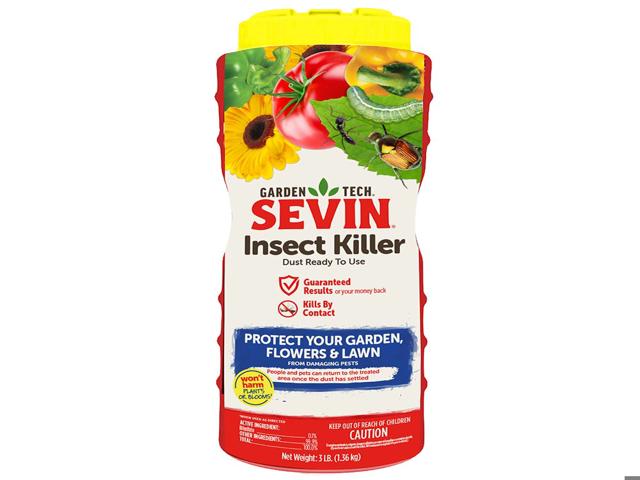
Sevin Insect Killer Dust helps protect flowers and lawn from listed damaging pests with a ready-to-use, shake-and-apply formula. It kills more than 150 insects by contact and creates a protective barrier when applied to leaves, stems, and flowers at the label rate. It won’t harm plants or blooms, and people and pets may return once the dust has settled.
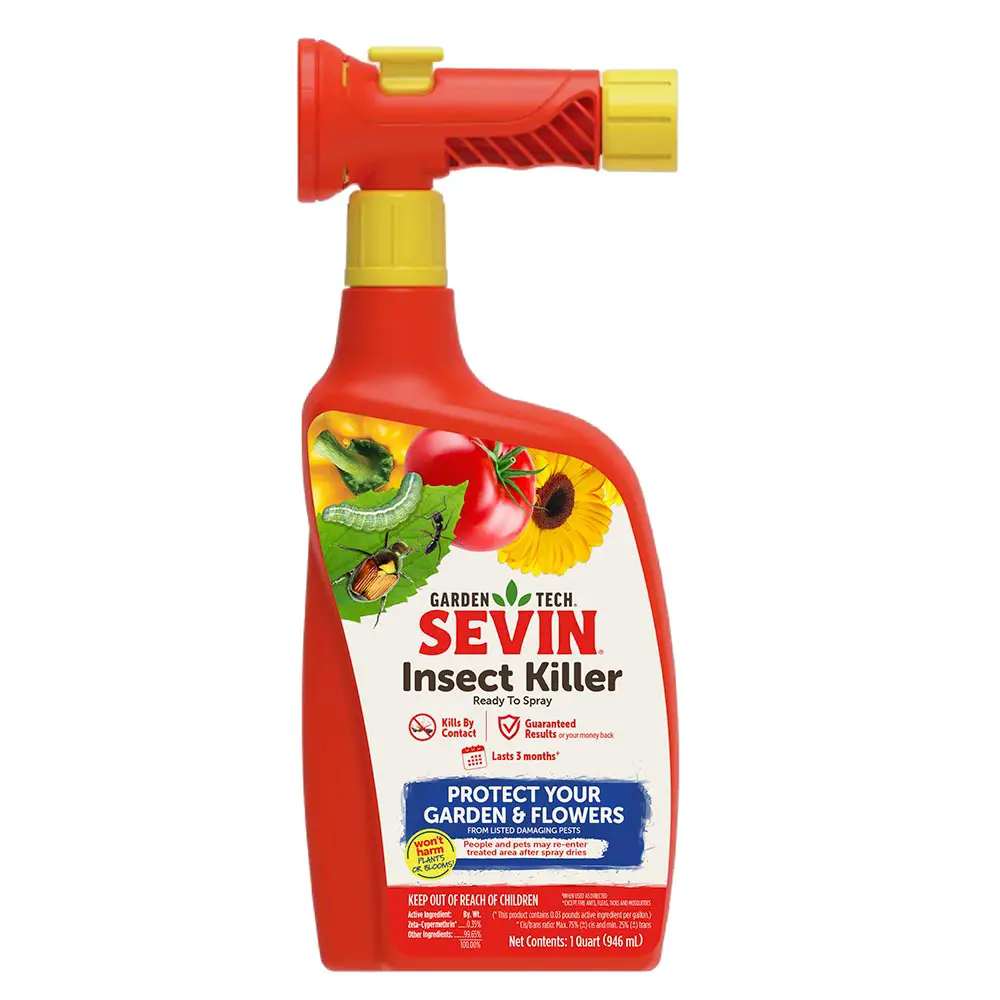
Sevin Insect Killer Ready to Spray helps protect flowers, vegetables, and ornamentals with a plant-safe formula that won’t harm blooms when used as directed. This hose-attachment spray targets a wide range of listed garden insects, including beetles, caterpillars, and aphids, for healthier plants. It provides up to 3 months of outdoor protection and lets people and pets return once the spray dries.
When to Treat: Early Season and Nighttime
Early season treatment in May and June, when nests are small and colony populations are low, is dramatically safer and more effective than late-summer treatment. A paper wasp nest with five to ten workers in June can be treated with a two-second aerosol application. The same nest site in August may have 50 to 100 workers defending a much larger comb. Inspect your home’s exterior eaves, porch understructures, deck rail undersides, and shrubbery for newly established nests in spring and treat them while small.
Nighttime treatment is the correct timing for any nest that has reached mature size. After dark, all workers have returned to the nest, cold temperatures reduce wasp metabolism and flight capability, and the colony is at its least reactive state. Treat between midnight and 4 am when temperatures are coolest for the lowest-risk nighttime application.
Protective Equipment
Treat any established wasp nest in long sleeves, long pants with the cuffs tucked into socks, gloves, and either a mesh insect veil over the face or sealed safety glasses. A bee suit provides the highest level of protection and is worth the investment for households that deal with wasp nests regularly. Wasps attempting to sting through thick denim are usually unsuccessful; thin fabric provides minimal protection against a determined stinging attempt.
Have a clear exit route established before you approach the nest. Know exactly which direction you will move after applying the aerosol, and move immediately and calmly in that direction after application. Running triggers the pursuit response in yellow jackets; walking quickly while moving away from the nest is more effective.
Applying the Treatment
Use a jet-stream aerosol wasp and hornet spray rather than a regular spray. Jet-stream products project a narrow, high-velocity stream of insecticide up to 20 to 27 feet, which allows treatment from a distance that keeps the applicator outside the immediate nest defense zone. For open paper wasp nests, direct the stream to saturate both the nest comb and as many adult wasps on the surface as possible. For enclosed nests (aerial yellow jacket, small hornet nests), direct the stream into the nest entrance opening.
Apply for five to seven seconds, then move away immediately before the first wasps in the colony reach the exit. After 48 hours, inspect the nest from a safe distance. If no activity is visible, the nest can be physically removed by knocking it down with a long pole, catching it in a heavy-duty garbage bag if it is small enough, and disposing of it in a sealed bag.
If wasps are still active 48 hours after treatment, a second nighttime application is needed. Do not attempt physical nest removal until all visible adult activity has ceased.
After Nest Removal: Preventing Reinfestation
Wasps return to previous nest sites in the following season. Applying a residual pyrethroid insecticide (bifenthrin or permethrin spray) to the locations where nests were removed, and to adjacent structural surfaces such as fascia boards, eave undersides, and porch ceiling joists, creates a chemical barrier that deters queens from initiating new nests in those locations the following spring. Apply the residual treatment in early spring before wasp activity begins in your area.
For product selection guidance across aerosol spray and residual treatment options, see our best wasp and hornet spray guide.