
How to Get Rid of Hornets and Bald-Faced Hornets
The term hornet is applied loosely to several large, aggressive wasp species in North American residential settings, but two species account for the vast majority of homeowner encounters: the bald-faced hornet (Dolichovespula maculata) and the European hornet (Vespa crabro). Both are significantly larger than yellow jackets, both build enclosed paper nests, and both defend their colonies with a level of aggression that is higher than paper wasps and comparable to yellow jackets. The bald-faced hornet, despite its name, is technically a yellow jacket rather than a true hornet, while the European hornet is the only true hornet (genus Vespa) established in North America. For practical homeowner purposes, the treatment approach for both is similar.
Identifying Bald-Faced Hornets
Bald-faced hornets (Dolichovespula maculata) are large, 15 to 20 mm, with a distinctive black body and white or ivory facial markings, white abdominal bands, and white markings on the tip of the abdomen. They are the insects most often responsible for the large, football-shaped gray paper nests found hanging from tree branches, attached to the underside of porch roofs, and suspended from utility structures. These nests, which start the size of a golf ball in early spring, can reach the size of a basketball or larger by late summer and contain 400 to 700 workers.
Bald-faced hornets are aggressive defenders of their nest at distances considerably greater than paper wasps, will sting without direct provocation if a person passes too close to the nest, and will spray defensive venom toward perceived threats. The spray can cause temporary eye irritation if it contacts the face.
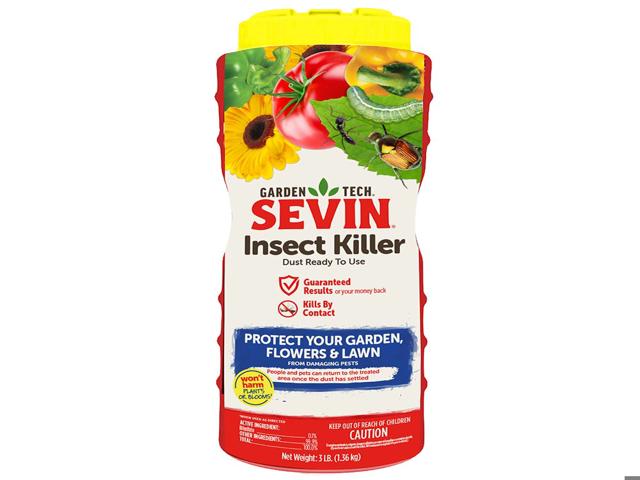
Sevin Insect Killer Dust helps protect flowers and lawn from listed damaging pests with a ready-to-use, shake-and-apply formula. It kills more than 150 insects by contact and creates a protective barrier when applied to leaves, stems, and flowers at the label rate. It won’t harm plants or blooms, and people and pets may return once the dust has settled.
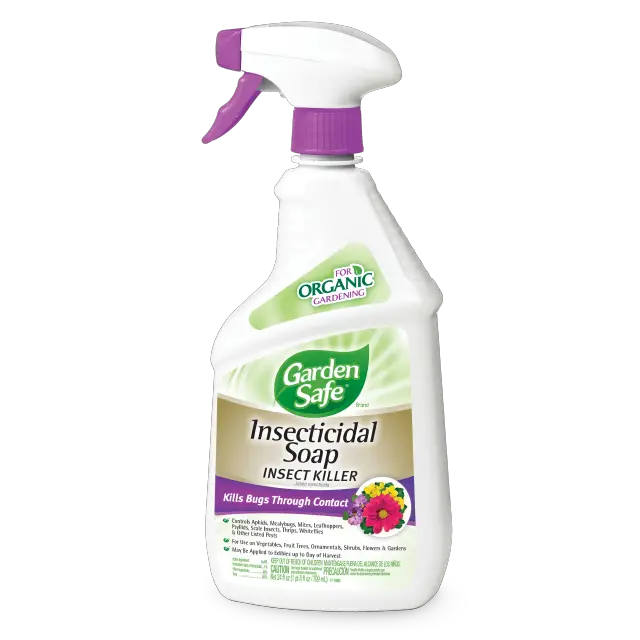
Garden Safe insecticidal soap is a ready-to-use contact spray that kills listed garden pests when sprayed directly on them. It’s formulated for organic gardening and can be used on vegetables, fruit trees, ornamentals, shrubs, flowers, and in indoor, outdoor, and greenhouse applications. For convenience, it may be applied to edibles up to and including the day of harvest.
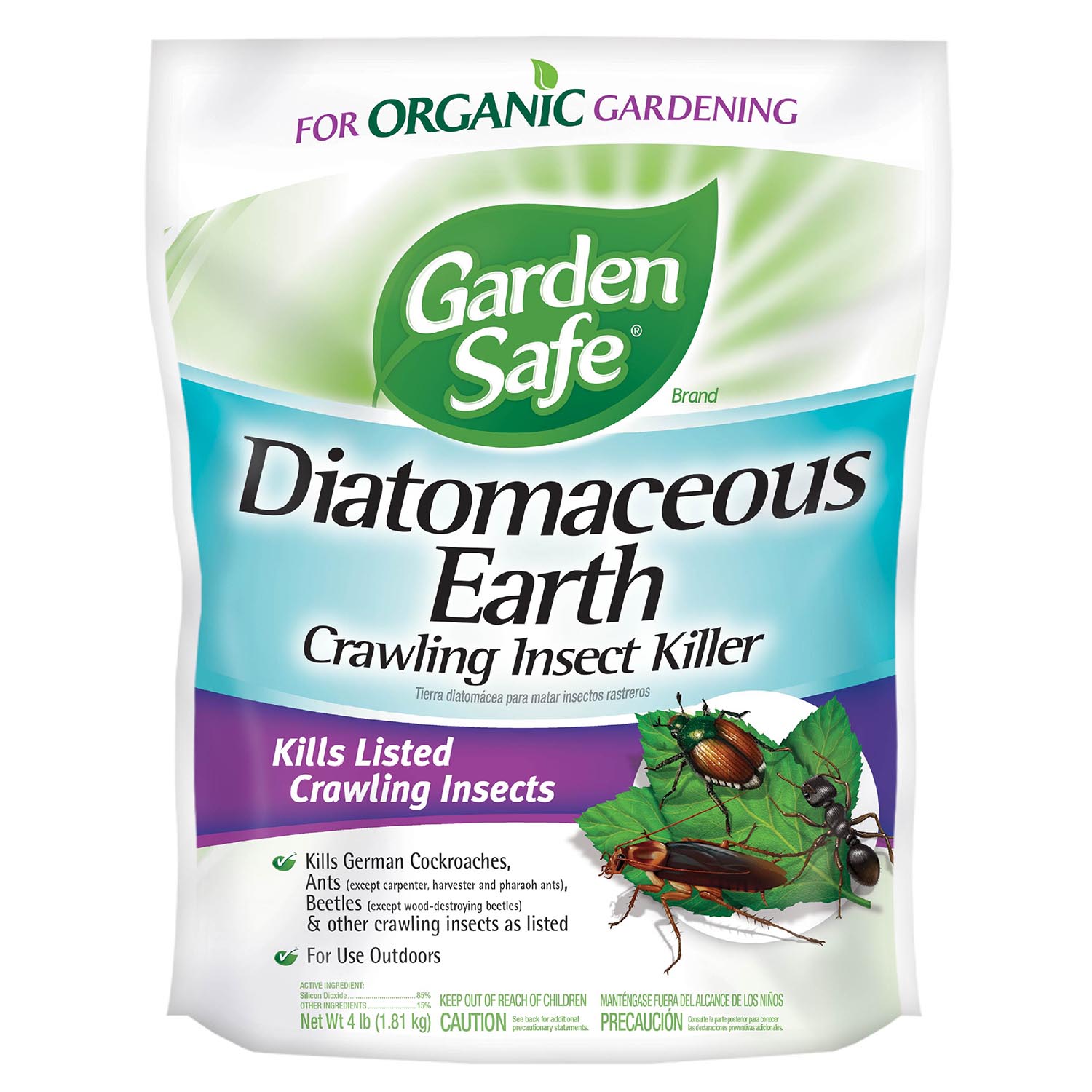
Garden Safe diatomaceous earth-based crawling insect killer provides organic, long-lasting control for listed pests. It kills German cockroaches, ants, beetles, fleas, mealybugs, and other crawling insects by contact by coating their exoskeletons and drying them out. Apply a thin powdery layer outdoors on plants and surrounding soil, and use indoors for crawling insect control as directed.
Identifying European Hornets
European hornets (Vespa crabro) are the largest wasp species in North America, with workers reaching 25 to 35 mm. They are yellow and brown with a reddish-brown thorax rather than the black-and-yellow of yellow jackets. European hornets are notable for their nighttime activity: unlike most wasp species, they fly and forage after dark and are attracted to lit windows and porch lights, which is often the first indication of their presence near a structure.
European hornets nest in hollow trees, wall voids, attic spaces, and other enclosed cavities rather than building an exposed aerial nest like bald-faced hornets. Nests in wall voids are harder to treat and detect than exposed aerial nests and more often require professional intervention to locate and treat effectively.
Early Season Treatment for Small Nests
The most important timing principle for hornet nest management is the same as for all colonial stinging insects: early intervention when the nest is small is dramatically safer and more effective. A bald-faced hornet nest the size of a baseball in May contains 10 to 20 workers and can be treated with a single aerosol application from a safe distance. The same nest in August may contain 500 workers who will pursue an aggressor for 50 or more feet from the nest.
Inspect your property in late April and May for new nest construction, paying attention to tree branches, porch and deck understructures, and the eaves and overhangs of outbuildings. Small, early-stage nests that are accessible from the ground can be treated quickly and easily at this stage before the colony reaches the size that makes DIY removal a significant risk.
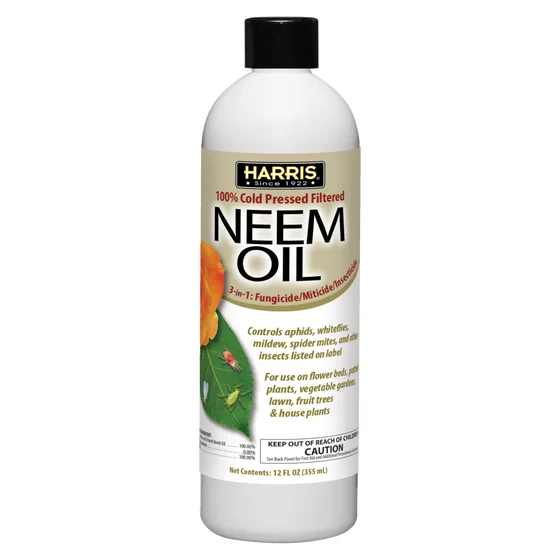
HARRIS Neem Oil Cold Pressed Water Soluble Concentrate is a 3-in-1 insecticide, fungicide, and miticide made from 100% cold pressed neem oil. It is EPA registered to help control aphids, whiteflies, mildew, spider mites, and other label-listed pests and diseases. Safe for indoor and outdoor use, it can be applied to a wide range of flowering and potted plants, vegetable gardens, lawns, ornamentals, fruit trees, and container gardening with foliar or soil treatments.
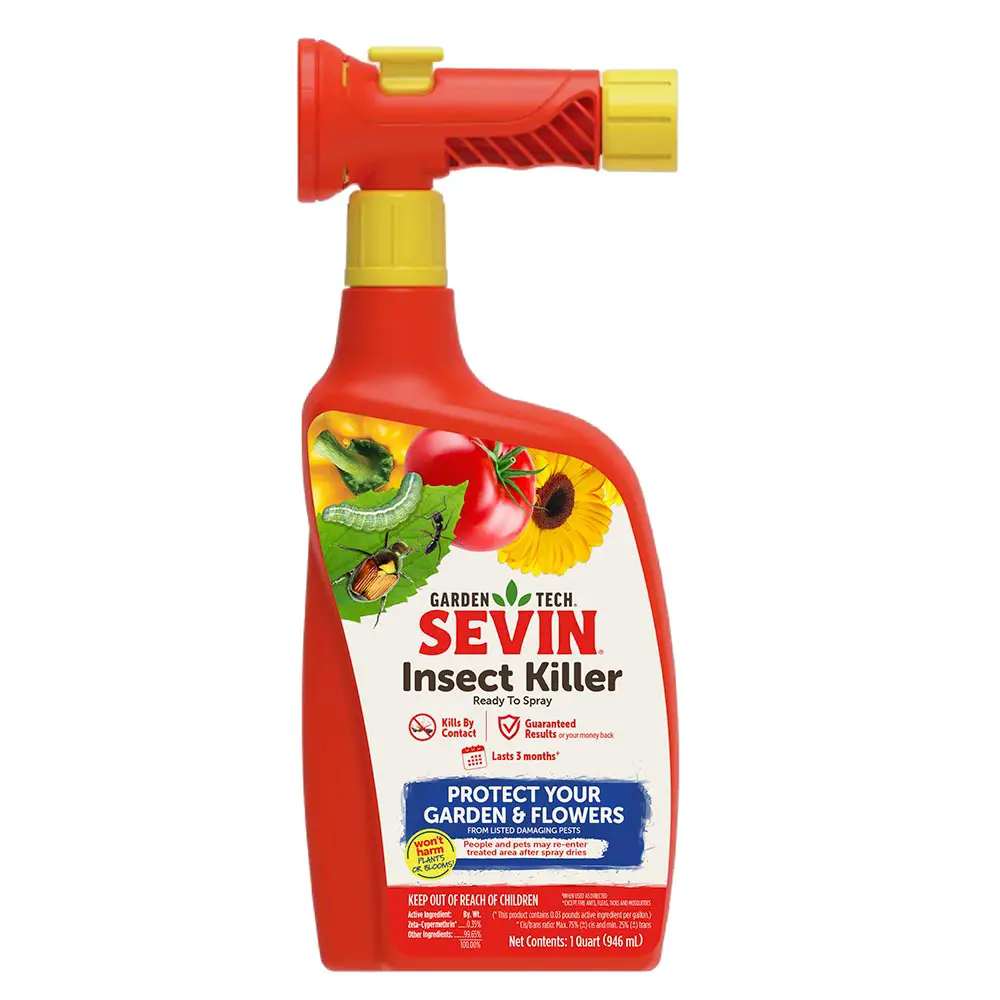
Sevin Insect Killer Ready to Spray helps protect flowers, vegetables, and ornamentals with a plant-safe formula that won’t harm blooms when used as directed. This hose-attachment spray targets a wide range of listed garden insects, including beetles, caterpillars, and aphids, for healthier plants. It provides up to 3 months of outdoor protection and lets people and pets return once the spray dries.
Treating Accessible Bald-Faced Hornet Nests
Accessible bald-faced hornet nests in trees or on structural surfaces can be treated with a jet-stream aerosol wasp and hornet spray applied at nighttime, following the same approach described in our wasp nest removal guide. Apply the jet stream directly into the nest entrance opening (located at the bottom of the enclosed nest structure) for seven to ten seconds, then move away immediately. For nests at tree height, the 20 to 27-foot jet range of a quality aerosol product is usually sufficient for ground-level application to nests up to about 20 feet off the ground.
A mature bald-faced hornet nest may require two nighttime applications 48 hours apart for complete colony elimination due to the colony size.
Do not attempt to cut or knock down a bald-faced hornet nest before the colony is fully eliminated, even after treatment. Any surviving workers that return to the nest location or emerge from within the nest will defend the nest structure aggressively.
Treating European Hornet Nests in Voids
European hornet nests inside wall voids or structural cavities require locating the entrance and applying an insecticide dust into the void, following the approach described for structural pest void treatment in our when to call a pest control professional guide. Because these nests are concealed and their full extent within the void is not visible, this application is more complex than treating an exposed aerial nest and warrants professional treatment in most cases.
European hornets in wall voids that are treated in late summer without being physically removed will leave the dead nest in the wall. A significant nest can produce an odor as the larvae and stored food decompose, and the nest may attract secondary pests. Accessing and physically removing the nest after treatment may require opening the wall, which is most practically done during a renovation or insulation update.
Leaving Nests That Pose No Direct Risk
Bald-faced hornet nests in tree branches well away from areas with human foot traffic are worth leaving alone if they are not creating a direct conflict point. Bald-faced hornets are significant predators of garden caterpillars, flies, and other insects, and a colony that poses no daily sting risk contributes to the yard ecosystem. The colony will die out completely in autumn after the first hard frost kills all workers, and the nest will not be reused the following season. Only the mated queens survive winter, dispersing to overwinter individually in sheltered locations and founding new colonies in spring.
For product recommendations for hornet aerosol treatment, see our best wasp and hornet spray guide.