
Self Binding Gravel: What It Is, How It Works, and Where to Use It
Self binding gravel is one of the most practical and cost-effective surface materials available to homeowners and landscapers. It compacts to a firm, cohesive finish, it looks natural, it requires no synthetic binders, and it handles foot traffic and light vehicle use well when correctly installed. Understanding what it is and how it behaves will help you decide whether it is the right choice for your project before you order a single tonne.
What Is Self Binding Gravel?
Self binding gravel is a naturally graded angular aggregate that contains a controlled proportion of fine particles, typically clay dust or limestone dust, alongside larger crushed stone. That combination of particle sizes is what gives it its binding properties. Unlike loose decorative gravel, which consists of a single uniform size, self binding gravel is a blend of sizes ranging from coarser chips down to fine dust.
The result is an aggregate that packs tightly when compacted. The fine particles fill the voids between the larger pieces of stone, locking them together into a surface that behaves more like a firm path than a loose scatter of gravel.
No artificial binders, resins, or chemicals are added. The binding action comes entirely from the mechanical interlocking of the aggregate and the cohesive properties of the fine clay or limestone dust within the blend.
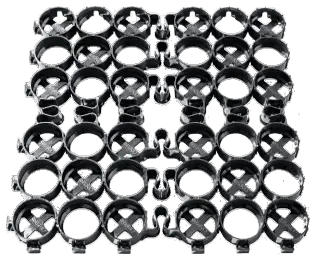
TRUEGRID PRO LITE permeable pavers are lightweight, DIY-friendly driveway and outdoor base pavers that install easily for a variety of projects. Made in the USA from 100%...
How Does Self Binding Gravel Work?
The binding mechanism relies on compaction. When self binding gravel is spread and compacted with a roller or wacker plate, the fine particles are forced into the voids between the larger aggregate pieces. This creates a surface that holds its shape under load rather than shifting and scattering as loose gravel does.
Moisture plays a role in the process. The clay or limestone fines in the blend are slightly moisture-sensitive, which means the surface firms progressively under traffic and benefits from being dampened lightly before final compaction. Once established, a well-laid self binding gravel surface resists displacement significantly better than loose gravel of equivalent depth.
The surface does not achieve a chemical set. It will not harden to the rigidity of concrete or resin-bound aggregate. If saturated for a prolonged period, or if laid on an inadequate sub-base, it can soften temporarily. Correct installation practice eliminates most of these risks.
Types of Self Binding Gravel
Self binding gravel is produced from several source materials, and the choice of material affects appearance, performance, and regional availability.
Limestone self binding gravel is the most widely available type in the US and much of Europe. It produces a pale buff or cream-colored surface and performs reliably across most residential applications. Limestone fines bind well and the material is typically available in a 10mm to dust grading, meaning the blend runs from 10mm chips down to fine stone dust.
Granite self binding gravel is harder and more durable than limestone, which makes it the preferred choice for areas that will see heavier or more frequent traffic. The surface finish is typically gray and slightly coarser in texture than limestone blends.
Hoggin is a regional term used primarily in southern England for a naturally occurring self binding gravel made from clay-bound flint or gravel. Hoggin is not manufactured but dug directly from local deposits, which gives it a variable character depending on the source pit. It performs very well as a path and driveway surface and has been used for centuries on estate paths and rural tracks. The key difference from processed self binding gravel is that hoggin is a naturally occurring material rather than a sized and blended product.
Cream and buff self binding gravel refers to processed limestone blends with a lighter, more decorative finish. These are popular for formal garden paths and entrance driveways where appearance is a priority alongside performance.
French self binding gravel is a gravel blend associated with the classic gravelled garden path style common in formal French garden design. It is typically a pale beige or golden limestone blend and is used both for its performance characteristics and its aesthetic.
What Is Self Binding Gravel Used For?
Self binding gravel is suited to a wide range of residential and light commercial surface applications.
Garden paths and walkways are the most natural use for this material. The compacted surface handles foot traffic comfortably, drains reasonably well, and creates a clean, defined path that does not scatter underfoot the way loose gravel does. It is also suitable for wheelchair and pushchair use when properly installed. The full guide to self binding gravel for paths covers construction detail, edging options, and accessible surface standards.
Driveways are the second most common application. Self binding gravel works well for light domestic vehicle use on a correctly prepared sub-base. It is not a structural surface and will not tolerate heavy vehicle loads or frequent turning movements without deterioration, but for a standard residential driveway with straightforward traffic patterns it performs reliably. The suitability question is covered in detail on the self binding gravel for driveways page.
Patios and seating areas benefit from self binding gravel because the firm, compacted surface eliminates the furniture instability and scatter that are common complaints with loose gravel. The material produces a natural appearance that suits informal garden settings. Coverage of patio-specific considerations, including finish options and the difference between laying for a seating area versus a through-route, is on the self binding gravel for patios page.
Garden paths with stepping stones are a common design application. Self binding gravel compacts neatly around stepping stone edges and holds its position between stones without the migration problem that affects loose gravel.
Self Binding Gravel vs Loose Decorative Gravel
The practical difference between self binding gravel and loose decorative gravel comes down to surface stability. Loose gravel, whether pea gravel, shingle, or decorative chippings, consists of a single uniform particle size with no fine fraction. It shifts underfoot, displaces under vehicle tyres, and migrates away from edges over time.
Self binding gravel addresses all three of those problems. The compacted surface resists foot traffic displacement, holds its position under light vehicle loads, and maintains a cleaner edge against any installed edging. The trade-off is that the installation process is more involved, requiring sub-base preparation and compaction equipment, and the surface has less decorative flexibility than a decorative chipping.
For readers who want the stability of a compacted aggregate surface but are comparing across all available options, the self binding gravel alternatives page covers how it compares to resin-bound gravel and decomposed granite in detail.
Is Self Binding Gravel Permeable?
Self binding gravel retains meaningful permeability after compaction. It is not a sealed surface in the way that concrete or tarmac is, and water passes through the void structure of the aggregate. The level of permeability varies between products depending on the clay fines content and the degree of compaction, but most self binding gravel products pass the standard permeability tests applied to driveway surfaces under sustainable drainage guidelines.
This matters for homeowners in areas where front garden driveway surfaces are subject to planning rules around surface water drainage. The detailed answer, including what to expect from different product types and what happens when self binding gravel is laid over an impermeable base, is on the is self binding gravel permeable page.
Frequently Asked Questions
What does self binding gravel look like? The finished surface has a firm, compacted texture with a natural stone appearance. The color depends on the source material: limestone blends produce a pale buff or cream finish, granite blends produce a gray finish, and hoggin produces a warm brown or tan surface. The texture is slightly rougher than a resin-bound surface but significantly more stable than loose gravel.
Is self binding gravel the same as crusher run? No. Crusher run is a mechanically crushed aggregate used as a compacted sub-base material beneath driveway surfaces. It is not intended as a finished surface. Self binding gravel is a surface aggregate designed to be the visible, trafficked layer. The two materials may look similar but serve very different purposes in a construction build-up.
Does self binding gravel set hard? Self binding gravel firms under compaction and traffic but does not achieve the hardness of concrete or resin-bound surfaces. It will always have a slight give underfoot, which is part of what makes it comfortable to walk on, but it will not crack or shatter the way rigid surfaces do.
How long does self binding gravel last? A well-installed self binding gravel surface on a correctly prepared sub-base can last many years with minimal maintenance. The surface may require occasional top-dressing if traffic gradually erodes the fine fraction from the upper layer, but the sub-base and core structure of the path or driveway do not need replacement.
Can I install self binding gravel myself? Yes. Self binding gravel is one of the more DIY-friendly surface materials available. The installation process requires excavation, sub-base preparation, edging, and compaction with a rented wacker plate or roller. The step-by-step process is covered in the how to lay self binding gravel guide.