
Self binding gravel is one of the best-performing surfaces available for garden paths and pedestrian walkways. It compacts to a firm, stable finish that handles foot traffic reliably, drains reasonably well, and holds its shape at path edges without the constant scatter and migration that loose gravel produces. For homeowners who want a natural-looking path that actually stays where it was put, this material is a strong first option to consider.
Why Self Binding Gravel Works So Well for Paths
The performance advantages of self binding gravel on paths come from the same binding mechanism that makes it useful on driveways, but paths operate well within the performance envelope of this material. Pedestrian foot traffic is a fraction of the load that vehicle traffic generates, which means the compacted surface holds its cohesion easily and requires minimal maintenance under normal garden use.
The angular aggregate interlocks under compaction to form a surface that resists displacement underfoot. Walkers do not slip through a correctly laid self binding gravel path the way they shift through loose gravel or pea shingle. The texture underfoot is firm and slightly rough, which provides good grip even in wet conditions.
The natural appearance of self binding gravel integrates well with most garden styles. The buff, cream, and golden tones of limestone blends suit formal and informal garden designs equally, and the compacted surface texture looks and feels right in a garden setting in a way that concrete or tarmac does not.
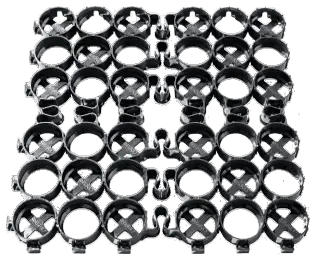
TRUEGRID PRO LITE permeable pavers are lightweight, DIY-friendly driveway and outdoor base pavers that install easily for a variety of projects. Made in the USA from 100%...
Path Construction: What Goes Under Self Binding Gravel
A garden path built on an inadequate base will develop soft spots and uneven sections over time, regardless of the surface material. The build-up for a self binding gravel path does not need to be as deep or as heavy-duty as a driveway, but the principle of correct sub-base preparation applies.
Excavation should reach a minimum depth of 100mm below the intended finished surface level. This provides room for a 50mm compacted sub-base layer and a 50mm compacted self binding gravel surface layer.
Sub-base material for a pedestrian path should be MOT Type 1 crushed aggregate or a similar graded crushed stone, compacted to a firm, even surface. On well-drained ground with stable soil, a carefully compacted native subgrade may be sufficient, but a properly prepared graded aggregate sub-base is the more reliable approach.
Geotextile membrane laid between the subgrade and the sub-base prevents fine soil particles from migrating upward into the aggregate layers over time. This maintains the drainage performance of the build-up and reduces the risk of soft spots developing as the path ages.
Self binding gravel surface layer should be laid at approximately 50 to 75mm depth before compaction, which will compact down to around 50mm finished depth. The material should be dampened lightly before final compaction to activate the binding action of the clay or limestone fines.
The complete step-by-step installation sequence, including tools, compaction method, and finishing technique, is covered in the how to lay self binding gravel guide.
Edging for Self Binding Gravel Paths
Path edging is important for maintaining the definition of a self binding gravel path over time. Without a physical edge restraint, the compacted surface gradually breaks away at the edges under foot traffic, and the path width narrows as loose material spills out to the sides.
Timber edging is the most common choice for informal garden paths. Pressure-treated timber boards set on edge provide a clean, natural-looking boundary that holds the gravel firmly and blends well with planting on either side.
Steel edging suits contemporary garden designs. Thin-profile steel path edging sits almost flush with the surface and provides a clean, precise boundary with a minimal visual footprint.
Brick or stone edging is the appropriate choice for formal garden settings, period properties, or where the path meets a paved area. A single course of brick or natural stone set on edge at path level creates a durable, attractive edge restraint that requires no maintenance and enhances the overall appearance of the path.
Recessed timber sleepers used as stepping elements within the path can also provide effective edge definition at intervals, and the combination of self binding gravel fill between timber or stone stepping elements is one of the most popular garden path design approaches.
Is Self Binding Gravel Suitable for Wheelchair and Pushchair Use?
A self binding gravel path that has been correctly installed and maintained provides a firm, stable surface that meets the accessible surface standards applicable to pedestrian routes. The key requirement for a surface to be considered accessible is that it is firm, stable, and slip-resistant. A well-compacted self binding gravel path meets all three criteria.
The surface must be properly installed to deliver accessible performance. A path where the sub-base has been omitted, where the self binding gravel layer is too thin, or where the surface has degraded without maintenance will not provide the firmness and stability required. On a correctly built path, however, wheelchair users and pushchair users can navigate the surface without the difficulty and resistance that loose gravel creates.
Self binding gravel is regularly specified for accessible path construction in public parks, estate grounds, and heritage settings for this reason. It is the standard surface material for many managed footpaths in UK National Parks and country parks because it combines accessibility with low environmental impact and a natural appearance.
Self Binding Gravel for Garden Paths with Stepping Stones
Self binding gravel and stepping stones are a classic combination in garden path design. The firm compacted surface holds the stepping stones in position far more effectively than loose gravel, which tends to migrate and leave stepping stones sitting proud of an uneven surface.
When incorporating stepping stones into a self binding gravel path, set the stones on a bed of sharp sand or mortar at the correct height before the self binding gravel is laid and compacted around them. The self binding gravel should be brought up to within a few millimeters of the top surface of the stones so that the transition between stone and gravel is level and comfortable underfoot.
Maintaining a Self Binding Gravel Path
Self binding gravel paths require less maintenance than loose gravel paths but benefit from occasional attention to maintain their performance and appearance.
Top-dressing becomes necessary when the fine fraction at the surface has been worn away by foot traffic over time. The path will feel slightly less firm and may show a loose layer of coarser aggregate on top of the bound surface. Spreading a thin layer of fresh self binding gravel, dampening it, and re-compacting with a roller or hand tamper restores the surface binding and refreshes the appearance.
Weed control is the most routine maintenance task. The geotextile membrane beneath the sub-base prevents weeds from growing up through the base, but airborne seeds will establish on the surface given the opportunity. Prompt removal of seedlings before root systems develop into the bound surface layer keeps the path clear with minimal effort.
Edge maintenance involves keeping the path edges defined and clear of encroaching lawn or planting. Trimming back overhanging vegetation and maintaining the edge restraint in good condition prevents the gradual narrowing that untended path edges experience.
Frequently Asked Questions
How wide should a self binding gravel path be? A pedestrian path for single-file walking needs a minimum clear width of 900mm. A path for two people walking side by side, or one designed to be fully accessible for wheelchair users, should be at least 1,200mm wide, and ideally 1,500mm where space allows.
Can I lay self binding gravel on an existing gravel path? Yes, if the existing base is firm and well-drained. Rake out any loose or degraded material, check that the base is stable, and lay fresh self binding gravel on top to the correct depth. Compact thoroughly. If the existing path has soft spots or poor drainage, those problems need to be addressed before adding the new surface layer.
Will self binding gravel paths get muddy? A correctly built path on a suitable sub-base will not become muddy. The combination of a geotextile membrane, a graded sub-base, and a compacted self binding gravel surface provides effective drainage and prevents the muddy conditions that occur when surface water saturates the ground beneath an insufficient build-up.
How long does a self binding gravel path take to install? A straightforward garden path can typically be completed in a day or weekend for a DIY project. Excavation takes the most time, particularly if the ground is firm. Laying the sub-base, membrane, edging, and self binding gravel surface is relatively quick once the excavation is done.