
How to Lay Self Binding Gravel: Step-by-Step Guide
Laying self binding gravel is a straightforward DIY project that most homeowners can complete over a weekend with the right preparation and equipment. The process follows a logical sequence: mark out, excavate, prepare the sub-base, install edging, lay the gravel, and compact. Getting each stage right ensures the finished surface performs the way it should and holds up over time without constant attention.
What You Will Need
Gathering the right tools and materials before starting saves time and avoids mid-project interruptions.
Materials:
- Self binding gravel (see quantity calculation below)
- MOT Type 1 crushed aggregate for sub-base
- Geotextile landscape membrane
- Edging material (timber boards, steel edging strip, brick, or natural stone)
- Timber pegs and string line, or spray paint for marking out
- Membrane fixing pins
Tools and equipment:
- Spade and wheelbarrow for excavation
- Plate compactor (wacker plate), available from most tool hire outlets
- Garden rake or lute for spreading aggregate
- Spirit level or long straight-edge for checking levels
- Watering can or hose with spray attachment
- Mallet for setting edging
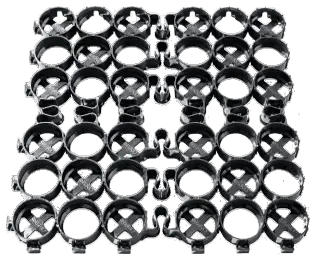
TRUEGRID PRO LITE permeable pavers are lightweight, DIY-friendly driveway and outdoor base pavers that install easily for a variety of projects. Made in the USA from 100%...
Step 1: Mark Out the Area
Marking the area accurately before excavating prevents waste and ensures the finished project is the right size and shape. Use stakes and string line for straight-sided paths and patios. For curved edges, a garden hose or length of rope works well as a flexible guide that can be adjusted until the shape looks right. Spray paint can be used to transfer the line to the ground as a permanent excavation guide.
Take time at this stage to check the proposed level of the finished surface in relation to existing features: the threshold of any buildings, adjacent paving, lawn levels, and drainage falls. Self binding gravel patios and paths should be finished slightly below adjacent paved or building threshold levels to prevent water tracking inside, and should slope gently away from structures at a fall of around 1:40 to 1:60 to direct surface water to a drainage point.
Step 2: Excavate to the Correct Depth
The total excavation depth determines the performance of the finished surface, so it is worth getting this right.
For a pedestrian path: excavate to a total depth of 150mm below the intended finished surface level. This provides room for a 75mm to 100mm compacted sub-base and a 50mm compacted self binding gravel surface.
For a driveway or parking area: excavate to a total depth of 225mm below finished surface level. This provides room for a 150mm compacted sub-base and a 75mm compacted self binding gravel surface.
For a patio or seating area: 150mm total excavation depth is standard, using a 100mm sub-base and 50mm surface layer.
Remove all excavated material from site. Check the bottom of the excavation for soft spots where subgrade material feels spongy or unstable. Any soft spots should be excavated further and filled with compacted granular material before proceeding.
Step 3: Lay the Geotextile Membrane
Geotextile membrane laid across the full base of the excavation serves two functions. It prevents fine soil particles from the subgrade migrating upward into the aggregate layers over time, which would degrade drainage performance and cause soft spots in the surface. It also suppresses weed growth from below, though it does not eliminate surface weed establishment entirely.
Unroll the membrane across the full excavated area. Overlap joins by at least 300mm and secure the membrane with fixing pins. Fold the edges up the sides of the excavation so the membrane runs continuously beneath and up the sides of the aggregate layers.
Step 4: Install Edging
Edging should be installed before the sub-base is added, so that the edging is held firmly in position by the compacted aggregate on both sides. Setting edging after the sub-base has been laid is possible but more difficult.
Drive timber pegs into the ground at intervals behind the edging boards to hold them vertical and at the correct height. The top of the edging should sit at the intended finished surface level, or very slightly above it, so that it acts as a screed guide when spreading and leveling the self binding gravel surface.
For steel edging, follow the manufacturer’s instructions for pinning and securing. For brick or natural stone edging, bed the units on mortar at the correct height and allow the mortar to cure before proceeding with the aggregate layers.
Step 5: Add and Compact the Sub-Base
MOT Type 1 crushed aggregate is the standard sub-base material for self binding gravel installations. Tip the aggregate into the excavated area and spread with a rake to an even depth.
Compact in layers of no more than 75mm at a time using a plate compactor. Do not attempt to compact the full sub-base depth in a single pass. Compacting in two or three thinner layers produces a more consistently dense and stable base than a single deep pass.
After each compaction pass, check the surface level against the edging with a long straight-edge or spirit level. Add more aggregate to any low spots and re-compact. The finished sub-base should be firm underfoot with no give, even in surface level, and set at the correct height below the top of the edging to leave the right depth for the self binding gravel surface layer.
Step 6: Lay and Compact the Self Binding Gravel
Self binding gravel arrives slightly damp and should be spread at a depth of approximately 75mm for a path or patio, or 100mm for a driveway. These pre-compaction depths will reduce to approximately 50mm and 75mm respectively after compaction.
Tip the material from a wheelbarrow and spread with a rake, working backward to avoid standing on freshly laid aggregate. Rake to an even depth across the full area, using the edging as a depth guide.
Before final compaction, lightly dampen the surface with a watering can or hose set to a fine spray. The moisture activates the binding action of the clay or limestone fines in the blend, improving the coherence of the final surface. Do not saturate the material, which can cause it to slump. A light, even surface dampening is sufficient.
Compact the surface with a plate compactor, working in overlapping parallel passes across the full area. On larger areas, make a first pass in one direction and a second pass perpendicular to the first. Check the surface level after compaction and add small amounts of material to any low spots, re-dampening and re-compacting as needed until the surface is flat, firm, and even.
How Thick Should Self Binding Gravel Be?
The compacted depth of the self binding gravel surface layer determines how well it performs and how long it lasts before requiring top-dressing.
For pedestrian paths and patios, a compacted depth of 50mm is standard and provides reliable performance under normal garden foot traffic.
For driveways and parking areas subject to vehicle loads, a compacted depth of 75mm is recommended. The additional depth provides more aggregate mass to resist deformation under vehicle tyres and more fine fraction to maintain binding action as the surface is used.
Going thinner than 50mm compacted depth produces a surface that is more susceptible to early degradation and surface loosening under traffic.
Can You Lay Self Binding Gravel on Soil Without a Sub-Base?
Laying self binding gravel directly on soil, without a prepared sub-base, is not recommended and is the most common cause of poor performance in DIY installations.
Soil, particularly clay-rich or loam soils, is not a stable foundation for a trafficked surface. It compresses and shifts under load, particularly when wet, causing the self binding gravel surface above it to deform and develop soft spots. The geotextile membrane alone does not provide structural support.
On very well-drained, dense, sandy or gravelly soils, a reduced sub-base depth may be adequate. On any soil type that exhibits softness or movement when walked on, a properly specified sub-base is essential.
Can You Lay Self Binding Gravel on a Slope?
Self binding gravel can be used on gently sloping sites, but the gradient affects how well the surface performs over time.
On slopes up to approximately 1:10, a correctly installed self binding gravel surface holds its position well. The compacted aggregate resists surface water wash because the bound layer moves as a mass rather than as individual loose particles. Surface drainage should be directed to the sides of the path or driveway rather than allowed to run down the slope and concentrate.
On steeper slopes, gradual surface erosion becomes a risk. Each rainfall event carries a small amount of the fine fraction downhill, progressively reducing the binding action of the surface. On steep sites, resin-bound aggregate or a different hard surface material is a more appropriate choice.
For laying self binding gravel over an existing hard surface such as concrete or tarmac, the process differs from new-build installation. That specific scenario is covered in the laying self binding gravel over concrete or tarmac guide.
How Long Does Self Binding Gravel Take to Set?
Self binding gravel does not undergo a chemical setting process the way concrete or resin-bound surfaces do. There is no defined set time after which the surface becomes hard. Instead, the surface firms progressively under traffic and compaction as the fine particles continue to pack and interlock.
The surface can take light foot traffic immediately after final compaction. Vehicle traffic on a driveway should ideally wait 24 to 48 hours to allow the surface to firm further, particularly in warm, dry weather when the fine fraction is consolidating most actively.
In practice, most self binding gravel surfaces feel noticeably firmer after the first week of normal use than they do immediately after installation.
Calculating How Much Self Binding Gravel You Need
The quantity required depends on the area to be covered and the target compacted depth.
The calculation is: Area (m²) x Depth (m) x Bulk Density (typically 2.0 to 2.1 tonnes per m³).
For example, a 20m² path at 75mm pre-compaction depth: 20 x 0.075 x 2.0 = 3.0 tonnes.
Add a 10% contingency to account for variation in depth across the site and material loss during spreading and compaction. For the same example, ordering 3.3 tonnes provides adequate material without significant waste.
Self binding gravel is sold by the tonne from aggregate suppliers and builders’ merchants. Pricing and coverage information specific to material type is covered on the self binding gravel cost page.
Frequently Asked Questions
Can I compact self binding gravel without a wacker plate? A hand roller or a lawn roller can compact a self binding gravel path to an acceptable level for pedestrian use. A plate compactor produces a more consistently dense and even finish, particularly for driveways and larger patio areas, and is the recommended approach for any installation that will see vehicle traffic. Plate compactors are widely available from tool hire outlets at reasonable daily rates.
Is self binding gravel dusty after laying? Yes, some surface dust is normal in the first weeks, particularly in dry weather. The limestone or clay fines produce a dusty surface layer before the material has fully consolidated. Light watering and additional compaction reduces dust quickly. The dustiness resolves naturally as the surface firms under use and weathering.
Can you sweep self binding gravel? A stiff brush or broom can be used to remove leaf litter and surface debris from a self binding gravel surface. Sweeping too vigorously on a freshly laid surface can disturb the top layer before it has fully consolidated. On a well-established surface, normal sweeping does not disturb the bound layer.
Can you lay self binding gravel between pavers? Yes. Self binding gravel can be used to fill the gaps between pavers, stepping stones, or other rigid surface elements. Compact it firmly around the edges of each paver so the surface level is consistent and the material is held in place by the surrounding elements.