
Self Binding Gravel Alternatives: Resin, Decomposed Granite, and More
Self binding gravel is a strong choice for many residential surface applications, but it is not the right material for every project. Understanding how it compares to the most relevant alternatives, and knowing what each competing material does better or worse, is the most reliable way to arrive at the right decision for your specific site, use case, and budget.
This page covers the four materials that readers most commonly evaluate alongside self binding gravel: resin-bound aggregate, decomposed granite, tarmac, and loose gravel.
Self Binding Gravel vs Resin-Bound Aggregate
Resin-bound aggregate is the alternative that most directly competes with self binding gravel for residential driveway and path applications where a natural stone surface finish is required. Both materials produce a surface that looks like natural stone. The differences between them in cost, durability, permeability, and installation requirements are significant.
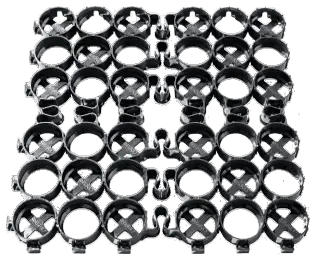
TRUEGRID PRO LITE permeable pavers are lightweight, DIY-friendly driveway and outdoor base pavers that install easily for a variety of projects. Made in the USA from 100%...
Appearance
Both materials present a natural aggregate surface. Resin-bound aggregate shows the stone more clearly because the individual pieces are coated in resin and bonded in a single layer, producing a clean, slightly textured finish where each stone is visible. Self binding gravel produces a more compacted, slightly less uniform appearance where the surface blends the various particle sizes into a cohesive layer. Resin-bound finishes tend to look more precise and designed. Self binding gravel looks more natural and organic.
Surface Hardness and Durability
Resin-bound aggregate is a rigid, hard surface once cured. It does not deform under vehicle loads in the way that self binding gravel can in high-turn areas or under heavy vehicles. For driveways with frequent use, heavy vehicles, or demanding traffic patterns, resin-bound aggregate is more durable and requires less maintenance than self binding gravel.
Self binding gravel is a semi-rigid compacted surface. It handles light domestic vehicle use comfortably but deforms under loads that exceed its performance envelope. For standard residential driveway and path use it performs reliably, but it does not match resin-bound aggregate for resistance to deformation under demanding conditions.
Permeability
Permeable resin-bound aggregate, laid on a permeable sub-base, achieves a higher and more consistent infiltration rate than self binding gravel. It is frequently specified for driveway applications where planning rules require a demonstrably permeable surface. Self binding gravel is semi-permeable and typically satisfies permeable surface criteria, but the permeability is lower and more variable across products than a purpose-designed permeable resin-bound system.
Cost
The cost difference between self binding gravel and resin-bound aggregate is the most decisive factor for most homeowners comparing the two. Resin-bound aggregate requires professional installation with specialist mixing and application equipment in almost all cases. The combined supply and installation cost is typically three to six times the equivalent self binding gravel project at the same area.
Self binding gravel is a practical DIY project. The material is delivered in bulk, installation requires a hired plate compactor, and the process is within the capabilities of a competent homeowner. For homeowners who are covering large areas and are cost-conscious, this difference is often the deciding factor.
Installation
Resin-bound aggregate is installed by applying a troweled layer of resin-coated aggregate over a prepared hard base, typically tarmac or concrete. It cures to a hard surface over 24 to 48 hours and cannot be walked on during the curing period. Professional installers are required in most cases because the mixing and application process requires specific equipment and skills.
Self binding gravel is tipped, raked, and compacted using standard construction tools and a hired plate compactor. The process is more physically demanding than resin-bound installation but does not require specialist skills or equipment.
Summary
Choose resin-bound aggregate over self binding gravel if surface hardness, maximum durability, and a premium finished appearance are priorities and budget is not the primary constraint. Choose self binding gravel if a natural compacted stone surface at significantly lower cost is acceptable and the use conditions fall within its performance envelope.
Self Binding Gravel vs Decomposed Granite
Decomposed granite, commonly referred to as DG in the US, is the American equivalent of self binding gravel in both composition and performance. The two materials are so similar in concept that the comparison is less about choosing between fundamentally different materials and more about understanding regional terminology and product availability.
What Is Decomposed Granite?
Decomposed granite is a naturally weathered granite aggregate produced by the physical breakdown of granite rock over geological time. The weathering process produces a mixture of coarser granite particles and fine granite dust, which mimics the composition of processed self binding gravel. When compacted, DG produces a firm, cohesive surface by the same mechanism: fine particles fill voids between coarser aggregate and lock together under pressure.
DG is the standard path and parking area surface material in many parts of the western US, where naturally occurring granite deposits produce large quantities of the material. It is used extensively in public parks, regional parks, and trail systems across California, Arizona, Colorado, and neighboring states.
Performance Comparison
Self binding gravel and decomposed granite perform very similarly in practice. Both produce a firm compacted surface that handles foot traffic and light vehicle use, both require a prepared sub-base for best results, both are semi-permeable, and both benefit from edging restraints to maintain surface definition.
The primary difference is the source mineral. Granite is harder than limestone, which means DG produces a slightly harder, more abrasion-resistant surface than limestone-based self binding gravel. For high-traffic applications, particularly those involving frequent vehicle use, DG may hold its surface slightly longer before requiring top-dressing. This difference is marginal for most residential applications.
DG is also available in a stabilized form, where a small percentage of polymer binder is added to the aggregate to increase the binding strength of the compacted surface. Stabilized DG produces a harder, more erosion-resistant surface than standard DG or self binding gravel, at a modest cost premium. For slopes, areas with high surface water flow, or heavily used path surfaces, stabilized DG is worth considering.
Availability
Decomposed granite is widely available in the western US but less so in the east and midwest where granite geology is less prevalent. Self binding gravel is more widely available in the UK and parts of Europe. In regions where both are available, the choice between them is typically made on the basis of price, color, and local supplier relationships rather than technical performance differences.
Self Binding Gravel vs Tarmac
Tarmac, also called asphalt in the US context, is the most common alternative to self binding gravel for residential driveway applications. The comparison between the two materials comes down to durability versus cost, appearance, and reversibility.
Durability
Tarmac is significantly more durable than self binding gravel under heavy vehicle loads and frequent use. A professionally laid tarmac driveway on a correct sub-base handles heavy vehicles, high-turn areas, and intensive daily use without the deformation risk that affects self binding gravel in those conditions. For homeowners who need maximum driveway durability, tarmac is the more appropriate structural surface.
Appearance
Tarmac produces a uniform black or dark gray surface that reads as an engineered, artificial material. Self binding gravel produces a natural stone surface in earth tones that integrates more naturally with garden settings and period properties. For homeowners in conservation areas or where a natural appearance is a priority, self binding gravel is typically the preferred choice. For homeowners who prioritize surface functionality over appearance, tarmac is a straightforward, durable option.
Reversibility
Self binding gravel is a reversible surface. If you want to change the surface in the future, you can excavate the self binding gravel and sub-base and replace with a different material. Tarmac is more permanent. While tarmac can be removed, it requires specialist plant to do so and the process is more disruptive and expensive than removing a compacted aggregate surface.
Cost
The total installed cost of tarmac, including professional installation, is typically higher than a DIY self binding gravel project at the same area. For homeowners who are able to self-install self binding gravel, the cost advantage of self binding gravel over tarmac is significant.
Self Binding Gravel vs Loose Gravel
Loose gravel is the most direct and lowest-cost alternative to self binding gravel. The comparison is relevant for homeowners considering whether the additional cost and installation complexity of self binding gravel is justified over simply laying loose decorative aggregate.
Scatter and Displacement
Loose gravel scatters freely under foot and vehicle traffic. It migrates away from edges, accumulates in corners and against walls, and tracks into buildings on footwear and vehicle tyres. Managing loose gravel scatter is the most common complaint from homeowners who have used it for driveways and paths.
Self binding gravel eliminates scatter almost entirely once the surface has compacted and consolidated. The bound layer behaves as a cohesive mass rather than a collection of individual particles. For any application where scatter management is a significant concern, self binding gravel is markedly superior to loose gravel.
Cost
Loose gravel is cheaper to purchase per tonne than self binding gravel, and it can be laid without compaction equipment. For applications where scatter is not a concern and appearance is the primary requirement, loose decorative gravel at lower cost may be the appropriate choice.
For driveways and paths where long-term maintenance burden matters, loose gravel requires more frequent regrading and topping up than self binding gravel. The lower initial material cost may be offset over time by the ongoing effort and expense of maintaining a loose gravel surface.
Appearance
Loose decorative gravel offers more variety in color, shape, and texture than self binding gravel. Pea shingle, quartz chippings, slate chippings, and other decorative aggregates are available in a wide range of colors and finishes that self binding gravel does not replicate. For purely decorative applications such as garden beds or borders, loose decorative gravel is more flexible in appearance terms.
Which Alternative Is Right for Your Project?
The right surface material depends on the combination of your specific performance requirements, appearance preferences, budget, and installation capability.
Self binding gravel is the strongest choice for homeowners who want a natural stone surface that significantly outperforms loose gravel, can be self-installed, and does not require the budget of a resin-bound or block-paved alternative. It suits residential paths, light-use driveways, patios, and seating areas where foot traffic and standard domestic vehicle use are the principal loads.
For a complete picture of how self binding gravel performs in these applications, and the honest assessment of where it works well and where it does not, the self binding gravel pros and cons page provides the detailed evaluation.
Frequently Asked Questions
Can I mix self binding gravel with loose gravel in the same area? Using self binding gravel and loose gravel in the same surface area is not recommended. The two materials have very different particle size distributions and binding characteristics. Mixing them disrupts the grading of the self binding gravel blend and degrades its binding properties, producing a surface that performs worse than either material used correctly on its own.
Is decomposed granite available in the UK? True decomposed granite in the DG sense used in the US is not commonly marketed in the UK. The UK equivalent is self binding gravel, which is available in limestone, granite, and hoggin variants from aggregate suppliers across the country. The performance of UK granite self binding gravel is closely comparable to US stabilized DG for most residential applications.
Can resin-bound aggregate be laid on top of self binding gravel? Resin-bound aggregate requires a hard, rigid base such as concrete or tarmac. Self binding gravel is not a suitable base for resin-bound because it lacks the rigidity needed to prevent the resin layer from cracking as the base flexes or settles. If you want to upgrade from self binding gravel to resin-bound in the future, a rigid tarmac or concrete base layer would need to be laid on the prepared sub-base first.