
Self Binding Gravel for Driveways: Is It Suitable?
Self binding gravel is a popular choice for residential driveways because it combines the natural appearance of gravel with a surface that actually stays put. Unlike loose decorative gravel, a correctly installed self binding gravel driveway resists scatter, holds its shape under vehicle tyres, and requires far less regrading over time. Whether it is the right choice for your driveway depends on your traffic load, your site conditions, and what you are comparing it against.
Is Self Binding Gravel Good for Driveways?
Self binding gravel is well-suited to light domestic vehicle use on a properly prepared and compacted sub-base. The compacted angular aggregate handles the load of standard passenger vehicles without significant deformation, and the natural binder within the blend helps the surface recover its cohesion between uses.
The honest answer is that it performs reliably for most standard residential driveways, parking areas, and turning circles where the vehicles involved are everyday passenger cars and light vans. It is not a structural surface in the way that tarmac or concrete is, and it will not tolerate conditions that push beyond its load range.
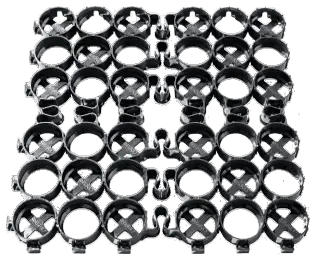
TRUEGRID PRO LITE permeable pavers are lightweight, DIY-friendly driveway and outdoor base pavers that install easily for a variety of projects. Made in the USA from 100%...
Where Self Binding Gravel Works Well on a Driveway
Self binding gravel performs best in predictable, moderate-use driveway conditions.
Straight runs with consistent traffic patterns suit this material well. A driveway where vehicles park at roughly the same point each day and follow the same path in and out gives the surface even load distribution and allows it to firm and stabilize over time.
Parking areas are a strong application. Static vehicle load is gentler on self binding gravel than dynamic load, and a parking area that is well-edged and correctly compacted will hold its surface for years with minimal intervention.
Low-to-moderate frequency use is the ideal traffic pattern. A family home with one or two vehicles using the driveway daily is well within the performance envelope of this material.
Where Self Binding Gravel Struggles on a Driveway
There are driveway conditions where self binding gravel is not the appropriate choice, and it is worth understanding these clearly before committing to the material.
Heavy vehicle access is the most significant limiting factor. Delivery lorries, skip wagons, or any vehicle above standard van weight will deform a self binding gravel surface, particularly at the point of turning. The fine fraction that provides the binding action is susceptible to rutting under concentrated heavy loads.
High-turn areas present a challenge. Vehicle turning movements generate lateral shear forces on the surface. Frequent sharp turns, for example where a vehicle turns on the spot in a narrow drive, will gradually break down the bound surface layer and produce loose material at the turning point.
Steep gradients require additional care. Self binding gravel can be used on mild inclines, but on steeper slopes surface water can gradually wash the fine fraction downhill, degrading the binding action over time. A slope gradient of 1:10 or steeper requires careful drainage design and potentially a different surface material.
If heavy vehicles, frequent turning, or steep gradients apply to your site, the self binding gravel alternatives page covers how resin-bound aggregate and other surface materials compare for more demanding driveway conditions.
How Does Self Binding Gravel Compare to Tarmac and Resin?
The three most common alternatives to self binding gravel for a residential driveway are tarmac, resin-bound aggregate, and plain loose gravel. Each represents a different trade-off between cost, appearance, durability, and installation complexity.
Tarmac is more durable than self binding gravel under heavy or frequent vehicle loads. It provides a sealed, impermeable surface, which makes it easier to keep clean and more resistant to surface degradation in wet conditions. The trade-offs are higher material and installation cost, a less natural appearance, and the fact that once laid it is difficult to modify or extend without visible joins.
Resin-bound aggregate provides a harder, fully permeable surface with a decorative finish that shows the aggregate clearly. It is significantly more expensive than self binding gravel and requires professional installation in most cases. For a homeowner who wants the natural stone appearance with maximum surface durability, resin-bound is the higher-specification option. The detailed comparison between these two materials is covered on the self binding gravel alternatives page.
Loose gravel costs less and is simpler to lay than self binding gravel, but it displaces freely, requires regular regrading, and tracks into buildings on vehicle tyres and footwear. Self binding gravel addresses all three of those problems at relatively modest additional cost.
What to Put Under Self Binding Gravel on a Driveway
The sub-base is the most important factor in driveway performance. A well-prepared sub-base determines how well the self binding gravel surface holds up under load, how long it lasts before it needs attention, and whether surface water drains correctly.
For a standard residential driveway, the recommended build-up is a compacted sub-base of MOT Type 1 crushed aggregate at 150mm depth, laid over a geotextile membrane that separates the sub-base from the natural ground below. The self binding gravel surface layer is then laid at 50 to 75mm compacted depth on top of the prepared sub-base.
Skipping the sub-base, or reducing it significantly in depth to save cost, is the most common cause of driveway failure with this material. The self binding gravel surface layer cannot compensate for a soft or uneven base beneath it.
The complete installation process, including excavation depth, membrane specification, edging, and compaction technique, is set out in the how to lay self binding gravel guide.
Self Binding Gravel Driveway Maintenance
One of the practical advantages of self binding gravel over loose gravel is reduced maintenance frequency. The bound surface does not scatter and migrate the way loose gravel does, which means the regrading and top-up cycles that loose gravel driveways require are significantly less frequent.
Over time, traffic gradually erodes the fine fraction from the upper surface layer. When this happens the surface begins to feel less firm and loose aggregate appears on top of the bound layer. The remedy is a top-dressing application: a thin layer of fresh self binding gravel spread over the existing surface, dampened, and re-compacted. This restores the binding action and brings the surface back to its original performance level without the need for full excavation or replacement.
Weeds are the other maintenance consideration. Self binding gravel does not suppress weed growth as effectively as a sealed surface. A geotextile membrane beneath the sub-base significantly reduces the weed problem, but surface weeds can still establish from airborne seed in the material itself. Prompt removal before root systems establish is the most effective management approach.
Frequently Asked Questions
Can you drive on self binding gravel straight away? The surface can take light foot traffic immediately after compaction. Vehicle traffic should ideally be delayed for 24 to 48 hours to allow the surface to firm further, particularly in warm weather when the fine fraction is drying and binding most actively.
Does self binding gravel rut easily? On a correctly prepared sub-base, rutting under standard passenger vehicle loads is not a common problem. Rutting is most likely to occur on an inadequate sub-base, in high-turn areas under repeated use, or under vehicle loads that exceed the performance envelope of this material.
Will self binding gravel wash away in heavy rain? A properly compacted self binding gravel surface on a flat or gently sloped site is resistant to rain wash. The bound surface layer holds together under rainfall in a way that loose gravel does not. On steeper slopes or where drainage is poor, surface erosion is more of a risk, and drainage design becomes an important part of the project.
Is self binding gravel suitable for a driveway in a conservation area or listed property setting? Self binding gravel is frequently used in heritage and conservation settings precisely because it produces a natural, historically appropriate surface finish that does not look out of place alongside period architecture. Its permeability characteristics also tend to satisfy the sustainable drainage requirements that many planning authorities apply to new driveway surfaces.