
Lawn Mowers: Buying Guides and Reviews for Homeowners
Choosing the right lawn mower comes down to matching the tool to three things: the size of the lot, the type of terrain, and the level of maintenance the buyer is comfortable managing. A walk-behind push mower suits small, flat lots. A self-propelled walk-behind suits medium lots with grade changes or any lot where pushing for 45 minutes is physically demanding. A riding mower or zero-turn suits half-acre and larger lots where walk-behind mowing takes too long to remain practical as a weekly task. This hub covers the full selection framework and links to the specific product guides, comparisons, and reviews that follow.
The Primary Selection Framework: Lot Size and Terrain
Lot size is the first variable in any mower decision because it determines which mower format can cover the ground in a practical amount of time. Walk-behind mowers with 21-inch decks cover a quarter-acre lot in roughly 45 to 60 minutes. That range is the outer practical limit for a push mower: above a quarter acre, the time and physical effort of pushing start to become a barrier to mowing consistently at the right frequency. A self-propelled walk-behind with a 21 or 22-inch deck covers the same area in 30 to 40 minutes with significantly less physical fatigue.
Terrain is the second variable. A flat lot is well suited to both push and self-propelled configurations. A lot with consistent grade changes of more than 10 to 15 degrees favors rear-wheel drive or all-wheel drive self-propelled mowers, which maintain traction on slopes where front-wheel drive loses grip. Lots with slopes exceeding 15 degrees or irregular, rough terrain that regularly bogs down a walk-behind are better suited to a riding mower with a wider deck and a lower center of gravity.
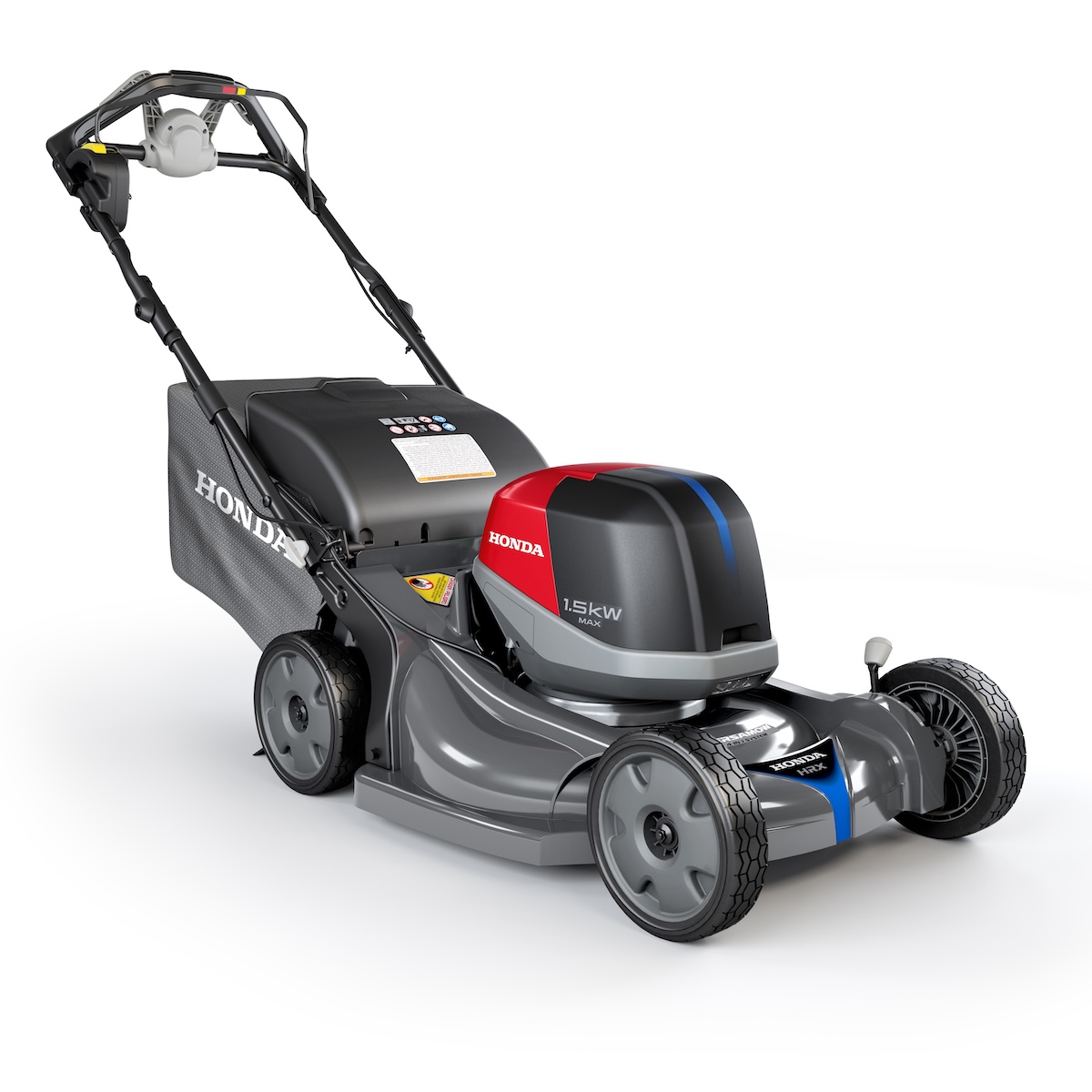
The Honda HRX-BV battery powered lawn mower delivers high torque performance for clean cutting in thick and tall grass. It features 4-in-1 Versamow with Clip Director for...
Walk-Behind vs Self-Propelled vs Riding
Walk-behind push mowers are the lightest, least expensive, and mechanically simplest option. They suit lots of a quarter acre or less on reasonably flat ground and buyers who want a low-maintenance tool with minimal moving parts. Self-propelled mowers add a drive system to the rear or all four wheels, reducing the operator’s effort to steering rather than pushing. They are the practical standard for lots between a quarter and half acre and any lot with slopes. Riding mowers and zero-turn mowers enter the picture for lots approaching and exceeding half an acre, where the time saving of a 42 to 54-inch cutting deck over a 21-inch walk-behind becomes significant enough to justify the larger purchase.
Gas vs Battery vs Corded Electric
Gas mowers use four-stroke engines that run on regular unleaded gasoline and require oil changes, spark plug service, and air filter maintenance on a seasonal schedule. They offer unlimited runtime, high torque in dense or damp grass, and wide availability of service parts and replacement components. Battery-powered mowers have closed the performance gap at the residential lot-size range, with 56V and 80V lithium-ion systems delivering comparable power in normal mowing conditions, no fuel cost, and almost no regular maintenance. Corded electric mowers are the lightest and most affordable of the three but are limited to a working radius determined by cord length and are best suited to very small, open lots with access to an outdoor outlet.
The gas vs electric lawn mower comparison covers the full cost, performance, and convenience trade-off across both power source types over a five-year ownership period, with clear guidance on which suits each lot-size and mowing-frequency profile.
Self-Propelled Mowers
Self-propelled mowers are the most purchased mower category for residential lots in the quarter-acre to half-acre range. Drive configuration, variable speed control, and deck size are the three main selection variables within the category. The best self-propelled lawn mower guide covers front-wheel, rear-wheel, and all-wheel drive options across gas and battery power sources, with top picks in each configuration and clear guidance on which drive type suits flat lots vs lots with slopes.
Battery-Powered Mowers
Battery lawn mowers have become the default choice for buyers with lots at or below a quarter acre and strong demand from buyers with lots up to a third of an acre. The best battery-powered lawn mower guide covers the leading 40V, 56V, and 80V models with a primary evaluation based on runtime per charge, self-propelled drive performance, cutting quality in heavy grass, and ecosystem compatibility for buyers who own other cordless tools from the same brand.
Electric Corded Mowers
Corded electric mowers eliminate fuel and battery management entirely and are consistently the lightest walk-behind option in any given cutting width. Their working radius is limited to the cord length plus an extension cord, which is workable for lots of an eighth of an acre or less with good outdoor outlet placement. The best electric lawn mower guide covers the top corded models alongside the best cordless options for buyers comparing both formats before committing to a battery platform.
Riding Mowers
Riding mowers become the practical choice when walk-behind mowing of the full lot takes more than 60 to 75 minutes per session, a threshold most homeowners encounter at half an acre or above. The best riding lawn mower guide covers traditional riding tractors and zero-turn models, with guidance on deck size selection, engine output, and the turning radius differences between the two formats that affect practical productivity on smaller lots with tight corners.
Model Reviews
The Honda HRX217 lawn mower review covers the benchmark residential gas walk-behind in depth, including the MicroCut dual-blade system, NeXite deck durability, and real-world performance across mulching, bagging, and side-discharge configurations.
Mower Accessories
Blade work and underside cleaning require raising the mower to a stable working height, which a standard floor jack cannot achieve safely on most mower decks. The best lawn mower lifts guide covers floor-mounted, saddle-style, and ramp-style lift options that allow safe access to the blade and deck for sharpening and cleaning.
Maintenance and Fuel
Gas walk-behind mower engines use SAE 30 or 10W-30 oil depending on operating temperature range and the manufacturer’s specification. Fuel grade, oil change intervals, spark plug service, and seasonal winterization are covered in the engine maintenance and fuel hub. The annual mechanical service schedule for blade sharpening, belt inspection, and filter replacement is covered in the lawn mower maintenance guide in the lawn care section. Readers focused on the technique and scheduling side of mowing, including cutting height, frequency, and grass type guidance, will find that context in the mowing hub.