
Gas vs Electric Lawn Mower: Which Is Right for Your Yard?
Gas and electric lawn mowers are both capable of cutting a residential lawn well. The question is not which type cuts grass better in laboratory conditions: it is which type suits the combination of lot size, terrain, mowing frequency, storage setup, and maintenance tolerance that applies to a specific home and homeowner. This comparison covers each of the variables that matter for residential buyers, so the decision is based on the actual trade-offs rather than general assumptions about power or convenience.
Power and Cutting Performance
Gas mowers use four-stroke engines in the 140cc to 190cc range for typical residential walk-behind models. Engine displacement translates directly to torque, which determines how well the mower handles thick, tall, or damp grass without bogging down. A 190cc engine on a bagging mower with a full catcher and dense grass will cut through without slowing. A 140cc engine in the same conditions will labor in spots.
Battery-powered mowers have improved considerably in cutting performance, particularly with the introduction of brushless motor technology and higher voltage platforms. Modern 56V and 80V battery mowers produce power output that compares well with mid-range 160 to 190cc gas engines in typical dry grass conditions. The gap appears in very heavy grass, prolonged wet-grass mowing, or applications where maximum sustained torque is needed for extended periods. For most homeowners mowing on a weekly schedule and keeping grass height in the recommended range, the performance difference between a quality 56V battery mower and a comparable gas model is not noticeable in day-to-day use.
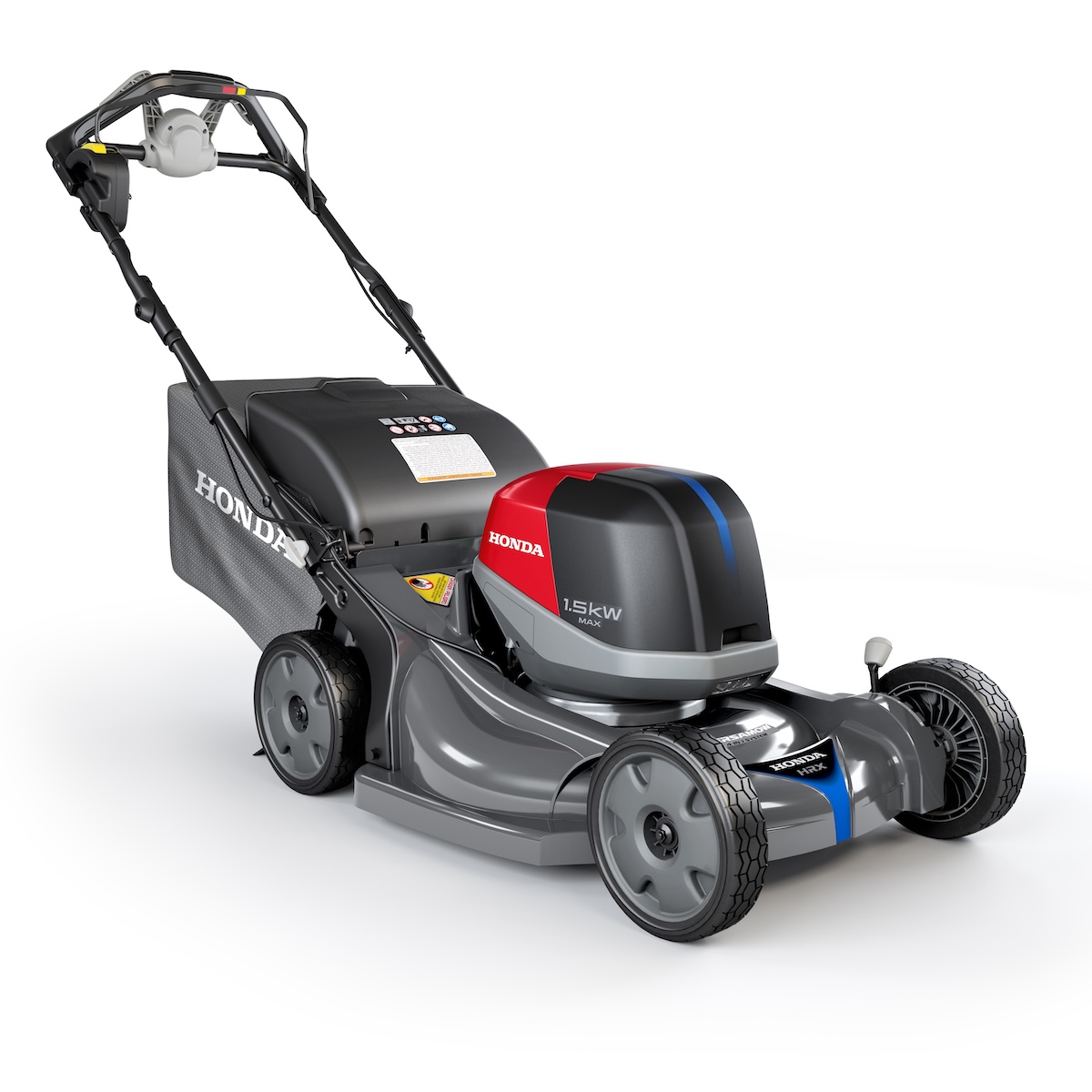
The Honda HRX-BV battery powered lawn mower delivers high torque performance for clean cutting in thick and tall grass. It features 4-in-1 Versamow with Clip Director for...
Lot Size and Runtime
Lot size is the most decisive factor in the gas vs electric comparison. Battery mowers have a finite runtime per charge, and that limit determines whether a single battery can cover the lawn in one session.
A typical 5.0Ah 56V battery in a quality battery mower delivers 40 to 50 minutes of runtime under mixed light and heavy cutting conditions. That is sufficient to cover a quarter-acre lot, assuming the lot is open and the grass is maintained regularly. A lot closer to half an acre or with significant obstacles and direction changes may require either a larger battery or a mid-session recharge. Gas mowers have no runtime limit beyond the fuel tank, which at typical residential use holds enough fuel for multiple mowing sessions.
For lots larger than a third of an acre, a gas mower or a battery mower with a high-capacity backup battery is the more practical choice unless the buyer is willing to manage recharge timing. For lots at or below a quarter acre with regular mowing, a 56V battery system handles the task reliably on a single charge.
Purchase Price
Gas mowers carry a lower purchase price at equivalent performance levels than battery mowers in most cases. A capable gas self-propelled mower with a 163 to 190cc engine starts at around $300 to $400. A comparable battery self-propelled mower from EGO, Greenworks, or Toro in the 56V range starts at around $450 to $600 including the battery and charger, or $350 to $450 for the bare tool if the buyer already owns a compatible battery.
The purchase price gap narrows when the buyer already owns a battery from the same platform for another tool, since the battery cost is shared across the ecosystem. It widens for buyers starting from scratch with no existing battery tools.
Long-Term Operating Cost
Gas mowers accumulate ongoing operating costs that battery mowers do not. A season’s worth of gasoline for a residential mower running 20 to 25 sessions costs roughly $20 to $40 depending on local gas prices and engine size. Annual oil changes add $5 to $15 for oil and a filter. Spark plugs, air filters, and occasional carburetor service add variable cost over the tool’s lifetime. Estimated total fuel and consumable cost for a gas mower over five years of residential use is typically $200 to $350.
Battery mowers have no fuel cost and negligible consumable cost during the battery’s useful life. The significant future expense is battery replacement. Lithium-ion batteries in outdoor power tools typically retain adequate capacity for five to eight years of residential use before performance degradation becomes noticeable, at which point replacement batteries cost $80 to $200 depending on voltage and amp-hour rating.
Over a ten-year horizon, the total cost of ownership for a battery mower is often lower than gas once the battery replacement is factored in, but the initial outlay is higher and the calculation depends heavily on battery longevity and replacement cost at the time of replacement.
Maintenance Requirements
Gas mowers require regular maintenance that battery mowers largely eliminate. Four-stroke engine service for a residential mower includes an oil change every 50 hours or annually (whichever comes first), spark plug inspection and replacement annually, air filter cleaning or replacement each season, and periodic carburetor cleaning when the engine starts or runs poorly. These tasks take 30 to 60 minutes annually for a homeowner comfortable with basic mechanical work, or carry a service cost of $50 to $100 at a small engine shop.
Battery mowers require almost no regular maintenance. The mower deck should be scraped clean after each session to prevent grass buildup under the deck, the blade inspected and sharpened annually, and the battery terminals kept clean. There are no fluid changes, no filters to replace, and no fuel system to service.
The reduction in maintenance burden is the most frequently cited reason homeowners give for switching from gas to battery, and it is a genuine practical advantage for buyers who do not enjoy or are not comfortable with small engine service.
Noise and Emissions
Gas mowers produce significantly more noise than battery mowers, typically in the 85 to 95 dB range at the operator’s ear. Many municipalities have noise ordinances that restrict lawn mowing before 8 or 9 a.m. on weekdays and weekends. Battery mowers operate in the 70 to 78 dB range, which is quieter than a vacuum cleaner and comfortable to use without hearing protection in most cases, though hearing protection is still a reasonable precaution at any sustained power tool noise level.
Gas mowers produce carbon monoxide and hydrocarbon emissions at the exhaust. Battery mowers produce no direct emissions at the point of use. For homeowners in areas with poor air quality days or with enclosed storage near living areas, the absence of exhaust emissions from battery mowers is a practical benefit beyond environmental preference.
Cold-Start Reliability
Gas mowers require a cold-start procedure involving the choke and primer bulb, and engines that have sat over winter with stabilized fuel in the tank may still require multiple pulls before starting reliably. Battery mowers start with a key or safety bail press every time, regardless of temperature, storage duration, or fuel condition, since they have no fuel system to degrade.
For buyers who store a mower through a five-month winter and want it to start reliably on the first mowing day of spring, battery provides a consistent advantage in cold-start predictability.
The Decision Framework
Gas suits buyers with lots over a third of an acre, properties with steep terrain or consistently heavy grass, buyers who already have a gas tool ecosystem and are comfortable with small engine maintenance, and buyers for whom purchase price is the primary constraint.
Battery suits buyers with lots at or below a quarter to a third of an acre with regular mowing schedules, buyers who value low maintenance and tool-free starting, households that already own tools in a compatible battery platform, and buyers in noise-sensitive neighborhoods or areas with outdoor tool emissions restrictions.
Buyers in the half-acre or larger range for whom riding mowers are worth considering will find that guidance in the best riding lawn mower guide, which covers the lot-size thresholds and terrain types where a riding format becomes more practical than any walk-behind configuration. The mowing technique and scheduling guide in the lawn care section covers how mowing height, frequency, and grass type all influence how hard the mower has to work, which in turn affects how meaningful the gas vs battery power gap is in real-world use.