
Best Self-Propelled Lawn Mower for Home Use
A self-propelled lawn mower drives its own wheels, reducing the physical effort required from the operator to steering and direction rather than pushing. That difference matters most on slopes, uneven terrain, and lots above a quarter acre, where pushing a heavy walk-behind mower for an hour or more becomes physically demanding enough to affect mowing frequency and quality. Self-propelled mowers cost more than comparable push models, but for anyone managing a lot larger than a quarter acre with any grade change, the investment is justified in most cases.
How Self-Propulsion Works
Self-propelled mowers use a drive system that transfers power from the engine or motor to one or more sets of wheels. Three drive configurations are available: front-wheel drive (FWD), rear-wheel drive (RWD), and all-wheel drive (AWD). Front-wheel drive suits flat lots and light grass volume; it is maneuverable and easy to disengage for turning, but loses traction when the grass catchers are full and weight shifts to the rear. Rear-wheel drive delivers better traction on slopes and when bagging because weight stays over the driven wheels; it is the most common configuration in mid-range self-propelled mowers and the best general choice for lots with grade changes. All-wheel drive provides traction from all four wheels simultaneously and is the best choice for steep terrain, loose soil, or wet grass conditions where any single axle losing grip would cause the mower to slip.
Drive speed is adjusted either through a fixed-speed lever with multiple settings or, on higher-end models, a variable-speed bail that lets the operator dial in any speed from a slow walk to a fast pace by squeezing the bail harder or lighter.
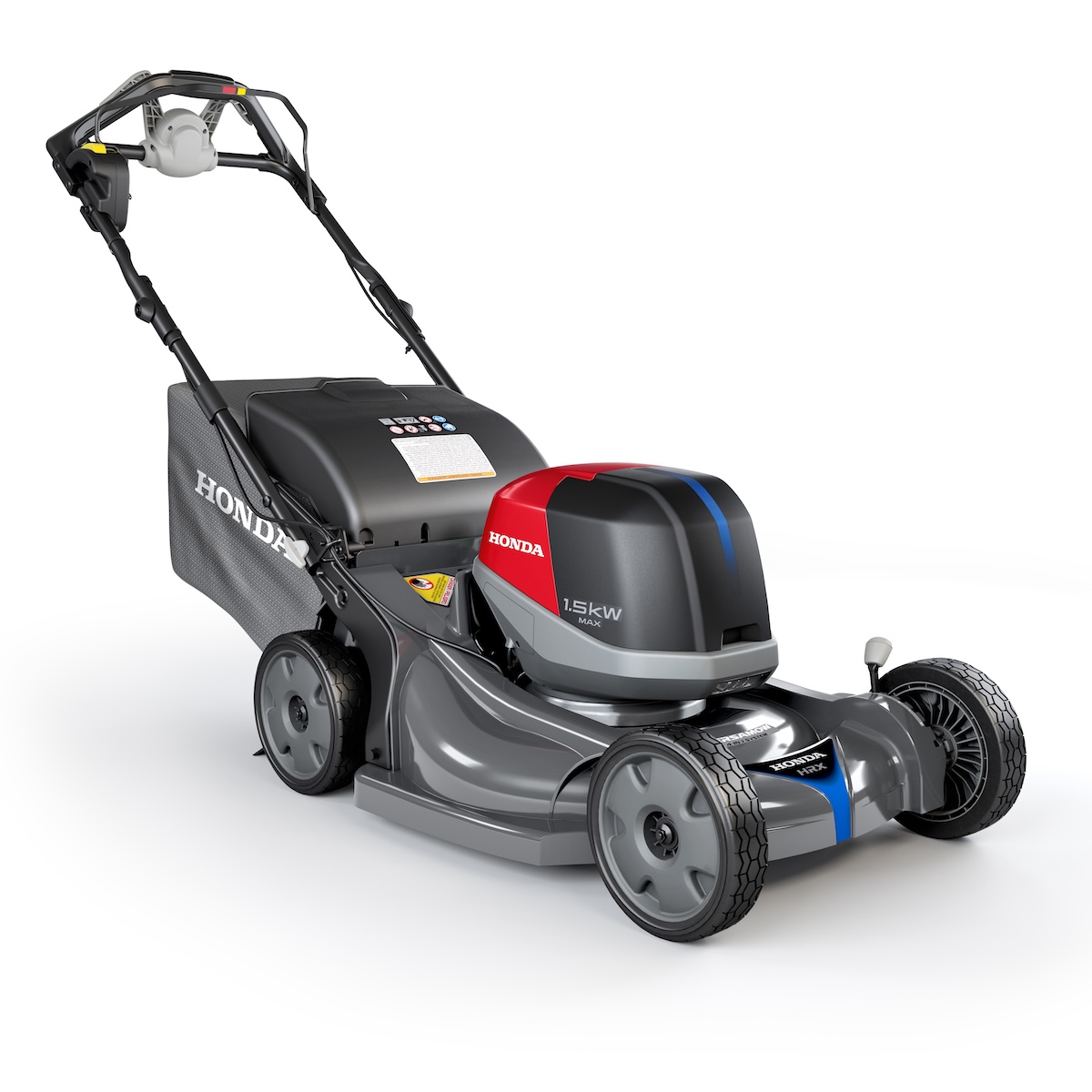
The Honda HRX-BV battery powered lawn mower delivers high torque performance for clean cutting in thick and tall grass. It features 4-in-1 Versamow with Clip Director for...
Deck Size and Cutting Width
Cutting width determines how many passes a mower needs to cover the same area and is the primary factor in how long mowing takes. For lots up to a quarter acre, a 21-inch deck is the standard choice. For lots between a quarter and a half acre, a 21 to 22-inch deck handles the area in a reasonable time. For lots approaching a half acre, a 22-inch or wider deck shortens the session significantly, and some homeowners in this range consider a riding mower or zero-turn instead. Self-propelled mowers with decks of 21 to 22 inches cover the large majority of residential applications. Wider residential walk-behind decks of 28 inches are available from brands including Honda and Toro for buyers who want the productivity of a wide cut without moving to a riding format.
Gas vs Battery Self-Propelled Mowers
Gas self-propelled mowers use four-stroke engines in the 140cc to 190cc range for most residential models. They start on a recoil pull cord or electric key, offer unlimited runtime, and deliver consistent power through heavy or damp grass. The trade-off is maintenance: oil changes, spark plug replacements, air filter servicing, and carburetor care over the tool’s lifetime. Battery self-propelled mowers have become strong competitors in the residential market, with 40V, 56V, and 80V systems from brands including EGO, Greenworks, and Ryobi offering runtime figures of 40 to 60 minutes per charge, which covers most quarter-acre lots in a single session. Brushless motor technology has made battery mowers more power-efficient, extending the runtime per charge compared with earlier brushed-motor designs.
For a detailed cost and performance comparison between the two power sources, the gas vs electric lawn mower guide covers both over a five-year ownership period including fuel, oil, battery replacement, and typical repair costs.
Top Self-Propelled Mower Picks
Best overall gas self-propelled mower: Honda HRX217 The Honda HRX217 is the benchmark residential gas self-propelled mower for consistent starting reliability, blade quality, and long-term durability. Its MicroCut dual-blade system produces a finer mulch than single-blade designs and handles tall or thick grass in a single pass. The rear-wheel drive NeXite deck is lighter than steel and does not rust or dent. The Honda HRX217 review covers the full specification, performance assessment, and a direct comparison to competing models in the same price range.
Best battery self-propelled mower: EGO Power+ LM2135SP The EGO LM2135SP is the strongest-performing battery self-propelled mower for most residential use. It runs on a 56V arc lithium battery and uses a brushless motor that delivers output comparable to a 190cc gas engine. The self-propelled system uses a variable-speed bail, the deck is 21 inches, and the battery management system provides a consistent power output until the battery approaches its lower charge threshold. Charge time for the 7.5Ah battery supplied is approximately 45 minutes with the rapid charger included in the kit.
Best budget self-propelled mower: Troy-Bilt TB330 The Troy-Bilt TB330 is a rear-wheel-drive self-propelled mower with a 163cc Briggs and Stratton engine at a price point that suits buyers who want self-propulsion without the premium of a Honda or Toro. It covers the core functionality of a residential self-propelled mower reliably, with an adjustable drive speed and a 21-inch steel deck that handles standard residential grass conditions without issue.
Best self-propelled mower for hills: Toro Personal Pace The Toro Personal Pace system uses a variable rear-wheel-drive mechanism where the handle bar pressure itself varies the drive speed: push the handle forward to go faster, reduce pressure to slow down. On slopes, this means the mower automatically adjusts pace to the terrain and the operator’s natural gait. The Toro Personal Pace is available in both gas and battery configurations and is the most consistently recommended option for lots with consistent grade changes.
Key Buying Factors
Buyers choosing a self-propelled mower should weigh drive type (FWD, RWD, AWD), deck size relative to lot size, cutting height adjustment (lever per wheel vs single-point), grass management system (mulch only vs mulch and bag vs mulch, bag, and side-discharge), and whether the mower accepts optional accessories such as a dethatching blade or lawn sweeper attachment.
Mower Accessories
Blade work and servicing access are made safer and easier with a mower lift or jack. The best lawn mower lifts guide covers floor-mounted, saddle-style, and ramp-style lift options for homeowners who sharpen their own blades and need a stable elevated platform to work under the deck safely.
Maintenance and Service
Self-propelled mowers share the same four-stroke engine service requirements as push mowers: oil changes at the manufacturer-specified interval, spark plug inspection annually, and air filter cleaning or replacement each season. The fuel type and oil specification guidance for walk-behind mower engines is covered in the engine maintenance and fuel hub, and the full annual service schedule including blade sharpening and belt inspection is covered in the lawn mower maintenance guide.