
Natural Ways to Get Rid of Ants Without Chemicals
Natural ant control works best when the approach is matched to what the ants are doing and what is attracting them. A homeowner dealing with a trail of sugar ants crossing the kitchen counter needs a different tool than someone managing a fire ant mound in a backyard play area or a carpenter ant colony in a damp wood beam. This guide covers the organic, physical, and cultural methods with genuine evidence of effectiveness, explains which situations each is suited for, and skips the folk remedies that sound convincing but produce unreliable results.
Exclusion: Preventing Entry Before Treating the Trail
The most durable natural ant control measure is removing the access points ants use to enter the structure. Ant workers follow pheromone trails from the nest to a food source and back, and they enter through gaps that are often a fraction of a millimeter wide: gaps around pipe penetrations, under door thresholds, around window frames, through weep holes in brick veneer, and through cracks in foundation slab edges. Sealing these entry points with caulk, weatherstripping, and appropriate gap fillers eliminates the access pathway and is more permanent than any applied treatment.
Before applying any other treatment indoors, walk the exterior perimeter and seal every visible gap in the building envelope below the roofline, paying particular attention to where any utility line, pipe, or cable enters the structure. This step takes an afternoon and prevents the need to retreat for the same trail access points in the next season.
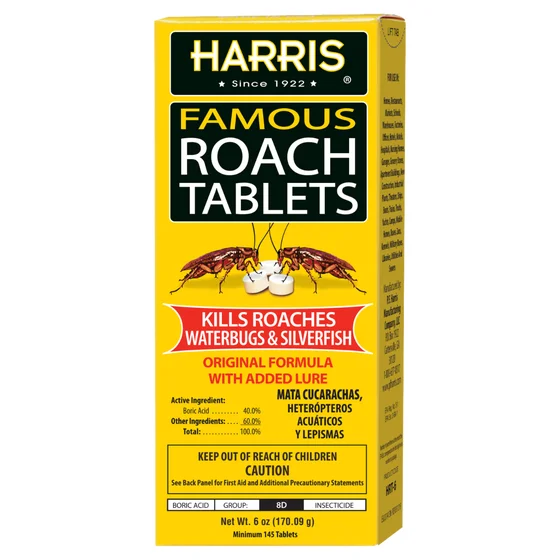
Harris Roach Tablets use boric acid with a formulated lure to attract roaches and help eliminate infestations at the source. The EPA-registered tablets are long lasting when kept dry and are designed to kill the entire colony by roaches carrying the bait back to their nests. Easy to conceal in hidden areas like under drawers, appliances, and cabinets, they offer an alternative to bait traps for treating multiple rooms.
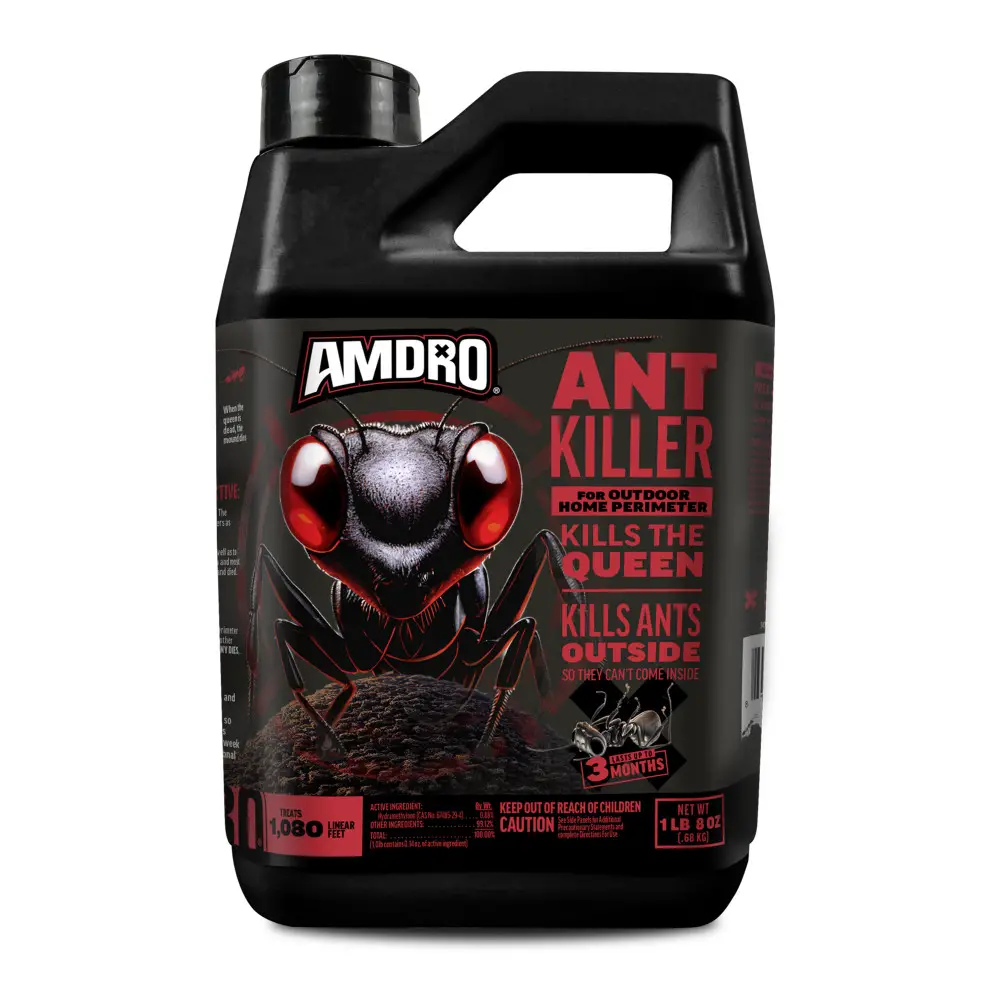
Amdro Ant Killer for Outdoor Home Perimeter creates a protective band that attracts and kills listed common ant species before they enter your home. Dual-action bait foraging workers carry it back to their colonies, helping reduce visible ants within about a week and stopping the colony, including the queen. For best results, apply when ants are active, and keep the treatment working up to three months for ongoing perimeter protection.
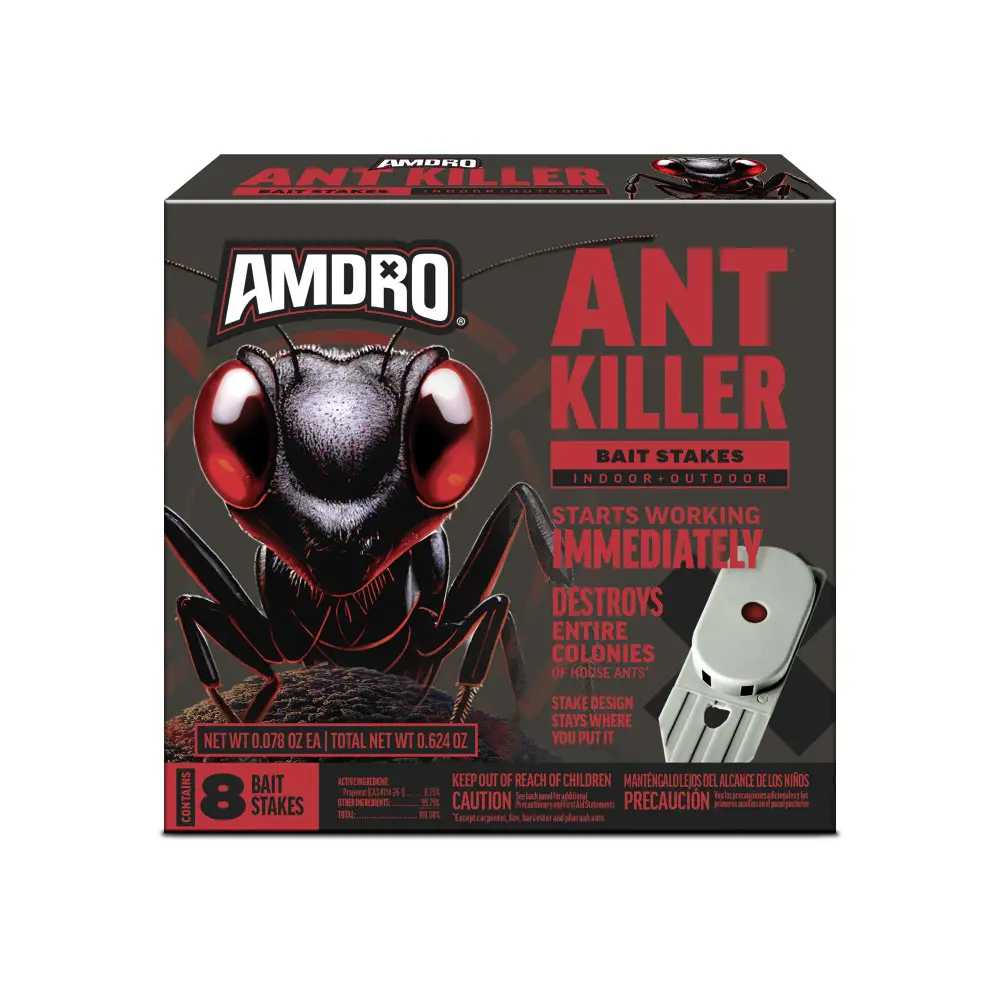
Amdro Ant Killer Bait Stakes destroy entire house ant colonies with a dual-action formula that attracts and kills sweet and grease eating ants. The pre-filled stakes are ready to use with no activation and can be placed indoors near ant trails or outdoors around your home perimeter. For best results, replace every 3 to 6 months and use year-round to help prevent ant infestations.
Borax-Based Bait: The Most Effective Natural Indoor Treatment
Borax (sodium tetraborate) dissolved in a sugar or protein food matrix is the most effective natural ant bait available to homeowners and works on the same colony-elimination principle as synthetic gel baits. Workers collect the bait, carry it back to the nest, share it through trophallaxis, and the slow-acting toxic effect of borax reaches the queen over a period of days to weeks. The key to borax bait success is using the correct concentration: too much borax kills workers before they return to the colony; too little does not reach a lethal dose.
An effective borax sugar bait is made from one cup of warm water, two tablespoons of granulated sugar, and one-half teaspoon of borax. Mix until fully dissolved. Place small amounts in shallow containers (bottle caps or jar lids work well) near active trails. Do not place borax bait where children or pets can access it freely, as borax is toxic if consumed in quantity.
For protein-preferring species such as carpenter ants, substitute peanut butter for sugar as the food matrix, mixed with a smaller amount of borax at approximately one part borax to ten parts peanut butter by weight.
Diatomaceous Earth as a Physical Barrier
Food-grade diatomaceous earth applied in a dry band at entry points, along baseboards, and under appliances creates a physical barrier that damages the cuticle of ants crossing it. It is effective as a supplemental exclusion tool for crawling ants and is particularly useful in areas where a long-lasting dry barrier is appropriate, such as under kitchen appliances and in the gap between the floor and cabinet base.
Diatomaceous earth is not effective in outdoor applications where rain will displace it, or in moist indoor areas where it absorbs water and loses its desiccating properties. Apply thin and evenly: a heavy layer creates a visible pile that ants will walk around. Replace after any moisture exposure. For a detailed explanation of how diatomaceous earth works and its impact on beneficial insects when used outdoors, see our diatomaceous earth guide.
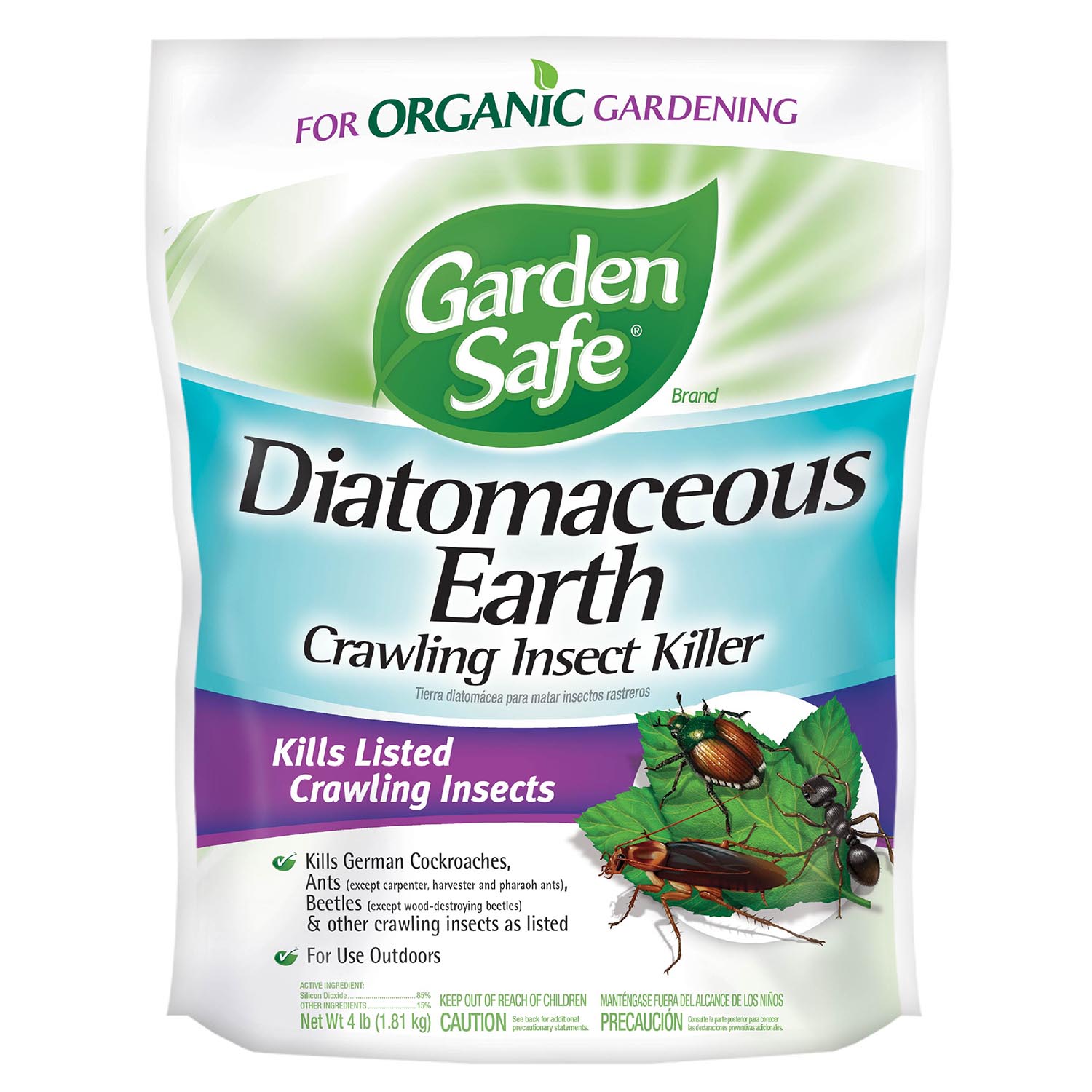
Garden Safe diatomaceous earth-based crawling insect killer provides organic, long-lasting control for listed pests. It kills German cockroaches, ants, beetles, fleas, mealybugs, and other crawling insects by contact by coating their exoskeletons and drying them out. Apply a thin powdery layer outdoors on plants and surrounding soil, and use indoors for crawling insect control as directed.
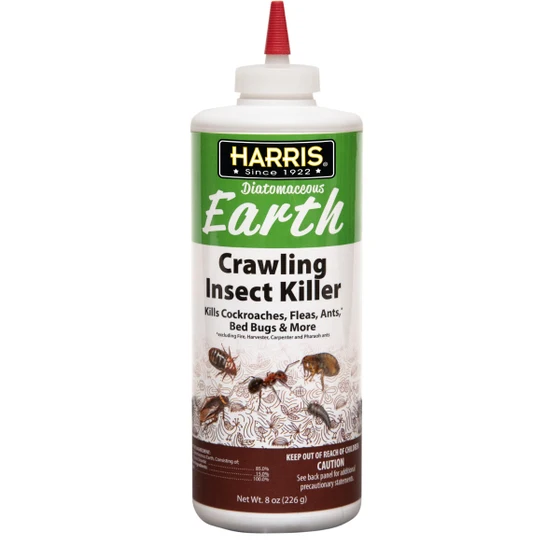
Harris Diatomaceous Earth Crawling Insect Killer is a ready-to-use 100% natural dust that targets crawling pests including ants, roaches, bed bugs, and fleas. Insects that contact or ingest the powder die within 48 hours when applied in cracks, crevices, and other hiding areas. Suitable for indoor and outdoor use with a powder duster included for easy application.
Essential Oil Repellents: Peppermint, Cinnamon, and Tea Tree
Peppermint oil, cinnamon oil, and tea tree oil disrupt ant pheromone trails when applied to surfaces, causing workers to lose the chemical signal and abandon the trail temporarily. These work as short-term repellents at trail surfaces and entry points and are appropriate for households where synthetic chemistry is entirely excluded.
The limitation is residual activity: essential oil repellents evaporate quickly and require daily reapplication to maintain trail disruption. They do not eliminate the colony or prevent the establishment of a new trail, and the colony simply establishes an alternative route within a day or two. Essential oils are most useful as a temporary trail disruption while longer-acting borax bait is being established nearby.
Apply diluted peppermint or cinnamon oil (ten drops per cup of water) in a spray to trail surfaces, window sills, and door thresholds. Do not apply directly over borax bait stations, as disrupting the trail near bait reduces bait collection.
Vinegar as a Trail Disruptor
White vinegar applied to ant trails destroys the pheromone signal and temporarily removes the chemical pathway that workers follow. It is the most accessible and immediate trail disruption tool available in most homes and is appropriate as a quick first response while a more durable treatment is being set up. Wipe trail surfaces with undiluted white vinegar and allow to air dry. The disruption lasts until new pheromone is deposited, which may be a matter of hours for an active trail.
Vinegar does not kill ants and does not affect the colony. It is a trail management tool, not a control measure.
Boiling Water for Outdoor Mound Treatment
Boiling water poured directly into an ant mound kills workers and larvae in the immediate pour zone and can reach a queen if the nest is shallow and the pour volume is sufficient. It is a completely natural, chemical-free option for outdoor mound treatment and is most effective for small, newly established mounds in accessible locations.
The limitations are significant for large or deep colonies: a mature fire ant mound may extend two to three feet below the surface, and the boiling water cools before reaching the lowest galleries. Multiple consecutive pours improve penetration. The treatment is also disruptive to soil structure and the surrounding plant roots if applied in a garden bed, and it kills whatever soil biology is present in the immediate treatment zone. Best suited for mounds in open lawn, gravel areas, or along paved edges where soil disturbance is not a concern.
Cultural Controls: Removing What Attracts Ants
Sanitation is the single most powerful natural ant control tool for indoor infestations. Ants enter buildings in search of food and water, and removing those attractants eliminates the foraging reward that reinforces trail activity. Store all food in sealed containers, wipe up spills immediately, empty indoor compost containers daily, seal pet food between meals, and repair any plumbing leaks that provide water sources near potential nest sites.
Outdoors, removing the aphid populations that ants tend for honeydew is an important cultural control step for yards with heavy ant activity in garden beds and on trees. Aphid honeydew is a major food source for many nuisance ant species, and controlling aphid populations disrupts ant foraging circuits in the garden. The connection between aphid management and ant control in the garden context is covered in our aphid control guide.
What Does Not Work Reliably
Several folk remedies for ant control are widely shared but do not produce reliable results. Cayenne pepper, chalk lines, baby powder, and coffee grounds placed at entry points disrupt trails temporarily at best and do not prevent ants from finding alternative routes within hours. Cinnamon as a repellent is effective only while the odor is fresh and concentrated. Planting mint around the foundation has no documented effect on ant behavior at the plant-to-structure distance involved in residential settings.
For natural methods that reliably address specific ant species in more detail, see our sugar ant control guide and our pavement ant guide.