
How to Get Rid of Pavement Ants
Pavement ants (Tetramorium caespitum) are one of the most commonly encountered nuisance ant species in North America, particularly in the northern and central United States where they are a non-native introduction from Europe. They build their nests in the soil beneath concrete slabs, pavement, walkways, driveways, and foundation walls, and they are the small dark ants most often seen creating sand-like mounds of excavated soil through expansion joints, cracks in concrete, and the gaps between paving stones. Pavement ants enter homes readily through foundation gaps and plumbing penetrations in search of food, making them both an outdoor aesthetic nuisance and a common indoor pest.
Identifying Pavement Ants
Pavement ants are small, 2.5 to 4 mm long, and dark brown to black with lighter-colored legs. The most useful identification feature visible under modest magnification is the two-node structure of the petiole between the thorax and gaster, and the parallel grooves (striations) running the length of the head and thorax. Workers have a small stinger but rarely sting unless directly handled. A behavioral characteristic that helps with identification is pavement ants’ highly territorial nature: in late spring and early summer, large aggregations of workers from competing colonies engage in visible territorial battles on paved surfaces, with masses of fighting ants accumulating in open areas adjacent to nest sites.
Pavement ants are often confused with odorous house ants (Tapinoma sessile), which are similarly sized and dark but have a single-node petiole and produce a rotten-coconut odor when crushed. The control approach differs slightly between these two species, with odorous house ants being more susceptible to sugar-based gel bait and pavement ants often requiring protein-based bait for higher uptake.
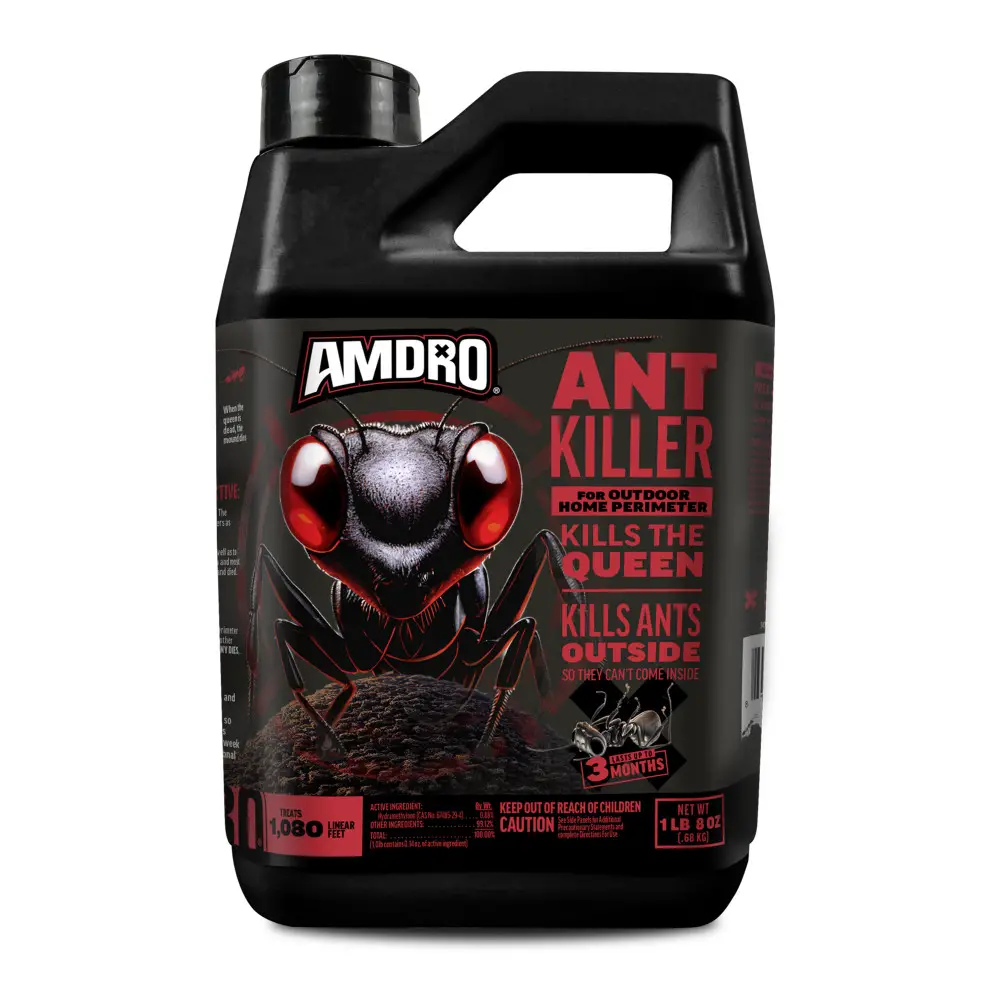
Amdro Ant Killer for Outdoor Home Perimeter creates a protective band that attracts and kills listed common ant species before they enter your home. Dual-action bait foraging workers carry it back to their colonies, helping reduce visible ants within about a week and stopping the colony, including the queen. For best results, apply when ants are active, and keep the treatment working up to three months for ongoing perimeter protection.
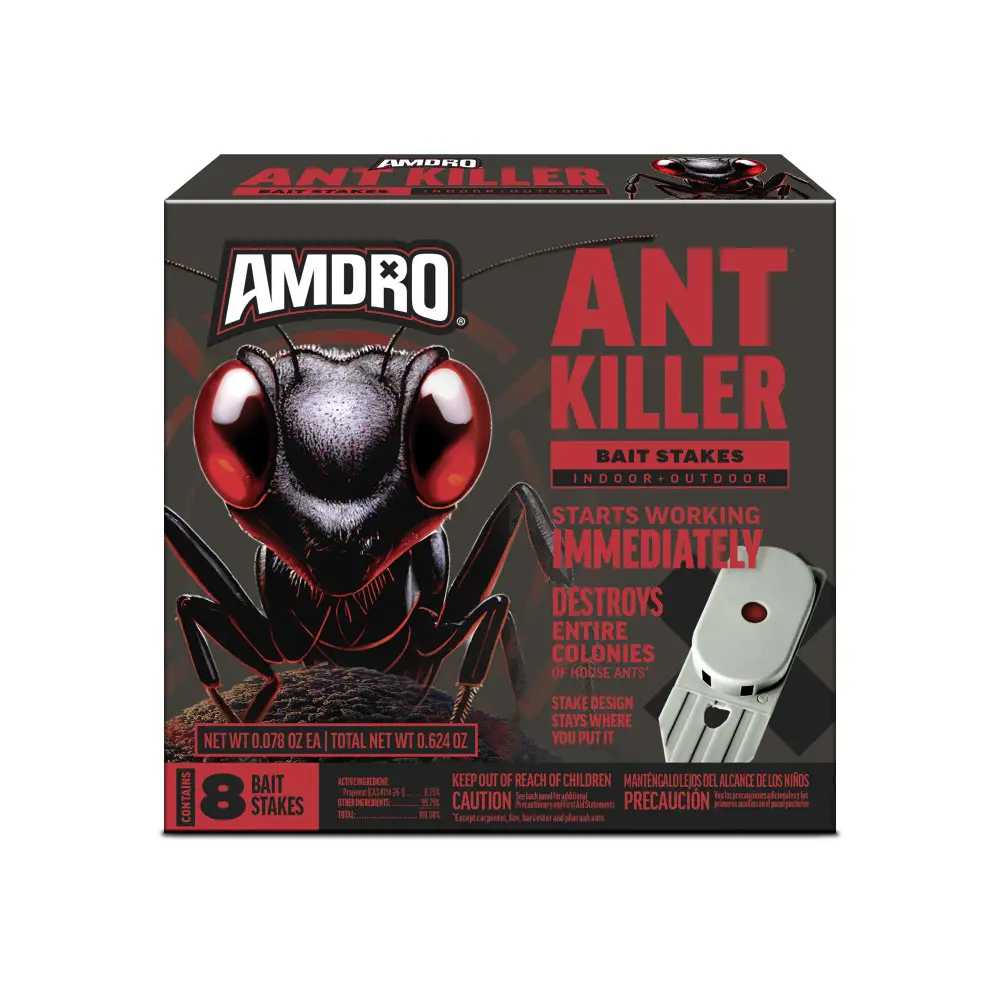
Amdro Ant Killer Bait Stakes destroy entire house ant colonies with a dual-action formula that attracts and kills sweet and grease eating ants. The pre-filled stakes are ready to use with no activation and can be placed indoors near ant trails or outdoors around your home perimeter. For best results, replace every 3 to 6 months and use year-round to help prevent ant infestations.
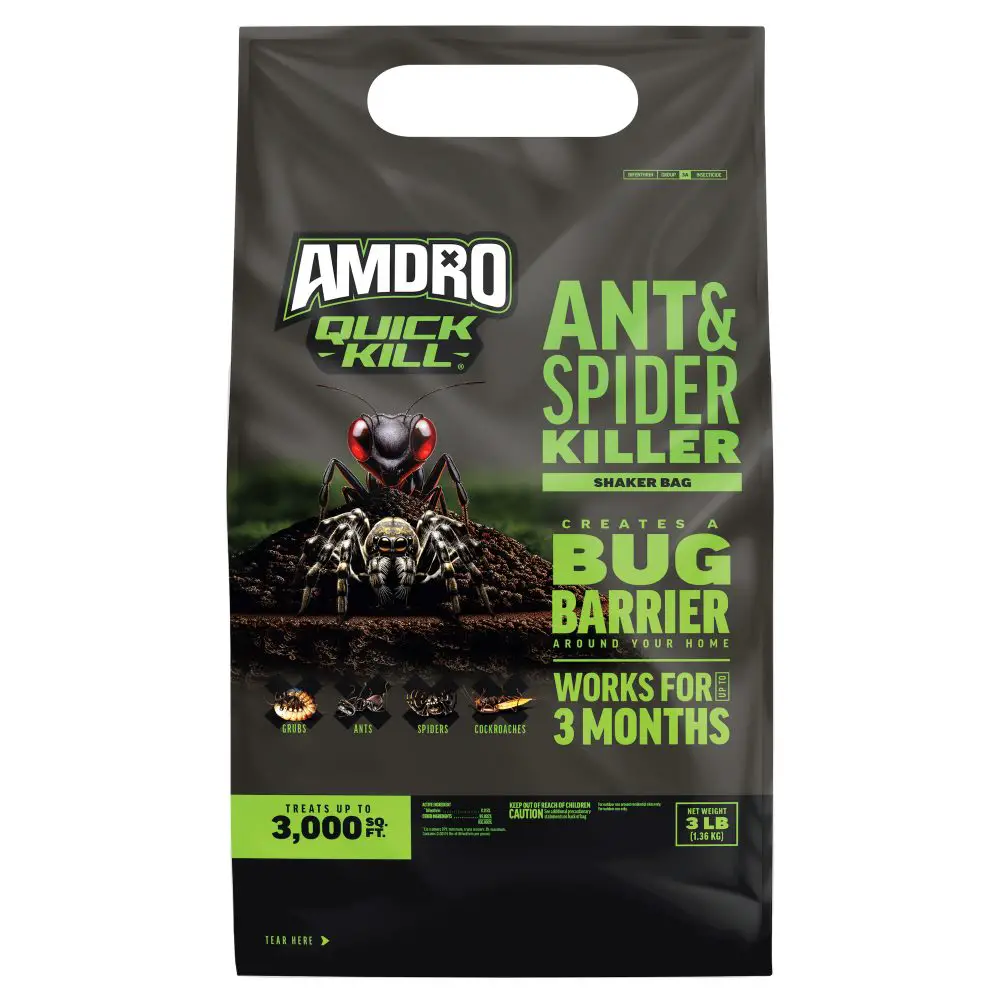
Amdro Quick Kill Ant & Spider Killer granules come ready to spread and help create a bug barrier around your home. The soil-penetrating formula kills listed insects by contact and works for up to 3 months, targeting lawn-damaging pests like grubs and mole crickets as well as surface pests such as ants and spiders. Simply apply evenly with the shaker bag, then lightly water the treated area to help control up to 100 listed insects and cover up to 3,000 square feet.
Nesting Habits and Why They Are Hard to Eliminate
The nest structure of pavement ants is typically below the concrete slab or pavement, sometimes extending two to three feet below the surface. Workers maintain galleries that travel through the soil beneath the pavement and up through any available crack or joint in the concrete surface. The excavated soil deposited as a small mound at the surface is structural material from deep below and indicates a colony that is well insulated from surface treatments.
This nesting depth is why direct mound treatment with a surface drench or spray has limited effectiveness: the liquid cools and disperses before reaching the queen’s gallery. Treatment approaches that are effective for pavement ants work either through bait transfer, which allows the active ingredient to be carried deep into the colony by workers, or through perimeter barrier treatments that disrupt the foraging routes and entry points workers use.
Step 1: Apply Gel Bait Along Active Trails
Gel bait placed on pavement ant foraging trails is the most effective treatment for active colonies, both for outdoor mound populations and for indoor incursions. Pavement ants are opportunistic feeders and will accept both sweet and protein-based bait formulations; switching between sweet and protein bait if one formulation is not being collected readily often improves uptake.
Apply bait in small amounts directly on or adjacent to the ant trail, near the crack or joint where workers are seen entering or exiting the pavement. Do not apply bait in large amounts in open areas away from the trail: workers are more likely to encounter and collect bait placed along the route they are already traveling. Replace bait every two to three days if it dries out or is no longer being actively collected.
Step 2: Apply a Liquid Residual Treatment to the Foundation and Pavement Edge
A perimeter treatment of liquid bifenthrin or permethrin applied to the foundation wall, the soil-to-pavement junction, and the pavement surface for two to three feet out from the foundation creates a residual barrier that deters pavement ant foraging routes and kills workers crossing the treated zone. Apply the perimeter treatment after bait is established and has been collected for several days, as the perimeter treatment kills workers that would otherwise carry bait back to the colony if applied simultaneously with bait.
For the expansion joints and cracks in pavement where workers are entering, an insecticidal dust (deltamethrin or pyrethrin dust) applied into the crack with a hand duster treats the tunnel that workers use to access the nest and kills workers moving through the treated crack.
Step 3: Seal Interior Entry Points
Pavement ant entry into the home occurs through gaps in the foundation sill plate, plumbing penetrations through the slab or foundation wall, expansion joints in concrete flooring that communicate with the underlying soil, and any gap in the interior wall that opens to a void above the foundation. Identifying and sealing these points with caulk, foam backer rod, or hydraulic cement for concrete gaps provides a physical barrier that reduces indoor ant pressure once the outdoor colony has been treated.
For floor-level slab gaps, expanding foam applied into the gap and trimmed flush provides a flexible seal that tolerates the movement common in concrete slabs without cracking open. Standard caulk on concrete expansion joints deteriorates more quickly under foot traffic and temperature cycling.
Managing Pavement Ants Long-Term
Pavement ants reinvade from neighboring properties and natural areas throughout the season, particularly in the spring and early summer when new queens establish colonies. A spring bait application when workers first become active at soil temperatures above 50 degrees Fahrenheit, followed by a perimeter treatment in late spring before peak foraging begins, is a practical twice-annual maintenance program for properties with recurring pavement ant pressure.
For natural control options without synthetic insecticides, the borax-based bait approach described in our natural ant control guide is effective against pavement ants and can be incorporated into the same bait-first approach described above.