
How to Get Rid of Sugar Ants in the House
Sugar ants is a common name applied to several small ant species that enter homes in search of sweet food sources, with the odorous house ant (Tapinoma sessile) being the most frequently encountered in North American households. Other species commonly called sugar ants include the Argentine ant (Linepithema humile) in coastal and southern states, the pavement ant (Tetramorium caespitum), and the ghost ant (Tapinoma melanocephalum) in Florida and other subtropical regions. The common thread is foraging behavior: workers follow pheromone trails from outdoor or wall-void nests into kitchens, pantries, and bathrooms in search of sweet, sugary, or protein-rich food.
The most important thing to understand about sugar ant control is that the ants you see are a small fraction of the colony population, and killing visible workers without addressing the colony has no lasting effect. A spray application that clears a kitchen counter of workers creates a clean surface for three to four hours while the colony sends out new foragers to replace the ones that were killed. Effective sugar ant control delivers an active ingredient back to the colony through bait transfer.
Identifying the Species You Are Dealing With
The odorous house ant is the most prevalent sugar ant species across most of North America. Workers are uniform dark brown to black, 2 to 3 mm long, and single-segmented at the node between the thorax and abdomen (a key distinguishing feature from fire ants, which have two nodes). The most reliable identification test for odorous house ants is crushing a worker: the crushed ant produces a distinct rotten-coconut odor from formic acid compounds. Colonies are large, often containing hundreds of thousands of workers and multiple queens, which is why elimination is slower than for single-queen species.
Argentine ants are lighter brown, smaller (1.5 to 2.5 mm), and form massive interconnected supercolonies that can extend across entire neighborhoods. They are particularly difficult to control with conventional bait because bait uptake is diluted across the enormous colony structure, and treatment typically requires sustained, coordinated bait application over weeks.
Ghost ants are tiny, with dark heads and pale, nearly transparent abdomens, and are primarily a problem in Florida, Hawaii, and similar climates. They nest both indoors in wall voids and potted plant soil and outdoors, making them harder to exclude than species that nest exclusively outside.
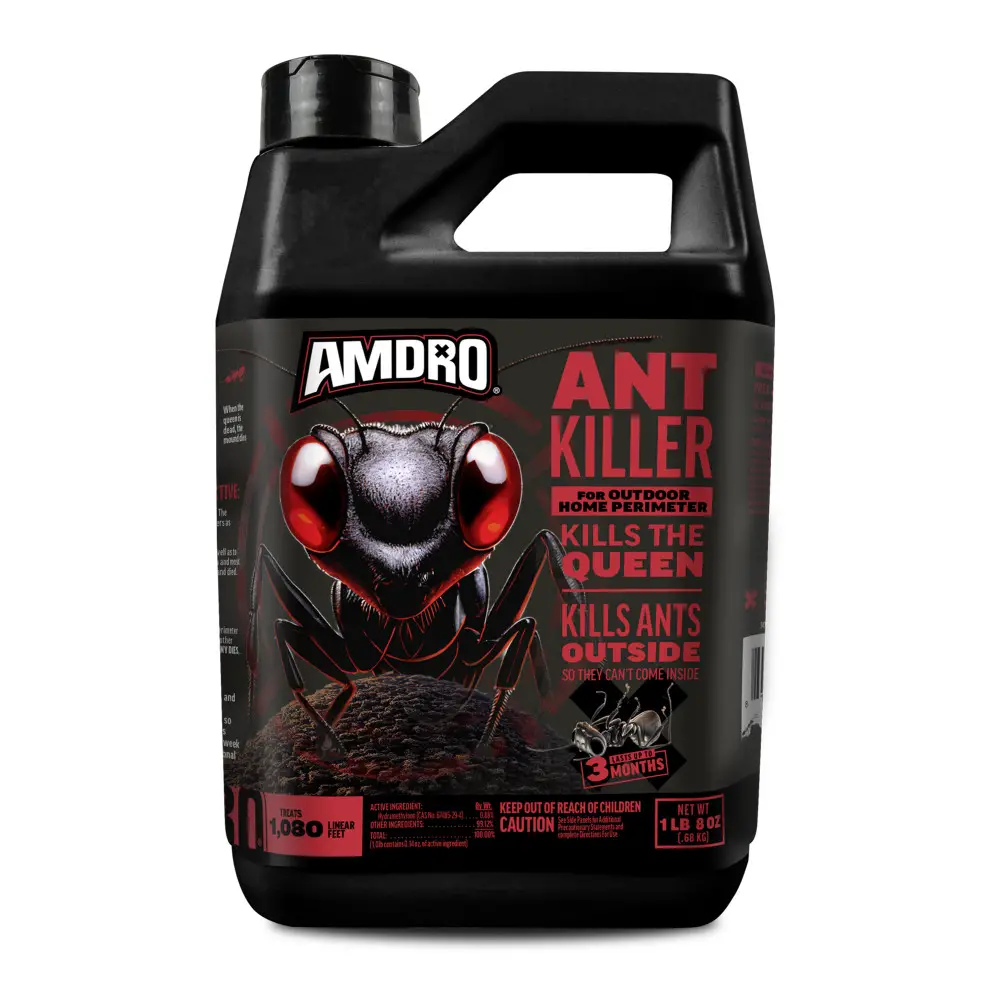
Amdro Ant Killer for Outdoor Home Perimeter creates a protective band that attracts and kills listed common ant species before they enter your home. Dual-action bait foraging workers carry it back to their colonies, helping reduce visible ants within about a week and stopping the colony, including the queen. For best results, apply when ants are active, and keep the treatment working up to three months for ongoing perimeter protection.
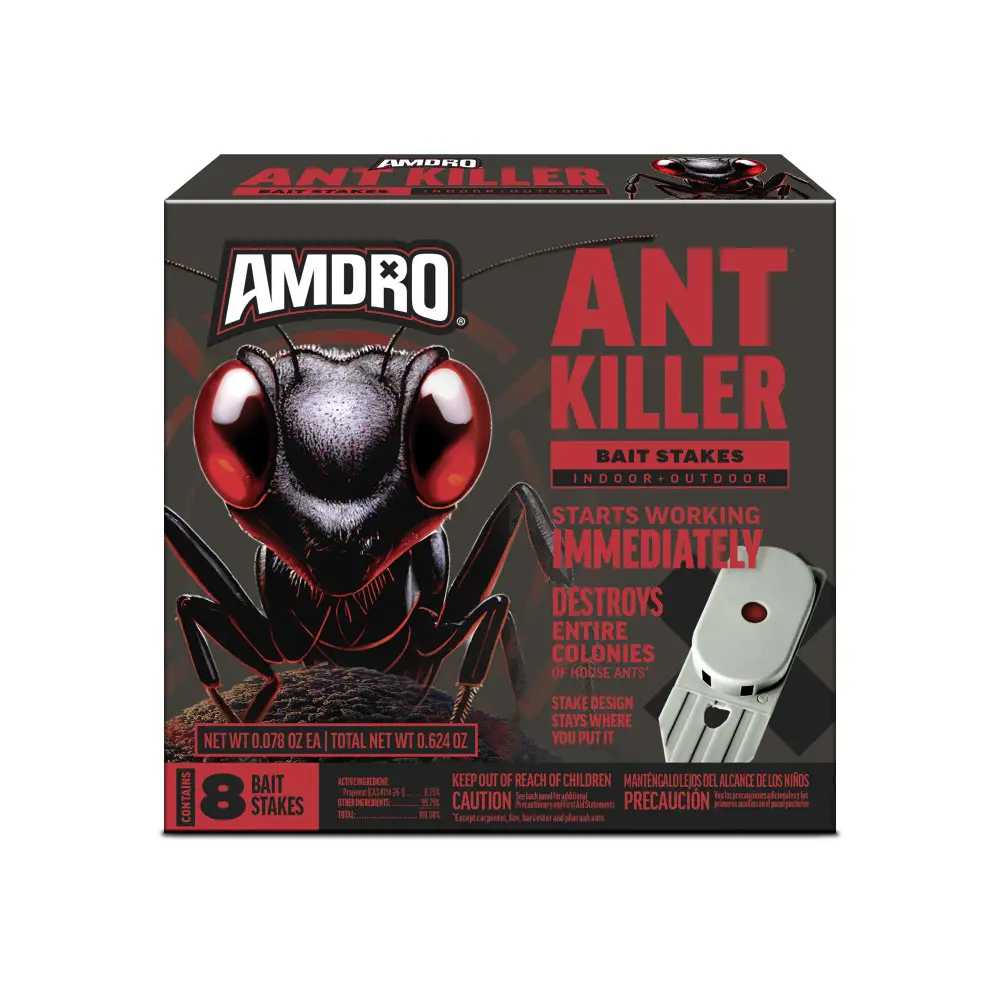
Amdro Ant Killer Bait Stakes destroy entire house ant colonies with a dual-action formula that attracts and kills sweet and grease eating ants. The pre-filled stakes are ready to use with no activation and can be placed indoors near ant trails or outdoors around your home perimeter. For best results, replace every 3 to 6 months and use year-round to help prevent ant infestations.
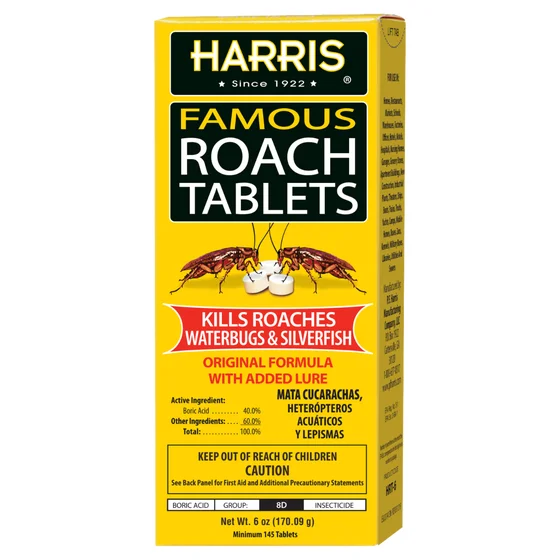
Harris Roach Tablets use boric acid with a formulated lure to attract roaches and help eliminate infestations at the source. The EPA-registered tablets are long lasting when kept dry and are designed to kill the entire colony by roaches carrying the bait back to their nests. Easy to conceal in hidden areas like under drawers, appliances, and cabinets, they offer an alternative to bait traps for treating multiple rooms.
Step 1: Remove the Foraging Reward
Before placing bait, eliminate the food sources that drew the trail into the kitchen or bathroom in the first place. This means transferring dry goods including sugar, flour, honey, syrup, and cereals into sealed airtight containers; wiping counters, stovetop surfaces, and appliance undersides to remove grease and food residue; repairing any slow leaks under the sink or around the dishwasher that provide water; and removing indoor compost containers or switching to lidded versions emptied daily.
This step does not eliminate the trail but reduces the foraging reward to the point where workers are more likely to investigate and collect bait as an alternative food source.
Step 2: Place Slow-Acting Gel Bait on Active Trails
Gel bait is the most effective format for indoor sugar ant control because it can be placed in small amounts precisely on or adjacent to the active trail, it is attractive to sweet-feeding ant species, and it contains a slow-acting active ingredient that workers carry back to the colony. The two most widely available and effective active ingredients in residential gel baits are borax and fipronil.
Borax-based gel baits (Terro Liquid Ant Bait and similar products) are effective against odorous house ants, pavement ants, and ghost ants. Apply small drops directly on active trails, on trail entry points, and in the path the ants are using to travel from entry point to food source. Do not apply in lines or smear the bait: small discrete drops allow workers to feed and recruit others to the bait site. Do not spray any contact insecticide near active bait stations, as this disrupts the trail and reduces bait uptake.
Fipronil-based gel baits (Maxforce FC Ant Bait Gel and similar products) are synthetic options effective against a broader range of ant species and may work better for Argentine ant infestations where borax-based bait produces inconsistent results.
Step 3: Do Not Spray While Bait Is Active
The instinct to spray a visible ant trail with a contact insecticide while bait is placed nearby is counterproductive and significantly reduces the effectiveness of the bait treatment. Contact sprays kill the workers that would otherwise carry bait back to the colony, disrupt the pheromone trail that workers are following to the bait, and trigger an alarm response in the colony that temporarily suppresses foraging activity. Allow the bait to work without disruption for at least five to seven days before evaluating results.
If the trail is in a location where it absolutely cannot be tolerated for a week, wipe the trail surface with white vinegar to temporarily disrupt the pheromone signal while the bait is establishing, then allow ants to relocate the bait without interference.
Step 4: Seal Entry Points After Colony Activity Declines
Once bait uptake has reduced the visible ant activity over a week to two weeks, inspect and seal the entry points the trail was using. Caulk gaps around pipe penetrations under the sink, along the baseboard where it meets the cabinet base, around the exterior of the window frame above the sink, and any other small gap in the exterior or interior wall that provided trail access. This step prevents the same access point from being used by a new colony or a surviving satellite colony in the next season.
When Bait Treatment Takes Longer Than Expected
Odorous house ant colonies are large and contain multiple queens, and complete colony elimination through bait transfer may take three to six weeks for a well-established infestation with a large colony population. Continued bait uptake (workers actively collecting bait) combined with a gradual decline in trail density over that period is a sign the treatment is working. If bait uptake stops abruptly without a corresponding decline in ant activity, the bait formulation may have dried out or lost attractiveness, and fresh bait should be placed.
Argentine ant infestations require sustained bait programs, often extending through a full season, due to the massive colony size and multiple-queen structure. A combination of indoor bait placement and outdoor perimeter bait application targeting the outdoor supercolony simultaneously is more effective for Argentine ants than indoor treatment alone.