
Flying Insects, Bees, and Wasps: Control for Homeowners
Flying stinging insects generate more fear and more misidentification than almost any other pest category homeowners deal with, and the misidentification problem matters because the correct response to a honeybee colony is the opposite of the correct response to a yellow jacket nest. Treating a beneficial pollinator as a pest, or delaying action on a genuinely aggressive colony because you are unsure of the species, are both errors with real consequences. This hub establishes the identification and behavioral framework that makes the control decision straightforward, then links to species-specific guides for each.
The Most Important Distinction: Pollinators vs Pest Species
Not every stinging insect around your home is a pest that warrants control. The order Hymenoptera includes thousands of bee and wasp species, the majority of which are either solitary (non-colonial), non-aggressive, or actively beneficial to the garden and broader ecosystem through pollination and predation of garden pests.
Honeybees (Apis mellifera) and native bumblebees (Bombus species) are pollinators that should not be treated with insecticide unless they have established a hive inside the building structure with no practical relocation option. A honeybee swarm resting in a tree or on a fence post is a temporary phenomenon that will move on within hours to days and poses very little sting risk unless disturbed. A licensed beekeeper can relocate swarms and established hive colonies at no or low cost in most areas of the country.
The stinging insects that do warrant control intervention are the colonial species with aggressive nest defense behavior, primarily yellow jackets (Vespula and Dolichovespula species), paper wasps (Polistes species), bald-faced hornets (Dolichovespula maculata), and European hornets (Vespa crabro), and the non-colonial nuisance species whose behavior creates specific conflict points with humans, such as sweat bees attracted to perspiration.
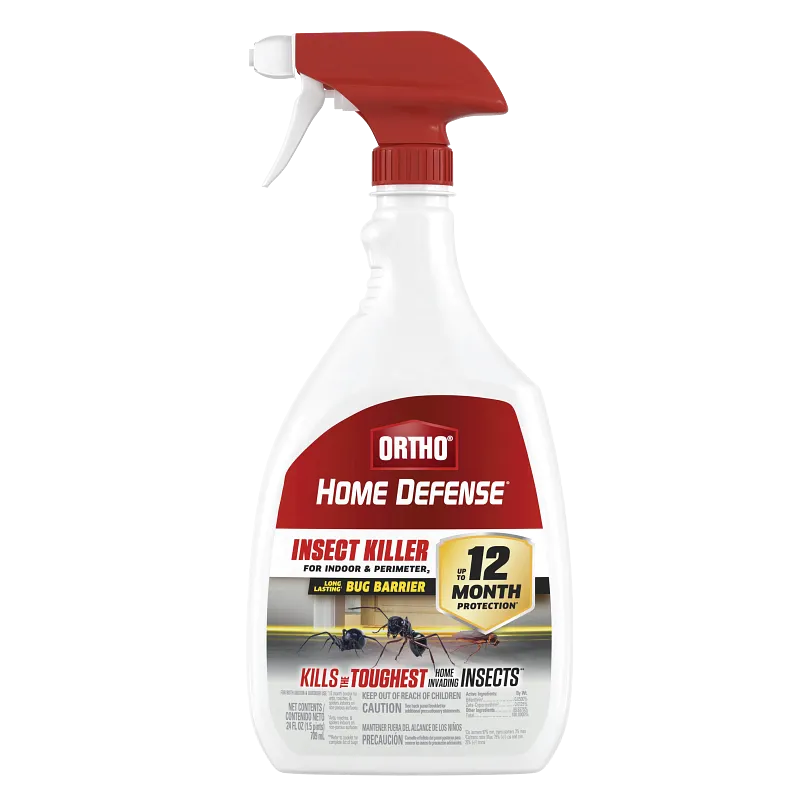
Ortho Home Defense Backyard Mosquito and Bug Killer Area Fogger helps control horse flies, deer flies, mosquitoes and other listed backyard pests. It provides up to 12-month protection indoors on non-porous surfaces and can be used to create a perimeter barrier outdoors. The ready-to-use trigger sprayer applies a clear, fast-drying, no-fumes formula for convenient spot or barrier treatment.
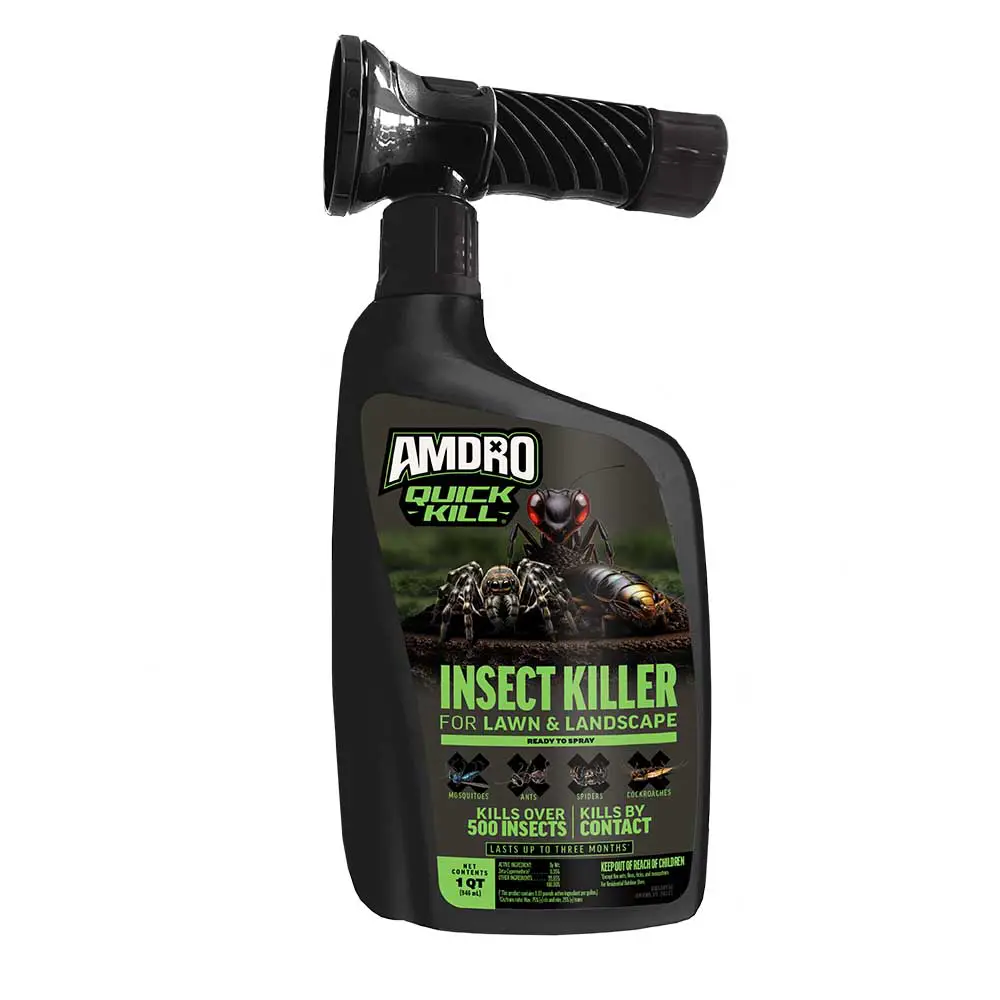
Amdro Quick Kill Insect Killer for Lawn & Landscape is a fast-acting ready-to-spray formula that starts working in minutes (except ticks) and kills over 500 insects. It kills by contact and is designed to be lawn-safe when used as directed, with control that keeps killing for up to 3 months (except fire ants, fleas, ticks and mosquitoes). Simply shake well, attach to the hose, and spray—no mixing or measuring required.
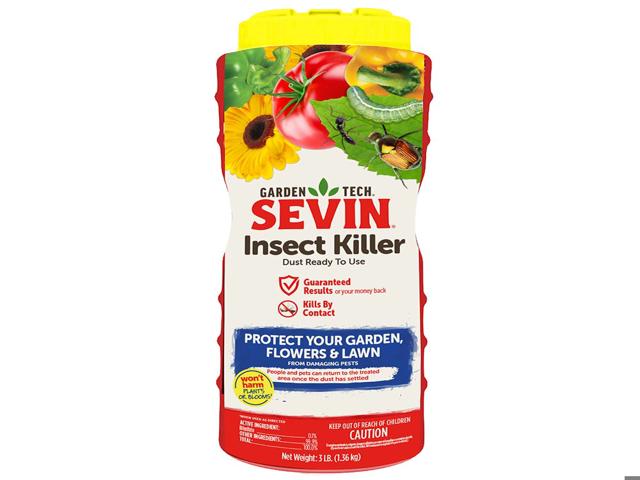
Sevin Insect Killer Dust helps protect flowers and lawn from listed damaging pests with a ready-to-use, shake-and-apply formula. It kills more than 150 insects by contact and creates a protective barrier when applied to leaves, stems, and flowers at the label rate. It won’t harm plants or blooms, and people and pets may return once the dust has settled.
Behavioral Characteristics That Drive the Control Decision
Nest location determines the level of risk and the treatment approach. Aerial nests in open locations away from high-traffic areas (paper wasp nests under deck railings, mud dauber tubes on eaves) can often be tolerated or managed with a simple knockdown when nests are small. Nests in enclosed spaces, wall voids, attic eaves, or ground nests in lawn and garden areas present a higher risk of incidental contact and warrant active treatment.
Aggression level varies significantly by species. Yellow jackets are the most aggressive of the common colonial stinging insects, particularly in late summer when colony populations peak and resources become scarce. Paper wasps are intermediate: they will sting when the nest is approached directly but are less likely to pursue aggressors away from the immediate nest area. Bald-faced hornets are highly aggressive in nest defense and will sting repeatedly and without provocation in the immediate vicinity of the nest.
Sting capability also varies: honeybees sting once and die; wasps and hornets can sting repeatedly. People with confirmed venom allergies face anaphylaxis risk from any stinging insect and should keep epinephrine available when managing any colony nest.
Mosquitoes: A Distinct Problem Category
Mosquitoes are Diptera rather than Hymenoptera and belong to the same hub for practical homeowner management purposes rather than taxonomic ones. Their control involves different products (repellents, larvicides, adulticides), different treatment strategies (eliminating standing water breeding habitat, applying barrier treatments to vegetation), and a different public health dimension from stinging insects. Mosquitoes are vectors of West Nile virus, eastern equine encephalitis, and other pathogens in North America, which elevates their practical significance beyond nuisance level for homeowners in areas with documented vector activity.
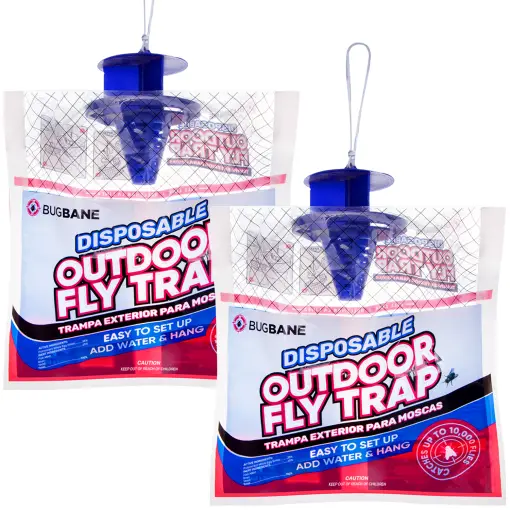
Discreetly draw flies away from your home with disposable outdoor hanging fly trap bags. The non-toxic bait is safe for kids and pets, activates with water, and attracts filth flies quickly using odor plus a visual lure. Hang the trap about 20 feet from your home, then dispose in outdoor trash for easy cleanup.
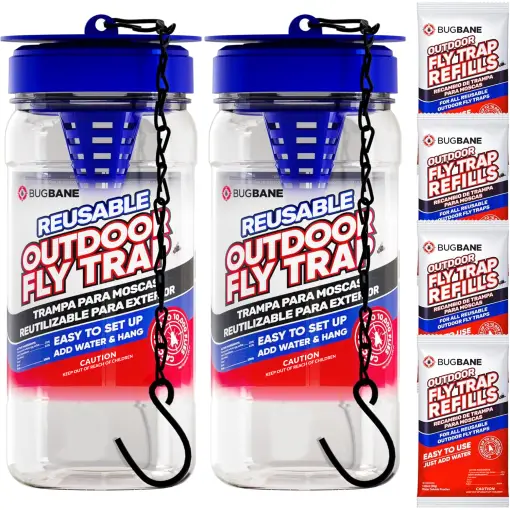
This 2-pack outdoor hanging fly trap helps discreetly draw flies away when placed about 20 feet from your home. The non-toxic, dissolvable bait releases an attractant odor and blue visual lure to quickly attract filth flies, including house and ranch flies. The reusable thick plastic trap is easy to set up with water fill and includes multiple bait refill packets for ongoing outdoor control.
Species Guides in This Hub
How to Get Rid of Yellow Jackets in Your Yard covers ground nest and aerial nest treatment for the most aggressive common wasp species, including timing and safety measures for DIY removal.
How to Get Rid of a Wasps Nest Safely covers the step-by-step process for treating and removing paper wasp and aerial wasp nests, including which situations are safe for DIY and which warrant professional handling.
How to Get Rid of Hornets and Bald-Faced Hornets covers the identification and treatment of bald-faced hornet and European hornet colonies, with emphasis on the elevated aggression level that separates them from paper wasps.
How to Get Rid of Mosquitoes in Your Yard covers the full mosquito management program: standing water elimination, larvicide application, barrier sprays, and personal protection strategies.
How to Get Rid of Hoverflies Around Your Home covers the wasp-mimicking flies most often mistaken for yellow jackets, explains why they require no pest control response, and addresses the situations where their presence becomes a genuine nuisance.
How to Get Rid of Sweat Bees covers the small native bees attracted to human perspiration, their beneficial role as pollinators, and the limited control options appropriate for managing their presence in outdoor living areas.
Does Citronella Repel Wasps and Bees? covers the evidence for and against citronella as a stinging insect deterrent, and its appropriate role in outdoor living spaces as part of a broader pest deterrent strategy.
Best Wasp and Hornet Spray for Nest Removal covers the top aerosol and liquid insecticide products for nest treatment, with guidance on jet spray distance, active ingredients, and timing for the safest DIY application.
Best Mosquito Repellent and Control for Yards covers personal repellents and yard treatment products, from DEET and picaridin formulations to barrier sprays and BTi larvicide products, matched to different exposure levels and household priorities.
Treatment Timing for Colonial Stinging Insects
Colonial wasp and hornet nests are smallest and least defended in spring and early summer, when the founding queen has produced only a few dozen workers. A nest the size of a golf ball in May may be the size of a football by August, with hundreds of aggressive defenders. The single most important timing principle for stinging insect nest management is early intervention: treating a small nest in late spring requires a fraction of the product, poses a fraction of the risk, and is significantly more likely to be a complete treatment than attempting the same removal on a mature late-summer colony.
Citronella and Outdoor Living Spaces
Citronella candles and torches are a popular addition to outdoor seating areas for their insect-deterrent properties. The connection between citronella use in outdoor fire features and the broader range of fire-safe patio accessories, including fuel types and placement guidance, is covered in our patio fire features accessories guide.