
Lawn Care: Complete Guides for a Healthy, Green Lawn
A healthy lawn is the result of a small number of practices done correctly and at the right time: feeding the grass with the right nutrients, controlling weeds before they establish, mowing at the correct height, managing thatch and compaction, and watering deeply rather than frequently. None of these are complicated once the underlying logic is understood. The problem for most homeowners is that lawn care advice is scattered, often contradictory, and rarely explains why a practice works rather than just telling you what to do.
This resource covers all of it in one place. Every guide is written to explain the cause-and-effect behind the recommendation, so you can make the right call for your specific lawn rather than following generic calendar schedules that may not fit your grass type, climate, or soil.
Weed and Feed
Weed and feed products combine a broadleaf herbicide with a granular fertilizer in a single application, which makes them one of the most popular lawn products on the market. They work well under the right conditions and cause real damage when applied incorrectly: at the wrong time of year, to the wrong grass type, or to a lawn where the grass and the target weeds require different treatment approaches.
The weed and feed hub covers what these products contain, when to apply them, how to apply them correctly, and when you are better served by separate fertilizer and weed control applications. It includes product recommendations for both cool-season and warm-season lawns, a guide to organic alternatives, and a practical comparison of liquid versus granular formulations.
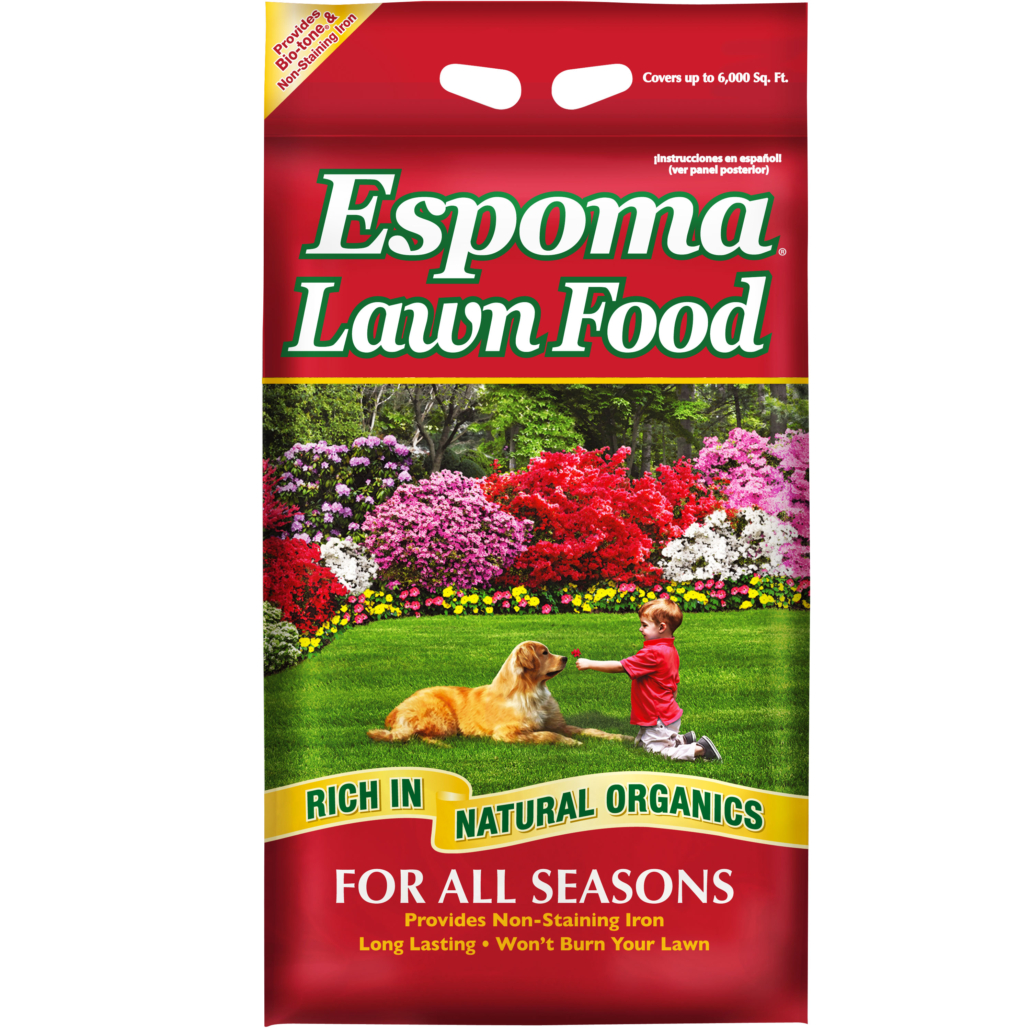
Espoma Lawn Food for All Seasons 15-0-5 provides slow-release, long-lasting nitrogen to help support a greener lawn year-round. Enhanced with iron for deep green color, it helps turn yellow lawns back to green and won’t stain concrete, sidewalks, or driveways. Safe for cool and warm season grasses, it applies in spring, summer, and fall with a drop or broadcast spreader.
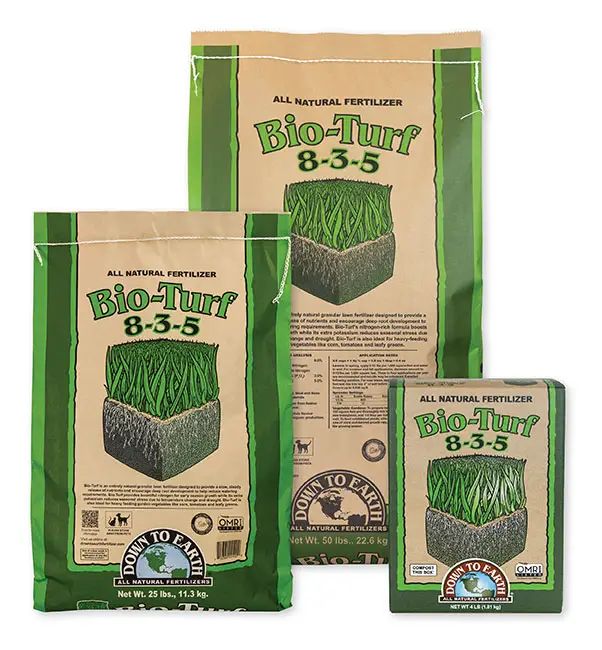
Down to Earth Bio-Turf is an all-natural 8-3-5 organic fertilizer, OMRI listed for use in organic production. It helps encourage deep root development to support greener, stronger growth while reducing watering needs and stress from heat or drought. Ideal for lawns, landscape ornamentals, and heavy-feeding garden vegetables and flowerbeds.
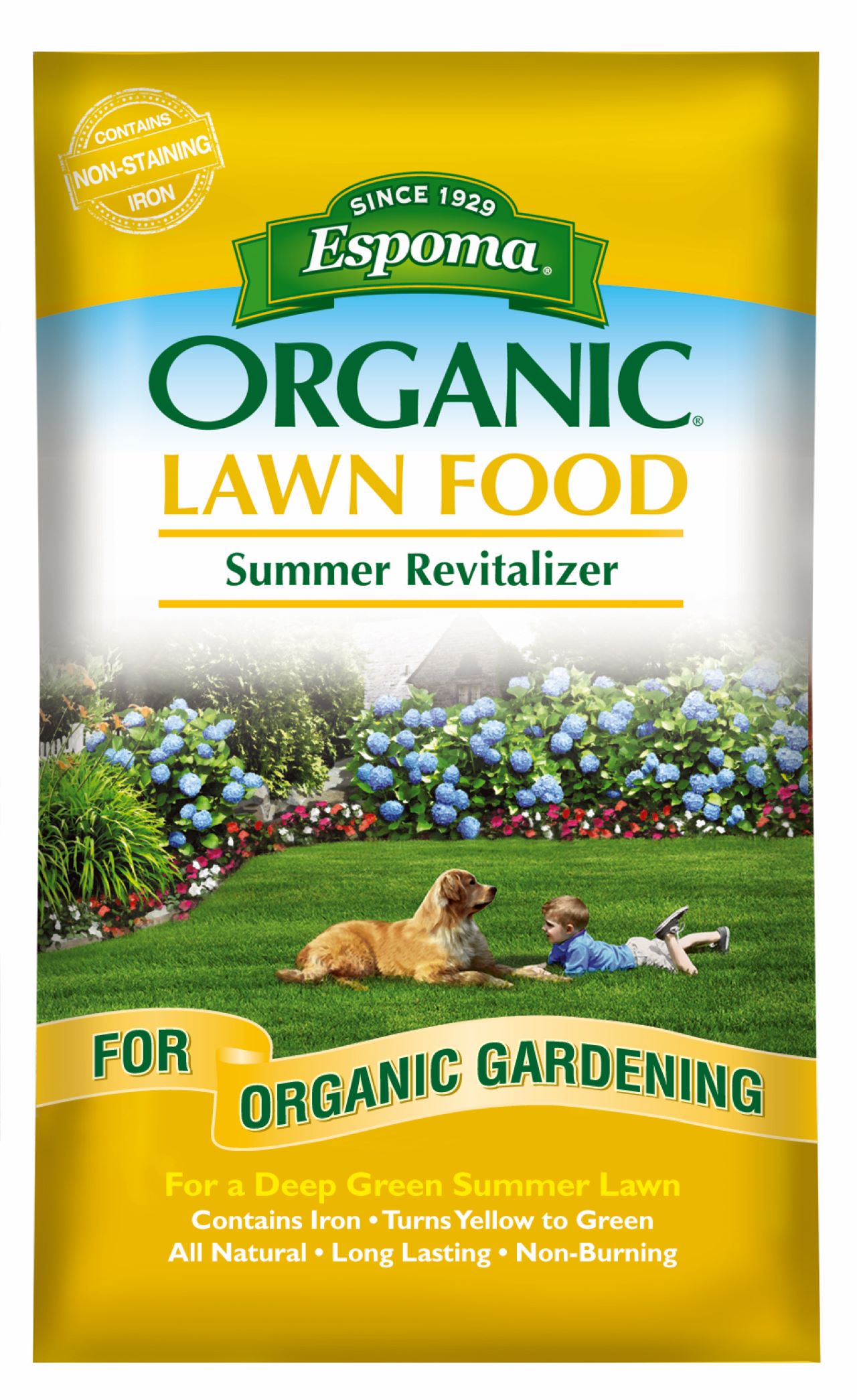
Espoma Organic Lawn Food Summer Revitalizer 8-0-0 delivers long-lasting organic nitrogen to help invigorate lawns during hot weather while adding iron for deep, greener color. Designed for all lawn types and cool- or warm-season grasses, it helps turn yellow lawns back to green without burning or leaching out of soil. Environmentally safe with no sludges or toxic ingredients, it won’t stain concrete, sidewalks, or driveways and is approved as a registered organic input material.
Lawn Fertilizer
Fertilizer is the single most impactful routine practice for maintaining lawn color, density, and stress tolerance. Understanding what the N-P-K numbers on a fertilizer bag mean, how to read a soil test and match a product to the result, and how to build a seasonal feeding schedule that does not produce thatch through nitrogen excess gives you the foundation for every other lawn care decision.
The fertilizer hub covers the full spectrum from basic NPK and product types through to specific product reviews, brand comparisons, soil amendment guides for lime and iron, and the timing questions that most homeowners get wrong (should you fertilize before or after rain, and when is it too early or too late in the season).
Weed Control
Effective weed control in a lawn depends on three decisions made in the correct order: identifying the weed, understanding whether a pre-emergent or post-emergent approach is appropriate, and selecting a herbicide that is safe on the existing grass type. Using a broadleaf herbicide on a lawn overseeded with ryegrass kills the grass alongside the weeds. Applying a pre-emergent after weeds have already germinated accomplishes nothing.
The weed control hub covers identification and treatment for the most common lawn weeds, including crabgrass, nutsedge, clover, ground ivy, and dandelions. It includes guides on natural and organic control methods, correct herbicide timing by weed type, and how to manage weeds in lawns where selective herbicides cannot be used safely.
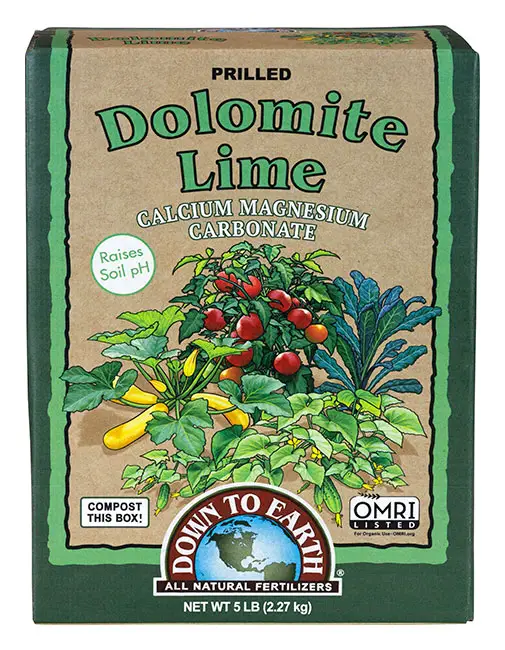
Down To Earth Organic Prilled Dolomite Lime helps raise acidic soil pH for better nutrient uptake and healthier vegetable gardens. Its rich calcium and magnesium support strong cell walls, root growth, and overall plant performance. OMRI listed for organic use, the prilled granules spread easily and act quickly while improving soil structure and microbial activity.
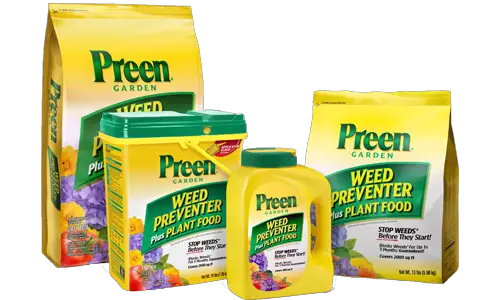
Preen Garden Weed Preventer Plus Plant Food helps prevent weeds while feeding your plants in one simple application. Safe for use in established flower and vegetable garden beds around trees, shrubs, and ground covers, it supports strong root development and abundant blooms. Use during spring, summer, or fall for best results and water it into the soil after sprinkling.
Grass Types and Seeding
Virtually every lawn care timing decision, including when to fertilize, when to overseed, when to dethatch, and what products are safe to use, depends on knowing your grass type. Cool-season grasses and warm-season grasses grow at different times of year, respond differently to heat and cold, and require different management approaches throughout the calendar.
The grass types and seeding hub covers identification of the major turf grasses, grass seed selection for new lawns and overseeding, germination requirements, and the specific care calendars for the grasses most commonly found in North American residential lawns.
Grass Types and Seeding Guides
Lawn Mowing
Mowing is the most frequently performed lawn care practice and the one that most directly shapes the long-term health of the turf. Mowing too short removes too much leaf area in a single cut, weakens the root system, and opens the turf to weed invasion and heat stress. Mowing with a dull blade tears rather than cuts the grass, leaving ragged tips that brown and become disease entry points.
The mowing hub covers the correct cutting height for each grass type, the one-third rule and why it matters, blade maintenance, mowing frequency by season, edging, and the tools involved: mowers, string trimmers, edgers, and the equipment choices that determine whether mowing is an hour of straightforward work or a recurring frustration.
Dethatching and Aeration
A lawn that looks thin, pale, or slow to respond to fertilizer is often dealing with a root-zone problem rather than a surface problem. Thatch accumulation above half an inch blocks water and nutrients from reaching the soil. Compacted soil prevents roots from developing the depth and density needed to support vigorous, resilient turf. Neither problem is solved by surface treatments alone.
The dethatching and aeration hub covers how to measure thatch depth, which removal tool is appropriate for which situation, the correct timing windows for cool-season and warm-season lawns, how core aeration relieves compaction, and the step-by-step process for both practices. It also covers the rent-versus-buy decision for aerators and whether dethatching blades actually work.
Dethatching and Aeration Guides
Lawn Problems and Repair
Yellow grass, brown patches, mushrooms appearing overnight, small holes in the turf, a soggy corner that never dries out: these problems have specific causes and specific fixes, and the fix depends on identifying the cause correctly before applying any product. Applying nitrogen to drought-stressed grass causes additional burn damage. Watering a lawn that is yellow from overwatering makes fungal disease worse.
The lawn problems hub covers diagnosis and treatment for the most common issues homeowners encounter: yellowing from multiple causes, fertilizer and chemical burn, fungal diseases including brown patch and dollar spot, mushrooms and fairy rings, grub damage, mole activity, waterlogging, and the specific situations involving dish soap and dog urine that generate a large number of searches for good reason.
Lawn Problems and Repair Guides
Lawn Watering
Most lawns are watered too frequently and not deeply enough. Daily light irrigation produces a shallow root system that stress-browns quickly in heat and dries out fast between sessions. Deep, infrequent irrigation encourages roots to grow downward toward reliable moisture, producing a lawn with significantly better drought tolerance and color consistency.
The watering hub covers irrigation frequency by grass type and season, the correct time of day to water and why evening watering consistently leads to fungal disease, how to calculate session length by measuring sprinkler output rate rather than guessing in minutes, and the full process for watering newly seeded lawns through germination and establishment. It also covers in-ground irrigation system costs, garden hose selection, and backpack sprayers for liquid lawn treatment applications.
Quick Reference: Key Lawn Care Timing by Season
| Season | Cool-Season Grass Priority | Warm-Season Grass Priority |
|---|---|---|
| Early spring | First fertilizer application, pre-emergent for crabgrass | Wait for green-up before any application |
| Late spring | Broadleaf weed control, second fertilizer if needed | First fertilizer application post green-up |
| Summer | Deep consistent irrigation, manage disease pressure | Peak fertilizer window, regular mowing |
| Late summer | Overseed thin areas, dethatch if needed | Dethatch if needed, grub treatment window |
| Early fall | Core aeration, overseeding, fall fertilizer | Final fertilizer before dormancy |
| Late fall | Final fertilizer application before dormancy | Reduce irrigation, allow dormancy |
About This Resource
Bovees is a practical outdoor care resource for homeowners who manage their own lawns and landscapes. All guides are written to explain the reasoning behind the recommendation, not just the recommendation itself. Where specific products are discussed, the focus is on what makes a product appropriate for a given situation rather than brand promotion.
For lawn care content that goes beyond the turf, including composting to build soil health, gardening in adjacent beds, and pruning and tree care for the wider property, see the links below.