
How to Get Rid of Spider Mites on Plants
Spider mites are one of the fastest-reproducing plant pests a homeowner will encounter, and the speed of their population growth is the primary reason early detection and prompt treatment matter more for this pest than for almost any other. Under hot, dry summer conditions, a two-spotted spider mite (Tetranychus urticae) can complete its full life cycle from egg to egg-laying adult in as few as five days, meaning a single undetected female arriving on a new plant can produce a damaging colony within two weeks. By the time the fine webbing on leaf undersides becomes visible to a casual inspection, the population is already large enough to cause measurable leaf damage.
Identifying Spider Mites
Spider mites belong to the family Tetranychidae. The most common species in North American home gardens is the two-spotted spider mite (Tetranychus urticae), named for the two dark spots visible on either side of the body in well-fed individuals. They are extremely small, typically less than half a millimeter long, making them difficult to see with the naked eye. The most reliable visual identification technique is holding a white piece of paper under a suspect leaf and tapping the leaf sharply: mites that fall onto the paper will appear as tiny moving specks, often with an orange, red, or greenish-yellow color depending on the species and what they have been feeding on.
The webbing that spider mites produce distinguishes them from other mite families and from thrips, which produce similar bronze stippling damage but no webbing. Fine, cottony webbing on leaf undersides, at stem junctions, and between leaves pressed together is a reliable indicator of spider mite presence. Heavily infested plants may have webbing covering entire branches, with mites, eggs, and cast skins visible throughout the strands when inspected with a hand lens.
Feeding damage appears as pale yellow or white stippling on the upper leaf surface, caused by individual mites piercing leaf cells and extracting contents. As damage progresses, leaves turn bronze or silver, then dry and drop. Severe infestations defoliate plants from the bottom up, and in annual crops and vegetables, they can cause complete plant collapse within two to three weeks if untreated.
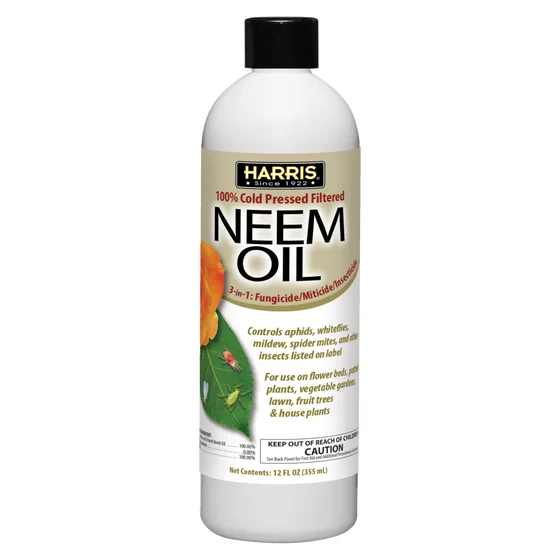
HARRIS Neem Oil Cold Pressed Water Soluble Concentrate is a 3-in-1 insecticide, fungicide, and miticide made from 100% cold pressed neem oil. It is EPA registered to help control aphids, whiteflies, mildew, spider mites, and other label-listed pests and diseases. Safe for indoor and outdoor use, it can be applied to a wide range of flowering and potted plants, vegetable gardens, lawns, ornamentals, fruit trees, and container gardening with foliar or soil treatments.
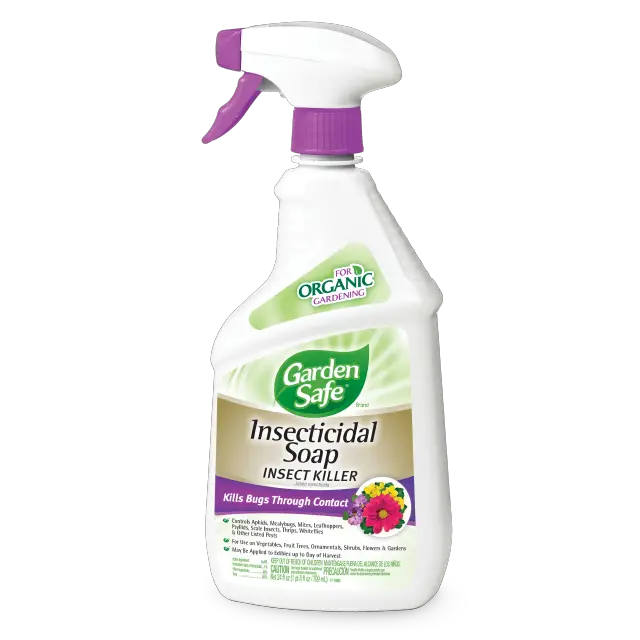
Garden Safe insecticidal soap is a ready-to-use contact spray that kills listed garden pests when sprayed directly on them. It’s formulated for organic gardening and can be used on vegetables, fruit trees, ornamentals, shrubs, flowers, and in indoor, outdoor, and greenhouse applications. For convenience, it may be applied to edibles up to and including the day of harvest.
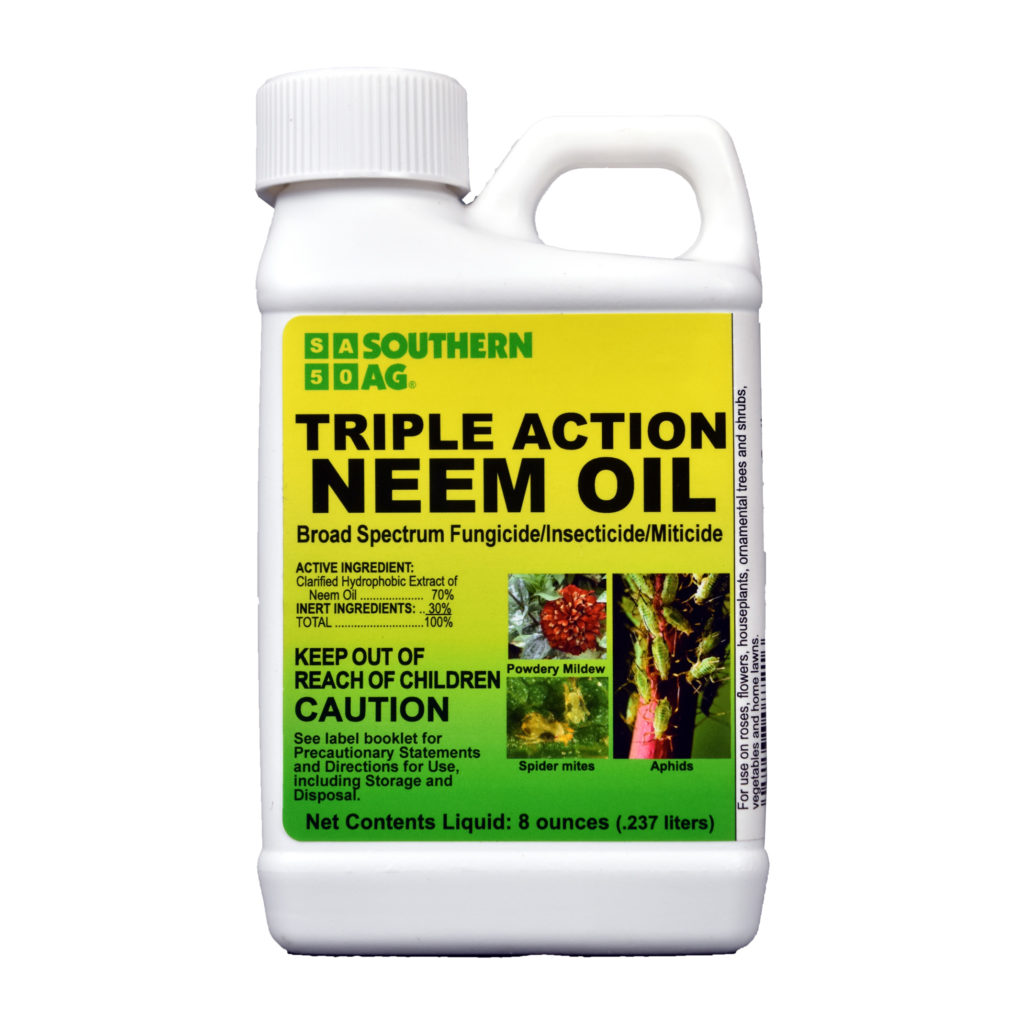
Southern Ag Triple Action Neem Oil Fungicide/Insecticide/Miticide delivers broad-spectrum control to help protect indoor and outdoor ornamental plants. Formulated with 70% clarified hydrophobic extract of neem oil, it targets common fungal diseases like powdery mildew and black spot as well as pests including aphids, spider mites, scale, and whiteflies. Thoroughly spray all plant surfaces for best results, mixing frequently during application.
Conditions That Favor Spider Mite Outbreaks
Hot, dry weather is the single strongest predictor of spider mite population explosions. Mites reproduce faster in heat, and drought-stressed plants are both more vulnerable to mite damage and less capable of compensating through new growth. Dusty foliage inhibits the predatory insects and fungi that regulate mite populations naturally, which is why mite outbreaks are more frequent along roadsides, in dusty production greenhouses, and on plants growing under eaves with limited rainfall wash.
Overuse of broad-spectrum insecticides is the second major driver of spider mite outbreaks. Many synthetic insecticides kill predatory mites, predatory insects, and the parasitic fungi that keep spider mite populations in check, and the surviving mites reproduce into the vacuum left by their natural enemies. Secondary spider mite outbreaks following broad-spectrum insecticide applications are a well-documented phenomenon in commercial and home garden settings alike.
Treatment Step 1: Water Pressure Knockdown
The fastest and safest initial response to a spider mite infestation is a strong water spray directed at the undersides of affected leaves. A forceful jet from a garden hose or spray bottle dislodges mites and eggs from the leaf surface and disrupts their webbing. Mites that are knocked to the soil typically cannot climb back onto the plant. This step reduces the population immediately and improves the coverage and efficacy of any subsequent spray treatment. Repeat every two to three days as a standalone treatment for light infestations or as a preparation step before applying a miticide.
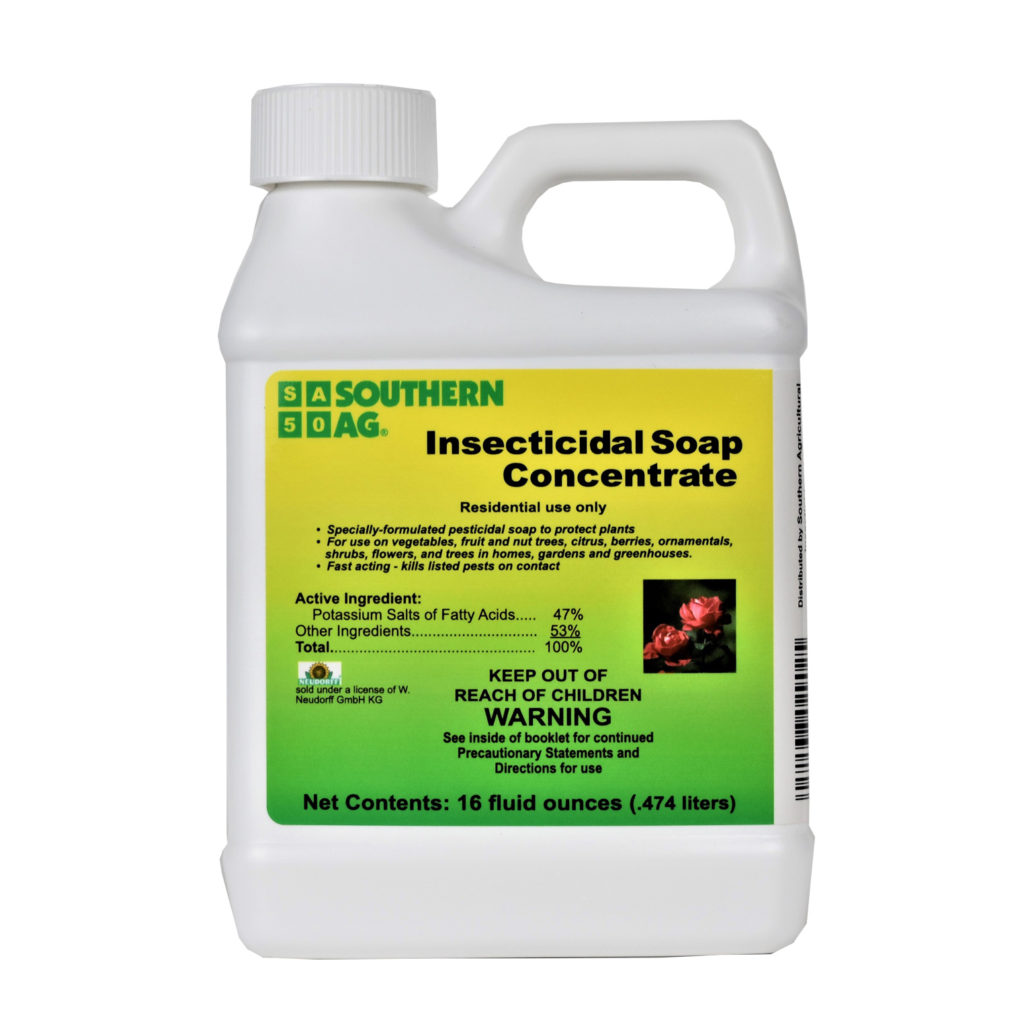
Southern Ag Insecticidal Soap Concentrate is a specially formulated pesticidal soap that delivers fast contact control of insect and mite pests. It’s suitable for use on vegetables, fruit and nut trees, citrus, berries, ornamentals, shrubs, flowers, and trees, including greenhouse and garden applications. Mix 4 teaspoons per quart of water and thoroughly spray all plant parts, including undersides of leaves.
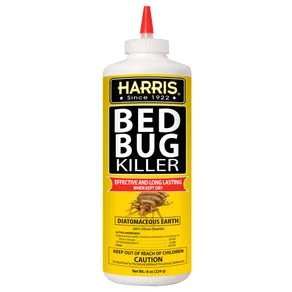
Harris Diatomaceous Earth powder provides thorough bed bug treatment, including hard-to-reach areas, with simple application using the included puffer tip. Bed bugs that contact the powder die within 48 hours, and the dry powder continues killing for weeks for extended residual protection. It is EPA registered for use in homes with people and pets and is also OMRI listed for organic mineral use.
Treatment Step 2: Insecticidal Soap or Neem Oil
For established infestations beyond what water knockdown can resolve alone, insecticidal soap and neem oil are the first-line organic miticide options. Insecticidal soap kills spider mites on contact by disrupting their cell membranes. It is effective against nymphs and adults but has no ovicidal activity, meaning eggs survive the treatment and hatch within a few days. A reapplication every three to four days for two to three cycles is necessary to address newly hatched individuals.
Neem oil applied as a foliar spray provides contact kill combined with azadirachtin’s disruption of nymph development, making it somewhat more effective against the immature stages that continue hatching after the initial application. Apply both products in the early morning or evening when temperatures are moderate, covering all leaf surfaces including undersides where mites concentrate. For a detailed comparison of these two options, see our insecticidal soap vs neem oil guide.
Treatment Step 3: Miticide for Severe or Resistant Infestations
When organic contact treatments are not producing visible improvement after two to three application cycles, a registered miticide is the appropriate escalation. The most effective homeowner-accessible miticides for spider mites include abamectin (sold under brand names including Avid and Bonide Mite-X), bifenazate (Floramite), and spiromesifen (Forbid). These products have multi-life-stage activity that contact-only treatments lack, and they typically deliver visible population reduction within 24 to 48 hours.
Resistance management is critical for spider mites because this species develops resistance to acaricides faster than almost any other agricultural or garden pest. Never apply the same active ingredient in two consecutive treatment cycles: rotate to a different chemical class after each cycle. Product rotation recommendations are addressed in our best miticide guide.
Biological Control with Predatory Mites
Predatory mites in the species Phytoseiulus persimilis are highly effective biological control agents against two-spotted spider mites on plants with moderate to dense foliage. They are commercially available from biological control suppliers and can be introduced into garden beds and greenhouses once an established spider mite population is present (predatory mites starve if prey density is too low). Phytoseiulus persimilis works best in moderate temperatures between 60 and 85 degrees Fahrenheit; the closely related species Neoseiulus californicus performs better in hotter and drier conditions.
To use predatory mites effectively, reduce or eliminate pesticide applications for at least two weeks before release, as most pesticides will kill the predators. Water mist the foliage to create the humidity that predatory mites prefer.
Spider Mites on Houseplants
Spider mites that establish outdoors often hitchhike indoors on new plant purchases or through open windows, and once established on houseplants, the warm, dry indoor environment allows rapid population growth year-round. The treatment approach for indoor plants differs from outdoor use primarily in the limitations on aerosol pesticides in enclosed spaces and the reduced effectiveness of high-pressure water spray indoors. The full treatment sequence for mite infestations on indoor plants is covered in our houseplant health problems guide.
Prevention
Maintaining well-watered plants, rinsing dusty foliage during dry periods, and avoiding routine broad-spectrum insecticide applications are the three most effective long-term spider mite prevention practices. Inspect new plants carefully before introducing them to the garden or home. Look specifically at leaf undersides for stippling damage and fine webbing that indicates mite presence before the population is visible to a casual inspection.