
How to Get Rid of Grubs in Your Lawn
White grubs are the larvae of scarab beetles, primarily the Japanese beetle (Popillia japonica), June beetles (Phyllophaga species), European chafer (Rhizotrogus majalis), and masked chafer (Cyclocephala species) in North America. They feed on the roots of turfgrass from beneath the soil surface, and the damage they cause, which presents as irregular brown patches where the turf has lost its root system and lifts away from the soil like a loose carpet, is one of the most frustrating lawn problems a homeowner faces because it develops underground and becomes visible only after significant root mass has been destroyed.
The most important fact about grub control is that timing determines almost everything. The same product that reliably controls grubs applied in the correct window produces poor results applied outside of it, because grub susceptibility to insecticides changes dramatically with the larval stage and soil depth.
Confirming a Grub Infestation
Before applying any grub control product, confirm that grubs are actually present and that their density exceeds the action threshold for your turf type. Symptoms that suggest grubs include brown patches that do not respond to irrigation, turf that lifts away from the soil with little resistance, and increased mole activity, raccoon digging, or bird probing activity in the affected area, as these animals are actively following the grub population.
To confirm and count grubs, cut three sides of a one-foot-square section of sod in a symptomatic area using a flat spade, fold it back, and count the C-shaped white larvae in the soil beneath. A count of fewer than five grubs per square foot in a healthy, well-established lawn is within a tolerable range. A count of ten or more per square foot warrants treatment. In a newly established lawn or one under drought stress, a lower threshold of five to eight per square foot may be appropriate.
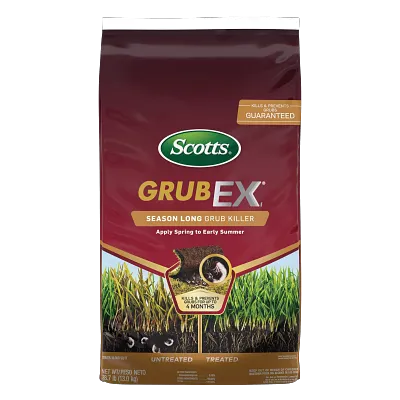
Scotts GrubEx1 is a season-long grub killer that keeps protecting your lawn from grubs and damage for up to 4 months with a single application. It helps stop grubs before they cause brown patches and harm grass roots, keeping your turf healthier. Apply in spring or early summer when grubs are developing for best results.
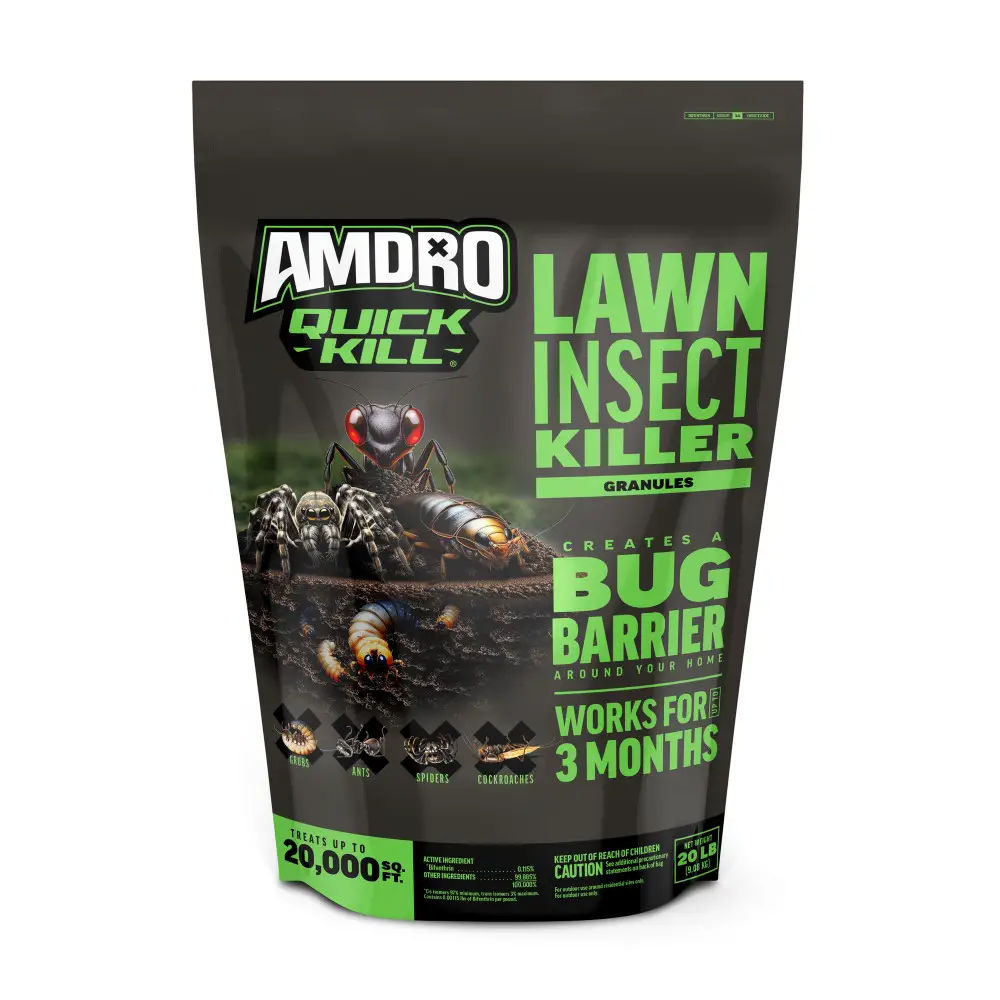
Amdro Quick Kill Lawn Insect Killer Granules protect your yard from listed pests for up to 3 months. Spread the granules uniformly and water them in to kill insects on contact, including grubs and mole crickets below the surface and common surface pests like ants, spiders, fleas, and ticks. The soil-penetrating formula helps create a bug barrier around your home and won’t harm lawns, flower gardens, trees, or shrubs when used as directed.
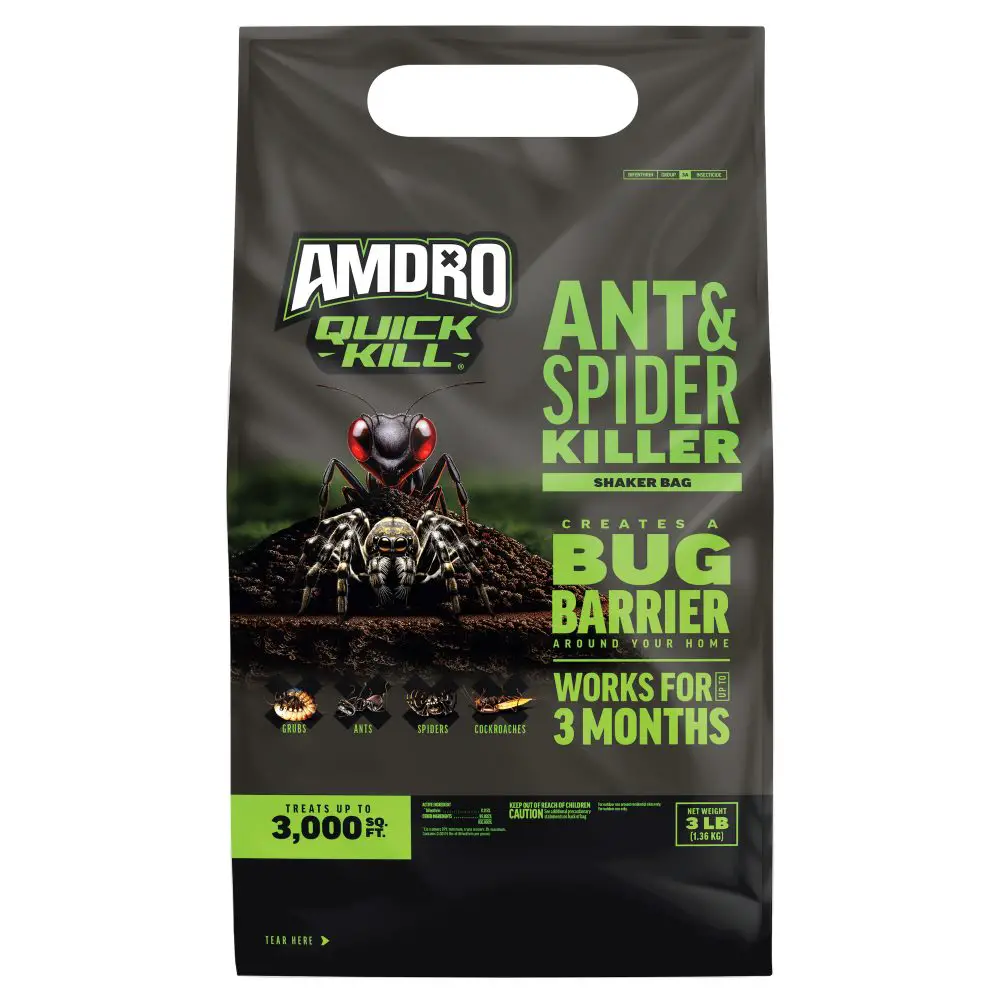
Amdro Quick Kill Ant & Spider Killer granules come ready to spread and help create a bug barrier around your home. The soil-penetrating formula kills listed insects by contact and works for up to 3 months, targeting lawn-damaging pests like grubs and mole crickets as well as surface pests such as ants and spiders. Simply apply evenly with the shaker bag, then lightly water the treated area to help control up to 100 listed insects and cover up to 3,000 square feet.
The Treatment Timing Windows
Grub treatment timing is driven by the grub’s life stage and location in the soil profile, which changes through the season.
Preventive treatment: late spring to midsummer (May to July). Preventive grub control products, particularly those containing imidacloprid, chlorantraniliprole, or thiamethoxam, are applied before eggs hatch and new larvae are present. These products require water to move them into the root zone where eggs and newly hatched first-instar larvae are concentrated, and they remain active in the soil through the hatching period and early larval development. They are most effective when applied in late May through July, before peak Japanese beetle egg-laying in July. Water the product in immediately after application (half an inch of irrigation) to move the active ingredient into the root zone.
Chlorantraniliprole (sold as Scotts GrubEx1) is the preferred preventive product because it has an extended window of activity (applications from April through early July remain effective), very low mammalian toxicity, and low risk to pollinators compared to neonicotinoid alternatives. It is the first-choice preventive for homeowners in areas with consistent Japanese beetle grub pressure.
Curative treatment: late summer (August to September). Curative grub products are applied when grubs are already present and actively feeding, typically late summer when the current year’s larvae are in the second-instar stage and most concentrated in the root zone. The most effective curative active ingredients are trichlorfon (Dylox) and carbaryl (Sevin), which have faster activity than imidacloprid against established larvae. Apply in August or early September, water in immediately, and expect results within one to two weeks.
Fall and spring: treatment is largely ineffective. By October, grubs have moved deeper in the soil profile beyond the reach of surface-applied granular treatments. In spring, overwintered third-instar grubs in the same deep position are similarly inaccessible. Treatment applied in October, March, or April typically produces little or no grub reduction and is a wasted application.
Organic Grub Control: Beneficial Nematodes and Milky Spore
Beneficial nematodes in the species Heterorhabditis bacteriophora are the most effective organic grub control tool, parasitizing Japanese beetle, June beetle, and European chafer larvae in the soil. Apply nematodes in late summer when soil temperature is between 60 and 85 degrees Fahrenheit and soil moisture is adequate to support nematode movement through the soil profile. Keep the soil moist for two weeks after application. Nematode applications can produce grub reductions of 50 to 80% under good conditions, which is sufficient to bring most populations below the action threshold.
Milky spore (Bacillus popilliae) is a bacterial disease specific to Japanese beetle larvae. It is sold as a powder applied to the lawn surface. Milky spore can take two to four years to establish throughout the soil in an area and is primarily a long-term population management tool rather than a quick fix. It is most appropriate for homeowners in areas with established Japanese beetle populations who want to build a durable biological control presence over multiple seasons.
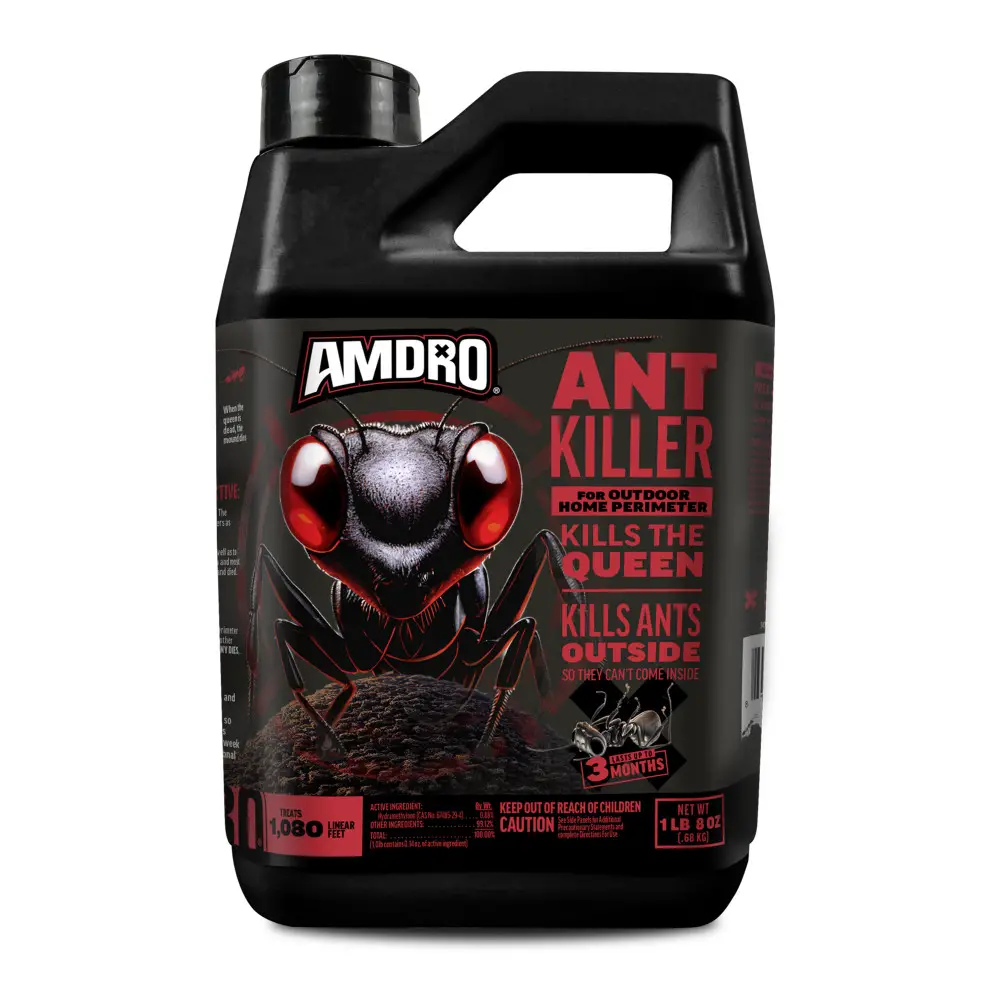
Amdro Ant Killer for Outdoor Home Perimeter creates a protective band that attracts and kills listed common ant species before they enter your home. Dual-action bait foraging workers carry it back to their colonies, helping reduce visible ants within about a week and stopping the colony, including the queen. For best results, apply when ants are active, and keep the treatment working up to three months for ongoing perimeter protection.
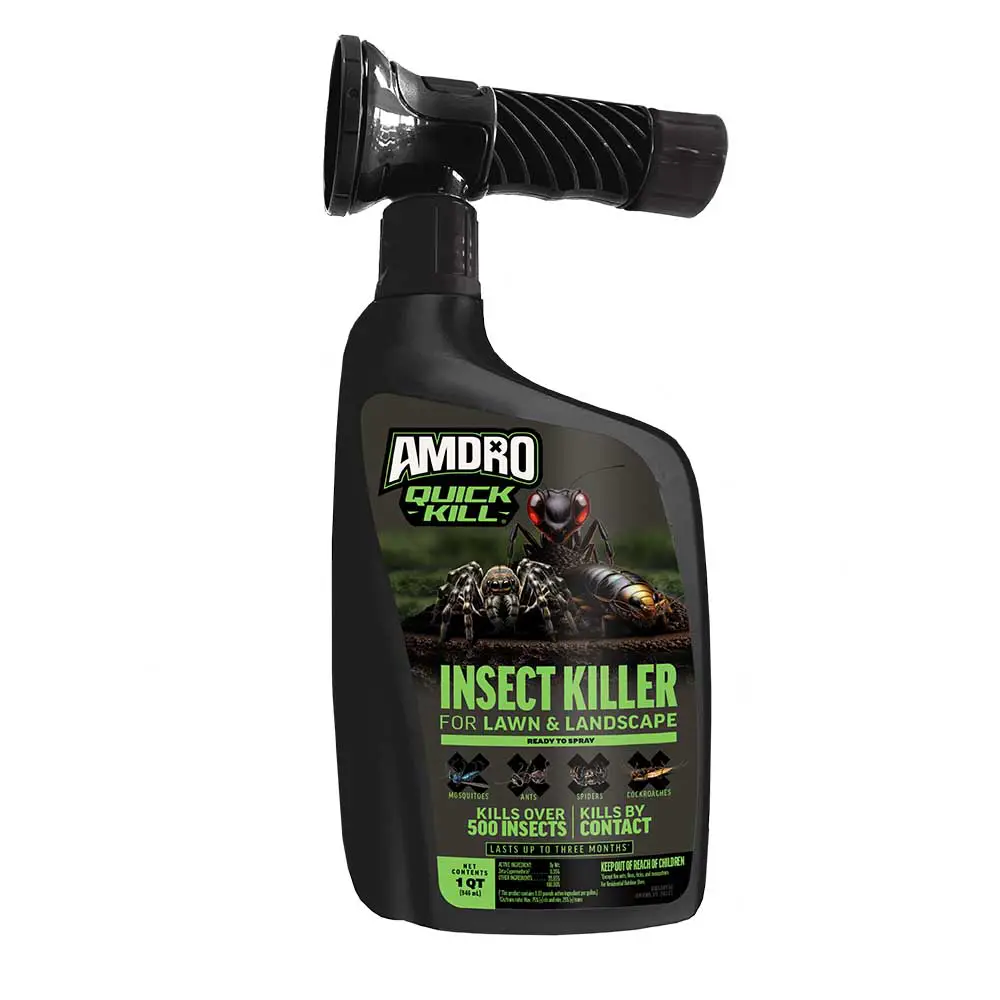
Amdro Quick Kill Insect Killer for Lawn & Landscape is a fast-acting ready-to-spray formula that starts working in minutes (except ticks) and kills over 500 insects. It kills by contact and is designed to be lawn-safe when used as directed, with control that keeps killing for up to 3 months (except fire ants, fleas, ticks and mosquitoes). Simply shake well, attach to the hose, and spray—no mixing or measuring required.
After Grub Treatment: Lawn Recovery
Grub-damaged turf with an intact root crown, the part of the plant below the soil surface, recovers with adequate water and appropriate fertilization. Heavily damaged areas where the turf has died back to the soil surface require overseeding or sodding after grub control is complete. Grub damage in late summer can often be overseeded in early fall before soil temperatures drop below 50 degrees Fahrenheit, which is the threshold for reliable cool-season grass germination.
When irregular brown patches persist through watering and the turf lifts away from the soil with minimal resistance, a grub infestation is the most likely diagnosis, and distinguishing grub damage from the drought stress, fungal disease, and lawn problems that produce similar symptoms is covered in our lawn problems guide.
For product comparisons between preventive and curative grub killers, see our best grub killer guide.