
Best Grub Killer for Lawns
The most important grub killer product decision is not which brand to buy: it is whether you need a preventive or a curative product, and that depends entirely on the time of year. Preventive grub killers applied before grub eggs hatch (May through July) work differently and contain different active ingredients than curative grub killers applied to an established larval infestation (August through September). Buying the wrong product for your timing window means spending money on a treatment that cannot work against the grub population you have. This guide separates the two categories clearly and identifies the best products in each.
Preventive Grub Killers (May to July Application)
Preventive products work by persisting in the root zone until eggs hatch and newly emerged larvae ingest the active ingredient as they begin feeding. They require soil moisture to move into the root zone and remain active through the hatching period, which in most of the eastern United States corresponds to Japanese beetle egg-laying in July. The application window for preventive products is generally May through early July, and effectiveness drops significantly if applied after peak egg-laying has already occurred.
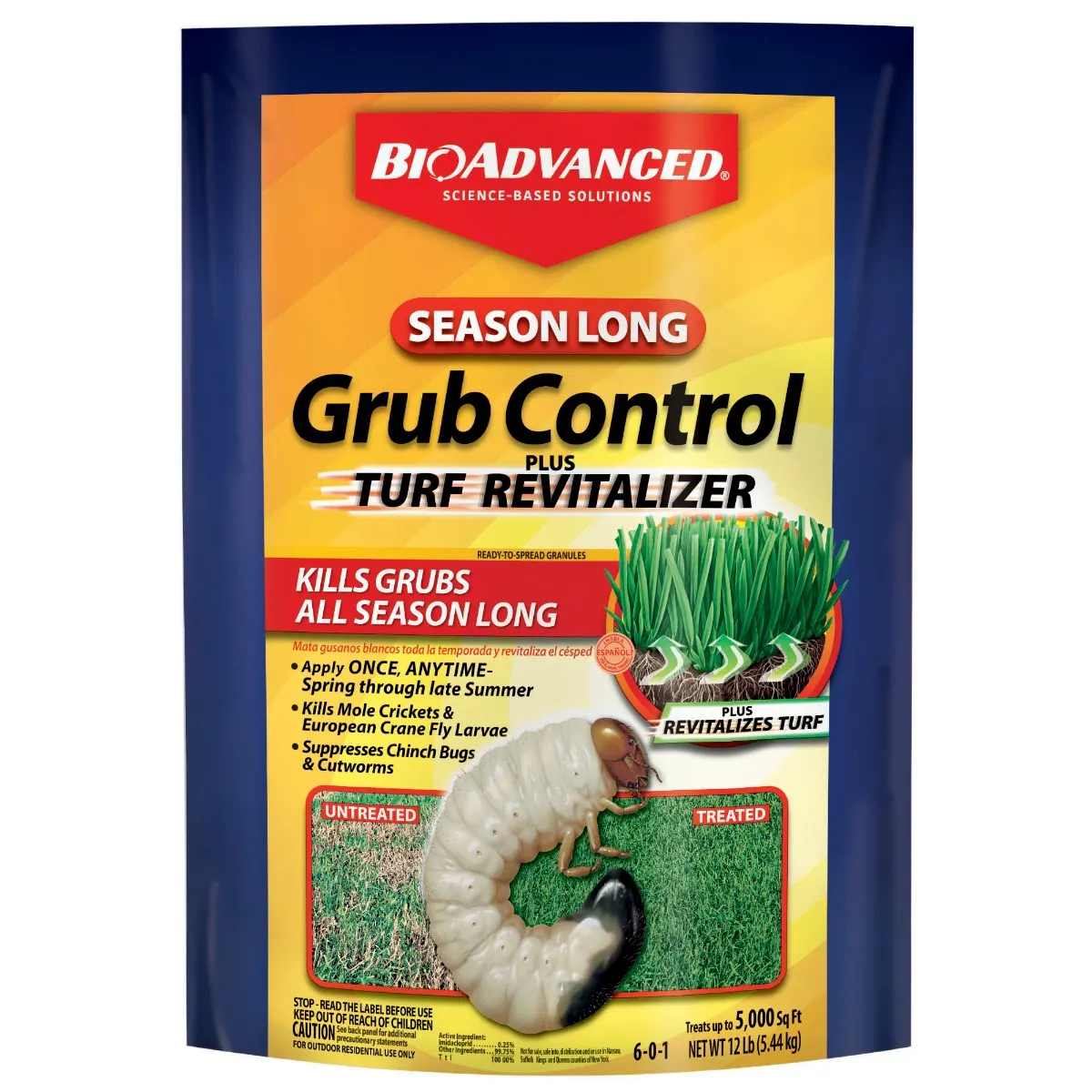
BioAdvanced Season-Long Grub Control Plus Turf Revitalizer is a 2-in-1 granule formula that kills lawn grubs while helping promote strong roots and thicker turf. Apply at the first sign of grubs for season-long protection and continued damage prevention. Coverage reaches up to 5,000 sq ft, and it also targets pests such as mole crickets, European crane fly larvae, and billbugs.
Scotts GrubEx1 is a season-long grub killer that keeps protecting your lawn from grubs and damage for up to 4 months with a single application. It helps stop grubs before they cause brown patches and harm grass roots, keeping your turf healthier. Apply in spring or early summer when grubs are developing for best results.
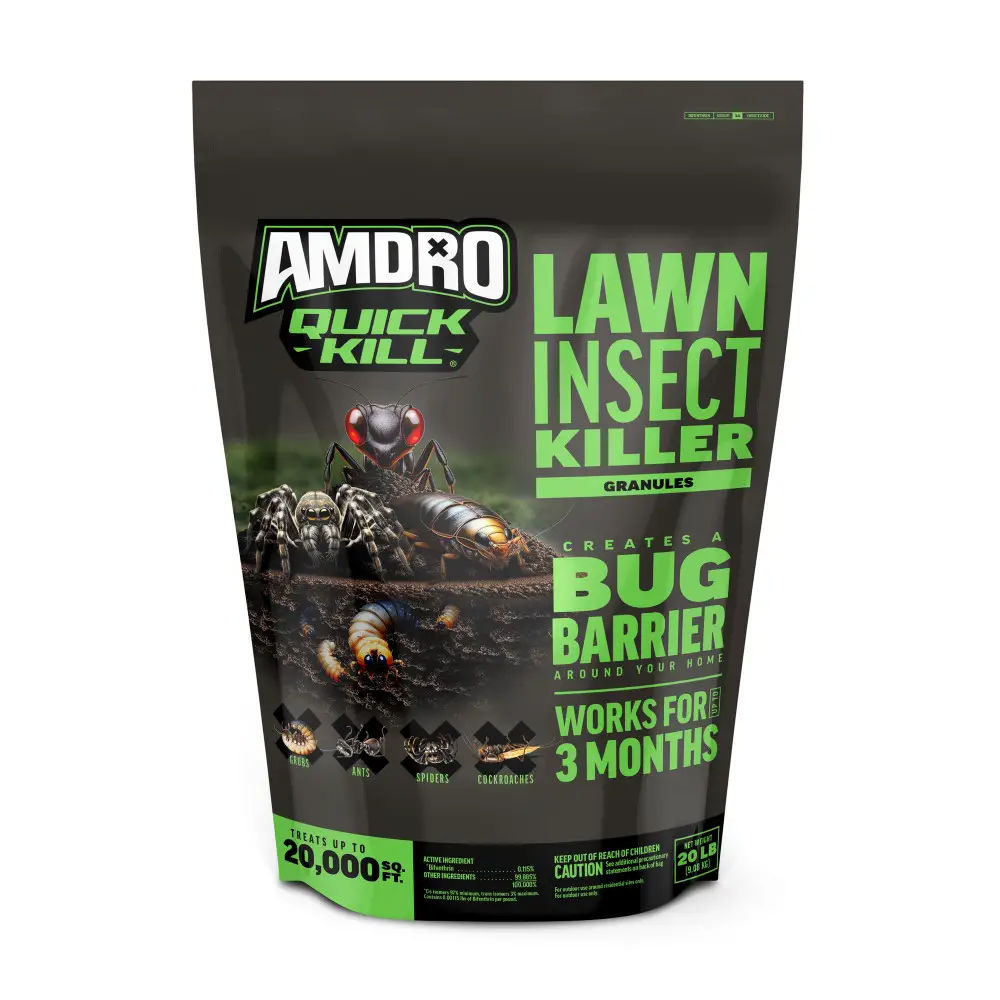
Amdro Quick Kill Lawn Insect Killer Granules protect your yard from listed pests for up to 3 months. Spread the granules uniformly and water them in to kill insects on contact, including grubs and mole crickets below the surface and common surface pests like ants, spiders, fleas, and ticks. The soil-penetrating formula helps create a bug barrier around your home and won’t harm lawns, flower gardens, trees, or shrubs when used as directed.
Scotts GrubEx1 (Chlorantraniliprole)
Chlorantraniliprole is the most recommended preventive active ingredient for grub control due to its extended application window (effective from April through July), very low toxicity to mammals and birds, low risk to pollinators compared to neonicotinoid alternatives, and consistent efficacy across Japanese beetle, masked chafer, and other white grub species. It is slow-acting against established larvae but highly effective when applied preventively before eggs hatch.
Scotts GrubEx1 is the most widely available chlorantraniliprole product for homeowners. Apply at the label rate, water in with at least half an inch of irrigation immediately after application, and do not apply during a prolonged drought when irrigation is not available to move the product into the root zone. One application per season is sufficient; do not double-apply.
Bioadvanced Season Long Grub Control Plus Turf Revitalizer (Imidacloprid)
Imidacloprid is the most commonly used neonicotinoid active ingredient in preventive grub control and has a long track record of effectiveness against Japanese beetle and related grub species. Bioadvanced’s Season Long product combines imidacloprid with fertilizer components, which makes it convenient for homeowners who want to feed the lawn at the same time as treating for grubs.
The key limitation of imidacloprid is its systemic uptake into plant tissue: when used on lawns with flowering weeds such as clover, the imidacloprid can be taken up into the flowers of those weeds and accessed by foraging bees. Apply imidacloprid only when the lawn does not contain significant flowering weeds, or ensure those weeds are mowed before application. The application window for imidacloprid is June through July for best results against Japanese beetle grubs specifically.
Merit 0.5G (Imidacloprid)
Merit 0.5G is the professional-grade imidacloprid granular product available through lawn and garden supply retailers. The 0.5% active ingredient concentration provides consistent, calibrated coverage at the correct label rate. It is the same product class used by lawn care professionals and is appropriate for homeowners who prefer to purchase the active ingredient separately from a fertilizer combination product.
Curative Grub Killers (August to September Application)
Curative products are applied when an established grub population is already feeding in the root zone, typically in August through early September when grubs are in the second instar and most concentrated in the upper soil profile. They act faster than preventive products but have a narrower effective window: once grubs move deeper in the soil profile in October, curative products can no longer reach them reliably.
Dylox 6.2 (Trichlorfon)
Trichlorfon is the most effective curative active ingredient available to homeowners for established grub infestations. It acts quickly, providing visible grub reduction within one to two weeks of application, and is effective against larger, more treatment-resistant third-instar grubs that preventive products cannot reliably control. Apply in August through early September, water in immediately with at least half an inch of irrigation, and apply when soil temperature is still above 60 degrees Fahrenheit.
Trichlorfon degrades quickly in the soil (seven to ten days), which limits off-target environmental persistence but also means it must be applied during an active infestation rather than as a calendar treatment. Dylox 6.2 is available through lawn and garden supply retailers and some big-box stores.
Sevin Insect Killer Granules (Carbaryl)
Carbaryl granular applied to turf at the label rate provides curative grub control with somewhat slower activity than trichlorfon. It is more widely available at general garden retailers than Dylox. Follow label application rates for grub control (which differ from the rates for surface insect control), water in immediately after application, and observe the appropriate re-entry interval before allowing children and pets back onto the treated area. The correct application and safety protocol for carbaryl products is covered in our Sevin dust guide.
Organic Options
Heterorhabditis bacteriophora nematodes (Biosafe Nemasys H or similar products) are the organic alternative for both preventive and curative grub control when applied in the correct window and with sufficient soil moisture. The full protocol for nematode application and milky spore use is covered in our grub control guide.
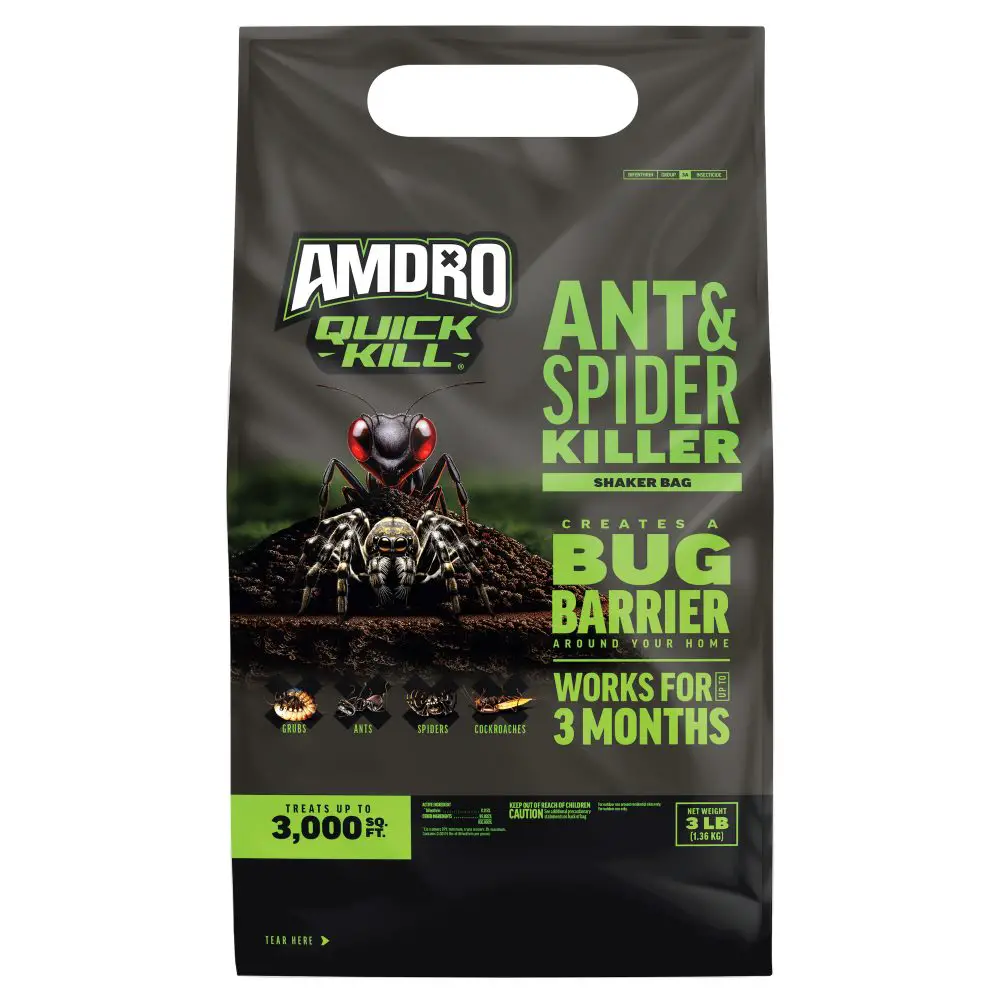
Amdro Quick Kill Ant & Spider Killer granules come ready to spread and help create a bug barrier around your home. The soil-penetrating formula kills listed insects by...
Choosing Between Preventive and Curative
| Situation | Product Type | Active Ingredient | Timing |
|---|---|---|---|
| Preventive, lowest non-target risk | Preventive | Chlorantraniliprole | May to early July |
| Preventive, most widely available | Preventive | Imidacloprid | June to July |
| Established grub damage, fast kill | Curative | Trichlorfon | August to September |
| Established grubs, general availability | Curative | Carbaryl | August to September |
| Organic preventive | Biological | Beneficial nematodes | August (when grubs are small) |
Do not apply a preventive product in August when grubs are already established, and do not apply a curative product in June as a preventive measure: the timing mismatch in either direction produces poor results. Apply the product matched to your treatment window and water it in immediately for best results.