
Why Is My Grass Turning Yellow and Dying? Causes and Fixes
Grass turns yellow for several distinct reasons, and the correct response is different for each one. Applying nitrogen fertilizer to yellowing grass is the instinctive first move for most homeowners, and the right move in some situations, but in others, it makes the problem significantly worse. Drought-stressed grass needs water, not nitrogen. Overwatered grass needs less irrigation and better drainage, not a fertilizer application. Fungal disease needs a fungicide, not more feeding.
The pattern and distribution of the yellowing, its timing relative to recent lawn care activities, and a few simple visual checks will almost always identify the correct cause.
Cause 1: Nitrogen Deficiency
Nitrogen deficiency is the most common cause of uniform lawn yellowing. Grass requires nitrogen to produce chlorophyll, and without adequate nitrogen the grass blades gradually lose their green color and turn pale yellow-green, then yellow.
Diagnostic clues: The yellowing is uniform across the entire lawn, or across large sections, rather than in distinct patches. The grass may still feel firm and look otherwise healthy in structure. The problem typically develops gradually over weeks rather than appearing suddenly. It is most common in spring (before the first fertilizer application), in late summer (if spring fertilization has worn off), or following heavy rainfall that has leached nitrogen from the soil.
Fix: Apply a balanced nitrogen fertilizer at the label rate. For a quick response, a fast-release nitrogen source, ammonium sulfate or urea, will show visible greening within 5 to 7 days. For a more sustained result, use a slow-release nitrogen fertilizer that continues feeding over 6 to 8 weeks. Do not over-apply: excess nitrogen burns grass at the application points and contributes to thatch buildup over time.
The timing, product selection, and application rate for lawn fertilizing are covered in our lawn fertilizer hub.
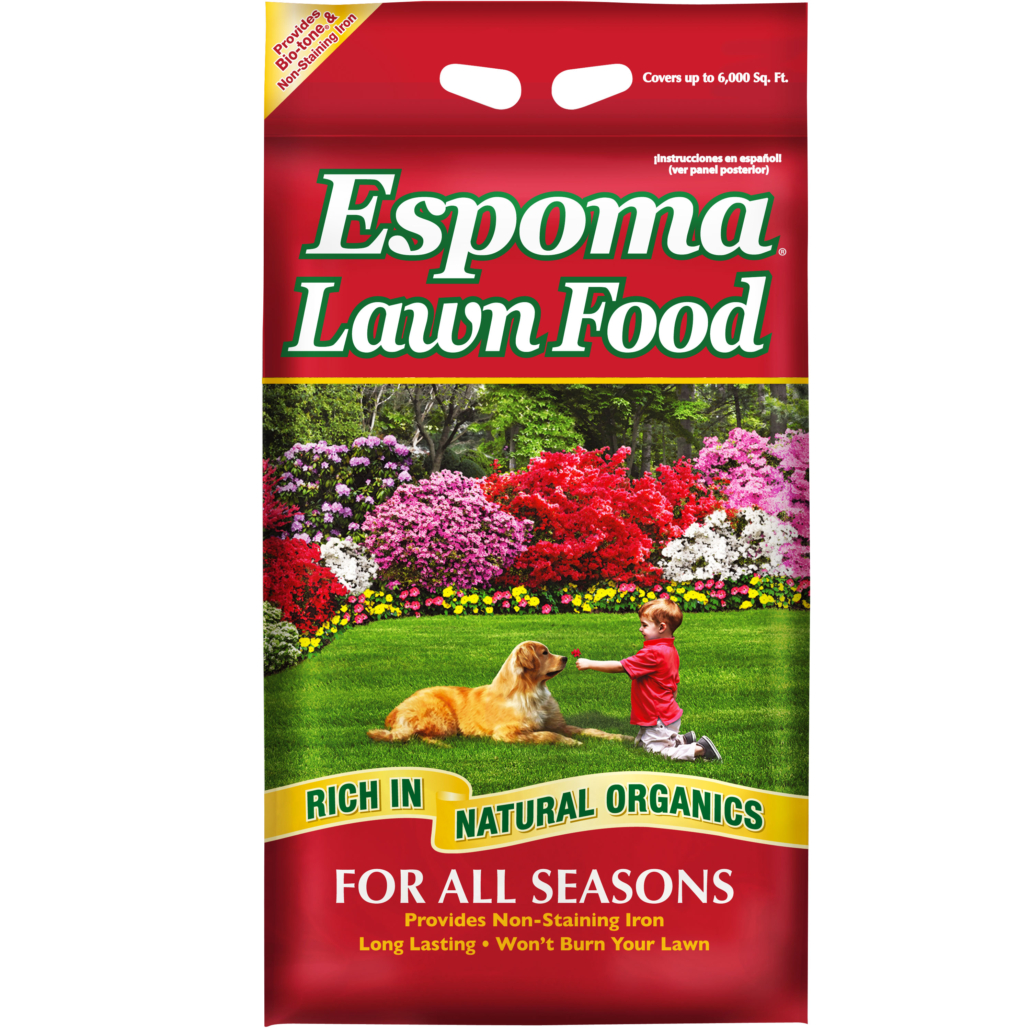
Espoma Lawn Food for All Seasons 15-0-5 provides slow-release, long-lasting nitrogen to help support a greener lawn year-round. Enhanced with iron for deep green color, it helps turn yellow lawns back to green and won’t stain concrete, sidewalks, or driveways. Safe for cool and warm season grasses, it applies in spring, summer, and fall with a drop or broadcast spreader.
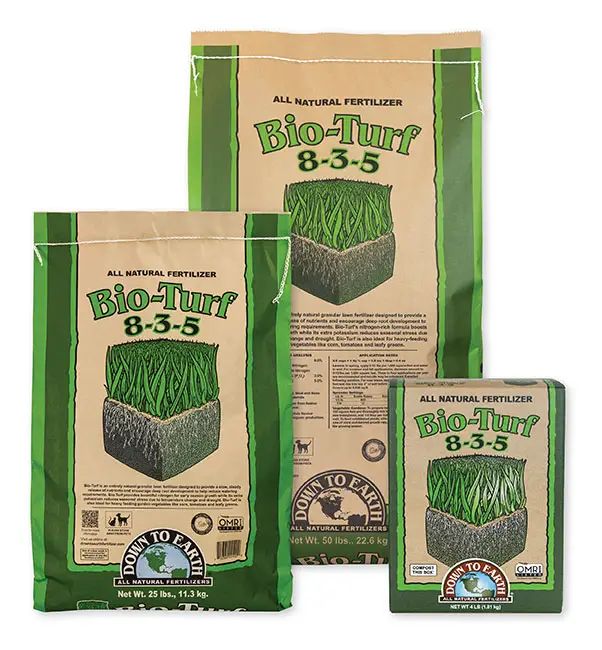
Down to Earth Bio-Turf is an all-natural 8-3-5 organic fertilizer, OMRI listed for use in organic production. It helps encourage deep root development to support greener, stronger growth while reducing watering needs and stress from heat or drought. Ideal for lawns, landscape ornamentals, and heavy-feeding garden vegetables and flowerbeds.
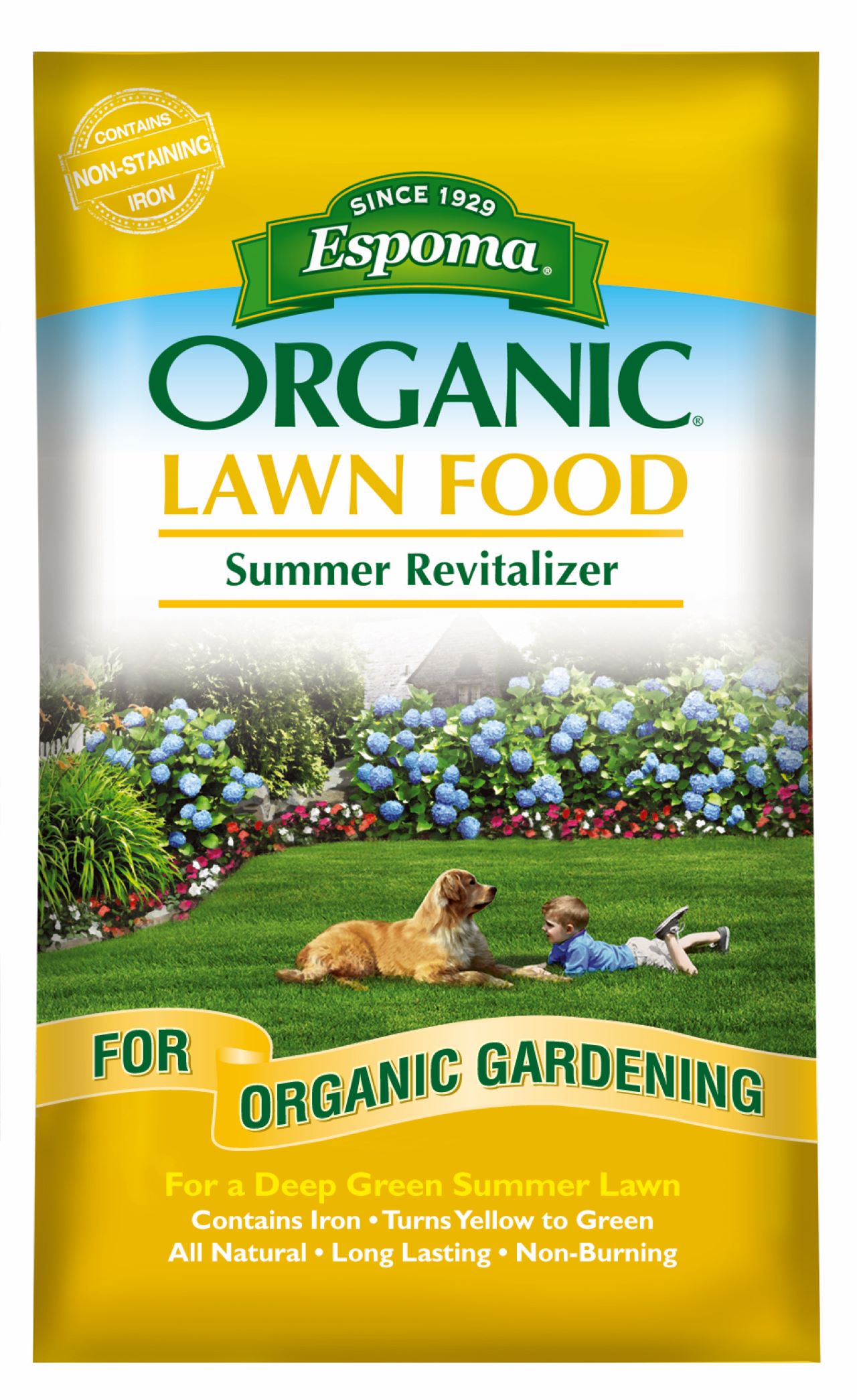
Espoma Organic Lawn Food Summer Revitalizer 8-0-0 delivers long-lasting organic nitrogen to help invigorate lawns during hot weather while adding iron for deep, greener color. Designed for all lawn types and cool- or warm-season grasses, it helps turn yellow lawns back to green without burning or leaching out of soil. Environmentally safe with no sludges or toxic ingredients, it won’t stain concrete, sidewalks, or driveways and is approved as a registered organic input material.
Cause 2: Iron Chlorosis
Iron chlorosis is a specific type of yellowing caused by the grass plant’s inability to absorb iron from the soil, even when iron is present. It is most common in alkaline soils (pH above 7.0), where iron is chemically bound in a form that grass roots cannot take up.
Diagnostic clues: The yellowing follows a distinctive interveinal pattern, the grass blades turn yellow but the veins running along the length of each blade remain green. This yellow-with-green-veins appearance is the most reliable identifier of iron chlorosis and distinguishes it from nitrogen deficiency, where the blades yellow more uniformly. Iron chlorosis is more common in western and southwestern states where soils are naturally alkaline, and in lawns where lime has been applied too aggressively.
Fix: Test soil pH. If pH is above 7.0, apply iron chelate (chelated iron) as a foliar spray for a fast cosmetic response within 1 to 2 weeks. For a longer-term correction, apply elemental sulfur to gradually lower soil pH into the range where iron becomes plant-available. Do not apply standard nitrogen fertilizer as a first response, it will not address the underlying soil chemistry issue.
Cause 3: Drought Stress
Drought stress causes grass to first lose its spring and resilience, then turn bluish-gray or dull yellow-green as the plant pulls water and nutrients from the blades to protect the crown and root system.
Diagnostic clues: The turf does not spring back after you walk across it, footprints remain visible for 30 seconds or longer. The discoloration is widespread across the lawn, particularly in south- and west-facing areas that receive the most sun and heat. The soil feels dry and powdery when you insert a screwdriver 4 to 6 inches deep. The problem occurs in dry, hot weather without recent rain or irrigation.
Fix: Water deeply, 1 to 1.5 inches per session, to wet the root zone to a depth of 4 to 6 inches. Water in the early morning to minimize evaporation. Do not apply any fertilizer until the lawn has recovered from drought stress, typically after 2 to 3 deep watering sessions over one week. Applying nitrogen to drought-stressed grass causes additional burn damage at the leaf surface.
Espoma Organic Lawn Soil is an all-natural organic soil mix designed to promote seed germination and help new sod establish. It contains earthworm castings, alfalfa meal, kelp meal, and feather meal, enhanced with Espoma MYCO-TONE, a blend of endo and ecto mycorrhizae fungi. Use it anytime you sow new grass seed or install sod for organic gardening results with no synthetic plant foods or chemicals.
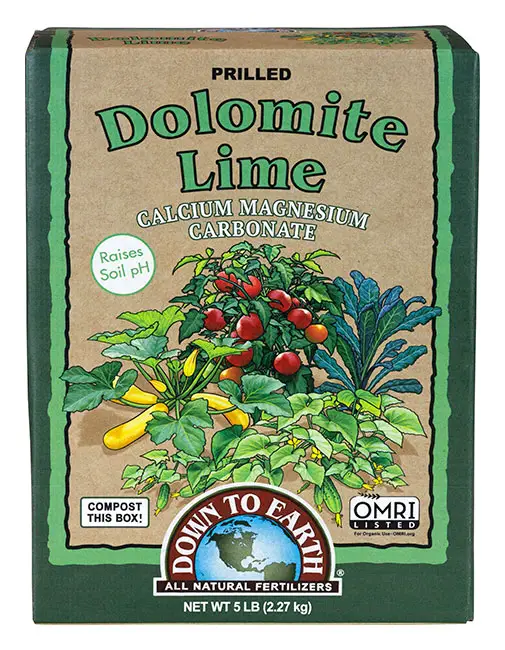
Down To Earth Organic Prilled Dolomite Lime helps raise acidic soil pH for better nutrient uptake and healthier vegetable gardens. Its rich calcium and magnesium support strong cell walls, root growth, and overall plant performance. OMRI listed for organic use, the prilled granules spread easily and act quickly while improving soil structure and microbial activity.
Cause 4: Overwatering
Overwatered grass develops yellowing through two distinct mechanisms: waterlogged soil forces oxygen out of the root zone, suffocating roots and causing nutrient uptake to fail; and persistently wet conditions at the surface promote fungal disease that produces yellowing and patchy die-off.
Diagnostic clues: The soil feels consistently wet or spongy even when it has not rained recently. The yellowing is widespread but may be worse in low-lying areas where water pools. The lawn may feel soft underfoot and squelch slightly when walked on. The problem occurs regardless of weather, particularly on lawns with compacted or clay-heavy soil and poor drainage.
Fix: Reduce irrigation frequency immediately. Allow the soil to dry between watering sessions, water when a screwdriver pushed 4 to 6 inches into the soil meets resistance, not on a rigid calendar schedule. If the drainage problem is structural, aeration and topdressing with a sandy loam mix will improve the soil’s capacity to shed excess water over time. For persistently wet yards with grade issues, see our how to dry up a wet lawn guide.
Cause 5: Fungal Disease
Several fungal diseases produce yellowing as an early or primary symptom. Yellow patch, Pythium blight, and certain manifestations of dollar spot can all present with yellow discoloration before the affected areas progress to brown or dead patches.
Diagnostic clues: The yellowing appears in distinct patches with irregular or circular borders rather than uniformly across the lawn. Some patches may show a darker border ring or visible mycelium (white or gray thread-like fungal growth) in the early morning before dew dries. The problem typically intensifies during periods of high humidity, warm nights, and wet weather.
Fix: Identify the specific disease before applying a fungicide, different fungal pathogens respond to different active ingredients. The identification characteristics and treatment options for the most common lawn fungal diseases are covered in our common lawn fungal diseases guide.
Cause 6: Grub Damage
Grub damage produces yellowing and browning in irregular dead patches as root-feeding larvae sever the grass root system below the surface. The grass in affected areas is not just yellowing, it is dying because its root system has been destroyed.
Diagnostic clues: Pull on the yellowing grass at the edge of an affected patch. If it lifts easily like loose carpet, with little or no root resistance, suspect grubs. Turn the sod back and examine the top 2 to 3 inches of soil, white C-shaped larvae from half an inch to 1.5 inches long confirm the diagnosis. Grub damage typically appears in late summer (August to September) when the larvae are in their most actively feeding phase.
Fix: See our lawn grubs guide for treatment timing and product options.
Cause 7: Dog Urine
Dog urine deposits concentrated nitrogen and urea salts at the point of contact, burning the grass and producing a small dead or yellow patch. The pattern is highly distinctive.
Diagnostic clues: Small circular patches, typically 4 to 8 inches in diameter, with a yellow or brown center and a ring of abnormally bright green grass at the outer edge. The bright green ring is fertilized by the diluted nitrogen at the urine margin, a pattern that is essentially unique to pet urine damage. Multiple patches in the same area suggest a preferred spot.
Fix: Flush the area with water immediately after a urine deposit to dilute the nitrogen concentration at the soil surface, this is the most effective preventive measure. For patches that have already developed, overseed the dead center after thoroughly flushing the soil. Whether baking soda neutralizes urine damage and what actually works is covered in our baking soda for dog urine on grass guide.
Cause 8: Scalping from Mowing Too Low
Scalping, cutting the grass shorter than the recommended height for the species, removes the green leaf tissue that the plant uses for photosynthesis. The exposed stem tissue is yellow or tan, and the lawn appears uniformly pale or streaked in the direction of mowing passes.
Diagnostic clues: The problem appeared immediately after mowing. The discoloration follows the mowing pattern. The grass feels very short, you can see the thatch layer or soil surface through the remaining blades.
Fix: Raise the mower deck to the appropriate height for your grass type and allow the lawn to recover over 1 to 2 weeks. Do not mow again until the lawn has regained adequate leaf tissue. The recommended mowing height by grass type is covered in our lawn mowing hub.