
Lawn Grubs: How to Identify and Treat White Grubs in Grass
White grubs are the larval stage of several scarab beetle species, Japanese beetles, June beetles (June bugs), masked chafers, and European chafers are the most common in North American lawns. The larvae live in the soil and feed on grass roots from midsummer through fall. At low population densities, a healthy lawn can tolerate grub feeding without visible damage. When grub populations exceed the damage threshold, the severed root system can no longer support the turf above, and irregular patches of dead or dying grass begin to appear.
Identifying Grub Damage
Grub damage produces patches of grass that turn yellow or brown in late summer (August to September) and pull up easily from the soil surface, the telltale sign that distinguishes grub damage from drought stress or fungal disease. When you pull back the turf in a damaged area, the root zone should be sparse or absent, and the C-shaped white larvae will be visible in the top 2 to 3 inches of soil.
Confirming the diagnosis. Cut a 1-square-foot section of sod at the edge of the damaged area, peel it back, and count the number of grubs visible in the soil. This is the population threshold check:
- Fewer than 5 grubs per square foot: Below threshold. A healthy lawn can typically tolerate this level without significant visible damage.
- 5 to 10 grubs per square foot: Threshold zone. Treatment is advisable, particularly for stressed lawns or in areas with a history of grub damage.
- More than 10 grubs per square foot: Above threshold. Treatment is recommended to prevent significant turf loss.
Secondary indicators. Increased activity from skunks, raccoons, crows, or starlings digging in the lawn is a reliable indicator of a high grub population, these animals are highly effective at locating grubs and will tear up turf in a feeding frenzy when populations are high. Moles may also be attracted to areas with high grub density (see our how to get rid of moles guide).
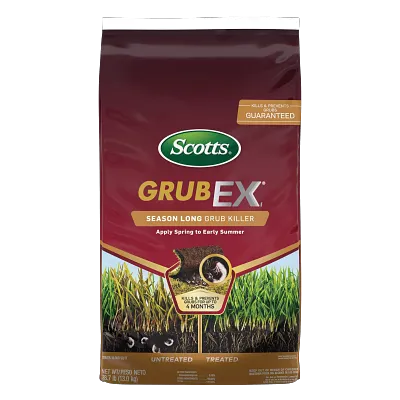
Scotts GrubEx1 is a season-long grub killer that keeps protecting your lawn from grubs and damage for up to 4 months with a single application. It helps stop grubs before they cause brown patches and harm grass roots, keeping your turf healthier. Apply in spring or early summer when grubs are developing for best results.
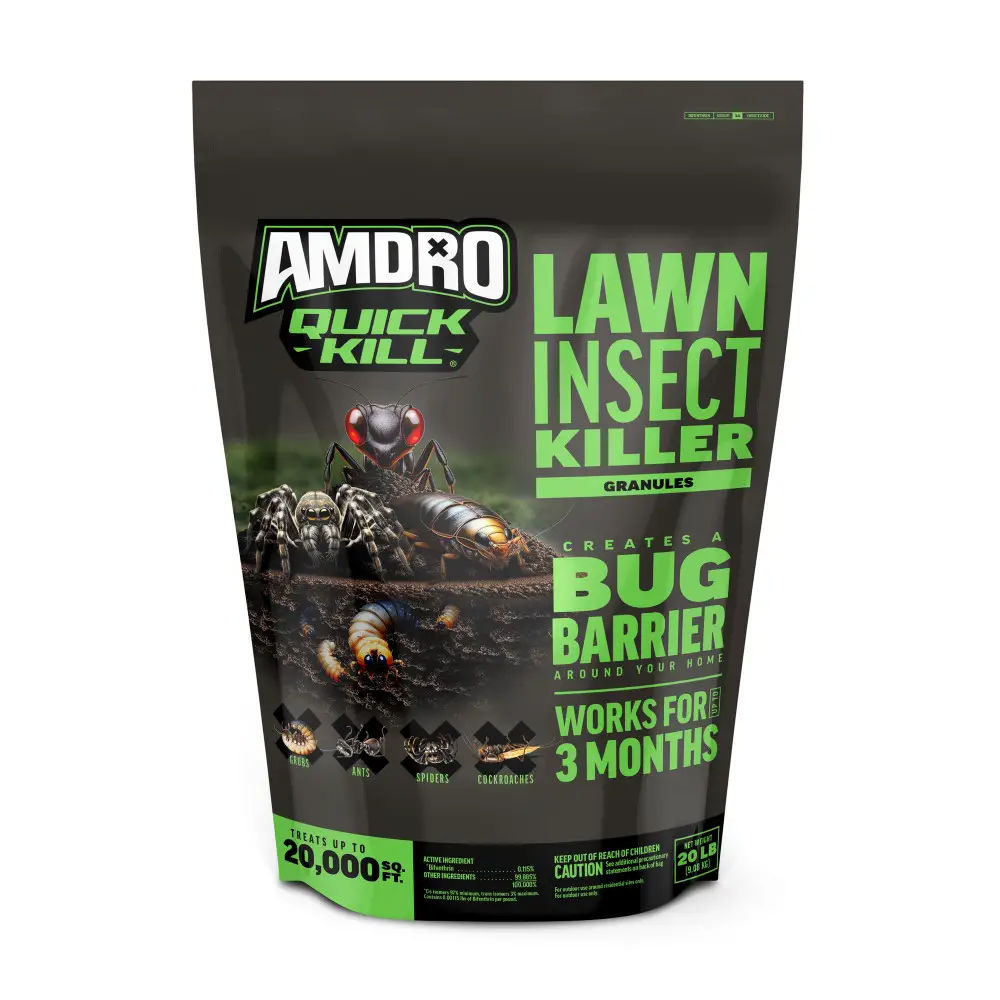
Amdro Quick Kill Lawn Insect Killer Granules protect your yard from listed pests for up to 3 months. Spread the granules uniformly and water them in to kill insects on contact, including grubs and mole crickets below the surface and common surface pests like ants, spiders, fleas, and ticks. The soil-penetrating formula helps create a bug barrier around your home and won’t harm lawns, flower gardens, trees, or shrubs when used as directed.
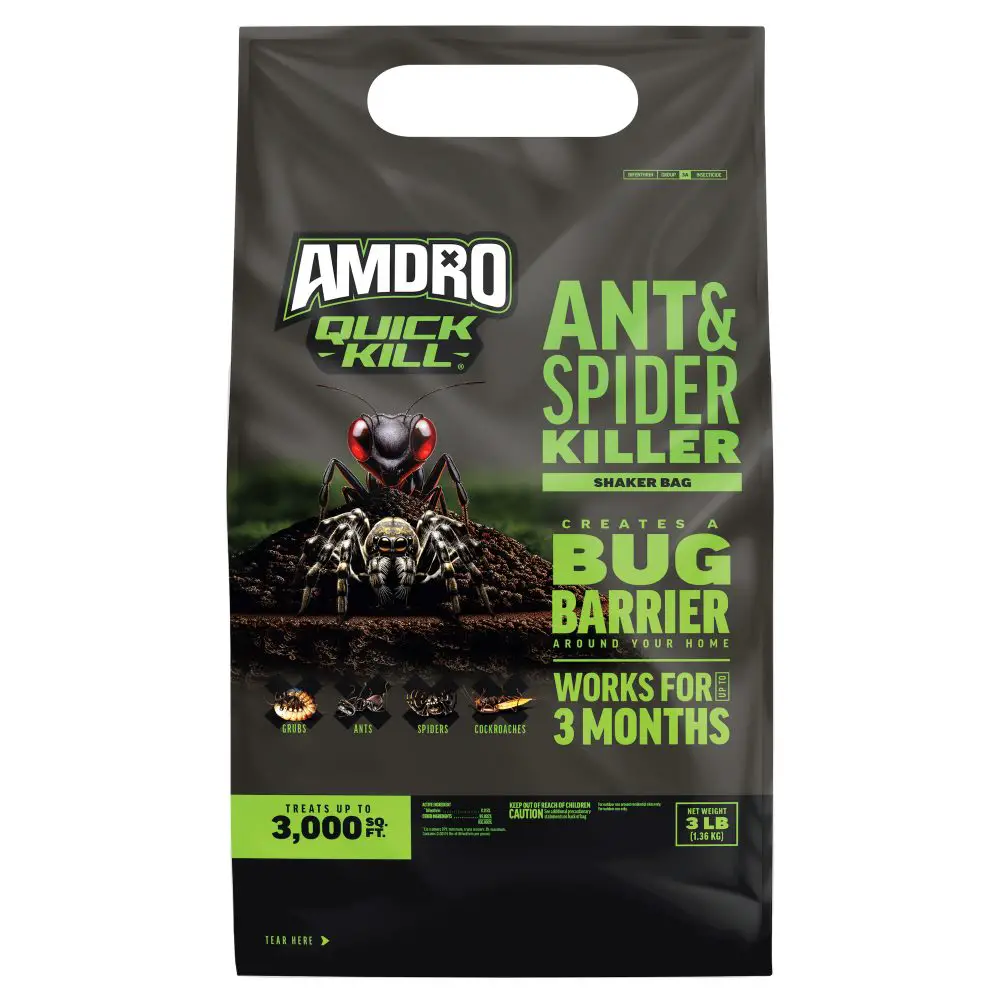
Amdro Quick Kill Ant & Spider Killer granules come ready to spread and help create a bug barrier around your home. The soil-penetrating formula kills listed insects by contact and works for up to 3 months, targeting lawn-damaging pests like grubs and mole crickets as well as surface pests such as ants and spiders. Simply apply evenly with the shaker bag, then lightly water the treated area to help control up to 100 listed insects and cover up to 3,000 square feet.
Grub Life Cycle: Why Timing Matters
Understanding the grub life cycle is essential for selecting the correct treatment timing. Most turf-damaging grub species follow a one-year cycle:
Spring (April to June): Overwintering grubs from the previous year are deep in the soil (6 to 12 inches) as they warm up and begin moving toward the surface. Grubs at this stage are large and approaching pupation, they are at their most resistant to pesticides and difficult to control.
Early summer (June to July): Adult beetles emerge from pupating grubs, feed on ornamental plants and trees, and mate. Female beetles deposit eggs in the turf (typically in moist, irrigated lawn areas).
Late summer (August to October): Newly hatched grubs are in the top 2 to 3 inches of soil, feeding actively on grass roots. This is the period of peak damage visibility, and also the window when young, small grubs are most vulnerable to treatment.
Late fall through winter: Grubs move deeper in the soil (below the frost line) as temperatures drop and enter an overwintering state.
Treatment Options and Timing
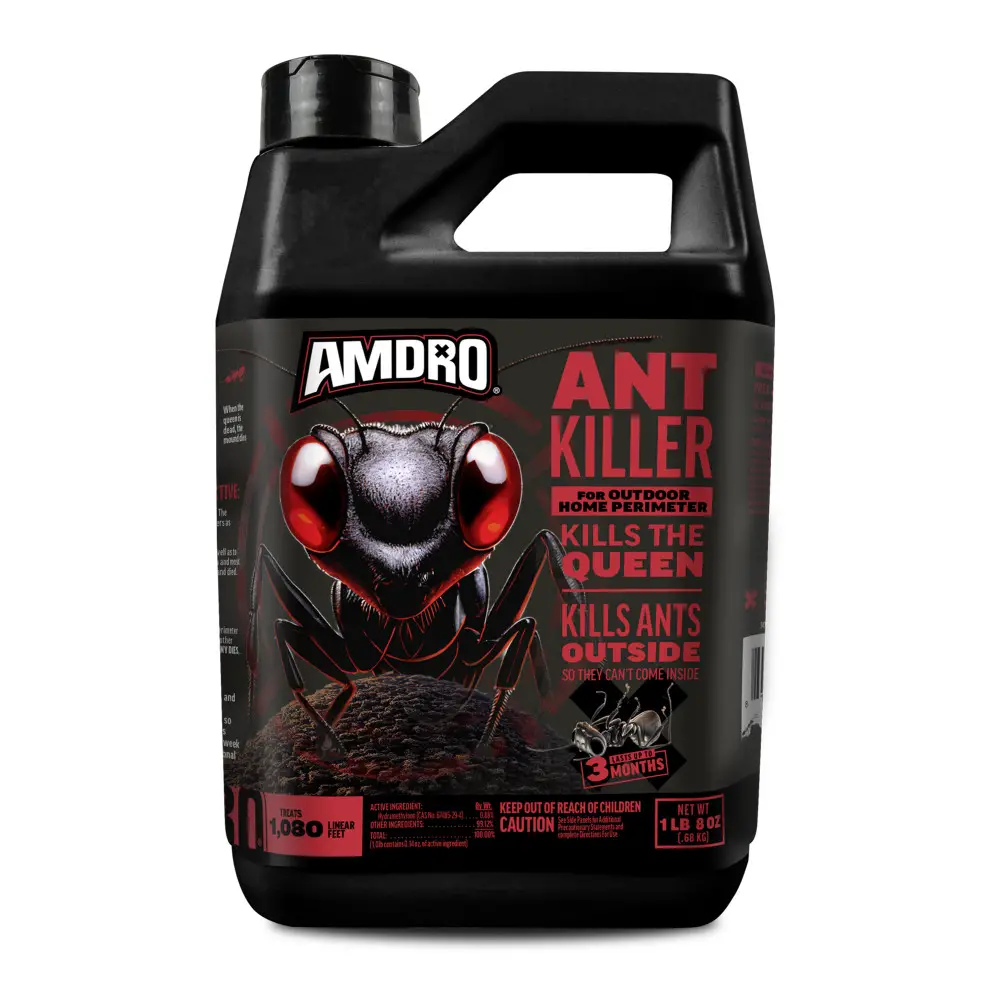
Amdro Ant Killer for Outdoor Home Perimeter creates a protective band that attracts and kills listed common ant species before they enter your home. Dual-action bait foraging workers carry it back to their colonies, helping reduce visible ants within about a week and stopping the colony, including the queen. For best results, apply when ants are active, and keep the treatment working up to three months for ongoing perimeter protection.
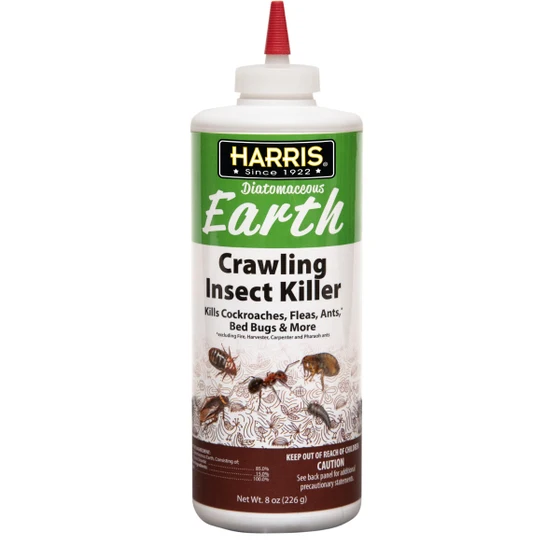
Harris Diatomaceous Earth Crawling Insect Killer is a ready-to-use 100% natural dust that targets crawling pests including ants, roaches, bed bugs, and fleas. Insects that contact or ingest the powder die within 48 hours when applied in cracks, crevices, and other hiding areas. Suitable for indoor and outdoor use with a powder duster included for easy application.
Preventive treatment (May to July)
Preventive insecticides are applied before the eggs hatch and target newly emerged small grubs in their most vulnerable stage. This is the most effective treatment window.
Chlorantraniliprole (brand name Acelepryn): The most effective and lowest-toxicity preventive grub insecticide available for residential use. Applied in May to early June, it provides season-long control of Japanese beetle and other grub species with minimal impact on beneficial insects, earthworms, and soil biology. It is the recommended first-choice preventive treatment.
Imidacloprid (various brand names): A systemic neonicotinoid that is effective when applied in May to July. It must be watered in immediately after application to move into the soil where grubs are feeding. Effective control when applied before egg hatch.
Curative treatment (August to September)
Curative products are applied after grubs are actively feeding in the upper soil zone. They are useful when a grub problem is identified after the preventive window has passed.
Trichlorfon (brand name Dylox): A fast-acting organophosphate that provides the most reliable curative control when grubs are already actively feeding. It must be watered in heavily immediately after application (0.5 inch of irrigation) to move the active ingredient into the feeding zone. Effective against grubs in the top 2 to 3 inches of soil.
Carbaryl: A second curative option, less effective than trichlorfon but widely available. Apply with heavy irrigation.
Note on timing: Late fall and winter applications are ineffective, grubs at depth in cold soil are not moving through areas where surface-applied products can reach them.
Biological Control Options
Beneficial nematodes. Steinernema and Heterorhabditis nematode species sold for grub control are parasitic nematodes that enter grub larvae and kill them. They are non-toxic to humans, pets, and soil biology. Effectiveness is variable, nematodes require moist soil, correct temperature (above 60°F), and protection from UV light (immediate watering-in after application). When conditions are right, nematode applications can achieve 50% to 80% population reduction, which is sufficient to bring populations below the damage threshold in moderate infestations.
Milky spore (Bacillus popilliae). Milky spore is a bacterial pathogen specific to Japanese beetle grubs. It has a reputation for being a long-term control solution once established in the soil, but research suggests it takes 2 to 4 years to establish an effective soil concentration and its effectiveness is highly variable by region and soil type. It is not effective against other grub species (masked chafers, June beetles), limiting its value in areas where the primary pest is not Japanese beetle.
Repairing Grub-Damaged Turf
After treating for grubs, the dead or thinned areas need to be repaired. The dead zones will not recover on their own, the root systems in those areas are gone.
Rake out the dead grass thoroughly to remove the debris. The soil beneath will likely feel loose and crumbly from the grub tunneling. Firm it with a light roller or by hand. Apply grass seed at the overseeding rate, 4 to 8 pounds per 1,000 square feet for patching, and apply a starter fertilizer. Water the seeded area twice daily until germination is established.
If the damage occurred in late summer on a cool-season lawn, the timing aligns well with the ideal overseeding window (late August to September). Repair immediately after treating and confirming grub mortality, do not wait until spring.
Addressing grub populations before they cause visible damage produces the best outcome. If your lawn has a history of grub damage or you have observed high bird foraging activity in summer, applying a preventive treatment in late May to early June provides season-long protection with minimal intervention.