
Best Drop Spreader for Precision Fertilizer Application
A drop spreader deposits granules directly downward through openings at the base of the hopper, applying material in a strip exactly as wide as the spreader’s wheel-to-wheel distance, typically 18 to 24 inches. No material is thrown sideways or forward: what falls, falls directly below the hopper. This precision makes a drop spreader the correct tool wherever the lawn borders a surface that must not receive fertilizer, seed, or ice melt: driveways, flowerbeds, garden borders, sidewalks, and any adjacent planting area that would be damaged by the product being spread.
The trade-off is coverage speed. A drop spreader requires significantly more passes to cover a given area than a broadcast spreader of the same hopper capacity, because the coverage width is limited to the spreader’s physical width. For lawns over a quarter acre, a full fertilizer application with a drop spreader is time-consuming relative to a broadcast spreader. Drop spreaders are most practical for lawns with complex borders or for buyers whose primary application area is a narrow strip of lawn alongside hard edges.
What to Look for
Gate accuracy is the most important performance variable in a drop spreader. The gate must open to a consistent and repeatable width at each numbered setting, and it must close fully and cleanly at the end of each pass to prevent over-application at the turnaround. A gate that does not close completely deposits a line of double-applied material at the end of each run, which in fertilizer terms creates a burning stripe and in seed terms creates an over-thick germination band. Testing the gate closure with a hand-crank before purchasing is worth doing in-store if possible.
Pass-to-pass overlap management is the user skill most critical to even coverage with a drop spreader. Most drop spreaders use a wheel that leaves a visible track, and the next pass should begin where the previous wheel track ended. Any gap between passes produces an untreated strip that shows in the lawn as a lighter green band three to four weeks after application.

Espoma Organic Lawn Food Summer Revitalizer 8-0-0 delivers long-lasting organic nitrogen to help invigorate lawns during hot weather while adding iron for deep, greener color. Designed for all lawn types and cool- or warm-season grasses, it helps turn yellow lawns back to green without burning or leaching out of soil. Environmentally safe with no sludges or toxic ingredients, it won’t stain concrete, sidewalks, or driveways and is approved as a registered organic input material.
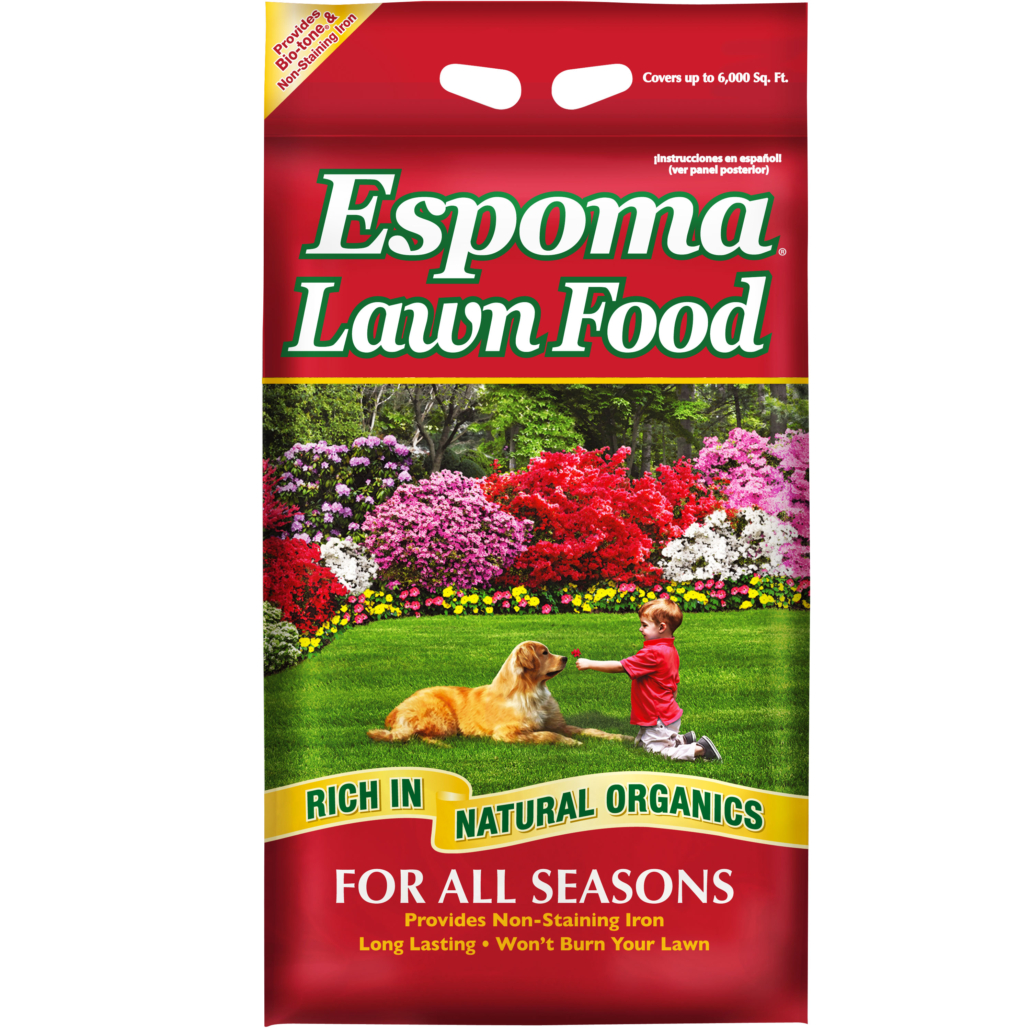
Espoma Lawn Food for All Seasons 15-0-5 provides slow-release, long-lasting nitrogen to help support a greener lawn year-round. Enhanced with iron for deep green color, it helps turn yellow lawns back to green and won’t stain concrete, sidewalks, or driveways. Safe for cool and warm season grasses, it applies in spring, summer, and fall with a drop or broadcast spreader.
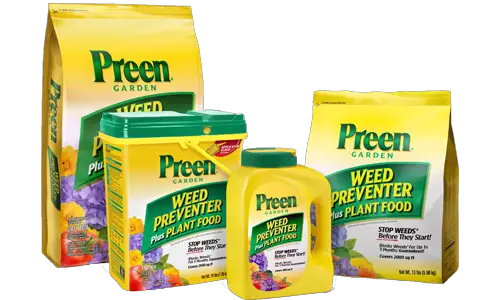
Preen Garden Weed Preventer Plus Plant Food helps prevent weeds while feeding your plants in one simple application. Safe for use in established flower and vegetable garden beds around trees, shrubs, and ground covers, it supports strong root development and abundant blooms. Use during spring, summer, or fall for best results and water it into the soil after sprinkling.
Best Drop Spreader Picks
Best overall: Scotts Turf Builder Classic Drop Spreader
The Scotts Classic Drop is the most widely purchased residential drop spreader and is calibrated for Scotts product settings. The gate mechanism closes cleanly at the spreader handle bail, which makes turning off material during turns straightforward. The 18-inch spread width covers the standard residential pass width. It suits lawns up to a quarter acre that border beds, driveways, or other surfaces requiring precise application edges.
Best heavy-duty: Lesco 80-Pound Drop Spreader
The Lesco drop spreader is a professional-grade unit used extensively by lawn care contractors for accurate fertilizer application. The gate setting mechanism uses a precise numbered dial with positive stops that produce repeatable opening widths across applications. The 80-pound stainless steel hopper resists fertilizer salt corrosion. For homeowners who apply fertilizer four or more times per year and want drop spreader precision at a durable build quality, the Lesco is the most reliable long-term investment.
Best value: Agri-Fab 45-0530 Drop Spreader
The Agri-Fab 45-0530 is a 130-pound capacity drop spreader at a lower price point than the Lesco, suited to buyers with larger lots who want drop spreader precision without the professional-grade cost. The pneumatic tires reduce push resistance on uneven terrain, and the large hopper capacity reduces refill frequency on quarter-acre to half-acre applications.
Drop vs Broadcast: The Right Application
Drop spreaders suit applications where edge precision is the primary requirement. Broadcast spreaders suit open lawn applications where coverage speed matters more than edge precision. Buyers with lawns that have both open interior areas and precise border requirements sometimes use a broadcast spreader for the interior and a drop spreader or handheld unit for the perimeter pass. The spreaders hub and the calibration guide cover the full range of spreader types and how to verify application rates before each use.
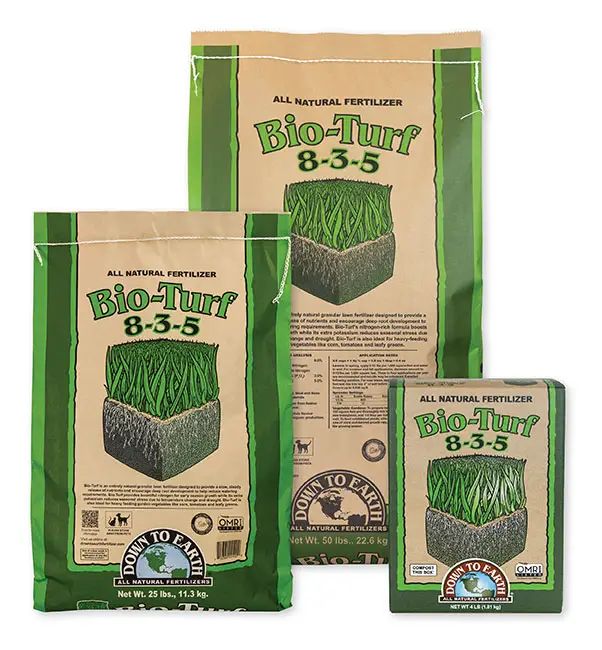
Down to Earth Bio-Turf is an all-natural 8-3-5 organic fertilizer, OMRI listed for use in organic production. It helps encourage deep root development to support greener, stronger growth while reducing watering needs and stress from heat or drought. Ideal for lawns, landscape ornamentals, and heavy-feeding garden vegetables and flowerbeds.
Espoma Organic Lawn Soil is an all-natural organic soil mix designed to promote seed germination and help new sod establish. It contains earthworm castings, alfalfa meal, kelp meal, and feather meal, enhanced with Espoma MYCO-TONE, a blend of endo and ecto mycorrhizae fungi. Use it anytime you sow new grass seed or install sod for organic gardening results with no synthetic plant foods or chemicals.