
Lawn Spreaders: Buying Guides and Calibration for Homeowners
A lawn spreader distributes granular material across a lawn surface evenly and at a controlled rate. Without a spreader, applying granular fertilizer, grass seed, or ice melt by hand produces an uneven distribution that results in striped growth, burning from concentration, or thin coverage from under-application. The spreader is not a sophisticated tool, but choosing the right format for the application and calibrating it correctly for the specific product being spread determines whether the application achieves the result on the bag label.
Broadcast vs Drop vs Handheld: The Primary Format Decision
Three spreader formats suit residential lawn applications, and the format determines the spread pattern, the application precision, and how long the task takes over a given area.
Broadcast spreaders, also called rotary spreaders, use a spinning impeller below the hopper that throws granules outward in a wide arc as the spreader is pushed forward. The spread width on a typical residential broadcast spreader ranges from 6 to 15 feet depending on the opening setting and the material’s granule size. Broadcast spreaders cover large areas quickly and are the most practical choice for open lawn areas where hitting adjacent beds or hard surfaces is not a concern. They are the most widely used spreader format for residential lawn fertilization.
Drop spreaders deposit material directly below the hopper through a row of openings at the bottom, producing a spread width equal to the spreader’s wheel-to-wheel distance, typically 18 to 24 inches. Drop spreaders apply material with high precision and suit applications where the lawn borders flowerbeds, driveways, or hard surfaces that must not receive fertilizer, seed, or ice melt. The trade-off is slower coverage: a drop spreader requires more passes to cover the same area as a broadcast spreader. Drop spreaders also require careful overlap management to avoid skipped strips, since the narrow spread path makes misses visible in the lawn weeks after application.
Handheld spreaders are small, one-handed units that distribute material across a width of 2 to 6 feet with a hand-cranked impeller. They suit small lawns, spot applications, paths, steps, and narrow border areas where a walk-behind spreader is too large and slow to maneuver efficiently. Handheld spreaders are also the most compact storage option for homeowners with limited shed or garage space.
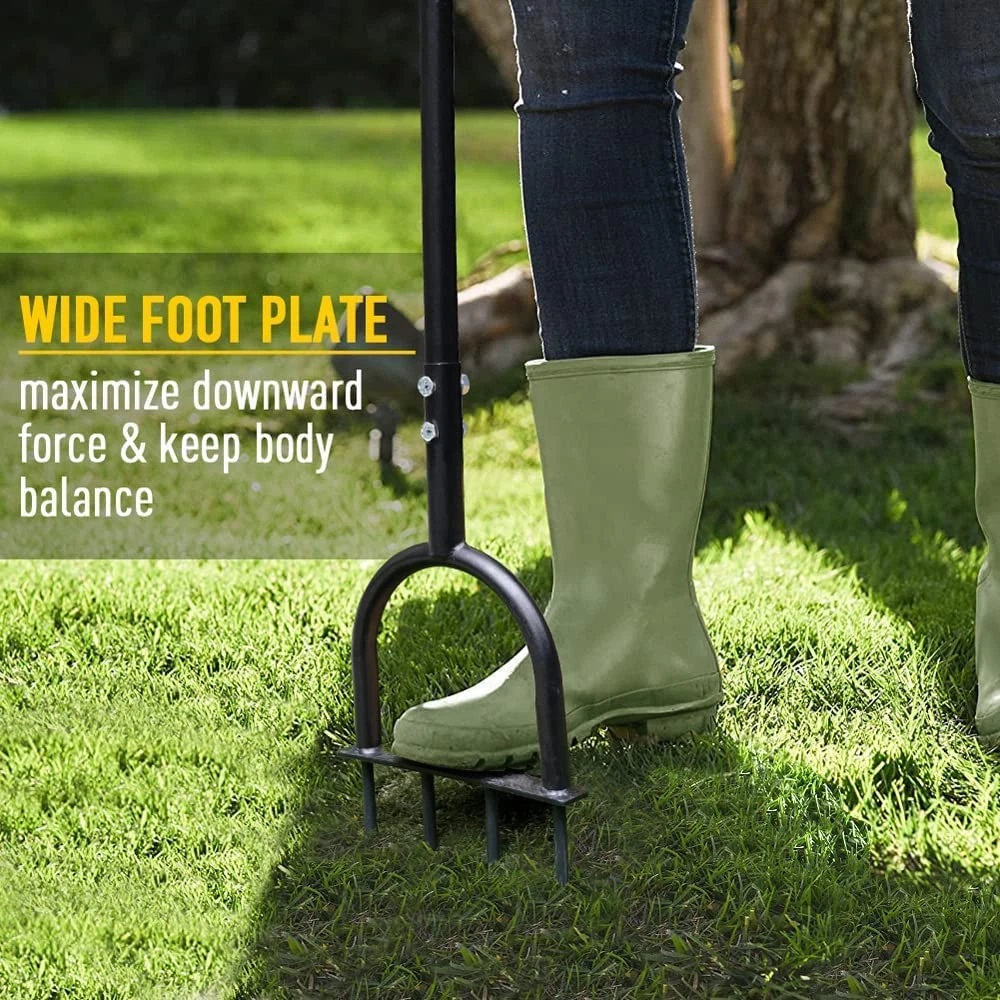
Colwelt manual lawn aerator tool penetrates compacted soil to improve airflow, water, and nutrient flow to grass roots. The 38-inch length helps you aerate with less bending for easier use on small lawns and narrow areas. Rugged steel spikes are designed to create deeper, larger holes, while the wide anti-slip foot plate supports steady plunging control.
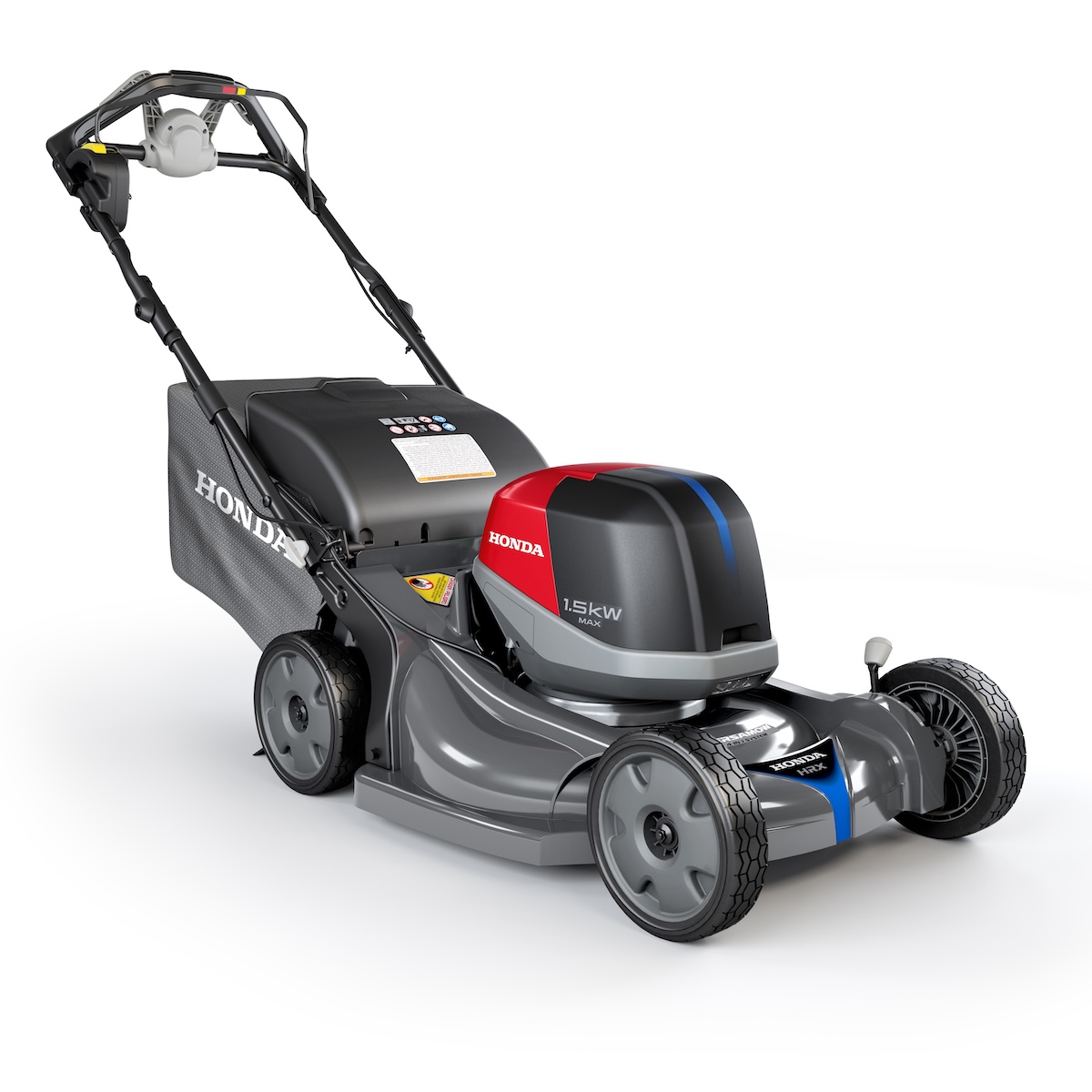
The Honda HRX-BV battery powered lawn mower delivers high torque performance for clean cutting in thick and tall grass. It features 4-in-1 Versamow with Clip Director for mulching, bagging, discharge, and leaf shredding without attachments. Enjoy variable speed self propulsion, adjustable cutting height, and up to 30 minutes of run time per charge for about 1/4 acre.
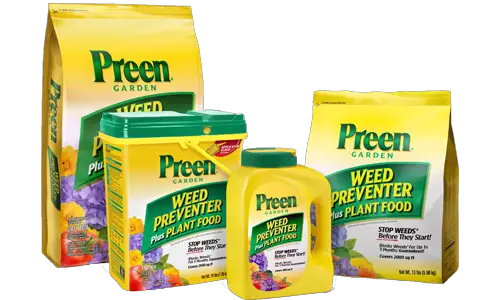
Preen Garden Weed Preventer Plus Plant Food helps prevent weeds while feeding your plants in one simple application. Safe for use in established flower and vegetable garden beds around trees, shrubs, and ground covers, it supports strong root development and abundant blooms. Use during spring, summer, or fall for best results and water it into the soil after sprinkling.
Calibration: Why the Setting Matters
A spreader setting that does not match the product’s recommended application rate either under-applies the material (producing poor results and wasted product cost) or over-applies it (risking fertilizer burn, over-seeding, or unsafe ice melt concentration). Every granular lawn product sold in the US specifies a spreader setting on the label, typically for common brands including Scotts, Earthway, and Lesco models, and often as a general opening-size calibration for other brands. Using those settings as a starting point and verifying output through a calibration catch test is the standard practice for anyone applying fertilizer at a precise rate.
The how to calibrate a lawn spreader guide covers the calibration catch test procedure, how to interpret the spreader setting charts on fertilizer and seed bags, and how to adjust for a spreader brand not listed on the label.
Best Broadcast Spreaders
Broadcast spreaders are the most common spreader type for residential lawns and suit the widest range of fertilizer, seed, and ice melt applications on open lawn areas. The best broadcast spreader guide covers the leading walk-behind models from Scotts, Earthway, and Agri-Fab across hopper capacity, spread width, gate setting accuracy, and build quality, with clear picks for small, medium, and large residential lots.
A broadcast spreader is the right tool for most homeowners applying fertilizer to a lawn of a quarter acre or more. Applying granular fertilizer at the correct rate to achieve the results the product promises requires matching the right spreader setting to the product: the lawn fertilizer guides in the lawn care section cover the fertilizer product side of that relationship, including how granule size and nutrient concentration affect the application rate.
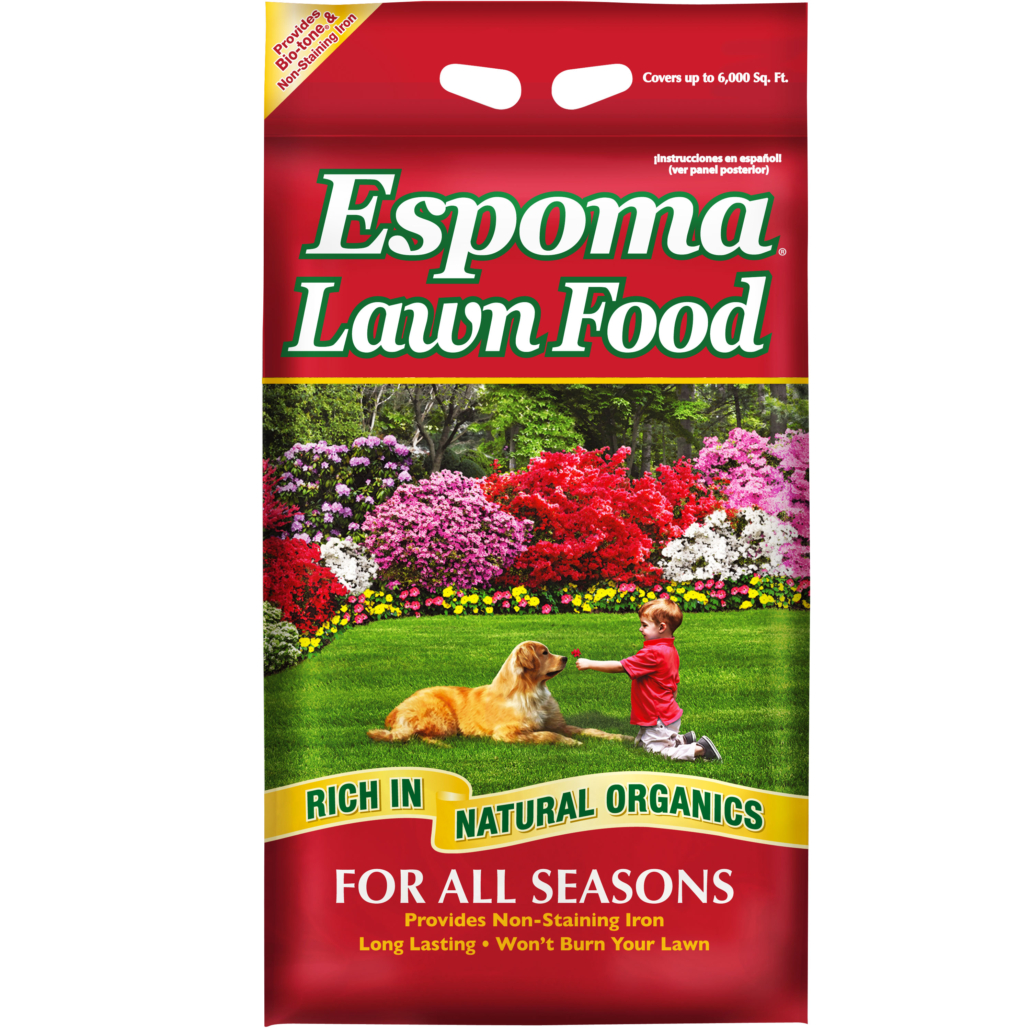
Espoma Lawn Food for All Seasons 15-0-5 provides slow-release, long-lasting nitrogen to help support a greener lawn year-round. Enhanced with iron for deep green color, it helps turn yellow lawns back to green and won’t stain concrete, sidewalks, or driveways. Safe for cool and warm season grasses, it applies in spring, summer, and fall with a drop or broadcast spreader.
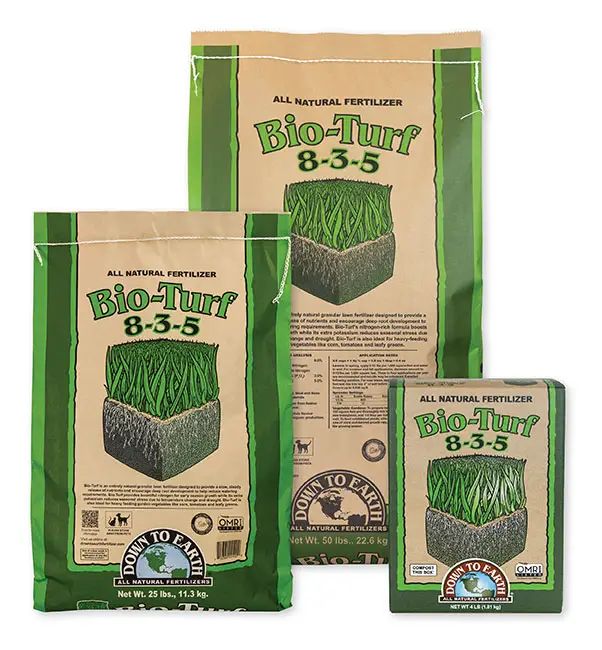
Down to Earth Bio-Turf is an all-natural 8-3-5 organic fertilizer, OMRI listed for use in organic production. It helps encourage deep root development to support greener, stronger growth while reducing watering needs and stress from heat or drought. Ideal for lawns, landscape ornamentals, and heavy-feeding garden vegetables and flowerbeds.
Best Drop Spreaders
Drop spreaders suit lawns with complex borders, beds adjacent to the mowing area, or any application where landing fertilizer or ice melt on a driveway, sidewalk, or planted bed would cause a problem. The best drop spreader guide covers the top models from Scotts, Andersons, and Lesco with guidance on edge guard features that further reduce off-target spread when working along hard borders.
Best Handheld Spreaders
Handheld spreaders are the right choice for small lawns under 5,000 square feet, spot applications, steps and paths, and any area too tight or irregular for a walk-behind unit. The best handheld spreader guide covers the top options including battery-powered and hand-cranked models, with guidance on how to achieve consistent spread rates with a manual unit.
Tow-Behind Spreaders
Tow-behind spreaders attach to a riding mower or garden tractor hitch and cover large areas quickly without the physical effort of pushing a walk-behind unit. They suit lots of a half acre or more where a walk-behind broadcast spreader requires too many passes and too much time to complete the application efficiently. The best tow-behind spreader guide covers hopper capacity, impeller quality, and the hitch compatibility considerations for common riding mower and zero-turn brands.
Cleaning and Maintenance
Fertilizer, seed, and ice melt granules left in a spreader hopper after use absorb moisture, cake, and corrode the metal components of the gate, impeller, and frame. Rinsing the hopper with clean water after each use and allowing it to dry before storage prevents the corrosion and caking that shortens spreader lifespan. Plastic-hopper spreaders are more resistant to corrosion than steel-hopper models but still benefit from rinsing. The gate mechanism and impeller should be checked before each season for binding or damage from granule residue.