
How to Use a Garden Tiller Safely and Effectively
A garden tiller handles the most physically demanding soil preparation task in the home garden by automating what would otherwise be a full day of digging with a fork or spade. Used correctly, it breaks ground to planting depth, incorporates amendments, and produces a loose, workable seedbed in an hour or less. Used incorrectly, it can damage the tines, strain the engine, and leave the soil in a worse condition than before. The steps above and the guidance below cover the approach that produces good results without tool damage.
Before You Start
Personal protective equipment for garden tilling includes close-toed shoes or boots (never sandals or open-toed footwear near rotating tines), safety glasses, and hearing protection for gas models. Long trousers reduce the risk of debris contact on the lower legs. Keep bystanders and children out of the tilling area while the machine is running.
The soil moisture condition at the time of tilling significantly affects the result. Very dry, hard soil compacts further under the tines before breaking, requires more passes to reach the same depth, and produces more dust and debris throw. Very wet, saturated soil compacts and smears under the tines rather than breaking into a granular structure, producing a dense, sticky mass that clods when it dries. The ideal tilling soil is moist: it crumbles when squeezed in the hand and does not stick in a ball. If the soil is bone dry, watering lightly and waiting several hours before tilling improves the result. If it has rained recently, waiting a day or two for surface moisture to reduce is worth the delay.
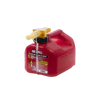
The NO-SPILL 2-1/2 gal Gas Can makes fueling cleaner and more controlled with a thumb button that starts and stops flow instantly. A 7/8-inch funnel spout with an attached...
Recognizing When the Tiller Is Overloaded
A tiller that is stalling, slowing dramatically under load, or jumping forward across the surface rather than digging is signaling that the soil condition or depth setting exceeds what the engine can deliver cleanly. The correct response is to reduce the depth setting, complete a shallow first pass to break the surface crust, and then deepen the setting for subsequent passes. Forcing the engine through heavy resistance by gripping the handles down increases the load on the tines and transmission and causes premature wear. Allow the depth control to do its job.
After Tilling
Cleaning the tines after each use prevents soil from drying and hardening in the tine gaps and around the gearbox housing. Hose the tines and housing clean, or use a stiff brush with water before storage. For gas tillers, follow the seasonal fuel stabilization procedure in the winterizing outdoor power tools guide before end-of-season storage.