
How to Kill a Tree Stump: Chemical and Natural Methods
A freshly cut stump from a vigorous species will send up new shoots within weeks if not treated. Even a dormant stump from a species with strong root-sprouting tendencies, such as elm, black locust, or tree of heaven, will regenerate aggressively given time and undisturbed soil. Killing the stump and root system promptly eliminates the regrowth problem and begins the decomposition process that allows replanting.
The method you choose depends on urgency, the species involved, proximity to other plants, and whether you plan to grind the stump or allow it to decompose in place.
Chemical Method 1: Potassium Nitrate
Potassium nitrate (potassium saltpeter) stump killer products, including Spectracide Stump Remover and similar formulations, work by accelerating the decomposition of stump wood. The chemical is applied to holes drilled into the stump and accelerates fungal and bacterial breakdown.
How to apply:
- Drill multiple holes into the top of the stump, each approximately 1 inch in diameter and 8 to 10 inches deep. Space holes 3 to 4 inches apart across the stump surface.
- Drill angled holes around the sides of the stump, angling downward into the root area.
- Fill holes with potassium nitrate granules and pour water into each hole to dissolve the granules into the wood.
- Cover the stump with a plastic tarp to retain moisture and accelerate the chemical action.
- Reapply after four to six weeks.
Timeline: Potassium nitrate products take four to eight weeks to significantly soften the wood. Full decomposition takes several months to a year depending on stump size and moisture levels.
Best for: Large stumps where grinding is not practical and you are willing to wait for decomposition. Not suitable when the area needs to be replanted quickly.

Ecoxall 99% pure potassium nitrate pellets support strong plant growth for fruits, vegetables, flowers, lawns, and ornamentals in indoor or outdoor settings. The industrial-grade prilled pellets provide controlled distribution while doubling as a practical tree stump remover that helps break down wood matter. With use across horticulture and industrial applications, this versatile compound delivers nitrogen and potassium benefits for healthy root development and plant vitality.
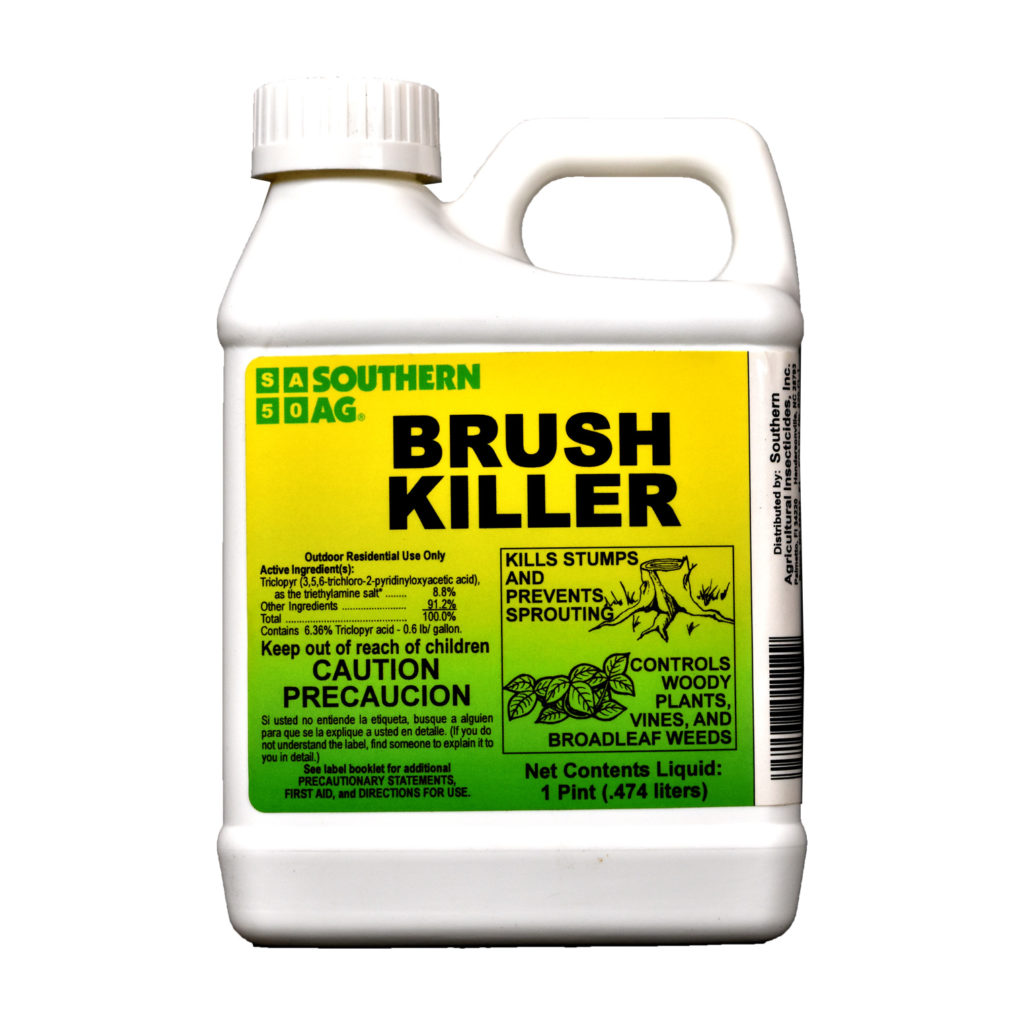
Southern Ag Brush Killer with 8.8% triclopyr helps kill tough vines and hard-to-control brush, including stump sprout prevention. It works as a full-volume foliage spray for vines, shoots, stems, and bark, and can also be used for undiluted stump treatment on freshly cut stumps. Ideal for non-crop areas like road right-of-ways, rangeland, pastures, and fence rows.
Chemical Method 2: Triclopyr Herbicide
Triclopyr-based herbicides (sold as Garlon, Brush-B-Gon, and others) kill the stump and root system by disrupting growth hormones. Applied to the freshly cut surface of a recently felled tree, they prevent regrowth and translocate through the root system to kill roots.
How to apply (cut stump method):
Apply undiluted or concentrated triclopyr to the outer ring of the stump (the cambium layer just inside the bark) within 30 minutes of making the cut. The window is critical: the cambium is actively transporting sap and carries the herbicide into the root system during this period. Application to a stump that has been cut and allowed to dry for several hours is far less effective.
Timeline: Regrowth suppression is immediate. Root system death takes one to three months.
Best for: Species with aggressive root sprouting tendencies such as elm, black locust, and tree of heaven where preventing regrowth is the primary goal.
Natural Method: Deprivation
Cutting the stump as low as possible and covering it with black plastic, a metal bucket, or soil blocks all light and photosynthesis from reaching any regrowth. Without the ability to photosynthesize, the stump and roots are forced to draw down their stored carbohydrate reserves. This process takes one to three years on most species but requires no chemicals and no physical labor beyond initial setup.
This method works best on species with limited root-sprouting tendencies. It is unreliable on black locust, elm, and tree of heaven, which sprout vigorously from roots far outside the cover area.
After the Stump Is Dead: Removal Options
Once a stump is dead and decomposing, you have three options: grind it out with a stump grinder, dig it out manually if the root mass is small, or leave it to continue decomposing in place if it is not in an active use area.
For a detailed comparison of grinding versus chemical removal including cost, timeline, and replanting options, the stump grinding vs chemical comparison covers both approaches from the decision-making perspective rather than the application technique.