
How to Prune Fruit Trees for Maximum Yield
Fruit tree pruning serves a different goal than ornamental tree pruning. The objective is not primarily shape or size management: it is maximizing fruit quality and yield by directing the tree’s energy into productive spur wood, maintaining adequate light penetration throughout the canopy, and building a scaffold structure strong enough to carry heavy crops without limb failure.
Pruning a fruit tree incorrectly, either by cutting too little and allowing the canopy to become crowded, or by cutting too aggressively and triggering excessive vegetative growth at the expense of fruiting, both reduce yield. Understanding the training system your tree is suited for, and the annual cuts that maintain it, produces better results than pruning by eye alone.
When to Prune Fruit Trees
Dormant-season pruning, from late January through early March before bud break, is the standard timing for most fruit tree pruning. At this point the tree is at its lowest metabolic activity, wounds close quickly once growth resumes, and the bare structure is clearly visible for making training decisions.
The exception is stone fruit trees, including cherry, plum, and peach. Stone fruit species are susceptible to several fungal diseases, including silver leaf and bacterial canker, that enter through fresh wounds during wet winter conditions. Prune stone fruit in late summer after harvest, when the drier weather reduces fungal spore counts and the tree’s active growth still supports wound closure.
For trees in regions with fire blight pressure, primarily apple and pear in humid climates, disinfect pruning tools between every cut during dormant pruning to avoid spreading latent infections from one branch to another.
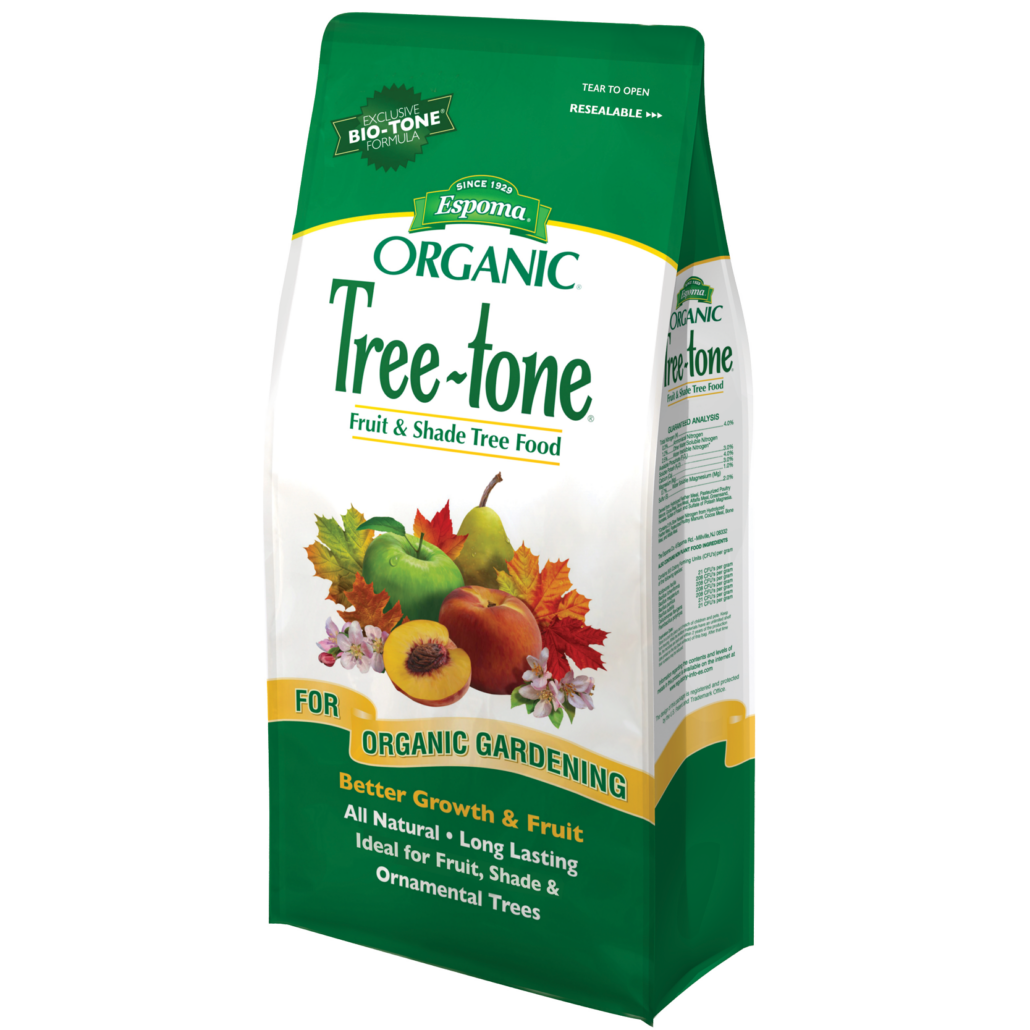
Espoma Organic Tree-Tone is an all-natural and organic fertilizer for shade, fruit, and ornamental trees, supporting healthy growth for favorites like peach and apple. The 6-3-2 formulation includes 5% calcium and is enhanced with Espoma’s Bio-tone formula. Best used in spring and fall, it is ready to use with no mixing required and is approved for organic gardening.
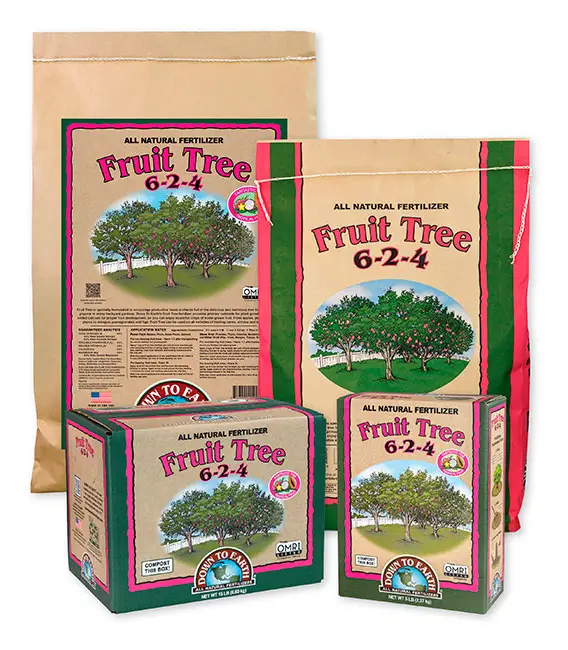
Down To Earth Fruit Tree is an OMRI-listed all-natural organic fertilizer in a 6-2-4 formula to support strong growth and bountiful home orchards. It helps provide primary nutrients for fruit tree development and adds calcium to support proper fruit development for apples, pears, plums, and tropical fruit trees. Suitable for fruiting canes, shrubs, and trees, this fertilizer is designed to encourage productive backyard harvests.
Training Systems: Central Leader vs Open Center
Central leader. Apples and pears are typically trained to a central leader system. A single dominant central stem carries scaffold branches arranged in tiers at roughly 18 to 24 inch intervals up the trunk. Each scaffold tier is trained to radiate outward from the trunk with adequate spacing between branches. This system maximizes light distribution and structural strength.
Annual pruning on a central leader tree maintains the dominance of the leader, removes any co-dominant stems that compete with it, thins the scaffold tier spacing where it becomes crowded, and removes downward-growing or crossing branches.
Open center. Peaches, nectarines, and sometimes sweet cherries are trained to an open-center, or vase-shape, system. Three to five scaffold branches emerge from the trunk at roughly the same height, angled outward to create an open bowl-shaped canopy. There is no dominant central stem. This system suits the natural growth habit of peach and maximizes sunlight access to the interior of the canopy, which is critical for peach fruit color and quality development.
Annual pruning on an open-center tree maintains the three to five scaffold structure, removes vigorous vertical shoots from the center that would close the canopy, and manages the length and crowding of lateral fruiting wood on each scaffold.
Spur Pruning on Apple and Pear
Apple and pear bear their fruit on short stubby growths called spurs, which develop over several years on two-year-old and older wood. Spurs gradually become less productive as they age and accumulate into crowded clusters. Spur thinning, removing the weakest and oldest spurs from a cluster and leaving the most vigorous, maintains productivity over the long life of the tree.
Renewal of older spur wood by cutting back to a younger lateral periodically also maintains spur quality. A spur cluster that has become a dense, tangled mass of five or more spurs with weak, crowded buds benefits from thinning to two or three of the strongest.
Annual Pruning Volume
Fruit trees tolerate more aggressive annual pruning than ornamental trees because their high vigor and the annual fruiting cycle create a natural renewal of productive wood. Removing 20 to 30 percent of canopy each dormant season is normal on actively managed fruit trees. However, very heavy pruning in a single season stimulates strong vegetative growth at the expense of fruiting. A tree responding to severe pruning with dense, upright water sprout regrowth and minimal fruit set in the following season is a tree that was pruned too hard.
For the full year-round management calendar that frames where dormant pruning fits in the overall fruit tree care cycle, the fruit tree care calendar covers each month’s tasks for productive backyard orchards.