
How to Get Rid of Cockroaches
The instinct to reach for a can of spray insecticide when cockroaches appear in the kitchen is understandable but consistently produces poor results compared to gel bait, and understanding why changes the entire treatment approach. Spray insecticides applied to cockroach activity areas kill the individuals that contact the wet spray during application, but cockroaches are harborage insects: they spend the majority of their time deep inside cracks, voids, and appliance interiors that a surface spray cannot reach. A gel bait placed inside those harborage zones is collected and consumed by foraging cockroaches, who return the active ingredient to the harborage where it is shared with nestmates and kills individuals that never came into contact with the bait placement site.
Identifying the Species
The two species most commonly found in North American homes require slightly different management approaches because their harborage preferences and the severity of infestation they represent differ significantly.
German cockroaches (Blattella germanica) are the most common indoor cockroach species and the most problematic. They are small, 10 to 15 mm, tan to light brown with two dark stripes running the length of the pronotum (the shield-like plate behind the head). German cockroaches are entirely indoor insects that do not survive outdoors in temperate climates; they spread between units in multi-family buildings through shared wall voids and plumbing chases. They reproduce very rapidly, with a female producing four to eight egg cases (oothecae) in her lifetime, each containing approximately 40 eggs. An untreated German cockroach infestation can grow exponentially within two to three months.
American cockroaches (Periplaneta americana) are large, 35 to 40 mm, reddish-brown with a distinctive pale figure-8 pattern on the pronotum. They are outdoor cockroaches that enter buildings from sewer systems, crawl spaces, and basements in search of food and shelter, and they are less likely to establish a large indoor infestation than German cockroaches. A single American cockroach in a home is typically an occasional invader rather than a sign of an established indoor colony.
Oriental cockroaches (Blatta orientalis) are large (20 to 25 mm), very dark brown to black, and prefer cool, moist environments including basements, drain areas, and the spaces under appliances near floor drains. They are primarily outdoor insects that move indoors through utility and drain connections.
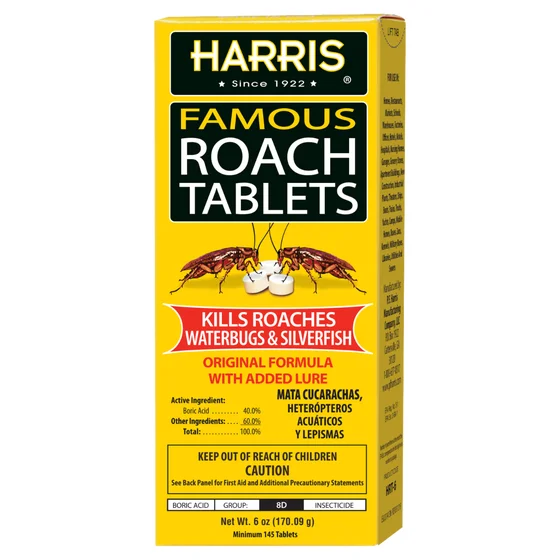
Harris Roach Tablets use boric acid with a formulated lure to attract roaches and help eliminate infestations at the source. The EPA-registered tablets are long lasting when kept dry and are designed to kill the entire colony by roaches carrying the bait back to their nests. Easy to conceal in hidden areas like under drawers, appliances, and cabinets, they offer an alternative to bait traps for treating multiple rooms.
HARRIS Food Grade Diatomaceous Earth is made from 100% ground freshwater diatomaceous earth with no additives or fillers, making it suitable for food-grade use. It comes with a powder duster for easy, efficient application on animal feed. OMRI listed, and Harris supports the local Etowah Valley Humane Society with a portion of profits.
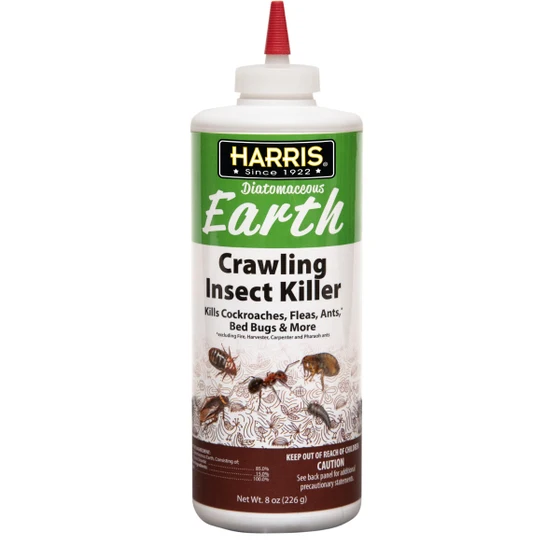
Harris Diatomaceous Earth Crawling Insect Killer is a ready-to-use 100% natural dust that targets crawling pests including ants, roaches, bed bugs, and fleas. Insects that contact or ingest the powder die within 48 hours when applied in cracks, crevices, and other hiding areas. Suitable for indoor and outdoor use with a powder duster included for easy application.
Sanitation: The Foundation Before Bait Placement
Gel bait is most effective when cockroaches are hungry and foraging actively, which means removing competing food sources before placing bait significantly improves uptake. Wipe all countertop and stovetop surfaces to remove grease and food residue, clean under and behind the stove and refrigerator where grease and food debris accumulate, store all food in sealed containers, empty trash containers daily, fix any leaking pipes or drips that provide water, and clean pet food bowls between meals.
Clutter in kitchen cabinets, under sinks, and in pantry areas provides harborage for German cockroaches. Removing clutter and reducing the number of dark, undisturbed spaces in the kitchen reduces the available harborage and forces cockroaches into more accessible locations for bait contact.
Gel Bait Application: Where and How
Gel bait placement for German cockroaches is a precision task. Apply small dots of bait (about the size of a pea or smaller) in locations where cockroach activity is concentrated: inside cabinet hinges, along the inside edge of cabinet doors, behind the stove and refrigerator, in the crack where the countertop meets the backsplash, inside the control panel area of appliances, and at the corner junctions of cabinet shelves. Place bait in as many discrete locations as possible in the kitchen and bathroom areas where activity is observed, as multiple small applications are more effective than fewer large ones.
Do not apply bait near areas treated with spray insecticide. The repellent residue from surface sprays contaminates bait placement sites and reduces bait acceptance. Do not apply bait in areas that will be cleaned with household cleaning products within 24 hours.
The most effective indoor cockroach gel baits available to homeowners contain indoxacarb (Advion Cockroach Gel Bait) or fipronil (Maxforce FC Magnum). Both are slow-acting active ingredients that allow cockroaches to return to harborage sites and share the active ingredient with nestmates through physical contact and ingestion of feces before they die, which is the mechanism that allows bait to reach the population inside the harborage rather than only the foragers.
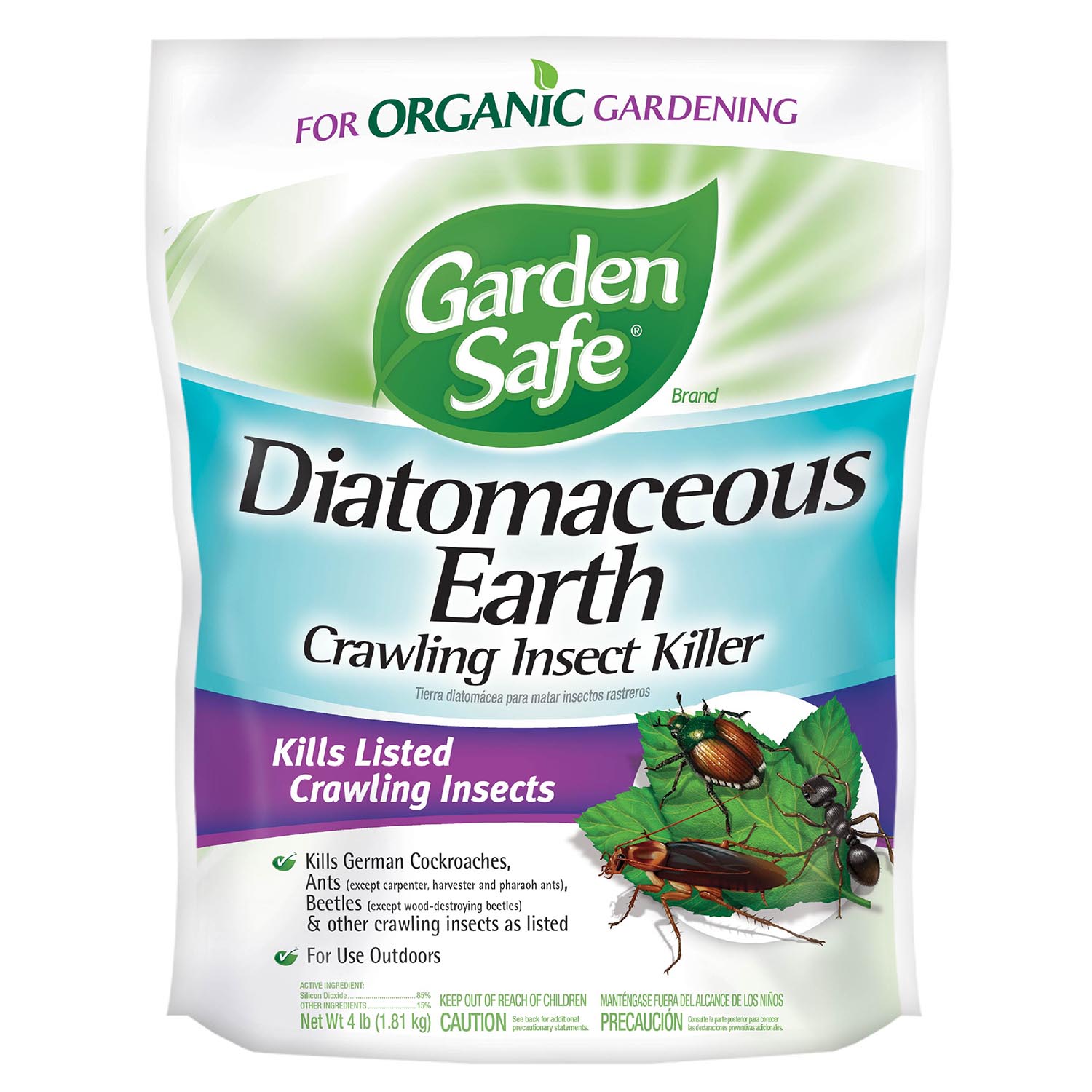
Garden Safe diatomaceous earth-based crawling insect killer provides organic, long-lasting control for listed pests. It kills German cockroaches, ants, beetles, fleas,...
Monitoring and Evaluating Results
Sticky cockroach traps placed in the same areas as bait provide a monitoring function that tells you whether the bait program is working and where the heaviest infestation is concentrated. Place traps in corners behind appliances, under sinks, and inside lower cabinets. A declining catch rate over two to three weeks of bait application indicates population reduction. An unchanged or increasing catch rate indicates that bait placement needs to be adjusted, bait needs to be freshened, or the competing food sources need further reduction.
Replace gel bait every two to four weeks or when it dries out or is no longer being actively consumed. Fresh bait consistently outperforms dried or degraded applications.
When Professional Treatment Is Needed
German cockroach infestations in multi-family buildings that span multiple units through shared wall voids require coordinated treatment across the building rather than single-unit treatment. A professional pest control company can treat shared voids with insecticide dust applications and establish a building-wide bait program that addresses the source infestation rather than just the visible activity in a single unit. The broader framework for the professional versus DIY decision is covered in our when to call a pest control professional guide.