
How to Get Rid of Whiteflies on Plants
Whiteflies are small, soft-bodied insects in the family Aleyrodidae that feed by piercing plant tissue and extracting phloem sap, weakening plants through direct feeding and through the sooty mold that develops on the honeydew they excrete. They are most visible when an infested plant is disturbed: shaking the foliage causes a cloud of white-winged adults to fly up from the leaf undersides before settling back onto the plant. This dramatic display makes whiteflies easy to identify but misleads treatment decisions: the adults are the least susceptible stage to most treatments, and the immobile nymph stages on leaf undersides are where treatment is most effective.
Life Cycle and Why Adults Are Hard to Kill
The whitefly life cycle includes egg, four nymph instars, and adult stages. The first-instar nymph (crawler) is mobile; subsequent instars are immobile and feed in fixed positions on leaf undersides, protected by a waxy secretion. The pupal stage (fourth instar) is particularly resistant to contact insecticides and is surrounded by a distinct wax fringe. Adults that fly up when plants are disturbed are capable of flying away from the treated area and returning after spraying is complete.
This life cycle creates a treatment challenge: a spray application that kills visible adults will find a fully intact nymph population on the same leaf undersides hatching into the next adult generation within days. Treatment programs that account for this by targeting the crawler and nymph stages with products that penetrate the waxy cuticle, and that include a product with insect growth regulator activity to disrupt the pupal-to-adult transition, outperform single-application adult contact treatments.
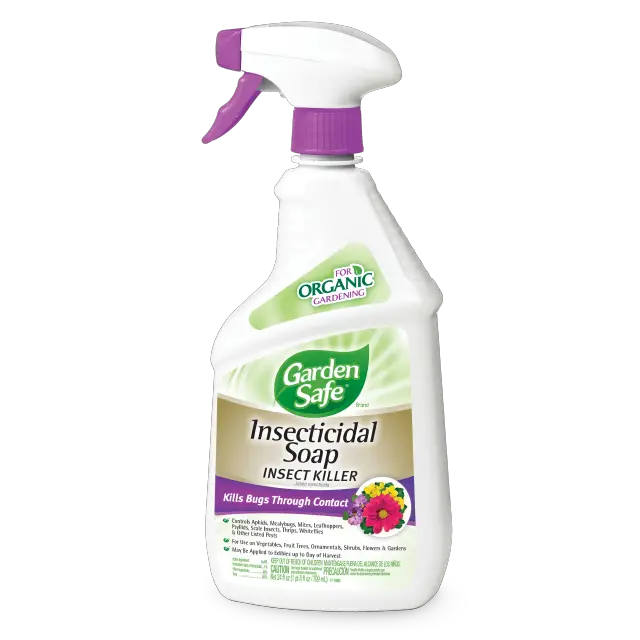
Garden Safe insecticidal soap is a ready-to-use contact spray that kills listed garden pests when sprayed directly on them. It’s formulated for organic gardening and can be used on vegetables, fruit trees, ornamentals, shrubs, flowers, and in indoor, outdoor, and greenhouse applications. For convenience, it may be applied to edibles up to and including the day of harvest.
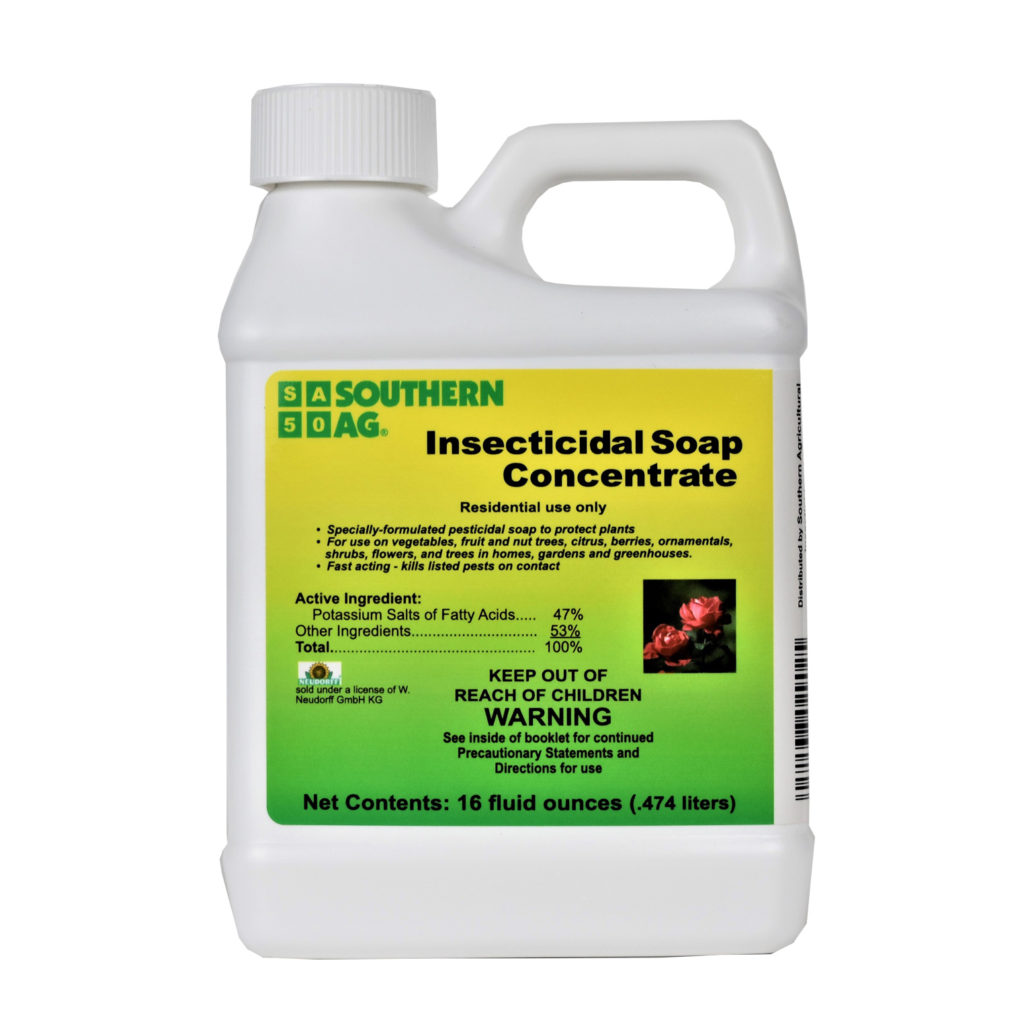
Southern Ag Insecticidal Soap Concentrate is a specially formulated pesticidal soap that delivers fast contact control of insect and mite pests. It’s suitable for use on vegetables, fruit and nut trees, citrus, berries, ornamentals, shrubs, flowers, and trees, including greenhouse and garden applications. Mix 4 teaspoons per quart of water and thoroughly spray all plant parts, including undersides of leaves.
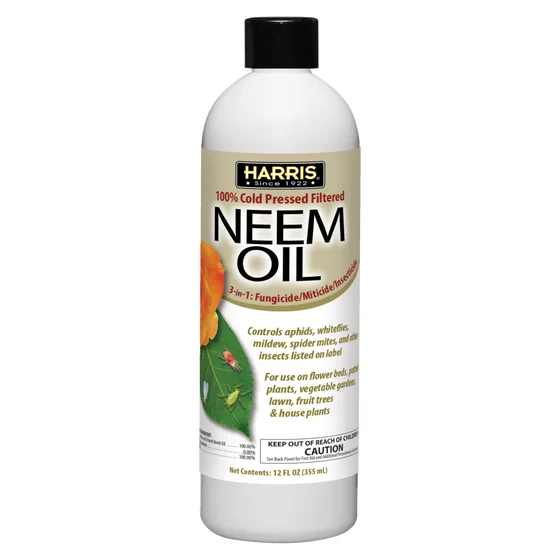
HARRIS Neem Oil Cold Pressed Water Soluble Concentrate is a 3-in-1 insecticide, fungicide, and miticide made from 100% cold pressed neem oil. It is EPA registered to help control aphids, whiteflies, mildew, spider mites, and other label-listed pests and diseases. Safe for indoor and outdoor use, it can be applied to a wide range of flowering and potted plants, vegetable gardens, lawns, ornamentals, fruit trees, and container gardening with foliar or soil treatments.
Monitoring and Threshold
Yellow sticky traps placed in and around affected plants capture adult whiteflies and serve as a monitoring tool for population levels and trends. A low and stable adult catch rate suggests the population is not building; a rapidly increasing catch rate in conjunction with visible nymph populations on leaf undersides indicates a treatment situation.
Natural enemies including Encarsia formosa (a parasitic wasp commercially available for greenhouse use), big-eyed bugs, and lacewing larvae provide meaningful biological control of whitefly populations in garden settings when broad-spectrum insecticide use is avoided.
Organic Treatment Options
Insecticidal soap is effective against whitefly crawlers and young nymphs when applied with thorough coverage of all leaf surfaces, particularly undersides. It has no activity against the waxy-covered older nymphs or the pupal stage, and no residual activity, making it a contact tool for the most susceptible stages only. Reapply every three to five days for two to three cycles.
Neem oil applied as a foliar spray provides contact kill at the crawler and young nymph stage plus azadirachtin’s disruption of development through the older nymph and pupal stages, making it more complete in its coverage of the life cycle than soap alone. Apply in the early morning or evening with thorough coverage of leaf undersides.
Pyrethrin provides fast adult knockdown but has essentially no activity on immobile nymphs and has no residual. It is useful for reducing adult populations temporarily ahead of a more comprehensive nymph-targeted treatment but not as a standalone control.
Synthetic Treatment Options
Spiromesifen (Forbid) inhibits lipid biosynthesis and has strong activity against whitefly nymphs and eggs, making it one of the most effective single-product treatments for established nymph populations. It is slower-acting than contact insecticides but provides residual activity of two to three weeks.
Imidacloprid (soil drench) as a systemic treatment taken up by plant roots and expressed in phloem sap kills whitefly nymphs feeding on treated plant tissue through ingestion rather than contact. This makes it highly effective for ornamental plants where foliar spray coverage of dense foliage is impractical. Do not use imidacloprid on flowering plants or plants that will come into flower during or shortly after the treatment period.
Resistance Management
Whiteflies develop insecticide resistance rapidly, particularly in populations that have been treated repeatedly with pyrethroids and neonicotinoids in greenhouse settings. In outdoor garden populations, resistance is less developed but still a relevant consideration. Rotate active ingredient classes on every application cycle: do not use the same product on consecutive treatment applications. Organic and synthetic rotation, alternating between neem or soap (organic) and spiromesifen or a pyrethroid (synthetic), maintains efficacy across a treatment season.
The broader resistance management framework that applies across garden and lawn pests is covered in our integrated pest management guide.