
How to Get Rid of Fire Ants in Your Yard
Fire ants (Solenopsis invicta and the hybrid Solenopsis invicta x richteri) are among the most challenging yard pests in the southeastern United States, and the reason most homeowner treatments fail is that they address individual mounds rather than the property-wide infestation. Fire ant colonies send out reproductive queens that establish new mounds throughout the yard, meaning that treating one or two visible mounds while a dozen others exist beneath the surface or on neighboring properties produces only temporary relief. The most effective fire ant control strategy is area-wide bait treatment that reduces the overall colony population across the entire yard, combined with mound-specific treatment for high-priority locations.
Understanding Fire Ant Biology
Solenopsis invicta was introduced to the United States from South America, and its success as an invasive species is partly explained by its two colony types. Single-queen (monogyne) colonies are territorial and produce large, distinctive dome mounds. Multiple-queen (polygyne) colonies are not territorial and produce a more diffuse infestation with many smaller mounds and higher overall ant density across the property. Polygyne infestations are harder to control because there is no single queen to eliminate, and treated colonies can be repopulated by queens migrating from adjacent colonies.
Fire ant workers are reddish-brown with a darker abdomen and range from about 1.5 to 5 mm long. A single colony contains polymorphic workers in multiple size classes. When a mound is disturbed, workers swarm rapidly and attack by gripping with their mandibles and stinging repeatedly, injecting venom (solenopsin alkaloids) that causes an immediate burning pain followed by a raised pustule. People and animals who receive a large number of simultaneous stings or who have venom allergies face a genuine medical risk.
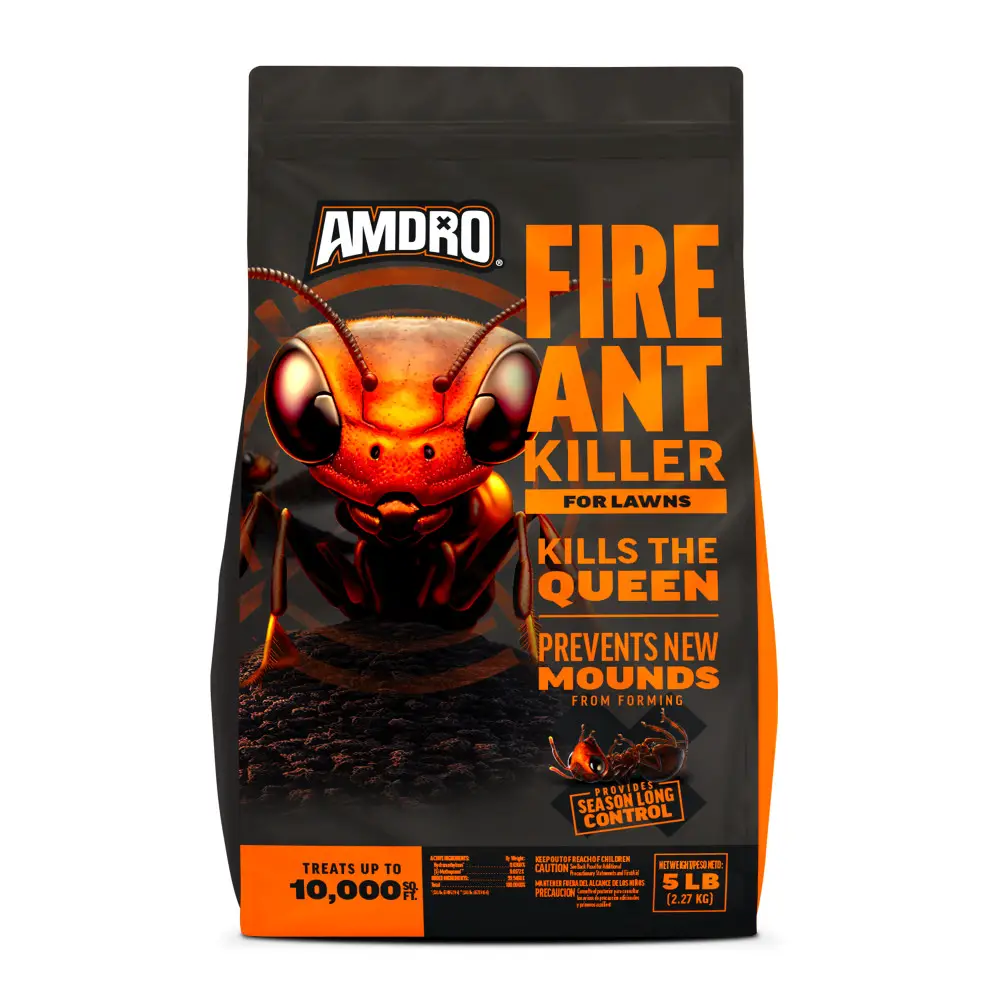
Amdro Fire Ant Killer for Lawns kills fire ants all season long, providing up to 3 months of control. It targets existing mounds while helping prevent new ones from forming, using a two-way killing formula that combines fire ant bait with an insect growth regulator. Ready to use and convenient, it requires no mixing and is best applied when ants first appear using a broadcast spreader.
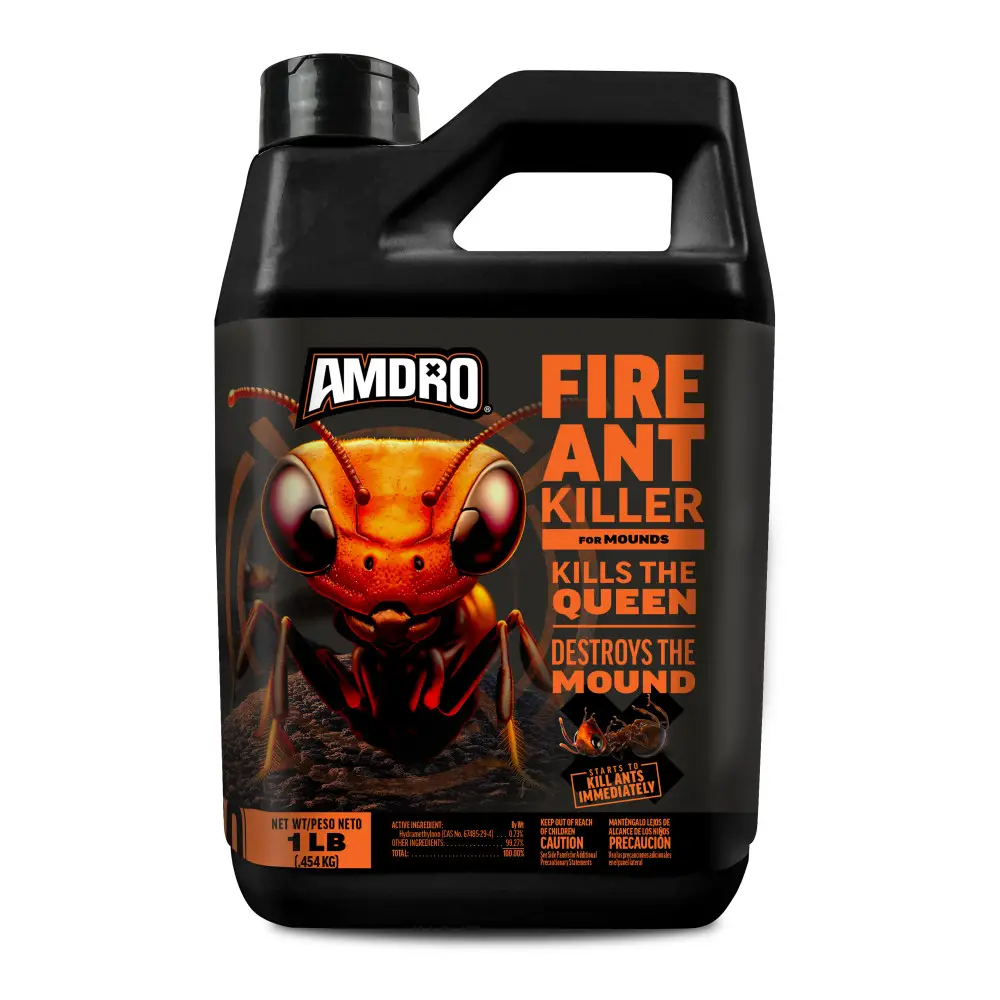
Amdro Granules Fire Ant Bait provides easy, effective fire ant control with a dual-action formula that targets visible and hidden mounds. The bait attracts ants and helps kill them quickly, reducing fire ant activity in about one week. It works against imported fire ants and several common ant types, and can be applied any time ants are active for best results.
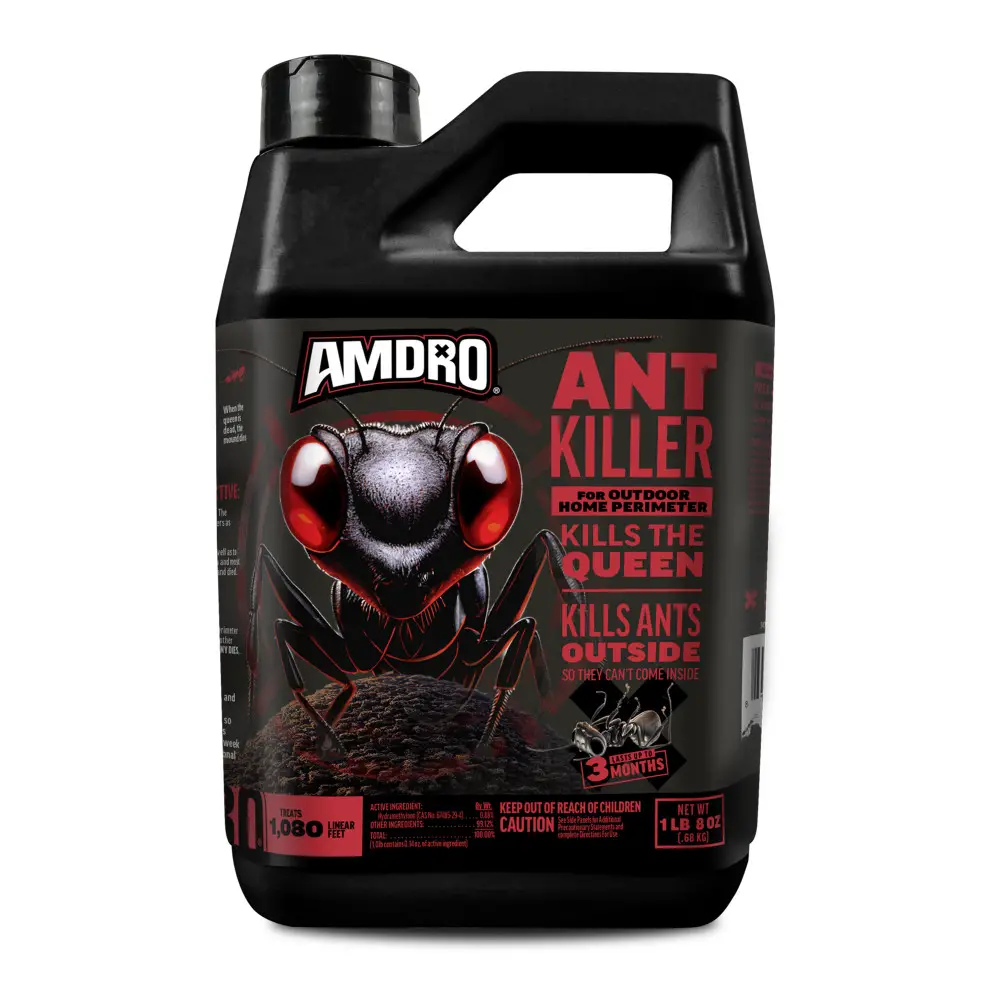
Amdro Ant Killer for Outdoor Home Perimeter creates a protective band that attracts and kills listed common ant species before they enter your home. Dual-action bait foraging workers carry it back to their colonies, helping reduce visible ants within about a week and stopping the colony, including the queen. For best results, apply when ants are active, and keep the treatment working up to three months for ongoing perimeter protection.
The Two-Step Fire Ant Control Method
The two-step method, developed and validated by Texas A&M AgriLife Extension and other university extension programs across the Southeast, is the most evidence-supported approach for property-wide fire ant management.
Step 1: Apply broadcast bait across the entire yard. Fire ant bait consists of a food matrix, typically a soybean oil or corn grit carrier, laced with a slow-acting insecticide. Workers collect the bait as food, carry it back to the colony, and share it with nestmates and the queen through trophallaxis. Because the active ingredient acts slowly (typically one to six weeks for full colony elimination depending on the active ingredient), workers continue foraging and distributing the bait before they are affected. Broadcast bait at the label-specified rate, typically one to one and a half pounds per acre, using a hand-held spreader or a whirlybird-style granule spreader for even distribution. Apply when fire ants are actively foraging: soil temperature between 65 and 95 degrees Fahrenheit, no rain forecast for 24 to 48 hours, and bait applied in late afternoon or early evening for best results.
Active ingredients in fire ant broadcast baits include spinosad (Monterey Garden Insect Spray with spinosad, or Surrender Fire Ant Bait), indoxacarb (Advion Fire Ant Bait), and hydramethylnon (Amdro Fire Ant Bait). Spinosad is OMRI listed and appropriate for organic programs. Hydramethylnon and indoxacarb are synthetic options with excellent colony elimination records.
Step 2: Treat individual mounds where faster control is needed. Wait three to five days after broadcast bait application before treating individual mounds to allow workers to collect and distribute bait without disruption. For mounds in high-traffic areas, near play equipment, or in pet runs where immediate hazard reduction is a priority, mound-specific treatment delivers faster knockdown. Options include contact insecticide drenches (bifenthrin or spinosad), granular mound treatments worked into the mound surface, or boiling water for organic treatment of accessible mounds. The goal of mound treatment at this stage is fast worker suppression in priority locations, not colony elimination (the broadcast bait handles that).
Timing the Broadcast Bait Application
Fire ant bait loses efficacy when the soybean oil carrier becomes rancid from heat or prolonged storage. Always use fresh bait: open bags should be used within a few months and stored sealed in a cool, dry location. Check the bait between your fingers before application: if it smells off or the granules are clumped or oily rather than free-flowing, replace it.
The optimal broadcast bait timing in most of the Southeast is twice per year: once in spring as soil temperatures warm above 65 degrees Fahrenheit and once in late summer or early fall before temperatures cool below 65 degrees. This two-application calendar catches the spring foraging surge and reduces the colony population heading into fall, when queens move deeper and foraging declines.
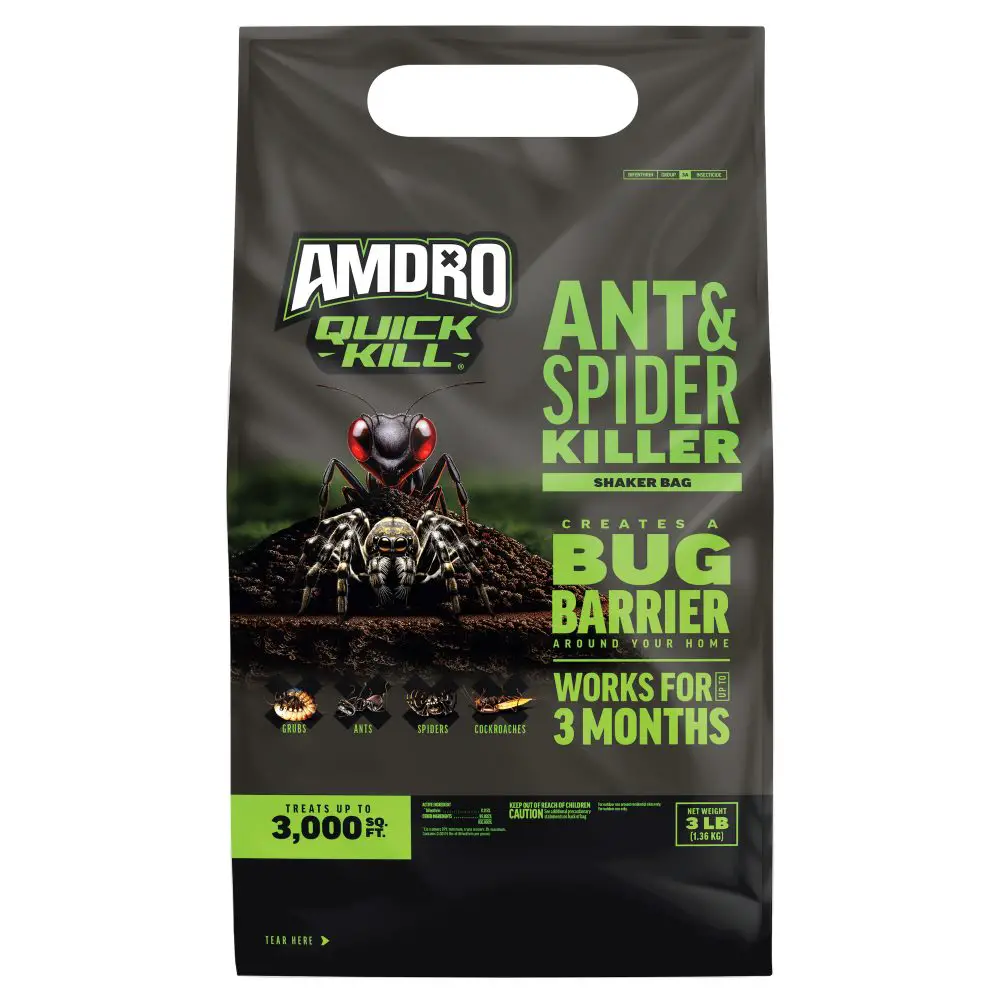
Amdro Quick Kill Ant & Spider Killer granules come ready to spread and help create a bug barrier around your home. The soil-penetrating formula kills listed insects by contact and works for up to 3 months, targeting lawn-damaging pests like grubs and mole crickets as well as surface pests such as ants and spiders. Simply apply evenly with the shaker bag, then lightly water the treated area to help control up to 100 listed insects and cover up to 3,000 square feet.
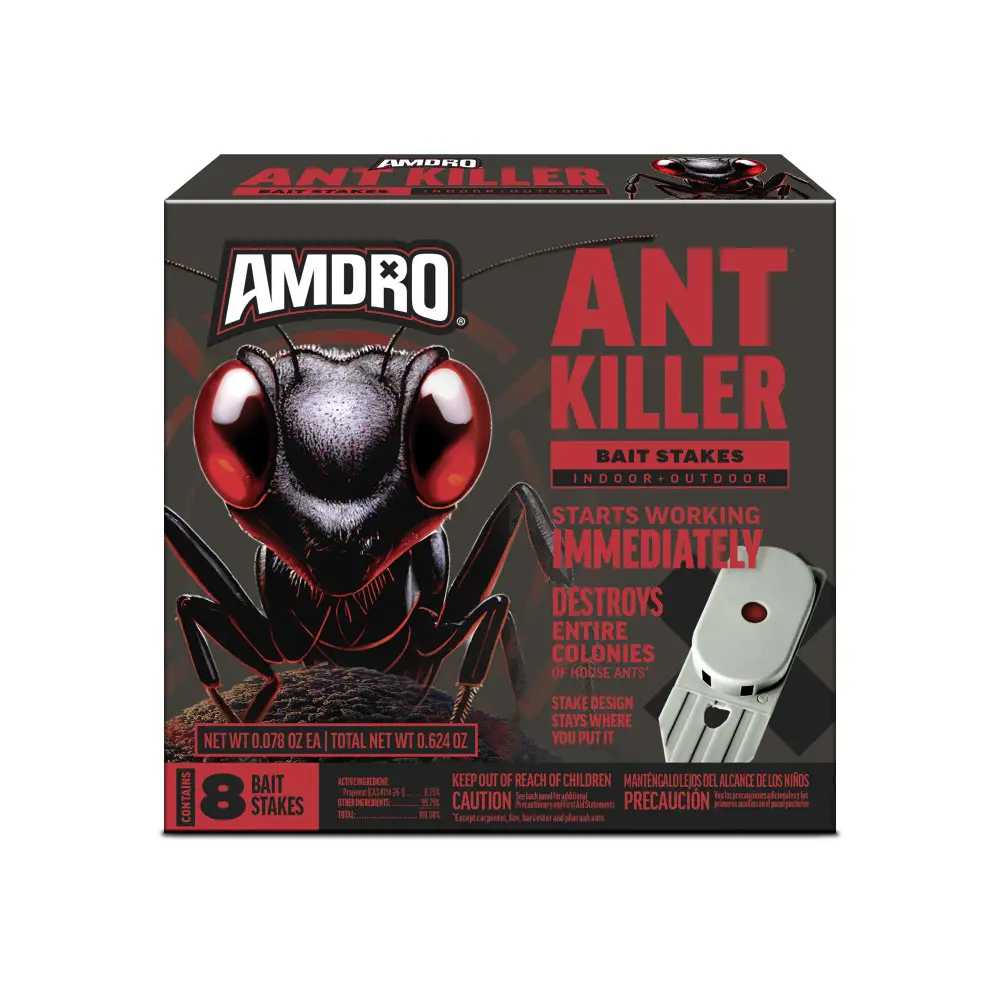
Amdro Ant Killer Bait Stakes destroy entire house ant colonies with a dual-action formula that attracts and kills sweet and grease eating ants. The pre-filled stakes are ready to use with no activation and can be placed indoors near ant trails or outdoors around your home perimeter. For best results, replace every 3 to 6 months and use year-round to help prevent ant infestations.
Organic Fire Ant Control
Spinosad-based broadcast bait is the most effective organic option for property-wide fire ant suppression. Diatomaceous earth applied to individual mounds kills surface workers but does not reach the colony below, making it a poor stand-alone treatment for fire ants. Orange oil drenches and essential oil treatments applied to mounds can kill workers and sometimes queens in the immediate mound area but have inconsistent colony elimination rates and no residual activity for reinfestation prevention.
For homeowners managing fire ants in a certified organic production setting or in a yard where any synthetic chemistry is not acceptable, spinosad broadcast bait combined with boiling water or orange oil mound drenches for priority locations is the most reliable available program.
Preventing Fire Ant Reinfestation
Complete elimination of fire ants from a residential property is not realistic in most of the infested range because queens and reproductive males from neighboring properties and natural areas continuously colonize new areas. The realistic goal is population management: keeping colony density below the threshold that creates daily safety concerns. A twice-annual broadcast bait program, combined with mound treatment for new mounds that appear between applications, maintains manageable fire ant pressure with a modest time investment.
The broader framework for setting realistic pest management thresholds and choosing between treatment options is covered in our integrated pest management guide.