
How to Get Rid of Argentine Ants
Argentine ants (Linepithema humile) are an invasive species native to South America that have established in coastal California, the Southeast, parts of the Southwest, and scattered areas of the mid-Atlantic and Pacific Northwest. They represent one of the most challenging ant control problems available to homeowners because of their colony structure: unlike native ant species that maintain territorial boundaries between colonies, Argentine ant colonies in invaded areas lack inter-colony aggression and effectively function as a single interconnected supercolony with thousands of queens and millions of workers spread across an entire neighborhood or watershed. This means that eliminating the ants on one property does not prevent reinvasion from adjacent areas, and treatment must be ongoing rather than a one-time event.
Identification
Argentine ants are small, 1.5 to 2.5 millimeters long, uniformly light to medium brown, with a single petiole node. They move in well-defined foraging trails that can be extremely wide, sometimes several centimeters, with hundreds or thousands of workers moving in both directions simultaneously. They are attracted to sweet foods, honeydew-producing insects, and moisture. Unlike odorous house ants, Argentine ants do not emit a distinctive odor when crushed. Unlike fire ants, they do not sting.
Argentine ants aggressively tend aphid, mealybug, and scale colonies on garden and ornamental plants, protecting these sap-feeders from predation in exchange for access to honeydew. Heavy aphid or scale infestations on garden plants accompanied by dense ant trails are a good indicator of an Argentine ant supercolony in the area.
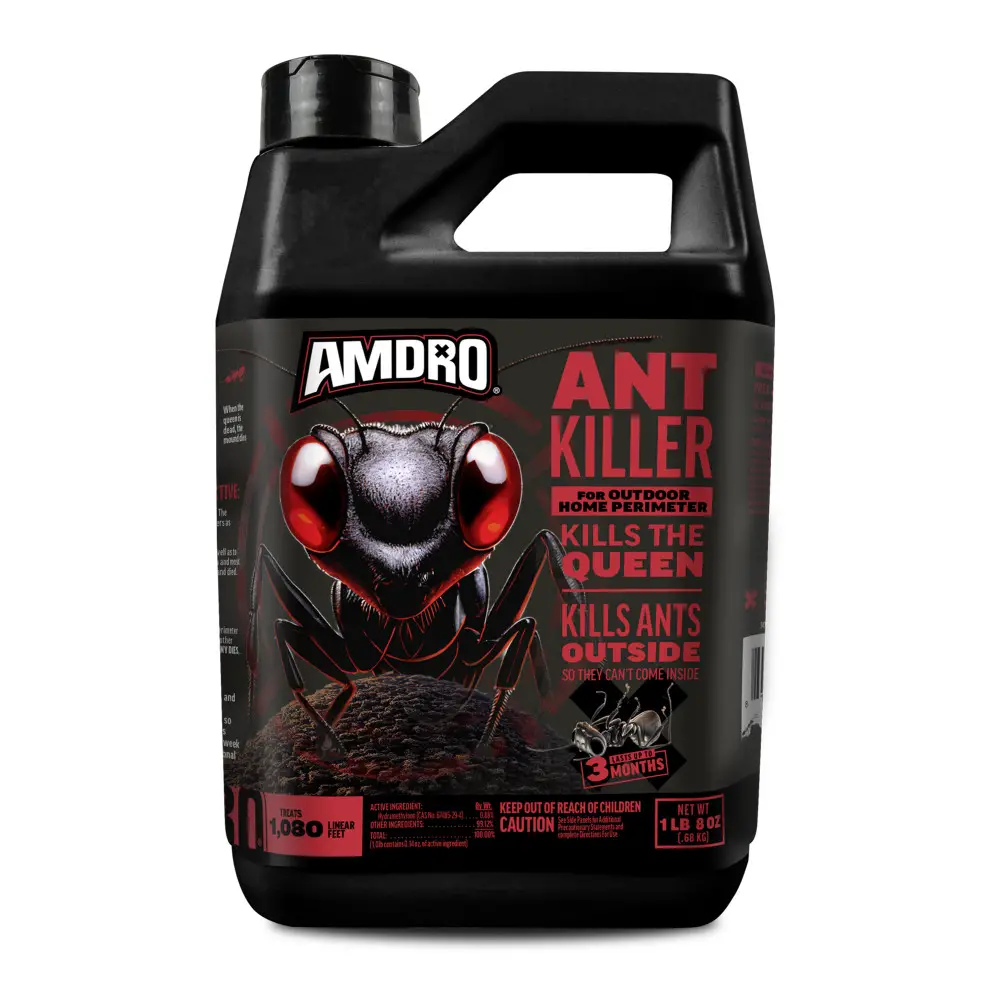
Amdro Ant Killer for Outdoor Home Perimeter creates a protective band that attracts and kills listed common ant species before they enter your home. Dual-action bait foraging workers carry it back to their colonies, helping reduce visible ants within about a week and stopping the colony, including the queen. For best results, apply when ants are active, and keep the treatment working up to three months for ongoing perimeter protection.
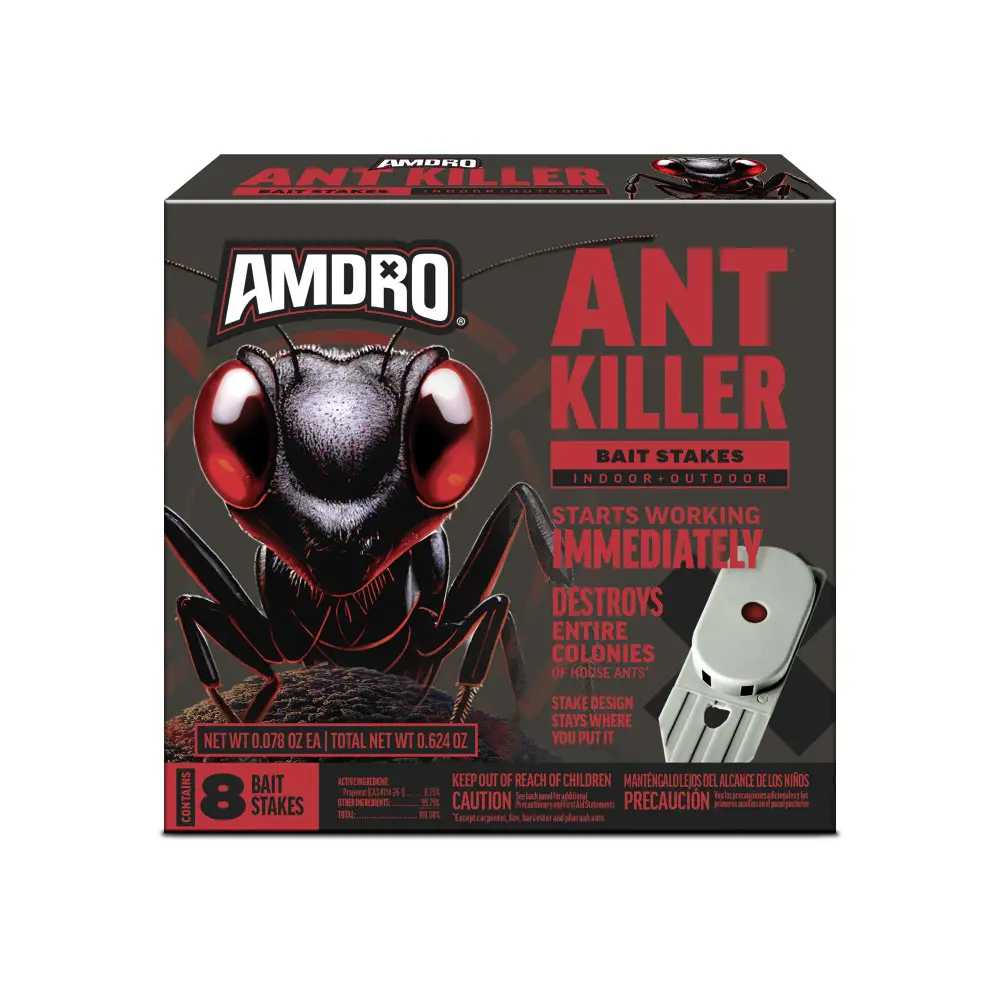
Amdro Ant Killer Bait Stakes destroy entire house ant colonies with a dual-action formula that attracts and kills sweet and grease eating ants. The pre-filled stakes are ready to use with no activation and can be placed indoors near ant trails or outdoors around your home perimeter. For best results, replace every 3 to 6 months and use year-round to help prevent ant infestations.
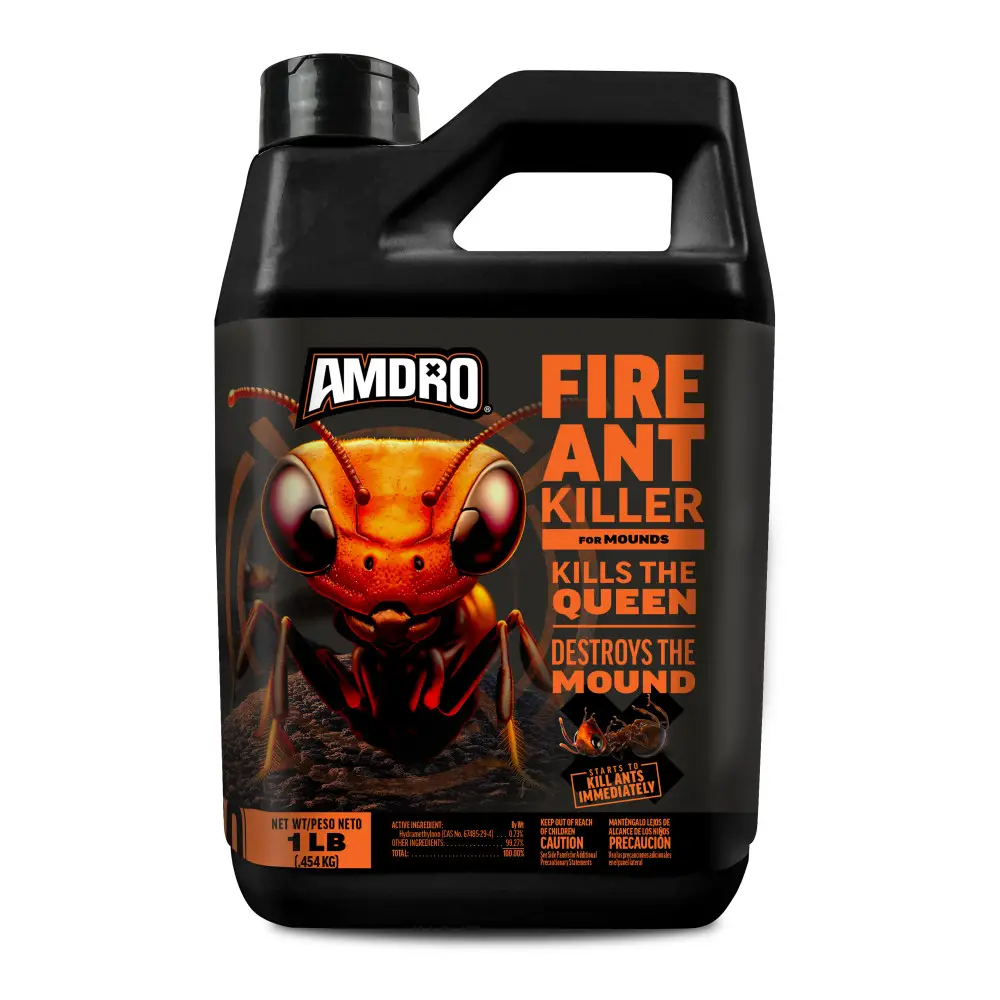
Amdro Granules Fire Ant Bait provides easy, effective fire ant control with a dual-action formula that targets visible and hidden mounds. The bait attracts ants and helps kill them quickly, reducing fire ant activity in about one week. It works against imported fire ants and several common ant types, and can be applied any time ants are active for best results.
Why Standard Treatments Fail
Contact insecticide sprays applied to foraging trails kill surface workers but do not affect the queens distributed across the supercolony, and the foraging trail is repopulated within hours from adjacent colony segments. Perimeter treatments slow entry through treated surfaces but do not prevent reinvasion once the residual degrades. Granular fire ant bait formulations designed for single-queen species are generally less effective against Argentine ants because the bait must reach the distributed queen population across the entire colony.
Slow-acting liquid bait is the most effective available tool for Argentine ant management in the homeowner context, with realistic expectations that control means significant reduction of foraging activity rather than elimination of the regional supercolony.
Baiting for Argentine Ants
Argentine ants have a strong preference for sweet liquid baits. Borate-based liquid baits such as Terro Liquid Ant Bait work by allowing foragers to consume a slow-acting borate solution and share it with queens and nest mates before dying. The key to effective baiting is volume: Argentine ant colonies consume bait in very large quantities, and using too little bait results in the colony consuming it completely before enough toxicant has been distributed through the colony to cause significant mortality. Multiple bait stations refreshed frequently produce better results than a small number of stations with limited bait.
Place bait directly on active foraging trails where worker density is highest. Do not spray insecticide in the vicinity of bait stations. Do not disturb the trail near bait stations, as this causes workers to detour and slows bait uptake. Expect foraging activity to increase around bait stations for the first day or two as workers recruit heavily to the food source before declining over the following one to two weeks.
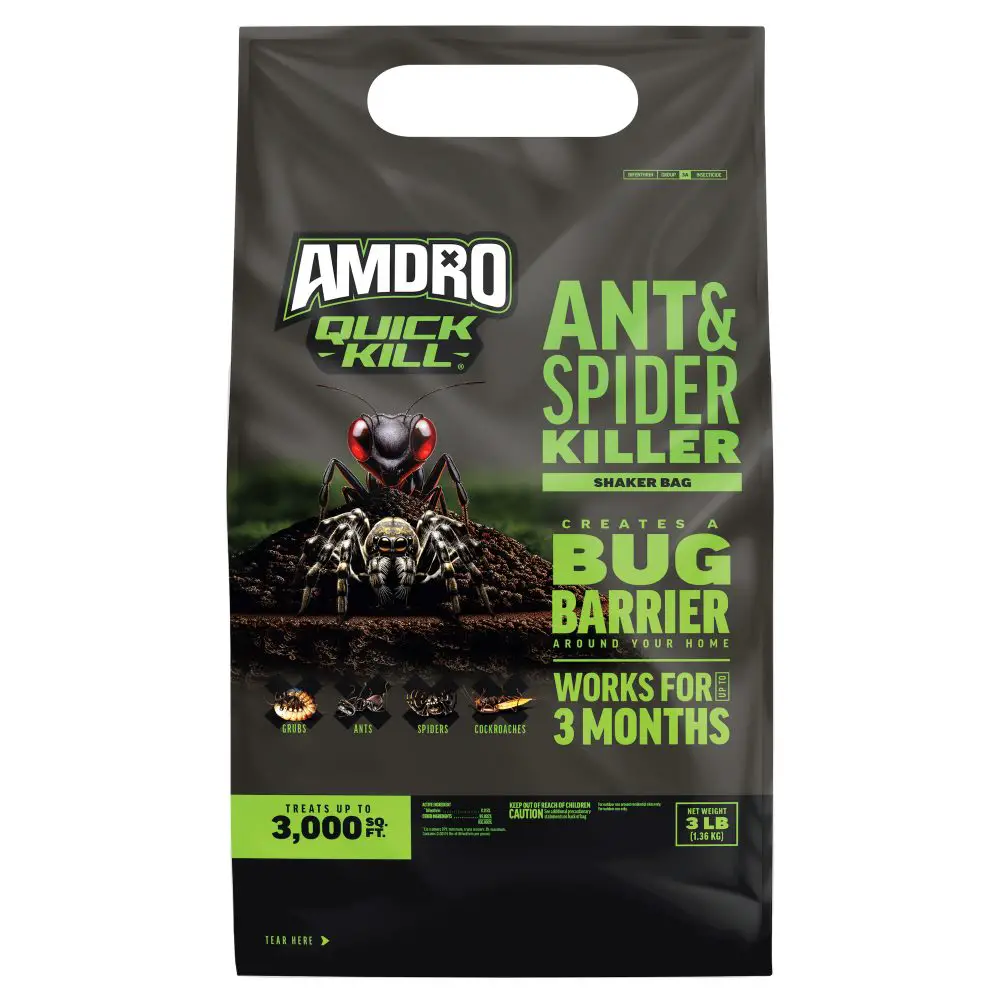
Amdro Quick Kill Ant & Spider Killer granules come ready to spread and help create a bug barrier around your home. The soil-penetrating formula kills listed insects by contact and works for up to 3 months, targeting lawn-damaging pests like grubs and mole crickets as well as surface pests such as ants and spiders. Simply apply evenly with the shaker bag, then lightly water the treated area to help control up to 100 listed insects and cover up to 3,000 square feet.
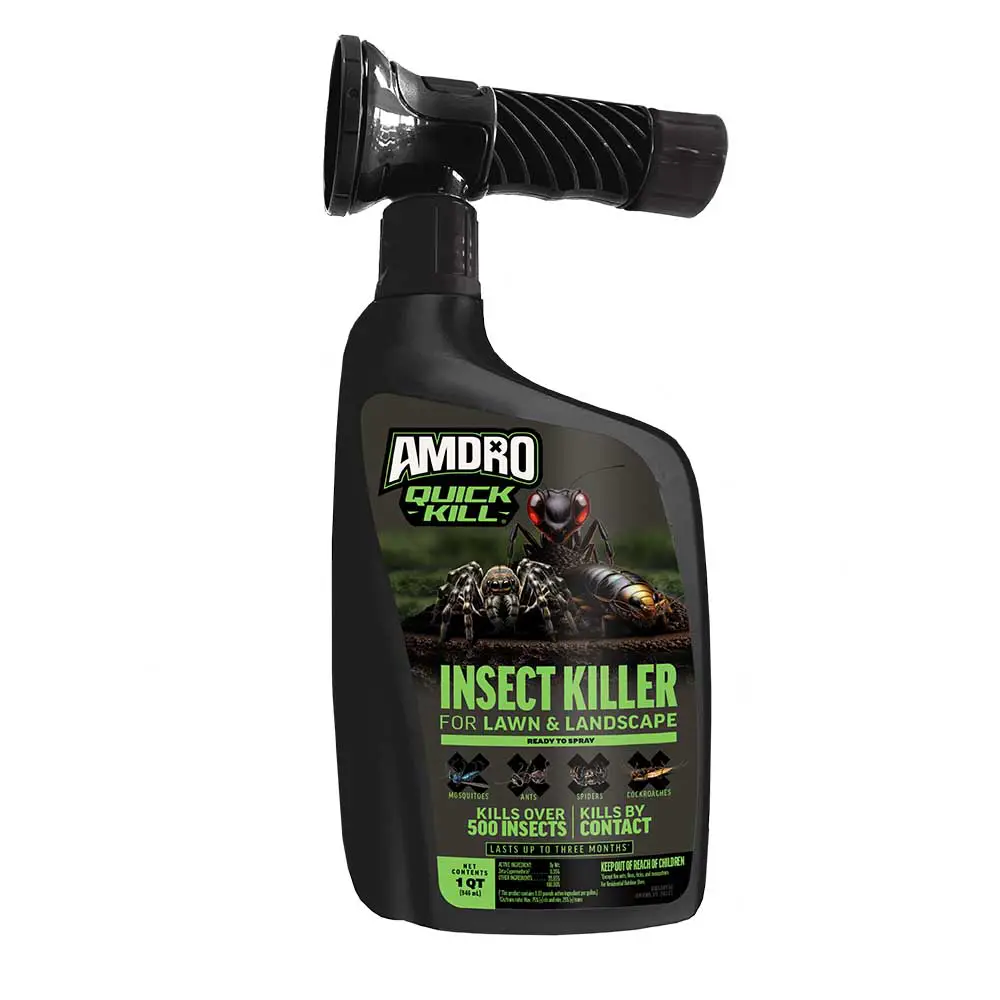
Amdro Quick Kill Insect Killer for Lawn & Landscape is a fast-acting ready-to-spray formula that starts working in minutes (except ticks) and kills over 500 insects. It kills by contact and is designed to be lawn-safe when used as directed, with control that keeps killing for up to 3 months (except fire ants, fleas, ticks and mosquitoes). Simply shake well, attach to the hose, and spray—no mixing or measuring required.
Perimeter Treatment as a Supplement
Residual perimeter insecticide applied to the foundation, window and door frames, and the ground within one meter of the structure slows reinvasion after a baiting program has reduced the foraging population. Bifenthrin and fipronil-based products applied as a barrier treatment provide the longest residual protection against Argentine ants of the commonly available consumer products. Fipronil, in particular, has documented transfer toxicity in ant colonies, meaning workers that contact treated surfaces carry lethal doses back to nest mates, extending its effect beyond the treatment zone.
Perimeter treatment must be maintained with periodic reapplication because the surrounding supercolony continuously replenishes the foragers lost to the treated barrier. For properties in areas of high Argentine ant pressure, ongoing perimeter treatment combined with seasonal baiting is the standard management approach rather than a one-time solution. The broader context of bait selection, perimeter products, and the distinction between ant species that bud versus those that do not is covered in our ant control hub.