
How to Make Grass Green: Fast Fixes and Long-Term Solutions
A pale, dull, or thin lawn is almost always a sign that something is limiting the grass plant’s ability to grow at its full capacity. The limiting factor might be a simple nitrogen shortage, the most common cause, but it might also be a soil pH problem, compaction, thatch buildup, inadequate water, or a combination of several factors that have been accumulating over multiple seasons.
Fast fixes deliver visible improvement within days or weeks. Long-term soil corrections deliver lasting improvement that compounds over time, producing a lawn that is progressively easier to keep green rather than one that requires constant maintenance inputs to look adequate.
Fast Fixes: Quick Green-Up Methods

Espoma Organic Lawn Food Summer Revitalizer 8-0-0 delivers long-lasting organic nitrogen to help invigorate lawns during hot weather while adding iron for deep, greener color. Designed for all lawn types and cool- or warm-season grasses, it helps turn yellow lawns back to green without burning or leaching out of soil. Environmentally safe with no sludges or toxic ingredients, it won’t stain concrete, sidewalks, or driveways and is approved as a registered organic input material.
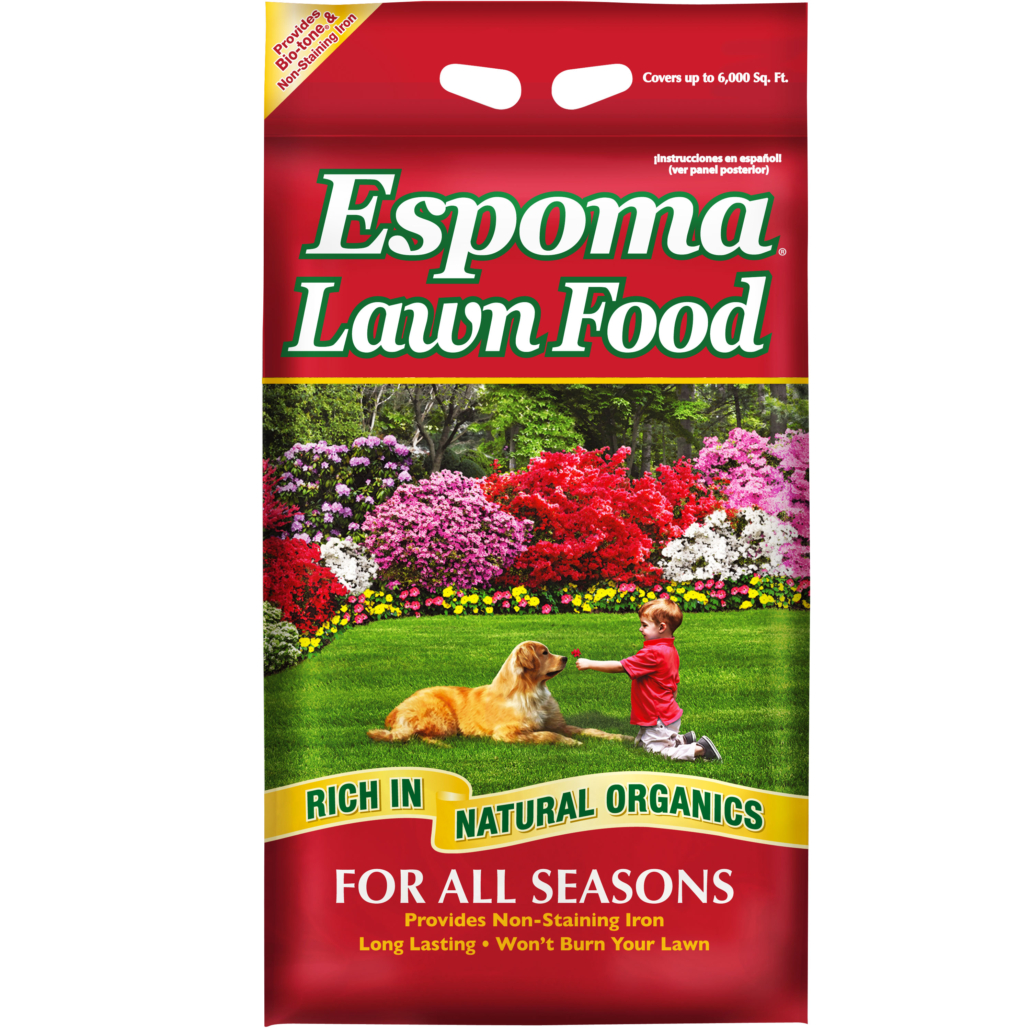
Espoma Lawn Food for All Seasons 15-0-5 provides slow-release, long-lasting nitrogen to help support a greener lawn year-round. Enhanced with iron for deep green color, it helps turn yellow lawns back to green and won’t stain concrete, sidewalks, or driveways. Safe for cool and warm season grasses, it applies in spring, summer, and fall with a drop or broadcast spreader.
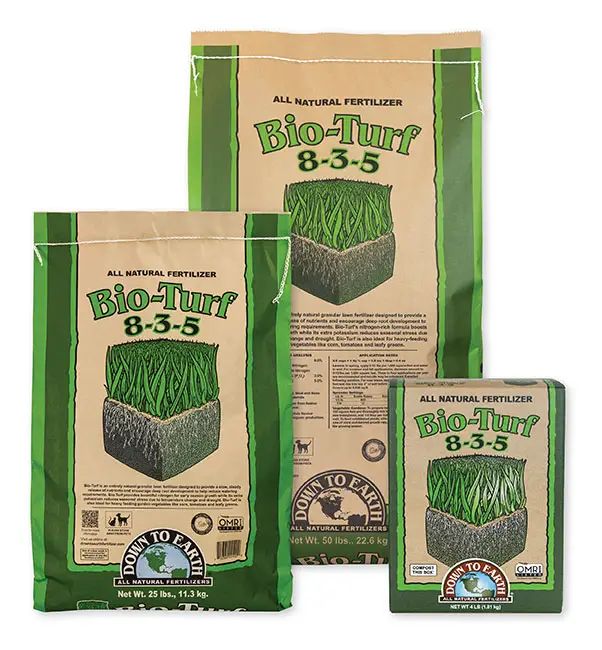
Down to Earth Bio-Turf is an all-natural 8-3-5 organic fertilizer, OMRI listed for use in organic production. It helps encourage deep root development to support greener, stronger growth while reducing watering needs and stress from heat or drought. Ideal for lawns, landscape ornamentals, and heavy-feeding garden vegetables and flowerbeds.
Apply a fast-release nitrogen fertilizer
Fast-release nitrogen sources, urea, ammonium sulfate, and ammonium nitrate, deliver nitrogen to the root zone quickly and produce visible leaf greening within 5 to 7 days. They are the fastest intervention available for a nitrogen-deficient lawn.
Apply at the label rate, typically 0.5 to 1 pound of actual nitrogen per 1,000 square feet. Calibrate the spreader before application. Apply to dry grass and water in immediately after to prevent fertilizer burn. Do not exceed label rates in pursuit of a faster response: over-application increases burn risk and contributes to thatch accumulation.
For reliable product selection and a complete guide to reading fertilizer labels and calculating application rates, see our lawn fertilizer hub.
Apply a chelated iron supplement
Iron is responsible for the deep blue-green color that distinguishes a high-quality lawn from one that is merely green. Even in lawns with adequate nitrogen, an iron application often produces a noticeably richer, darker green color within 5 to 10 days. It is particularly effective for lawns on alkaline soils (pH above 7.0) where grass has difficulty absorbing iron from the soil.
Apply chelated iron as a foliar spray for the fastest color response. Liquid chelated iron products are widely available at garden centers and online. Follow label rates carefully, over-application can stain concrete and hardscape surfaces a persistent rust-brown.
Water consistently and deeply
A lawn under even mild moisture stress loses color before it shows other stress symptoms. If the lawn has been getting light, frequent irrigation, a few minutes every day, the root zone may be consistently dry below the top inch despite the surface feeling moist.
Switch to deep, infrequent irrigation: 1 to 1.5 inches per session, applied every 5 to 7 days in the absence of rain. This wets the soil to the depth of the root zone (4 to 6 inches for a healthy established lawn) and encourages roots to grow downward rather than staying shallow. A deeper root system supports better green color during heat and between irrigation cycles.
The timing, frequency, and volume guidelines for lawn irrigation are covered in our lawn watering hub.
Long-Term Solutions: Root-Zone Corrections
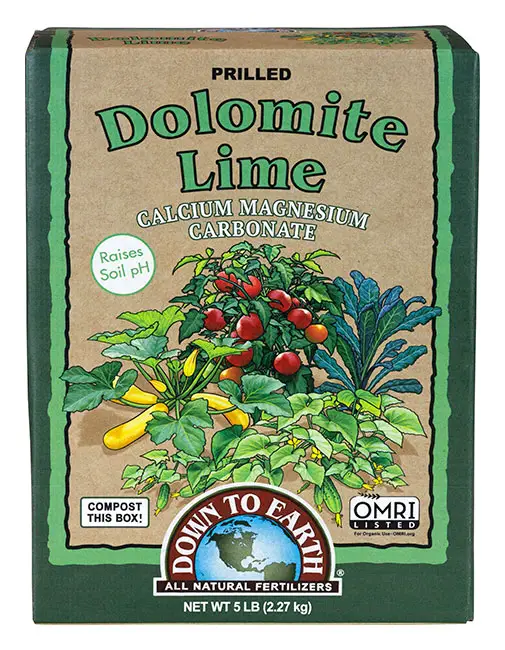
Down To Earth Organic Prilled Dolomite Lime helps raise acidic soil pH for better nutrient uptake and healthier vegetable gardens. Its rich calcium and magnesium support strong cell walls, root growth, and overall plant performance. OMRI listed for organic use, the prilled granules spread easily and act quickly while improving soil structure and microbial activity.
Espoma Organic Lawn Soil is an all-natural organic soil mix designed to promote seed germination and help new sod establish. It contains earthworm castings, alfalfa meal, kelp meal, and feather meal, enhanced with Espoma MYCO-TONE, a blend of endo and ecto mycorrhizae fungi. Use it anytime you sow new grass seed or install sod for organic gardening results with no synthetic plant foods or chemicals.
Test and correct soil pH
Soil pH controls the availability of virtually every nutrient that grass needs to grow. The productive pH range for most turf grasses is 6.0 to 7.0. At pH levels below 5.5, phosphorus, calcium, and magnesium become less available. At pH levels above 7.5, iron, manganese, and zinc become less available. A lawn on soil outside the productive pH range will remain pale and thin regardless of how much fertilizer is applied, because the nutrients are present in the soil but the grass cannot access them.
A soil pH test, available through county cooperative extension offices or commercial labs, costs under $30 and identifies whether pH is the limiting factor in your lawn. If soil pH is low (acidic), apply ground limestone (lime) at the rate recommended by the test. If soil pH is high (alkaline), apply elemental sulfur. pH correction is not a quick fix, it takes 3 to 6 months for lime or sulfur to meaningfully shift soil pH, but it is the most cost-effective long-term intervention available for a persistently pale or thin lawn.
Aerate compacted soil
Soil compaction restricts oxygen movement in the soil profile and limits root growth. Grass roots in compacted soil cannot develop the deep, extensive root system that supports vigorous, consistently green top growth. A lawn on compacted soil responds weakly to fertilizer and watering because the roots are shallow and restricted.
Core aeration, removing small plugs of soil from the lawn surface, relieves compaction, improves oxygen exchange in the root zone, and improves water and nutrient infiltration. The visible response to aeration is often dramatic: lawns that have been compacted for years frequently show a substantial improvement in density and color within one to two growing seasons of regular annual aeration.
The full aeration process is in our how to aerate a lawn guide.
Remove thatch accumulation above half an inch
A thatch layer above half an inch intercepts water and fertilizer at the surface before they reach the soil. Grass roots in a heavily thatched lawn grow primarily within the thatch layer rather than in the mineral soil, a shallow, poorly anchored root system that stresses easily and greens up slowly.
Dethatching the lawn removes the barrier and allows water and nutrients to reach the root zone directly. The improvement in color and density after dethatching a heavily thatched lawn can be dramatic, though the lawn looks rough for two to three weeks during the recovery period.
The dethatching process is in our how to dethatch a lawn guide.
Overseed thin or bare areas
A lawn with low turf density, where soil is visible between grass plants, will always look pale and thin because there is simply not enough leaf surface area producing green color per square foot. Overseeding thin areas with the correct grass variety fills in the canopy and produces more consistent, dense green color.
Overseed in fall for cool-season grasses and in late spring for warm-season grasses, when soil temperatures favor germination. The best overseeding results follow core aeration: plug holes provide direct seed-to-soil contact and significantly improve germination rates compared to seeding over an undisturbed surface.
Grass seed selection by grass type, climate zone, and shade level is covered in our grass types and seeding hub.
Build a seasonal fertilizer program
A lawn that looks green in spring and progressively duller through summer and fall is running through its nutrient supply without a consistent replenishment schedule. A structured fertilizer program, applying nitrogen-containing products three to four times per year at the rates and timing recommended for your grass type, maintains consistent nutrient availability through the full growing season.
The program design, timing by grass type, and product selection for a complete seasonal fertilizer schedule are covered in our lawn fertilizer hub.