
How to Fix Burnt Grass and Get It Green Again
Brown, scorched-looking lawn patches that appear suddenly can result from three distinct causes: fertilizer burn, chemical or herbicide damage, and heat and drought scorch. Each looks similar on the surface but requires a different recovery approach. The first step in fixing burnt grass is identifying which type of burn occurred, then the right response becomes clear.
Type 1: Fertilizer Burn
Fertilizer burn occurs when nitrogen salts are applied at too high a concentration, when granular fertilizer is applied to wet grass, or when product is spilled or heavily overlapped during a spreader pass. The concentrated salt draws water out of the grass blade through osmotic pressure, desiccating the tissue from the outside in.
Identifying fertilizer burn. The damage appears within 1 to 5 days of fertilizer application. Burned areas are typically sharply defined, often following the spreader pattern with clear lines where a double application occurred, or isolated spots where product was spilled. The affected grass turns yellow, then straw-colored or tan. Adjacent grass remains green.
Recovery from fertilizer burn. The immediate response is dilution. Water the affected area heavily, 1 to 2 inches of water applied over 24 hours, to flush the excess nitrogen salts through the soil and away from the root zone. Continue deep watering daily for 7 to 10 days. Avoid applying any additional fertilizer until the lawn has fully recovered.
Whether the grass recovers depends on how long the high-salt conditions persisted before dilution began. If treated within 24 hours of the fertilizer application, most grass varieties recover fully in 2 to 4 weeks. If the damage was not treated for several days and the grass crowns are dead, the affected areas will not recover and will need to be overseeded or patched.
To confirm whether the crowns are alive, tug gently on the brown grass blades at the edge of the damaged zone. If they have some resistance at the base and you can see pale or slightly green tissue at the crown level, recovery is likely. If the blades pull out freely and the crown looks completely dried out and tan, reseed those areas.
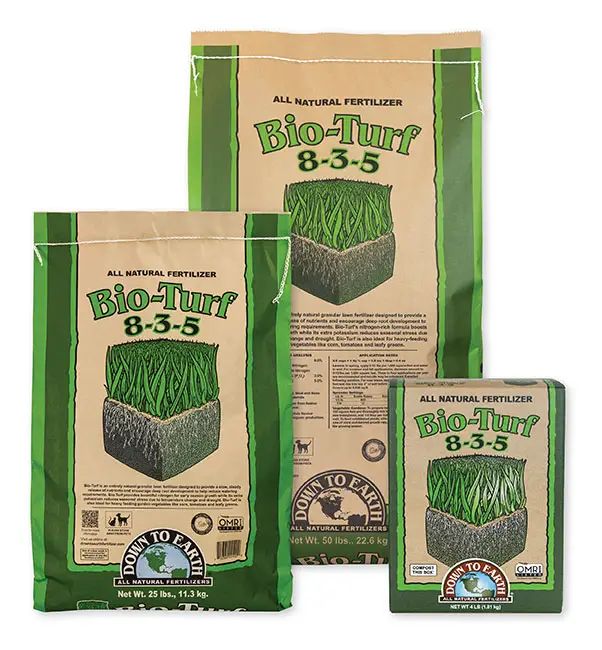
Down to Earth Bio-Turf is an all-natural 8-3-5 organic fertilizer, OMRI listed for use in organic production. It helps encourage deep root development to support greener, stronger growth while reducing watering needs and stress from heat or drought. Ideal for lawns, landscape ornamentals, and heavy-feeding garden vegetables and flowerbeds.

Espoma Organic Lawn Food Summer Revitalizer 8-0-0 delivers long-lasting organic nitrogen to help invigorate lawns during hot weather while adding iron for deep, greener color. Designed for all lawn types and cool- or warm-season grasses, it helps turn yellow lawns back to green without burning or leaching out of soil. Environmentally safe with no sludges or toxic ingredients, it won’t stain concrete, sidewalks, or driveways and is approved as a registered organic input material.

Espoma Lawn Food for All Seasons 15-0-5 provides slow-release, long-lasting nitrogen to help support a greener lawn year-round. Enhanced with iron for deep green color, it helps turn yellow lawns back to green and won’t stain concrete, sidewalks, or driveways. Safe for cool and warm season grasses, it applies in spring, summer, and fall with a drop or broadcast spreader.
Type 2: Herbicide and Chemical Damage
Chemical damage from herbicide overapplication, spray drift, concentrated product contact, or fuel and oil spills produces dead zones that do not respond to watering. The mechanisms differ from fertilizer burn, many herbicides work by disrupting plant hormone systems or blocking photosynthesis rather than by salt toxicity, which is why watering alone does not reverse the damage.
Identifying chemical damage. Chemical burn often produces irregularly shaped dead zones that do not follow a clear spreader pattern, particularly when caused by spray drift. Fuel or oil spills produce sharply defined dead zones in the shape of the spill. Herbicide overapplication zones may show leaf distortion or abnormal color (yellowing, bleaching, or purpling depending on the herbicide mode of action) before the grass dies back.
Recovery from chemical damage. The recovery timeline depends on the product involved. Contact herbicides (such as glufosinate or certain post-emergent broadleaf herbicides) break down relatively quickly in the soil with exposure to sunlight and microbial activity. Persistent soil herbicides (such as some pre-emergent products or certain broadleaf herbicides with extended residual activity) can prevent regrowth for several months to over a year in the treated area.
For contact herbicide damage or spray drift zones, water the area thoroughly to dilute any surface residue. Wait 4 to 6 weeks and then attempt a small test patch of overseeding to determine whether the herbicide residual has broken down sufficiently to support germination. If test seed germinates, proceed with full overseeding. If germination fails, wait another 4 weeks and test again.
For fuel or oil spills, the hydrocarbons in the soil must biodegrade before grass can re-establish. In a small affected area, remove the top 2 to 3 inches of contaminated soil, replace with clean topsoil, and overseed. In a larger spill zone, consult a turf professional about bioremediation options.
Type 3: Heat and Drought Scorch
Heat and drought scorch occur when extended high temperatures combined with insufficient soil moisture cause the grass plant to withdraw from its above-ground tissue to protect the crown. The visible result is brown, straw-colored grass across large areas, typically the most sun-exposed sections of the lawn.
Identifying heat scorch vs actual death. The key diagnostic question with heat-scorched grass is whether the plant is dormant or dead. Cool-season grasses are programmed to go dormant during extreme summer heat and drought, this is a survival mechanism, not death. The crowns and root system can survive dormancy for 3 to 6 weeks without water in most cases. Warm-season grasses typically tolerate heat better and are less prone to this type of dormancy-scorch.
Tug on the brown grass. Dormant grass has resistance at the crown and pulls up with difficulty. Dead grass pulls up freely, and the crowns feel dry, brittle, and completely tan with no green tissue.
Recovery from heat scorch. If the grass is dormant, water deeply, 1 to 1.5 inches, immediately. Continue with deep, infrequent irrigation (once every 5 to 7 days in the absence of rain) and the lawn will typically green up within 2 to 3 weeks once temperatures moderate. Do not apply nitrogen fertilizer while the lawn is dormant from heat stress.
If sections of the lawn have died outright from extended drought without watering, they will need to be overseeded or patched after conditions improve. For cool-season lawns, the best overseeding window is late summer to early fall when temperatures drop below 85°F consistently. For warm-season grasses, wait until the following spring when soil temperatures rise above 65°F before patching.
Overseeding After Burnt Grass: The Repair Process
Once the cause of the burn has been addressed and a sufficient waiting period has passed (particularly for chemical damage), overseeding the dead zones is the most reliable repair approach.
Rake the dead grass out of the affected area. Rough up the soil surface with a hand rake or a garden fork to create good seed-to-soil contact. Apply the appropriate grass seed at the overseeding rate, typically 4 to 8 pounds per 1,000 square feet for patching, depending on the grass type. Press the seed lightly into the soil surface with the back of a rake or by walking over it.
Water the seeded area lightly twice daily, a short morning and afternoon irrigation run, until germination is visible, typically within 7 to 14 days for cool-season grasses. Once seedlings reach 1 to 2 inches of growth, transition to deeper, less frequent irrigation.
Apply a starter fertilizer at the time of overseeding to support root development. Avoid applying pre-emergent weed control in overseeded areas until the new grass has been mowed at least three times, pre-emergents will suppress the new seedlings alongside weed seeds.
Grass seed selection for patching and overseeding is covered in our grass types and seeding hub.