
Plant Food vs Fertilizer: What Is the Difference?
The terms plant food and fertilizer appear on garden center shelves as if they describe the same thing, and in casual usage they are often treated as interchangeable. They are not technically the same, and understanding the distinction helps you make better choices about what your garden actually needs.
What Plants Actually Make as Their Own Food
True plant food is produced by the plant itself through photosynthesis. Chlorophyll in leaf cells captures light energy and uses it to convert carbon dioxide and water into glucose, which the plant uses as fuel for growth, root development, cell repair, and reproduction. This is plant food in the biological sense: carbohydrates synthesized by the plant from air and light.
No product you apply to a plant is plant food in this sense. When a product is marketed as plant food, it is using the term loosely to mean something the plant needs to produce its food, which is a mineral nutrient delivered through the roots.
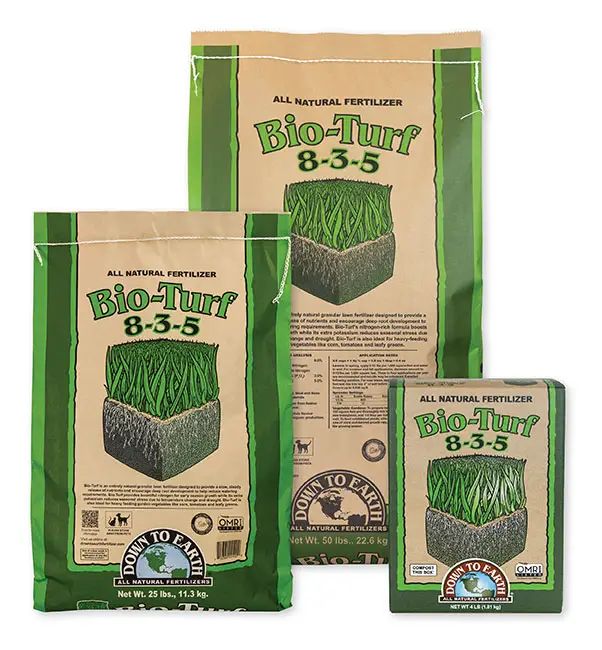
Down to Earth Bio-Turf is an all-natural 8-3-5 organic fertilizer, OMRI listed for use in organic production. It helps encourage deep root development to support greener, stronger growth while reducing watering needs and stress from heat or drought. Ideal for lawns, landscape ornamentals, and heavy-feeding garden vegetables and flowerbeds.
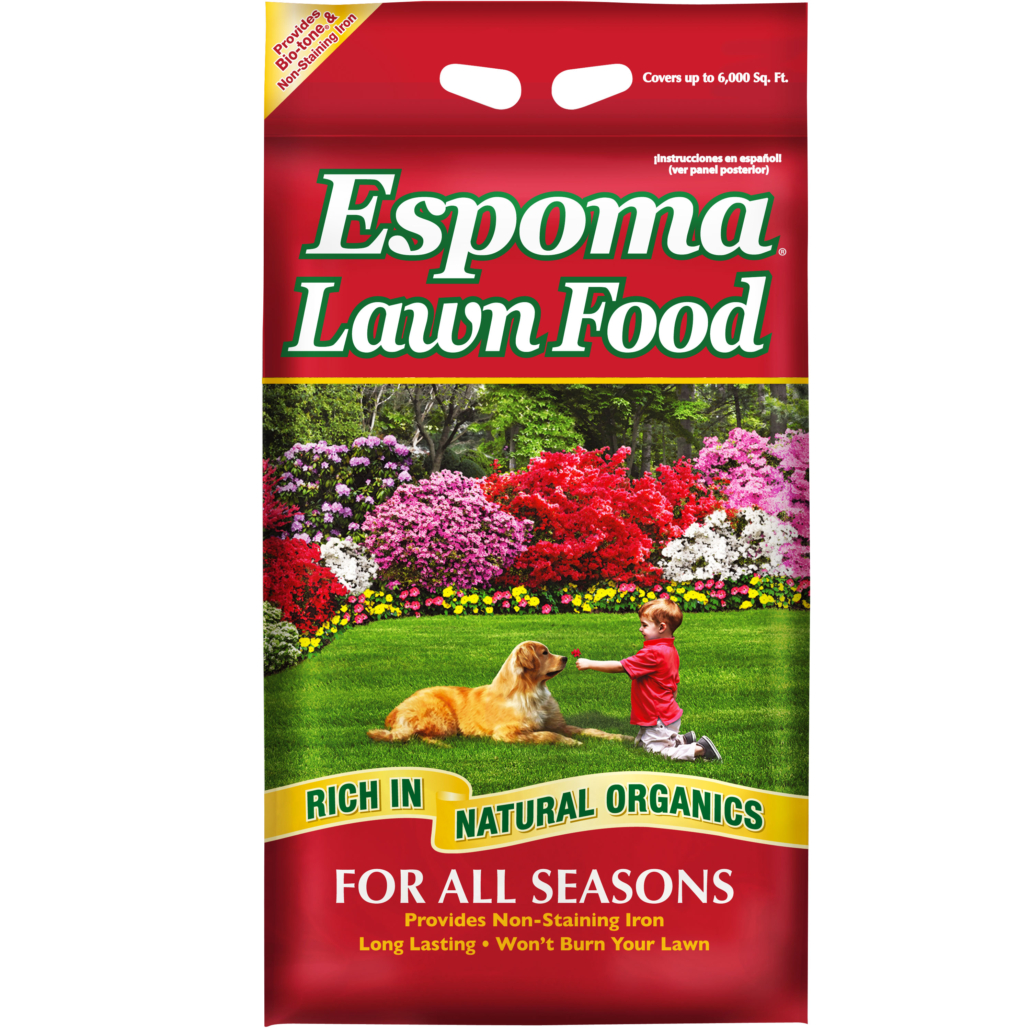
Espoma Lawn Food for All Seasons 15-0-5 provides slow-release, long-lasting nitrogen to help support a greener lawn year-round. Enhanced with iron for deep green color, it helps turn yellow lawns back to green and won’t stain concrete, sidewalks, or driveways. Safe for cool and warm season grasses, it applies in spring, summer, and fall with a drop or broadcast spreader.
Espoma Organic Lawn Soil is an all-natural organic soil mix designed to promote seed germination and help new sod establish. It contains earthworm castings, alfalfa meal, kelp meal, and feather meal, enhanced with Espoma MYCO-TONE, a blend of endo and ecto mycorrhizae fungi. Use it anytime you sow new grass seed or install sod for organic gardening results with no synthetic plant foods or chemicals.
What Fertilizer Is
Fertilizer is any product that supplies mineral nutrients to the soil or directly to plant tissue. The three primary macronutrients that fertilizers supply are nitrogen (N), phosphorus (P), and potassium (K), expressed on product labels as an NPK ratio. A fertilizer labeled 10-10-10 contains 10 percent nitrogen, 10 percent phosphorus (as phosphate), and 10 percent potassium (as potash) by weight.
Nitrogen drives vegetative growth: leaf production, stem length, and the deep green color of healthy foliage. Nitrogen deficiency produces yellow-green, undersized leaves, particularly on older growth.
Phosphorus supports root development, flowering, and seed production. Phosphorus deficiency produces poor flowering and sometimes a purple tint to foliage.
Potassium regulates water movement within plants, supports disease resistance, and is important for fruit quality. Potassium deficiency often appears as browning at leaf margins.
Secondary macronutrients (calcium, magnesium, sulfur) and micronutrients (iron, manganese, zinc, boron, and others) are needed in smaller quantities but are equally essential for healthy plant function.
Types of Fertilizer and When to Use Each
Slow-release granular fertilizers dissolve gradually over weeks or months, delivering a steady, low-level supply of nutrients. These are ideal for in-ground garden beds and long-season container plants because they reduce the risk of over-fertilization and require only one or two applications per season. Many potting mixes include slow-release granules at packaging.
Liquid fertilizers act within days of application because nutrients are already dissolved and immediately available for root uptake. These are the right choice when a plant is showing deficiency symptoms and needs a rapid response, or for heavy-feeding crops like tomatoes and leafy greens that benefit from regular supplemental feeding through the season.
Organic fertilizers such as blood meal, bone meal, fish emulsion, and compost supply nutrients through microbial breakdown in the soil. They act more slowly than synthetic options but build soil biology over time and reduce the risk of salt buildup from repeated synthetic applications.
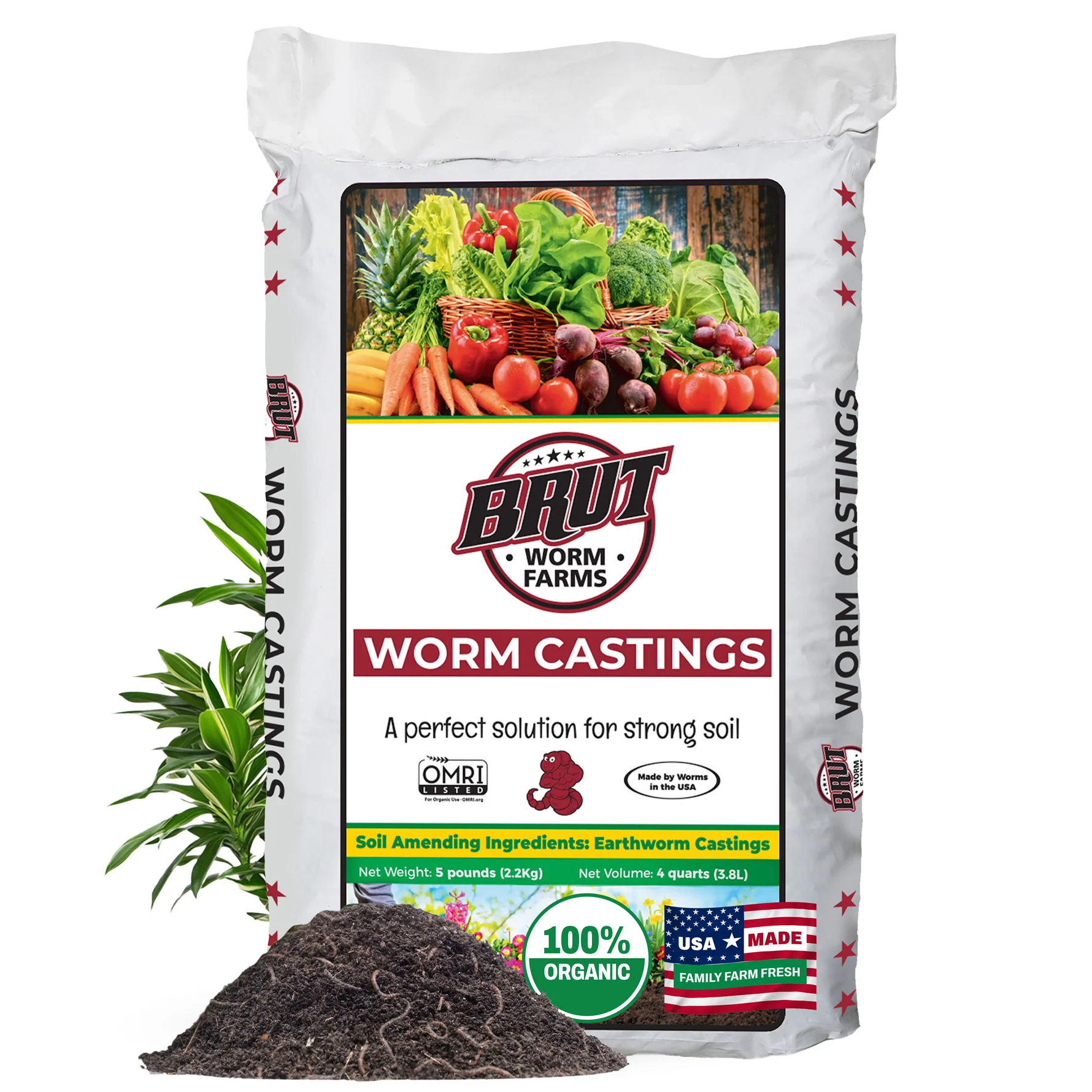
Brut organic worm castings provide mineral-rich, certified organic nutrition to supercharge indoor and outdoor plants. Raised indoors in containers for purity, these castings support lush greenery, vibrant blooms, and bountiful harvests. OMRI and CDFA listed formula helps deliver nature’s nutrients directly to plant roots for healthy growth from root to leaf.
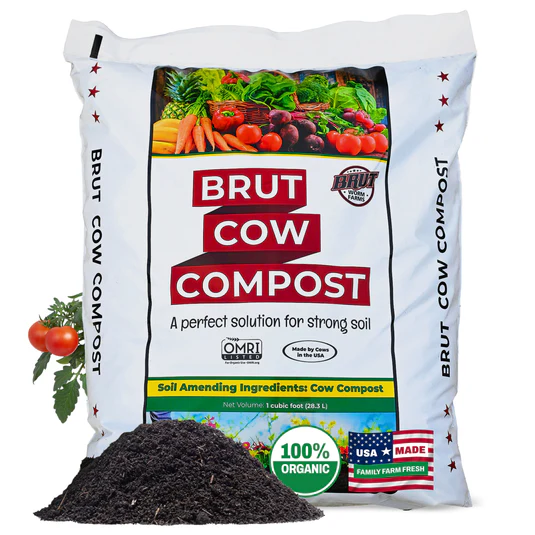
Brut Cow Compost is a nutrient-rich organic soil amendment made from 100% pure, thoroughly composted cow manure. It enriches soil with nitrogen, calcium, and iron, supports beneficial microbial life, and helps plants produce stronger growth. Odor-free and gentle on roots, it can be used for vegetables, flowers, lawns, shrubs, and indoor plants as a top dressing or mixed into garden and potting soil.
Reading an NPK Label
The three numbers on any fertilizer package represent the percentage by weight of nitrogen, phosphate, and potash in the formulation. A product with a label reading 5-10-10 is relatively low in nitrogen and higher in phosphorus and potassium, making it appropriate for flowering and fruiting plants. A product labeled 30-0-0 is a pure nitrogen source, useful for lawns or leafy vegetables but unsuitable for flowering plants where high nitrogen delays blooming.
For how to apply fertilizer correctly to garden plants through the season, the full approach is covered in the how to fertilize garden plants guide.