
How to Make Hydrangeas Blue: Soil pH and Aluminum
Turning a pink hydrangea blue is one of the most satisfying experiments in home gardening, and it is entirely achievable with the right soil chemistry. The color transformation is not cosmetic: it reflects a real change in how the plant absorbs aluminum from the soil, which in turn changes the pigment expressed in the flowers. Understanding the mechanism helps you manage it reliably season after season.
Why Hydrangeas Change Color
Bigleaf hydrangeas (Hydrangea macrophylla) contain the pigment compound delphinidin, part of the anthocyanin family. In the presence of aluminum ions, delphinidin forms a complex that absorbs red light and reflects blue and violet, producing blue to purple blooms. Without aluminum, the same pigment produces pink to red colors.
Soil pH determines whether aluminum is available to plant roots. In acidic soil with pH below 6.0, aluminum compounds dissolve and become soluble. In neutral to alkaline soil above pH 7.0, aluminum forms insoluble compounds that roots cannot absorb. To make a pink hydrangea blue, you lower soil pH to make aluminum available. To make a blue hydrangea pink, you raise pH to lock aluminum away.
This mechanism only works in varieties that carry the delphinidin pigment. White-flowering hydrangeas lack this pigment entirely and cannot change color regardless of soil chemistry. Some pink-flowered varieties have such deep pink pigmentation that they resist full color change even in highly acidic conditions.
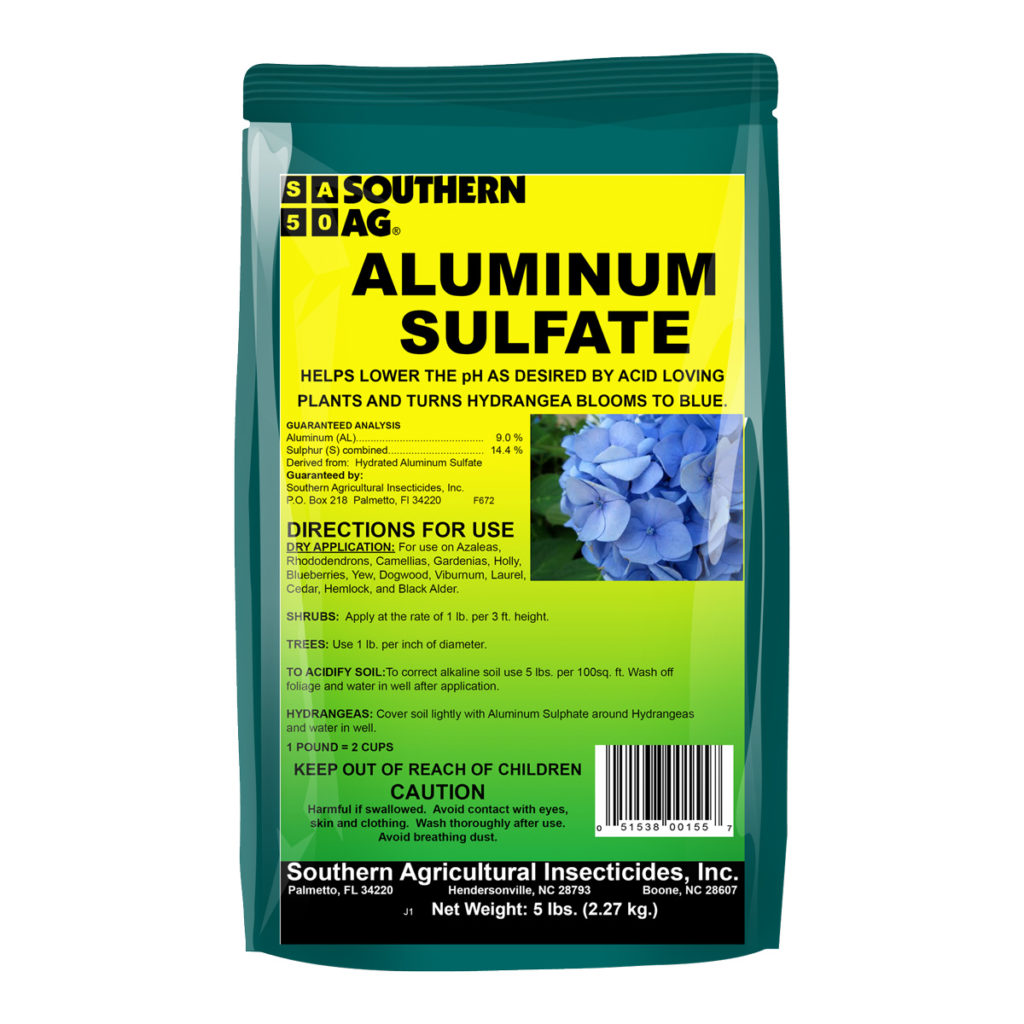
Southern Ag Aluminum Sulfate is a soil acidifier that helps lower pH and corrects high alkalinity, making it ideal for acid-loving plants. It’s great for hydrangeas and other shrubs and trees that prefer acidic conditions, including rhododendrons, blueberries, azaleas, and more. Broadcast evenly and wash off foliage, then water after application.
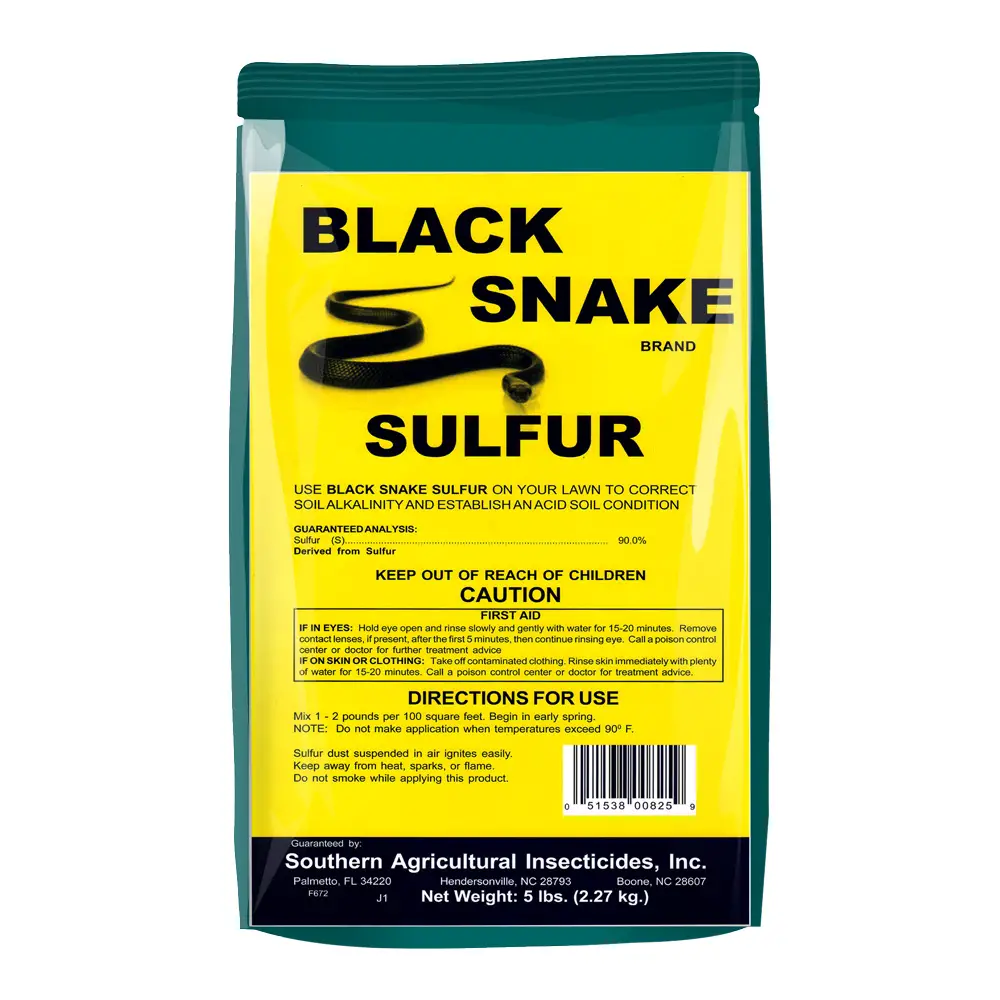
Black Snake Sulfur is a pulverized sulfur product used to help correct lawn soil alkalinity and establish an acid soil condition. It is applied directly to soil using a recommended rate for 100 square feet area. Keep the product away from sparks, open flames, and lit cigarettes during use.
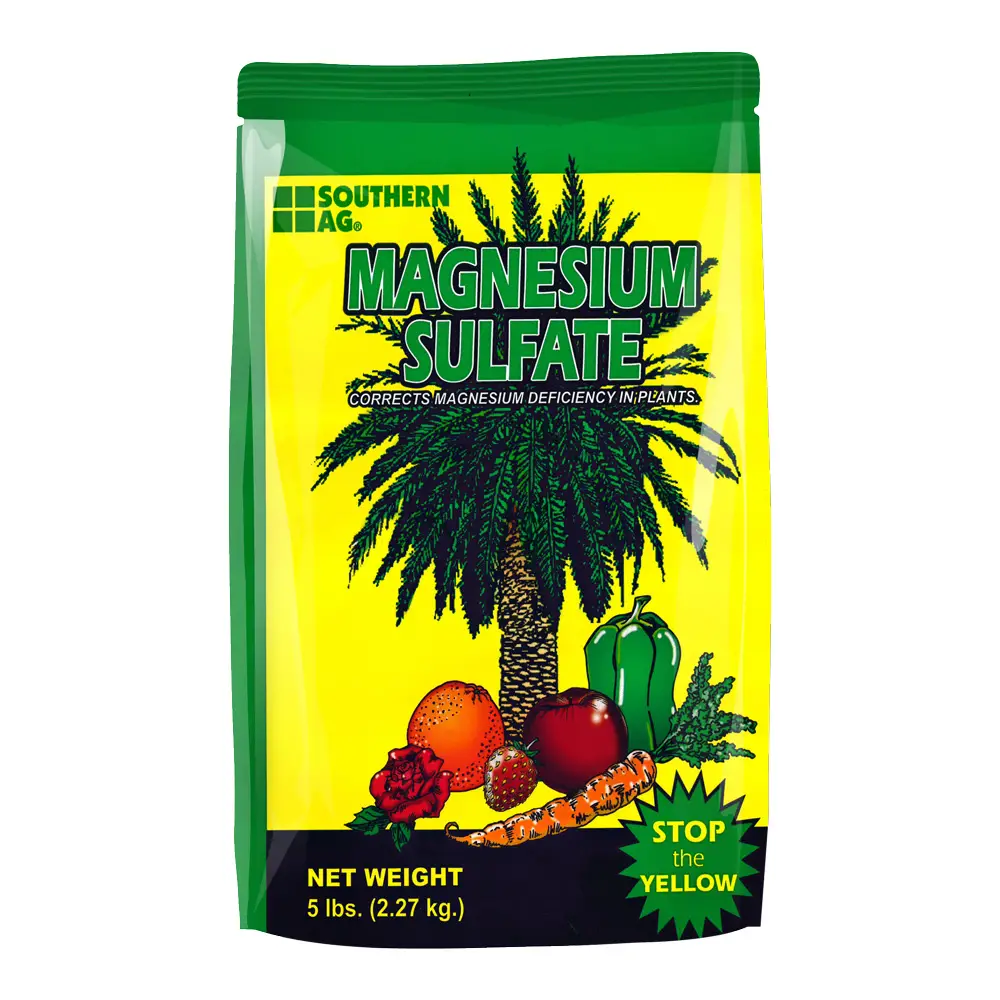
Root 98 Warehouse Southern Ag Magnesium Sulfate is a dry, water-soluble fertilizer for correcting magnesium deficiency in shrubs and trees. It helps acidify soils with less risk of staining and is designed for use on citrus, palms, trees, shrubs, annuals, and turf. Apply by spreading over the treatment area and watering in; do not mix or spray.
What You Need
Aluminum sulfate is the fastest-acting amendment and the most commonly used product for this purpose. It supplies both the aluminum directly and has an acidifying effect that lowers pH. Results appear within two to four weeks of application.
Elemental sulfur acts more slowly but produces a longer-lasting pH reduction through microbial activity in the soil. It works best as a pre-season soil preparation applied the autumn before the growing season you want blue blooms.
Acidifying fertilizers formulated for azaleas and rhododendrons also contribute to pH maintenance and provide appropriate nutrients without pushing alkalinity. These are useful as a maintenance product between heavier applications of sulfur or aluminum sulfate.
Step-by-Step to Blue Blooms
Step 1: Confirm the variety. Check that you have a bigleaf hydrangea (Hydrangea macrophylla) that currently produces pink blooms. The process does not work on panicle, smooth, or oakleaf hydrangeas, or on white-flowered bigleaf varieties.
Step 2: Test your soil pH. Use an inexpensive soil pH meter pushed into the root zone, or send a sample to a laboratory or extension service for a precise reading. The target for blue flowers is pH 4.5 to 5.5.
Step 3: Apply aluminum sulfate. For container plants, dissolve 1 tablespoon of aluminum sulfate in 4 liters of water and water the root zone thoroughly. Repeat every two weeks from late winter through the first sign of bud development in spring. For in-ground plants, sprinkle 60 grams per square meter around the drip line of the plant and water in well.
Step 4: Support with elemental sulfur. For garden-bed plants where you want sustained color, incorporate elemental sulfur at the rate appropriate for your soil type (as described in the soil acidification guide) in autumn or early spring. This creates a longer-term pH buffer than aluminum sulfate alone.
Step 5: Retest and maintain. Test soil pH each spring. Garden soils drift back toward their natural baseline over time, especially where irrigation water is alkaline. Annual applications of acidifying fertilizer or elemental sulfur maintain the target range with less intensive management than the initial correction required.
Realistic Expectations
Color change is a gradual process, not an overnight event. Blooms in the season immediately after treatment often show intermediate lavender tones rather than deep blue. Deep, saturated blue typically develops over two to three seasons of consistent pH management. Be patient, maintain the target pH range, and the color will intensify year over year.
Plants grown in containers have a significant advantage: because the rooting volume is small, pH adjustment is faster and more reliable than in open garden soil. If you want predictable blue color with minimal effort, growing bigleaf hydrangeas in containers with an acidic, ericaceous potting mix gives you direct control over the root environment. Container growing tips including soil mix and watering specifics are in the hydrangea care in pots guide.