
Gas vs Electric Leaf Blower: Which Should You Buy?
Gas and electric leaf blowers have different strengths, and the residential buyer who ends up frustrated with their blower has usually bought the wrong type for their lot size and use pattern. Gas blowers deliver sustained high CFM output without runtime limits and are the correct tool for half-acre and larger lots with heavy seasonal leaf fall. Electric battery blowers have closed the performance gap enough for lots at or below a third of an acre and offer genuine advantages in startup convenience, maintenance simplicity, and noise reduction. The comparison below covers the variables that determine which type fits a given situation.
Power and CFM Output
Gas backpack blowers remain the highest-output category. Professional and prosumer gas backpack models in the Husqvarna 570BTS and 580BTS class produce 500 to 908 CFM, which clears large volumes of leaves in fewer passes than any battery alternative at the same price. Mid-range gas backpack blowers in the 130BT and 350BT class deliver 380 to 494 CFM, which is competitive with the best battery blowers but requires the fuel mixing and maintenance of a two-stroke engine.
Battery blowers in the 56V and 80V tier from EGO and Greenworks now deliver 580 to 700 CFM, matching or exceeding mid-range gas backpack output in peak CFM terms. The practical difference appears in sustained load: a battery blower’s output drops gradually as the battery depletes, while a gas blower maintains consistent output until the tank runs low. For sessions of 20 to 30 minutes, most buyers do not notice the gradual output reduction of a battery. For sessions of 45 minutes or more, gas maintains consistent performance to the end of the tank.
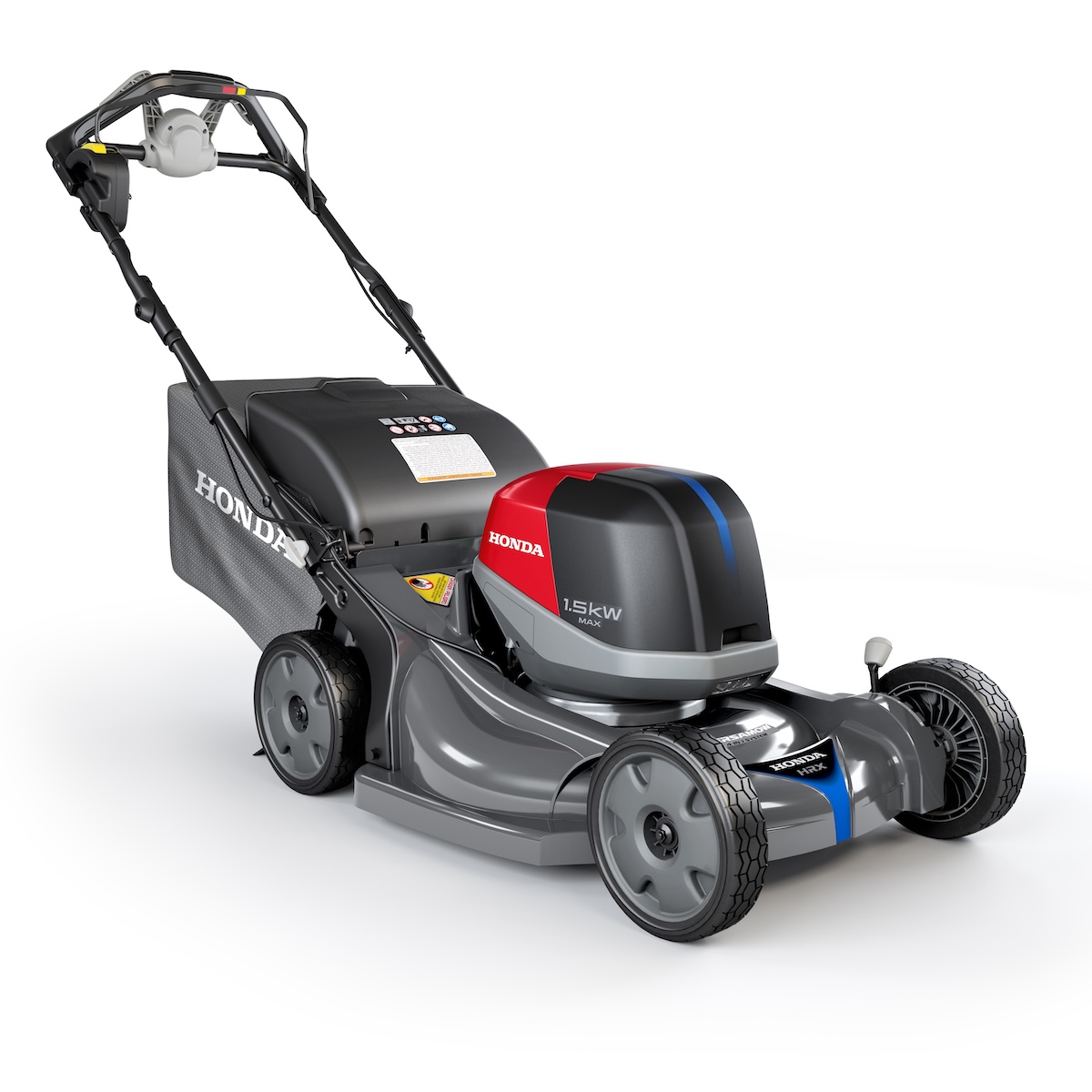
The Honda HRX-BV battery powered lawn mower delivers high torque performance for clean cutting in thick and tall grass. It features 4-in-1 Versamow with Clip Director for...
Runtime
Gas blowers have effectively unlimited runtime: a full tank on a typical backpack blower provides 30 to 45 minutes of operation, and refilling the tank takes 60 seconds. Back-to-back sessions with a gas blower require only fuel availability. Battery blowers are limited to one charge per battery, with runtime ranging from 20 to 45 minutes depending on battery voltage and capacity. A second battery extends runtime, but requires planning and adds to the upfront cost.
For buyers with lots that require blowing sessions shorter than 30 minutes, a single battery is sufficient. For lots requiring longer sessions or multiple sessions between charges, either a high-capacity battery, a second battery, or a gas blower is the practical solution.
Startup and Operation
Gas two-stroke blowers require a cold-start procedure including priming, choke setting, and pull-cord starting. In mild weather with fresh fuel, most quality gas blowers start in two to three pulls. In cold weather or after sitting with old fuel, cold starts can require more effort and occasional carburetor attention. Battery blowers start immediately with a trigger press every time, in any weather and after any storage duration.
Maintenance
Gas two-stroke blowers require seasonal maintenance: air filter cleaning or replacement, spark plug inspection, and end-of-season fuel stabilization or draining before storage. Carburetor cleaning is occasionally needed when gum deposits from stale fuel restrict the jets. Battery blowers require no fuel system maintenance. Keeping the air intake vents clear of debris and storing the battery correctly are the only ongoing care requirements.
Noise
Gas backpack blowers produce 95 to 103 dB at the operator position, which is above the threshold where hearing protection is required for prolonged exposure. Many municipalities restrict gas-powered tool use before 8 or 9 a.m. Battery blowers produce 65 to 78 dB, which is significantly quieter and allows earlier morning use in noise-sensitive neighborhoods without complaint.
The Decision
Gas suits buyers with lots over a third of an acre with heavy seasonal leaf fall, extended blowing sessions exceeding 30 minutes, or buyers who need the sustained maximum output of a professional-grade gas backpack for dense or wet leaf conditions. Battery suits buyers with lots at or below a third of an acre, buyers who want to eliminate fuel and carburetor maintenance, buyers in noise-sensitive areas, and buyers who already own tools in a compatible battery ecosystem. The best battery leaf blower guide covers the top battery blower picks across voltage platforms. The Husqvarna backpack blower comparison covers the gas options across the full Husqvarna residential and prosumer lineup.